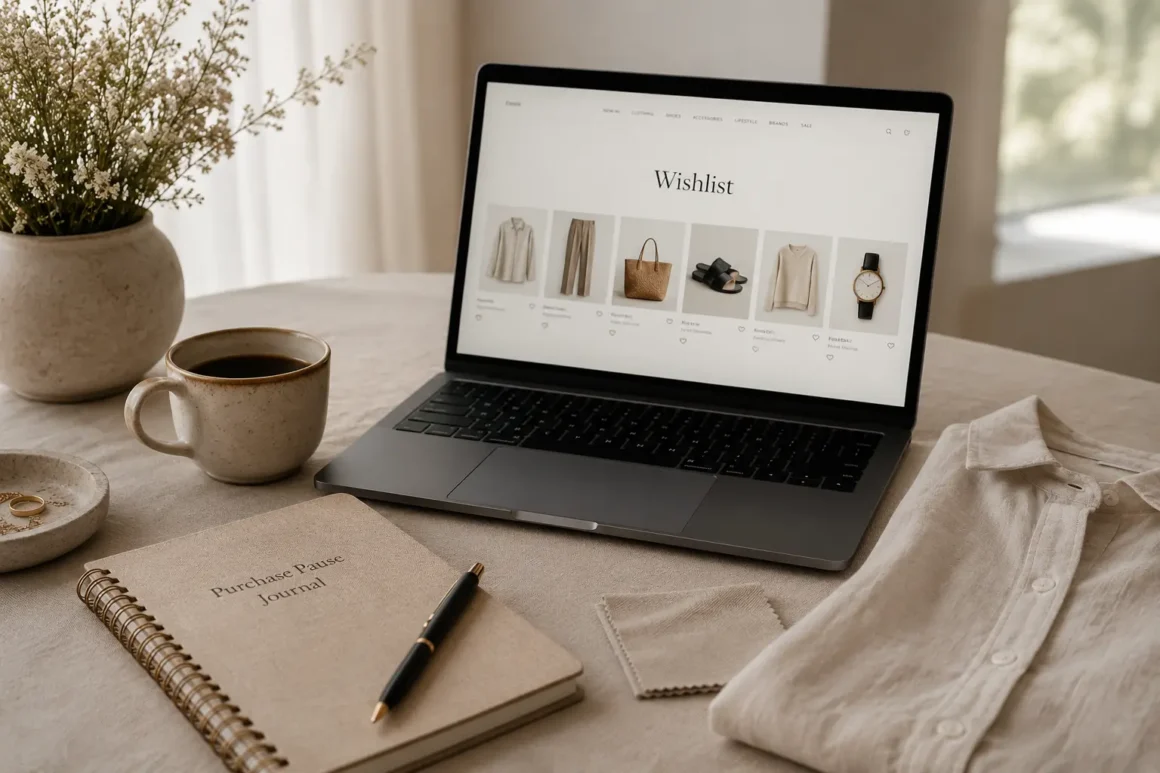
Every sale seems to ask the same question:
Are you ready to check out?
A beautiful sweater catches your eye. A pair of linen trousers you’ve admired for months is finally marked down. Before long, your shopping cart begins to fill—not necessarily because you’ve decided to buy those pieces, but because it feels easier to postpone the decision until later.
Where you choose to save something quietly shapes how you think about it.
A shopping cart and a wishlist may seem interchangeable, but they encourage two very different ways of thinking. A shopping cart is designed to move you toward a purchase. A wishlist gives you permission to pause, reflect, and decide whether something truly belongs in your wardrobe. You avoid impulse buying in favor of a more intentional shopping experience.
Over time, I’ve found that some of my best purchases never came directly from a shopping cart. They began on a wishlist, where time had the chance to separate genuine wardrobe needs from the excitement of something new.
The short answer
Why is a wishlist better than a shopping cart?
A wishlist encourages thoughtful decisions instead of immediate purchases. While a shopping cart is designed to move you quickly toward checkout, a wishlist gives you time to reflect, compare options, identify genuine wardrobe gaps, and return only to the pieces that continue to feel right.
A wishlist creates space for better decisions. Instead of asking whether you are ready to buy today, it asks whether the piece still deserves a place in your wardrobe tomorrow.
Shopping Carts are Meant to be Temporary
A shopping cart may look like a place to hold a decision, but it is really designed to complete one.
Everything about it creates forward motion. The item is selected. The size is chosen. The total is calculated. Shipping thresholds appear. A timer may begin. Inventory suddenly feels limited. Even before anything has been purchased, the cart creates the sense that the decision is already underway.
Then come the emails.
You left something behind.
Your cart is waiting.
Complete your purchase before it is gone.
Retailers are remarkably attentive to abandoned shopping carts. I have received plenty of reminders about items I had no real intention of buying. I cannot remember receiving the same kind of message about something quietly sitting on a wishlist.
That difference is revealing.
A shopping cart is valuable to a retailer because it sits close to conversion. Its purpose is not to help you think more clearly. Its purpose is to reduce the distance between interest and checkout.
This does not make the cart inherently manipulative or wrong. It simply means that it is the wrong place to store uncertainty.
When an item goes into a cart before the decision has been made, the cart begins doing emotional work. You start to justify what is, in fact, impulse buying. You picture the piece arriving. You begin styling it in your mind. You notice the sale price more than the full cost. You become aware of how little is required to qualify for free shipping. What began as curiosity starts to feel like commitment.
That is why abandoned-cart emails can feel so irritating. They interrupt the natural fading of desire. Just as you begin to forget the item, the retailer places it back in front of you and frames your hesitation as unfinished business.
But hesitation is not always a problem to solve.
Sometimes it is useful information.
A pause may mean you do not need the piece. It may mean the color is not quite right, the fit is uncertain, or the sale is doing more of the persuading than the item itself. It may simply mean that you are not ready to decide.
A shopping cart treats that pause as an obstacle.
A wishlist creates distance. A purchase pause helps you decide what to do with it.

“Save for Later” Isn’t the Same as a Wishlist
Many retailers now offer a Save for Later button, and at first glance it seems like the perfect compromise. You remove the item from your cart without letting it disappear completely.
But I’ve noticed something interesting.
Those saved items are often accompanied by subtle reminders:
Only one left.
Selling fast.
Price dropped.
Back in stock.
Instead of creating distance from the purchase, the feature often keeps you emotionally attached to it.
I’ll admit it—I have caught myself frantically searching for the same item at another retailer after discovering it sold out. Or looked for something similar at the same retailer to take its place. Interestingly, I hadn’t actually decided to buy it until I couldn’t.
A decision I had been perfectly comfortable postponing somehow becomes urgent the moment someone else has made it for me.
That’s rarely a sign that the item belonged in my wardrobe.
It’s usually a sign that scarcity has changed the way I’m thinking.
A true wishlist doesn’t pressure you to act before someone else does.
It simply waits.
And that’s exactly what makes it such a valuable decision-making tool.
Wishlists Create Perspective
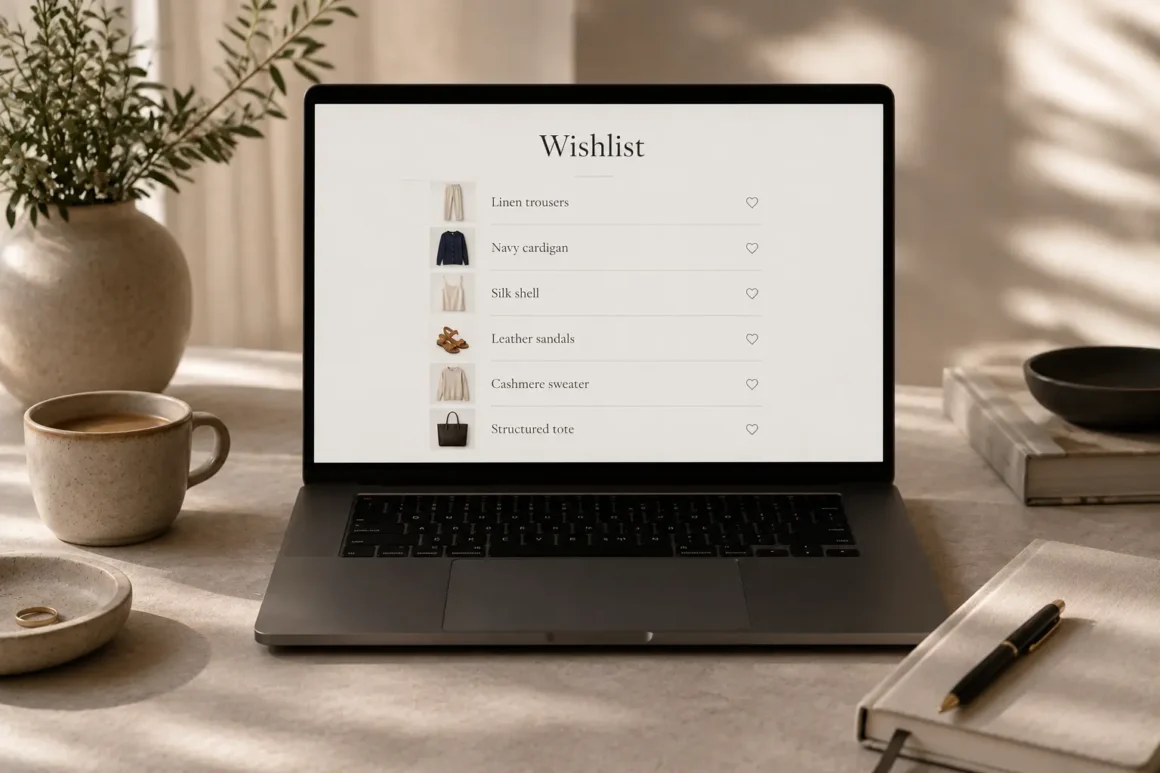
A wishlist serves a very different purpose than a shopping cart. It isn’t designed to help you buy something today. It exists to help you decide whether you should buy it at all.
The simple act of moving an item from your cart to a wishlist changes the nature of the decision. Instead of asking, “Should I check out?” you begin asking, “Does this still belong in my wardrobe?”
That shift is more significant than it first appears.
Time has a remarkable way of clarifying our preferences. Some items quietly disappear from your mind after a few days, revealing that they were exciting in the moment but never truly necessary. Others continue to return to your thoughts week after week. Those are often the pieces worth examining more closely.
I’ve also noticed that wishlists begin to tell a story.
Perhaps every pair of shoes you’ve saved is a simple leather loafer. Maybe every sweater is navy. Perhaps you keep returning to linen trousers, structured blazers, or silk shells. Patterns emerge long before a purchase is made.
Those patterns are valuable.
They often reveal genuine wardrobe preferences rather than temporary trends. Instead of asking what is new this season, your wishlist begins to answer a more useful question:
What kind of wardrobe am I actually trying to build?
That question is far more interesting than whether a particular item happens to be on sale.
A wishlist doesn’t eliminate desire. It simply gives desire enough time to become discernment. In this way, shopping becomes more intentional, and every purchase has the opportunity to strengthen the wardrobe you already own.
Learning to wait often changes what feels essential. It’s the same idea explored in The Confidence of Enough, where confidence grows from clarity rather than constant acquisition.
Time Reveals What You Actually Want
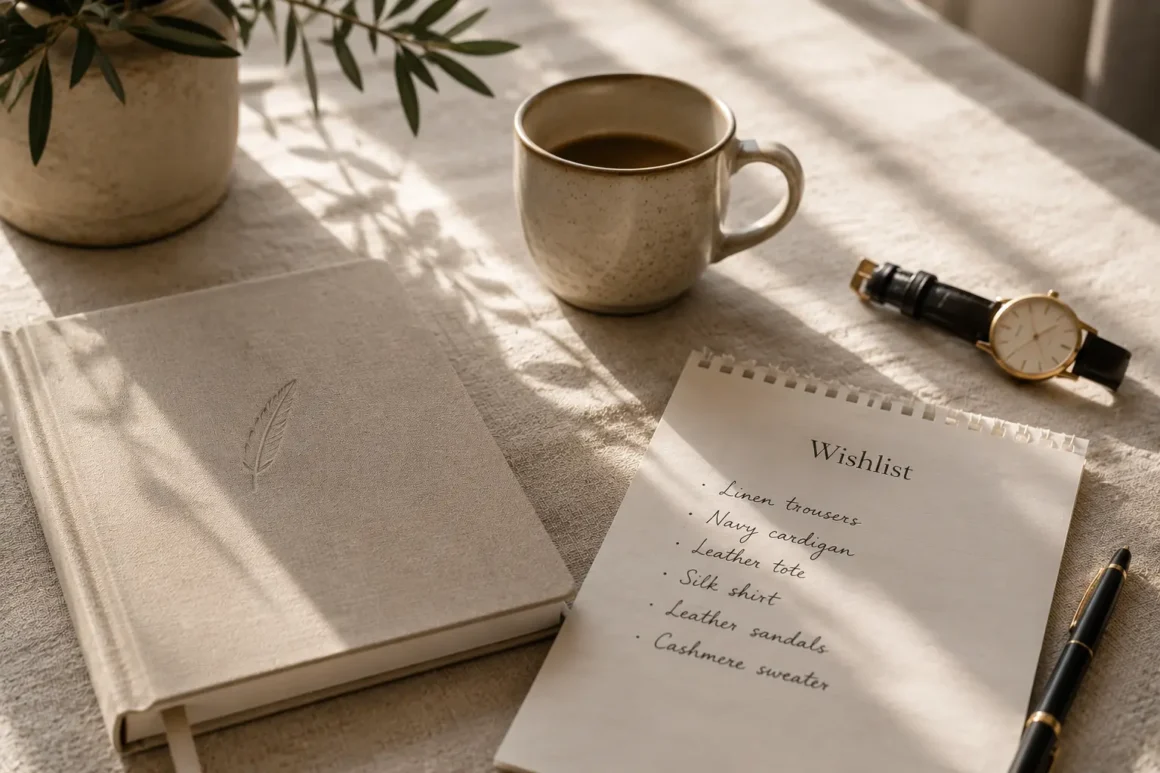
One of the greatest advantages of a wishlist is that it allows time to become part of the decision.
When we first discover something beautiful, it is difficult to separate the item itself from the excitement of finding it. The color feels perfect. The styling is inspiring. We begin imagining all the places we might wear it. In those moments, we are often responding to possibility as much as practicality.
Time changes that.
Some items quietly lose their appeal after a few days or weeks. Without the urgency of a sale or the excitement of discovery, they simply stop feeling important. That doesn’t mean they were bad purchases waiting to happen. It simply means they belonged to a moment rather than a lasting need.
Other pieces have a different quality.
You return to them repeatedly. You compare them to similar options. You imagine them with clothes you already own instead of outfits you don’t. Even after weeks—or months—they continue to feel like a natural extension of your wardrobe.
Those are the pieces worth paying attention to.
The goal here isn’t to prove that every item deserves a place in your wardrobe. It’s to discover which ones continue to deserve your attention after the initial excitement has faded.
Time also reveals whether a purchase fills a genuine gap—or whether your wardrobe may already have enough.
That’s why I rarely think of a wishlist as a holding place for future purchases.
I think of it as a filter.
The items that quietly disappear from it have already served their purpose. They helped clarify what I don’t actually want.
The ones that remain often become some of the easiest purchasing decisions I make—not because they’re perfect, but because time has already done much of the thinking for me.
Your Wishlist Becomes a Wardrobe Editor
After a while, something unexpected begins to happen.
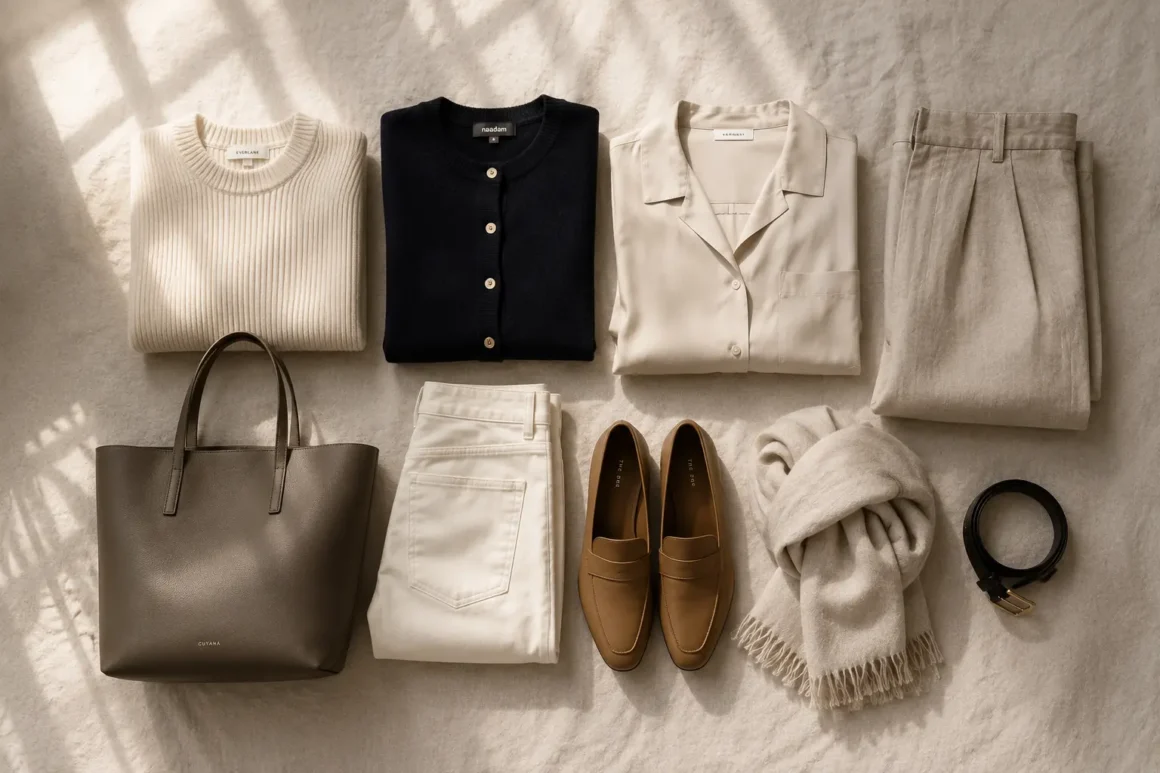
Your wishlist stops looking like a collection of random products and starts revealing patterns.
Perhaps you’ve saved five navy sweaters over the past year. Maybe every handbag is structured, every pair of shoes is flat, or every dress shares the same clean silhouette. Without realizing it, you’ve been documenting your preferences all along.
Those patterns are worth paying attention to.
They often reveal what you genuinely enjoy wearing—not what happened to catch your attention on a particular afternoon. Instead of chasing each new arrival or seasonal trend, your wishlist begins to show you the wardrobe you’re naturally trying to build.
It also becomes easier to recognize when a purchase doesn’t belong.
If you’ve consistently saved tailored trousers, linen shirts, and understated leather loafers, a brightly patterned trend piece may still be beautiful—but it no longer feels like an obvious next step. Your wishlist has quietly established a point of reference.
In that sense, a wishlist becomes more than a place to save products.
It becomes an editor.
Not every beautiful item receives an invitation into your wardrobe. Some are admired for a moment and then released. Others continue to earn your attention over time, gradually proving that they belong.
The longer I keep a wishlist, the less I use it to remember individual items and the more I use it to understand my own taste.
That may be its greatest value.
A well-kept wishlist doesn’t simply tell you what you want to buy.
It reminds you who you’re becoming as you build your wardrobe.
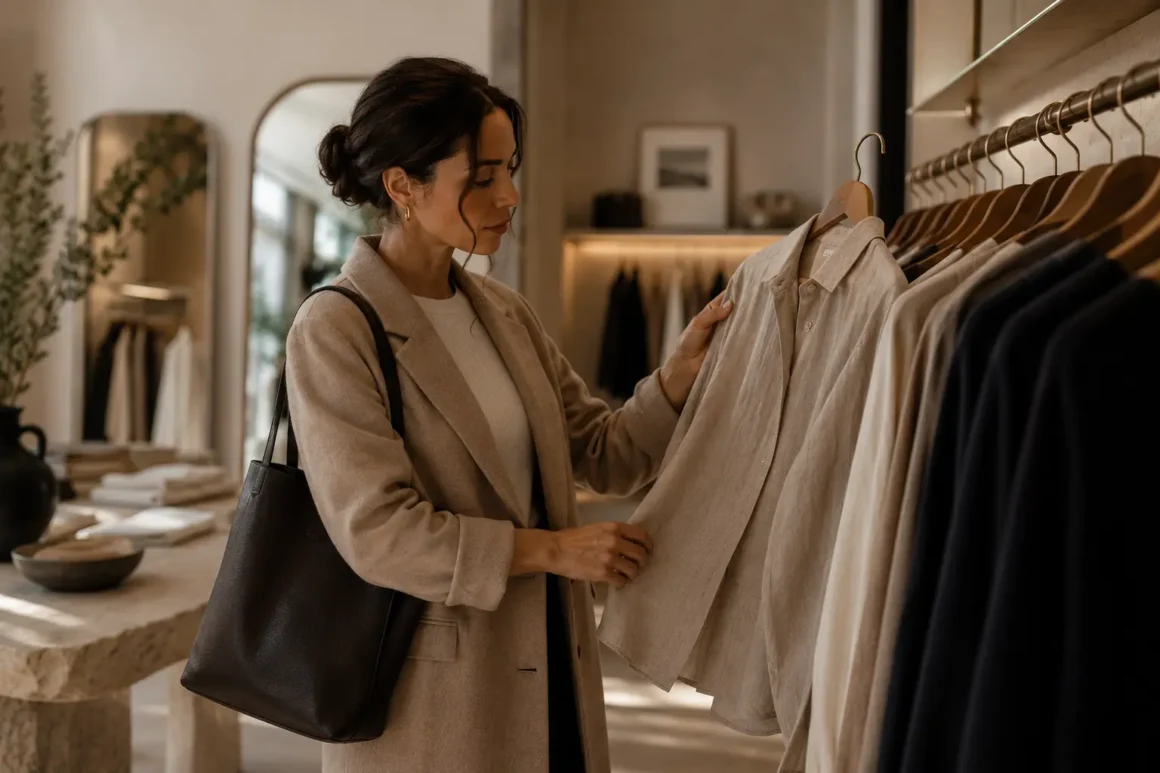
Buy From the Wishlist, Not the Sale
Sales have a remarkable way of making every purchase feel like an opportunity.
Whether it’s the Nordstrom Anniversary Sale, Prime Day, Black Friday, or an end-of-season clearance, the message is always the same:
Buy it now, before the opportunity disappears.
There’s nothing inherently wrong with shopping a sale. In fact, some of my favorite purchases have been made at a discount.
The difference is that the decision was made long before the sale began.
When I shop from my wishlist instead of the sale itself, the discount becomes a bonus—not the reason for the purchase.
That simple shift changes everything.
Instead of asking, “What should I buy while it’s on sale?” I begin asking, “Has something I’ve already decided belongs in my wardrobe become available at a better price?”
Those are very different questions.
The first allows the sale to shape your wardrobe.
The second allows your wardrobe to shape the sale.
That distinction has saved me from countless purchases I almost certainly would have regretted. It has also made it much easier to recognize the sales that truly matter. If something has remained on my wishlist for weeks or months, I already know why I wanted it. The reduced price simply makes a thoughtful decision a little easier to act on.
Occasionally, something on my wishlist sells out before I decide.
That can be disappointing.
But I’ve learned not to mistake disappointment for evidence that I should have bought it sooner. Sometimes the right conclusion is simply that it wasn’t meant to become part of my wardrobe—and that’s perfectly acceptable.
A sale will always create another opportunity.
A thoughtful wardrobe is built one considered decision at a time.
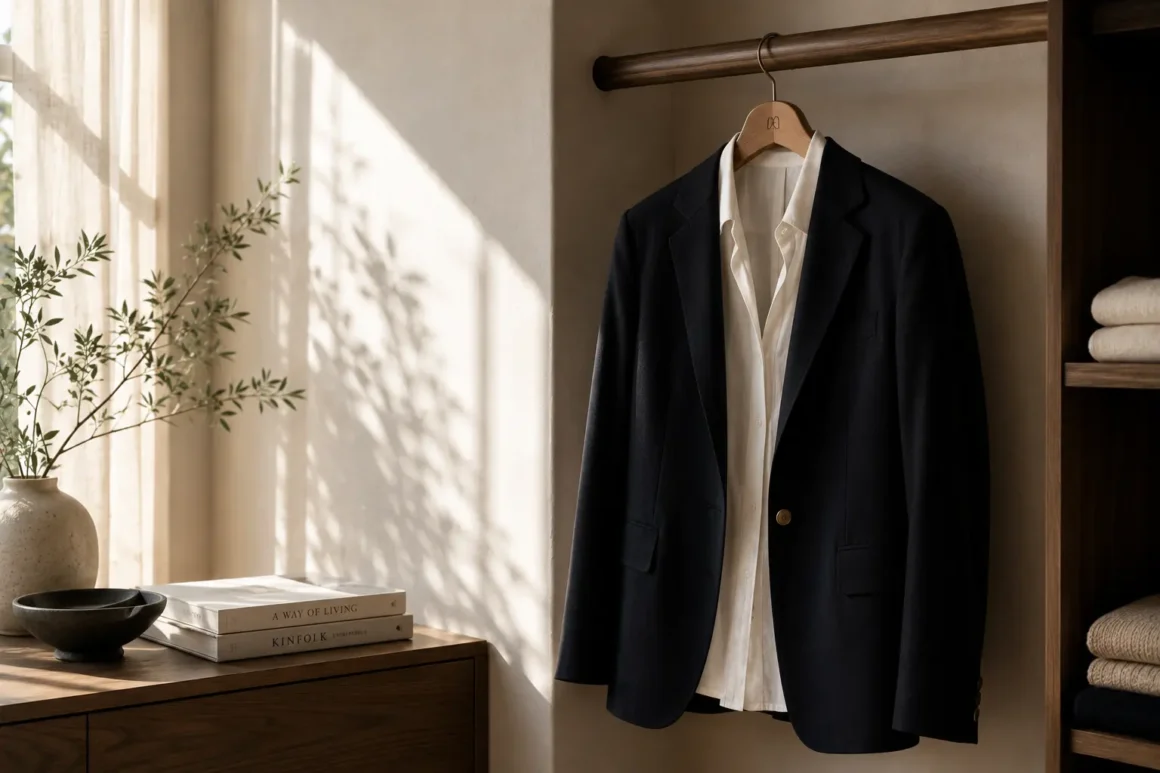
The Best Purchases Rarely Feel Urgent
I’ve come to believe that the best purchases rarely arrive with a countdown timer.
They aren’t the pieces I rush to buy because inventory is low or because today happens to be the final day of a sale. More often, they’re the ones that have quietly remained on my wishlist long after the excitement of discovering them has faded.
Time doesn’t diminish the right purchase.
It strengthens it.
If an item continues to feel useful after weeks or even months, there’s a good chance it belongs in the wardrobe you’re intentionally building. If it quietly disappears from your mind, you’ve learned something just as valuable—without spending anything at all.
Perhaps that’s the greatest gift a wishlist offers.
It reminds us that deciding not to buy something is just as meaningful as deciding to buy it.
A thoughtful wardrobe isn’t built by reacting to every opportunity. It’s built by recognizing the few opportunities that continue to feel right long after the urgency has passed.
The next time you find something beautiful, resist the temptation to ask, “Should I buy this today?”
Instead, try asking a different question:
“Will I still hope this is waiting for me a month from now?”
The answer may tell you everything you need to know.
The best purchases aren’t made in moments of urgency. They’re made after moments of clarity.
Frequently Asked Questions
Shopping with a Wishlist
Why is a wishlist better than a shopping cart?
A wishlist creates distance between discovery and purchase. Instead of encouraging an immediate decision, it gives you time to reflect, compare options, and decide whether an item truly belongs in your wardrobe. That pause often leads to fewer impulse purchases and more satisfying long-term decisions.
How long should something stay on my wishlist before I buy it?
There isn’t a perfect timeline. The goal isn’t to wait a specific number of days but to allow the initial excitement to settle. If you continue returning to the same item after weeks or even months, it’s more likely to reflect a genuine wardrobe need rather than a passing impulse.
Should I only buy clothes when they’re on sale?
A sale should make a thoughtful purchase less expensive—not make the decision for you. When you buy from your wishlist instead of shopping the sale itself, the discount becomes a bonus rather than the reason for the purchase.
Can a wishlist help reduce impulse buying?
Yes. Moving an item to a wishlist creates space between wanting something and buying it. Over time, many items naturally lose their appeal, while the ones that continue to feel right often become your best purchases.
What if something on my wishlist sells out?
It can be disappointing, but a sold-out item doesn’t automatically mean you should have bought it sooner. Sometimes scarcity creates urgency that wasn’t there before. If a piece truly belongs in your wardrobe, another opportunity—or an even better alternative—will often come along.
How do I know if an item fills a genuine wardrobe gap?
A genuine wardrobe gap makes getting dressed easier. It solves a recurring problem, completes multiple outfits, or replaces something that no longer serves you. If an item only feels exciting because it’s new or discounted, it may be responding to a craving rather than a true need. Giving yourself time to revisit it—and asking whether it improves the wardrobe you already own—often makes the answer much clearer.
Where This Leads
Thoughtful shopping is only the beginning.
A wishlist creates space to make better decisions. These next resources explore how those decisions become a more intentional wardrobe—one thoughtful purchase at a time.
Purchase Pause Journal
Turn thoughtful reflection into a repeatable shopping process with guided prompts designed to help you distinguish genuine wardrobe needs from impulse purchases.
Explore the Journal →The Confidence of Enough
Discover why confidence grows through familiarity—not constant novelty—and how enough can become one of the greatest luxuries in your wardrobe.
Read the Essay →How to Build a Quiet Luxury Wardrobe from Scratch
Learn how thoughtful decisions accumulate into a wardrobe built on quality, versatility, and pieces you’ll genuinely enjoy wearing for years.
Build Your Wardrobe →
