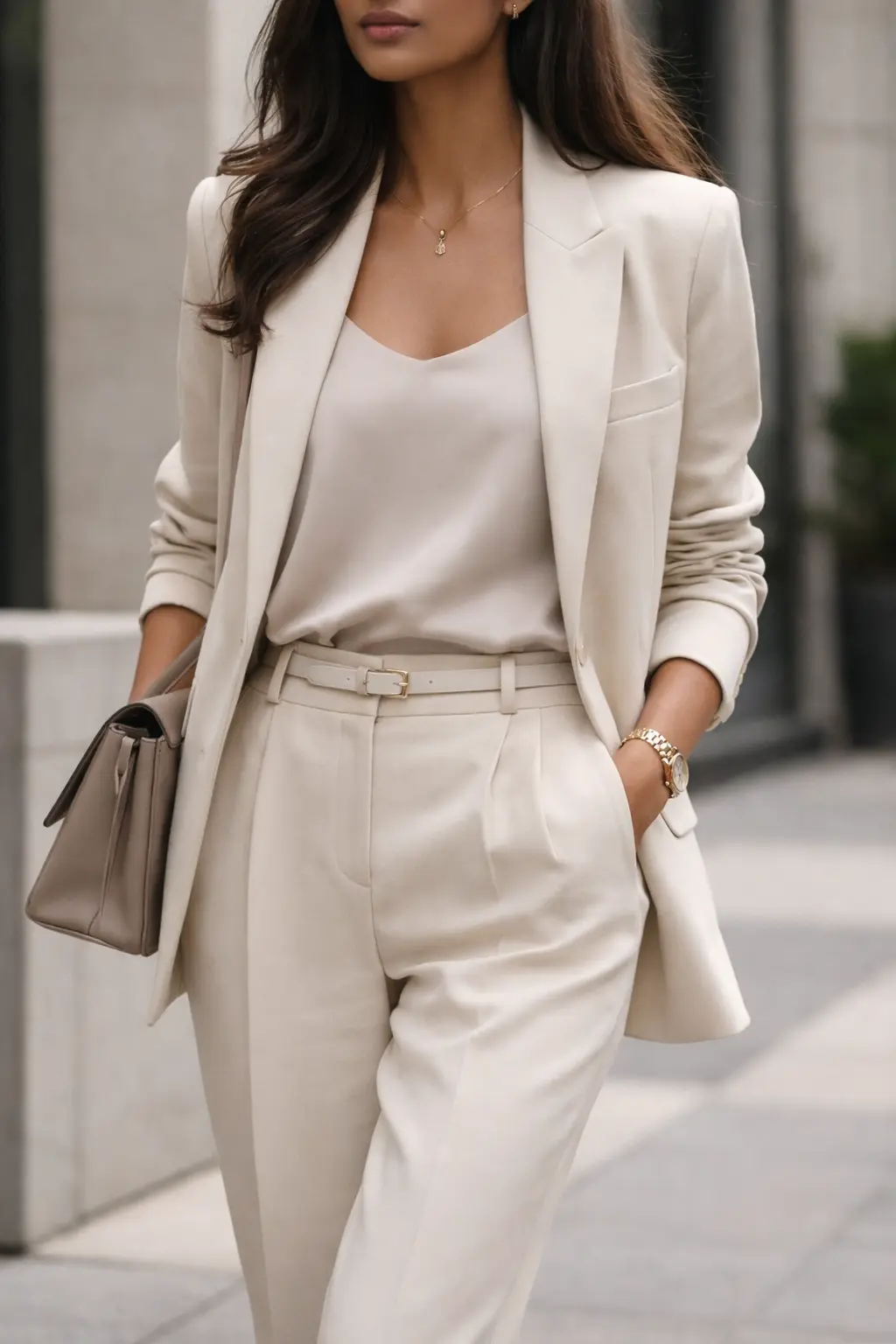
Some clothing reads as elevated the moment you see it.
Not because of branding—but because of how it holds itself.
The difference is often subtle, but consistent.
Why some clothes look expensive has less to do with price, and more to do with how fabric, structure, and proportion work together. These signals are rarely obvious, but they are immediately felt.
Once you begin to recognize them, it becomes easier to understand what creates a more refined, considered wardrobe—and what quietly works against it.
5 Details That Make Clothes Look Expensive
When people describe clothing as looking “expensive,” they’re usually responding to a handful of consistent visual signals—not the price tag. These details work together to create a sense of ease, cohesion, and refinement that feels intentional rather than attention-seeking.
1. Structure
Clothes that hold their shape without feeling rigid create quiet confidence. Clean shoulders, defined lines, and garments that maintain their silhouette communicate intention rather than excess.
2. Fabric
Fabric influences how clothing catches light, moves with the body, and ages over time. Materials with natural drape, depth, and substance often appear more refined, regardless of their price.
3. Fit
Expensive-looking clothing rarely appears overly tight or oversized. Instead, it follows the body comfortably, requiring little adjustment throughout the day.
4. Proportion
Refinement comes from balance. The relationship between jacket length, trouser rise, sleeve length, and overall silhouette creates harmony that people notice instinctively.
5. Ease
Perhaps the quietest signal of all is ease. Clothes that allow you to move naturally—and that don’t require constant pulling, smoothing, or correcting—often read as more luxurious than pieces that demand attention.
What Actually Makes Clothes Look Expensive
Clothing does not signal cost directly.
It signals cohesion.
Pieces that read as expensive tend to share a certain clarity.
In many cases, what people interpret as “expensive” is actually a collection of quieter visual signals—proportion, texture, structure, restraint, and care working together subtly over time.
Nothing feels forced. Nothing feels excessive.
This creates a sense of ease that is often mistaken for cost—but is more accurately a reflection of alignment.
Not attention—but assurance.
How Fabric Affects Whether Clothes Look Expensive
Fabric is often the first thing the eye registers, even if it’s not immediately named.
Materials that drape well, hold their shape, and reflect light softly tend to read as more refined. The surface appears smoother, the movement more natural, and the overall impression more considered.
This is why two pieces in the same color and cut can feel entirely different—one slightly flat, the other quietly elevated.
Understanding how fabric behaves is what allows you to recognize this difference more clearly. It’s less about the label, and more about how the material interacts with the body and light over time.
At its core, this comes down to how fabric drapes—how it falls, moves, and holds its line in motion.
Fabric quality is not determined by fiber name alone. Weight, drape, texture, opacity, and finish all affect how a garment reads. For a deeper look, see What Makes Clothes Look Expensive? Fabric, Drape, and Finish.
Why Structure Makes Clothes Look More Refined
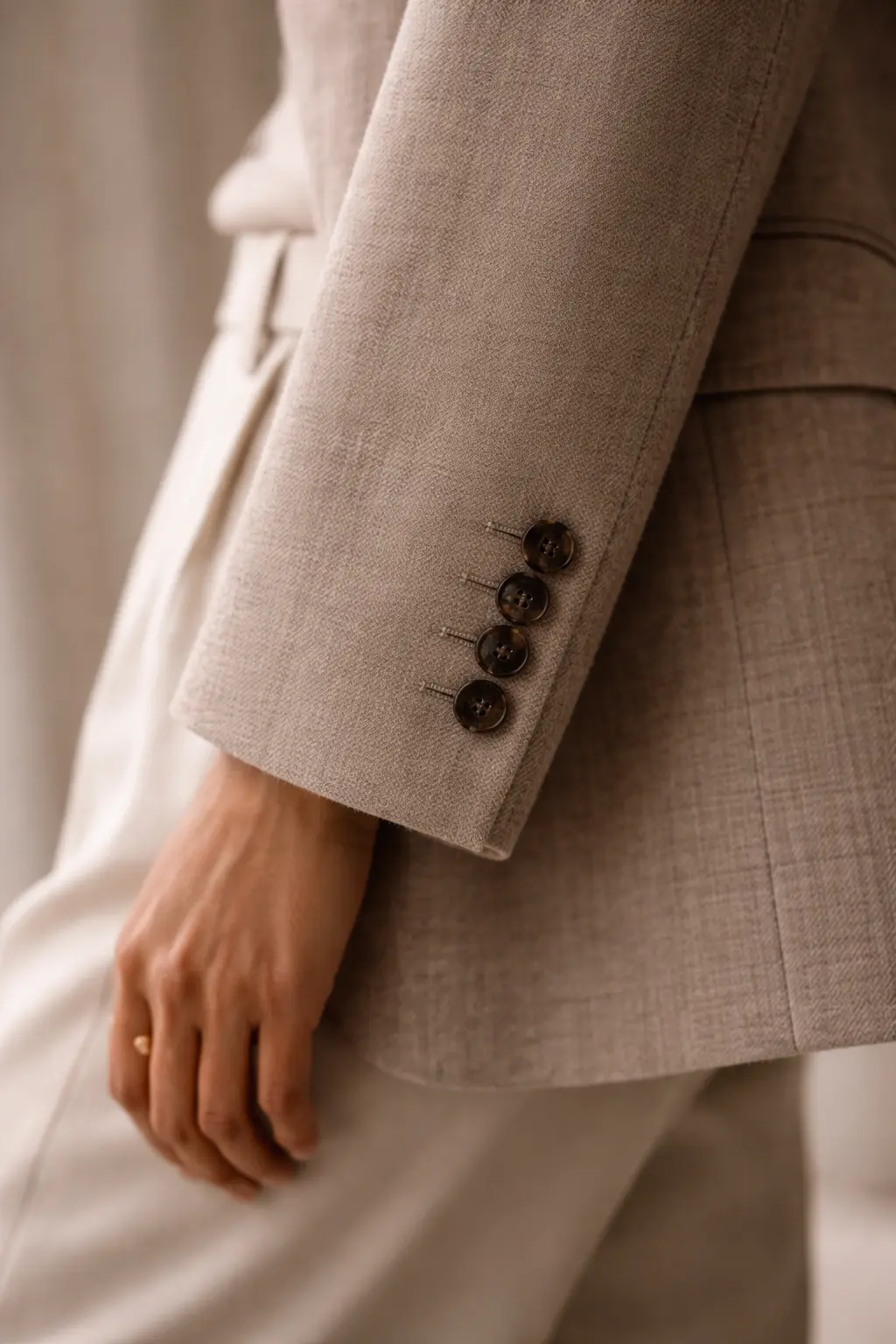
Structure defines how clothing sits on the body.
A piece that holds its line—without pulling, collapsing, or shifting—immediately reads as more refined. The shape is clear. The intention is visible.
Often, even one structured element—a blazer, coat, trouser, or bag—is enough to anchor softer pieces and make an outfit feel more resolved.
This does not require stiffness. In fact, the most effective structure allows for movement while maintaining form.
This is where many wardrobes begin to shift.
Not through more pieces—but through better ones.
Understanding how to dress with authority often begins here—through pieces that create clarity without feeling rigid.
How Proportion Changes the Way an Outfit Reads
Proportion is rarely discussed, but always perceived.
The relationship between length, width, and volume determines how an outfit reads at a glance. When these elements are balanced, the result feels calm and intentional.
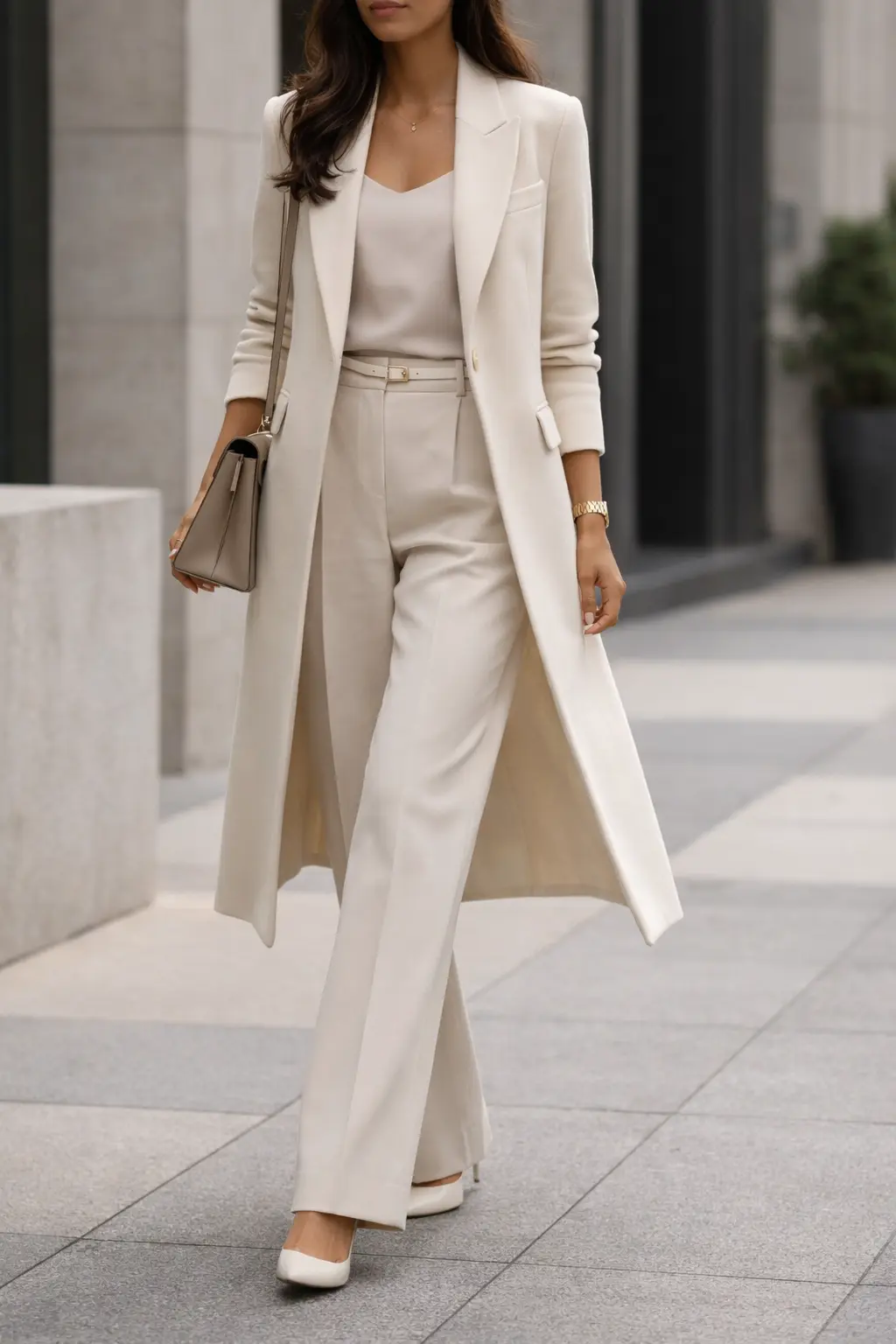
When they are not, something feels slightly off—even if each individual piece is well-made.
A longer line through the leg.
A cleaner break at the waist.
A sleeve that ends at exactly the right point.
These adjustments are often subtle, but they change everything.
Why Movement Makes Outfits Look Polished Instead of Stiff
Clothing that looks expensive rarely feels rigid.
The most refined outfits usually maintain some degree of movement and ease—polished enough to feel intentional, but relaxed enough to avoid looking overly rigid or formal.
This movement is the result of fabric, cut, and construction. The way a garment moves as you walk, sit, or reach becomes part of how it is perceived.
Professional style doesn’t have to feel stiff.
However, this is where many “polished” outfits fall short.
They achieve structure, but lose ease.
The result is something that looks correct, but feels uncomfortable—and that tension becomes visible.
The balance is not between casual and formal.
It is between structure and movement.
A quieter way to build your wardrobe
If you’re rethinking how your clothing fits, moves, and comes together, start with fewer pieces—chosen more intentionally.
The Quiet Luxury Capsule outlines 10 essential pieces that repeat well, layer easily, and create a more polished foundation.
A quiet monthly note. Unsubscribe anytime.
Why Small Fit Issues Can Make Clothes Look Less Refined
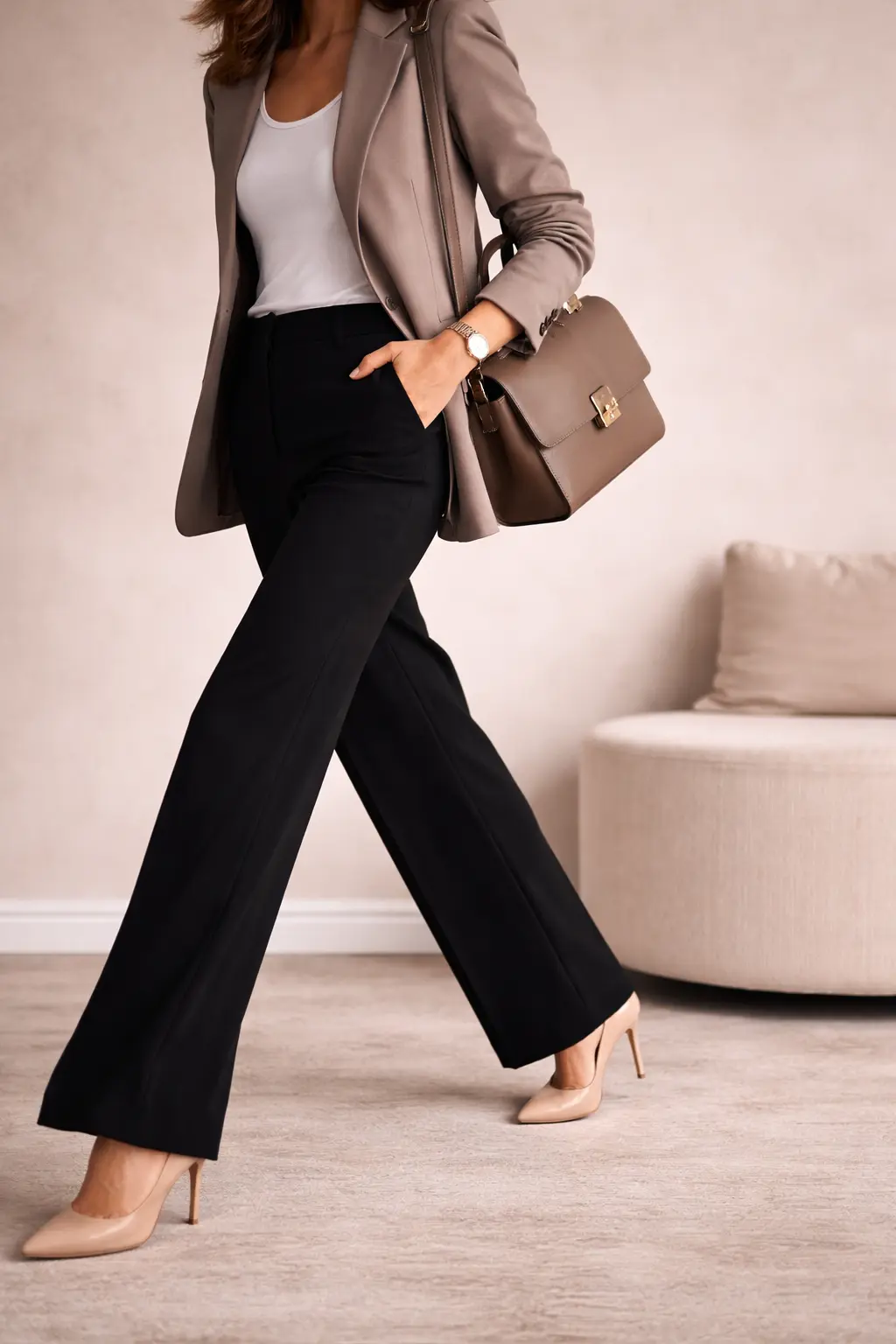
What often makes clothing read as expensive is not what is added—but what is removed.
Nothing interrupts the line of the outfit.
There is no pulling at the waist, no tension across the shoulder, no fabric that resists movement. Each piece sits as it should, without needing to be adjusted or corrected.
This absence is subtle, but it changes how everything is perceived.
The eye moves easily.
Nothing competes.
Nothing distracts.
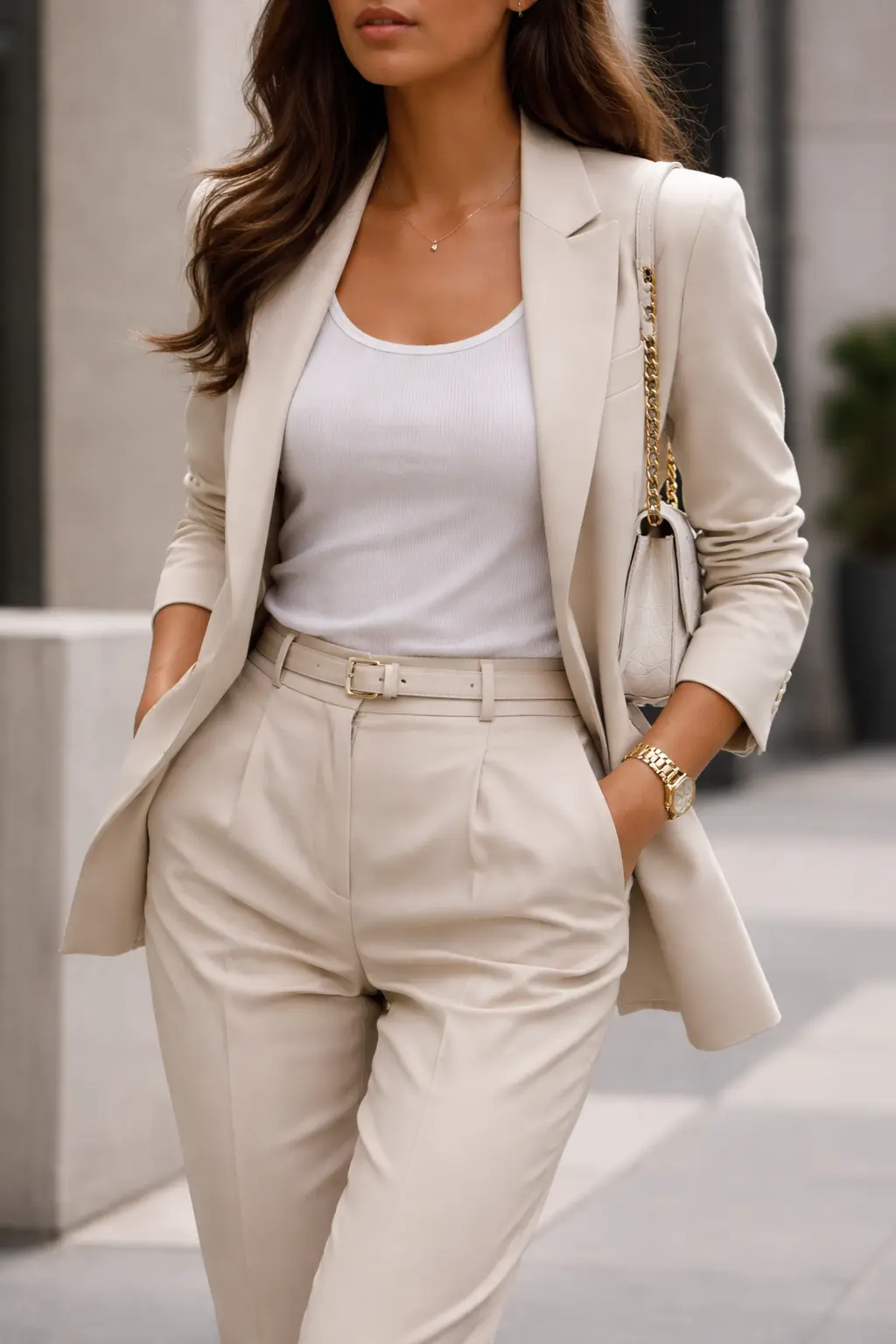
Even small disruptions—slight tightness, excess volume, a break in proportion—can shift an outfit from feeling considered to unsettled.
This is why refinement is not always about replacing a piece, but about recognizing what is quietly working against it.
When those interruptions are removed, the result is not perfection.
It is continuity.
How to Choose Clothes That Look More Refined
Once you begin to recognize these signals, the focus starts to shift.
These details begin to shape the pieces you return to most often—the quiet luxury wardrobe essentials that continue to feel polished without relying on trend or excess.
The question is no longer what looks expensive—but what actually works.
You begin to notice which pieces hold their shape, which fabrics move naturally, and which proportions feel balanced without effort. Certain combinations repeat easily. Others begin to feel unnecessary.
This is where a wardrobe starts to refine itself.
Not through adding more, but through choosing more carefully.
Not through replacing everything, but through understanding what is already there.
Over time, the distinction becomes clearer.
What reads as elevated is no longer accidental.
It is consistent.
Why Some Clothes Look Expensive — FAQs
What makes clothes look expensive?
Clothing tends to look expensive when fabric, structure, and proportion work together. Pieces that hold their shape, move naturally, and require little adjustment create a sense of ease that reads as refined.
It is less about price and more about how everything aligns.
How can I make my outfits look more expensive?
Focus on improving a few key elements rather than replacing everything. A well-cut structured piece, a reliable foundation item, and a refined pair of shoes can shift how an entire outfit reads.
For a more complete approach, see Quiet Luxury Wardrobe Essentials.
What fabrics look the most refined?
Fabrics that drape well, maintain their shape, and reflect light softly tend to feel more elevated. This includes certain wools, cottons, and blends that move naturally rather than appearing stiff or flat.
Understanding how a fabric behaves is often more important than the material itself.
Why do some outfits look stiff instead of polished?
Stiffness usually comes from a lack of movement. When fabric is too rigid or the fit is too exact, the outfit resists motion, creating visible tension.
The balance between structure and ease is what allows clothing to feel polished without appearing forced.
Can affordable clothes look expensive?
Yes. When fit, fabric, and proportion are considered, clothing at many price points can read as refined.
The key is selecting pieces that work well together and avoiding details that disrupt the overall line of the outfit.
Once you can see it, you begin to choose differently.
Recognizing what makes clothing feel refined changes how you approach everything else. You begin to notice which pieces hold their shape, which fabrics move well, and which details create quiet continuity. These pieces explore how that awareness translates into a more considered wardrobe.

