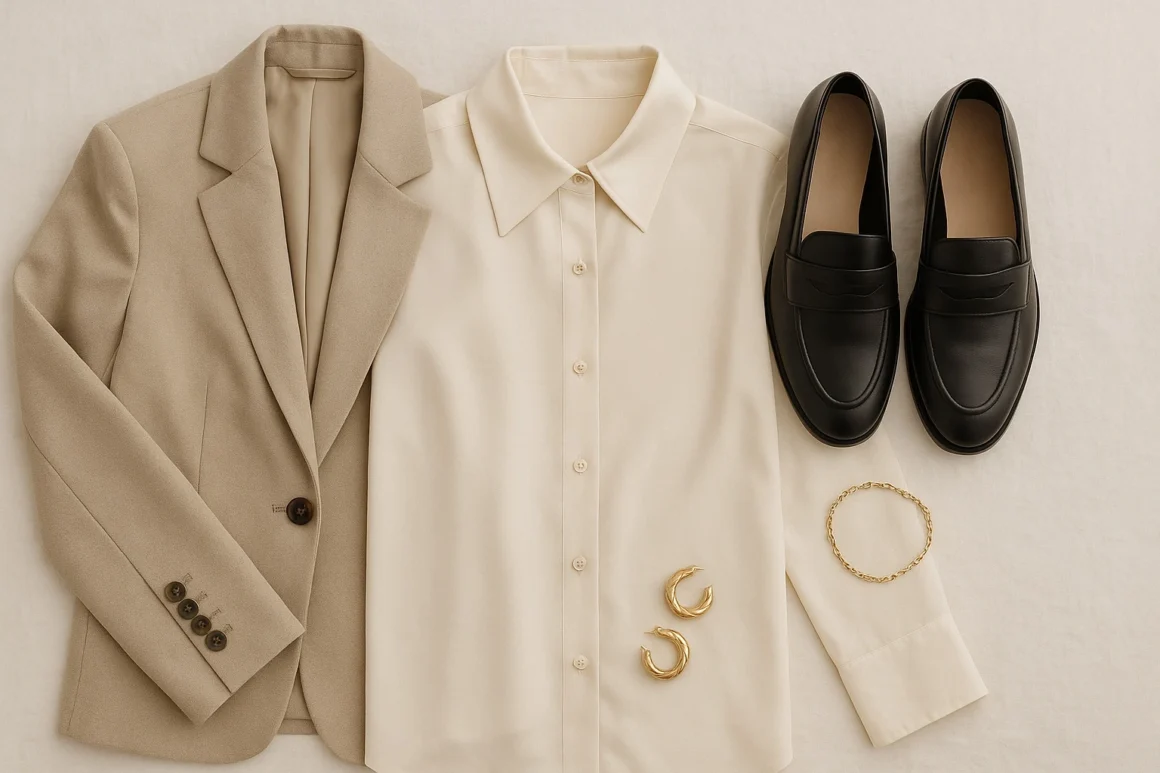
The modern professional’s capsule wardrobe is less about owning the “right” number of pieces and more about building a calm framework: a wardrobe that moves easily between work, travel, dinners, and everyday life without requiring a complete shift in identity.
A capsule wardrobe is not simply minimalism with better tailoring. At its best, it creates visual clarity — a quieter way of dressing built around repetition, versatility, and ease. Instead of chasing constant novelty, the modern professional’s capsule prioritizes pieces that layer well, hold their shape, and continue to feel relevant long after a season ends.
For many professionals, getting dressed has become another form of decision fatigue. Trend cycles move faster, wardrobes grow larger, and yet daily dressing often feels more complicated rather than less. A refined capsule wardrobe reduces that friction. Fewer, better pieces create more consistency, more flexibility, and often more confidence.
The modern professional capsule wardrobe functions less like a rulebook and more like a system — a small collection of interchangeable pieces designed to work across meetings, commuting, travel, weekends, and transitional seasons. Its structure is practical, but its effect is emotional: a sense of calm, clarity, and quiet preparedness.
At the center of this approach is the idea of quiet luxury — clothing chosen not for obvious status, but for proportion, texture, longevity, and ease of wear. The goal is not to appear overly styled or minimalist for its own sake, but to create a wardrobe that feels polished, cohesive, and easy to return to repeatedly.
Below, we’ll break down the 12 essential pieces that form the foundation of a modern professional capsule wardrobe, along with the textures, silhouettes, and styling principles that make it feel elevated over time.
What Makes a Modern Professional Capsule Wardrobe Feel Refined?
A modern professional capsule wardrobe feels refined not because it is perfectly minimal, but because every piece relates naturally to the others.
The goal is not simply to own fewer clothes. It is to create enough cohesion that getting dressed becomes easier, more versatile, and more consistent across work, travel, dinners, weekends, and everyday life.
In practice, most refined capsule wardrobes rely on a relatively small foundation — often around 10 to 15 core pieces — built around tailoring, texture, repetition, and understated versatility rather than constant novelty.
That foundation usually includes:
- tailored trousers
- relaxed blazers
- elevated knitwear
- structured outerwear
- versatile dresses
- understated leather shoes
- and a structured everyday bag
But the refinement rarely comes from the individual pieces alone.
It comes from how they work together.
A quiet luxury capsule wardrobe often feels cohesive because the silhouettes repeat naturally. Tones remain balanced rather than overly contrasting. Fabrics develop depth through texture rather than excessive pattern or trend-driven styling. Wool beside silk. Soft cotton beneath tailoring. Cream layered with camel, charcoal, navy, black, or soft white.
The wardrobe begins to function more like a system than a collection of separate outfits.
This is especially important for modern professionals, whose wardrobes often need to move easily between office settings, commuting, remote work, travel, dinners, and everyday wear without requiring an entirely different identity for each setting.
Refined professional dressing also depends heavily on restraint.
Instead of relying on obvious branding or statement pieces, quiet luxury wardrobes tend to emphasize:
- clean lines
- proportion
- tonal dressing
- quality fabrics
- subtle accessories
- and consistency over time
A structured leather tote, polished loafers, a wool coat that returns every winter, knitwear that softens with wear — these details create continuity throughout the wardrobe and allow outfits to feel intentional without appearing overly styled.
This is often why capsule wardrobes feel calmer over time rather than more limiting.
Once the visual language becomes clear, repetition begins to feel less repetitive. Outfits become easier to build because the pieces already belong together. The wardrobe starts to feel reliable — not rigid, but settled.
And that reliability is often what gives quiet luxury its sense of refinement in everyday life.
The 12 Essential Pieces in a Modern Professional Capsule Wardrobe
A modern professional capsule wardrobe works best when every piece can move across multiple settings—workdays, travel, dinners, weekends, and transitional seasons. Instead of focusing on trend cycles, these pieces prioritize structure, versatility, and longevity.
The goal is not strict minimalism, but a wardrobe that feels cohesive, repeatable and easier to wear over time.
The 12 foundational pieces
- Tailored black or charcoal trousers
- Relaxed neutral blazer
- Crisp white button-down shirt
- Silk or fluid blouse
- Fine-knit cashmere sweater
- Elevated knit tee or structured T-shirt
- Dark straight-leg denim
- Knit dress or column dress
- Wool coat
- Classic trench coat
- Minimal leather flats or loafers
- Structured everyday bag
If cashmere is one of your investment knits, this guide to choosing cashmere explains what is actually worth paying for.
For a more detailed breakdown of how these pieces work together, see the full guide to the 12-piece quiet luxury capsule wardrobe.
If you’re still refining which pieces deserve a place in a quieter wardrobe overall, this guide to what defines a quiet luxury wardrobe breaks down silhouettes, fabrics, and essentials that create the foundation of the aesthetic.
5 Quiet Luxury Outfit Formulas for Modern Professionals
A refined capsule wardrobe works best when outfits feel adaptable rather than overly styled.
Instead of relying on constant novelty, quiet luxury dressing often depends on a handful of repeatable formulas — combinations built around proportion, texture, layering, and ease of wear. The goal is not to wear the exact same outfit repeatedly, but to create enough cohesion that getting dressed feels intuitive across work, travel, dinners, and everyday life.
1. Tailored Trousers + Fine Knit + Loafers
This is often the foundation of a modern professional capsule wardrobe.
A relaxed trouser paired with fine knitwear creates structure without feeling overly formal, while loafers or understated leather flats keep the silhouette grounded and versatile.
The refinement comes from balance:
- soft knitwear against sharper tailoring
- clean lines without rigidity
- restrained accessories
- tonal layering rather than strong contrast
Camel, charcoal, navy, cream, or black tend to work especially well here because the outfit relies more on texture and proportion than statement color.
2. Relaxed Blazer + Crisp Shirt + Straight-Leg Denim
This formula works because it moves easily between professional and off-duty settings.
A relaxed blazer sharpens denim without making it feel corporate, while a crisp white or soft neutral shirt creates clarity beneath the structure of tailoring.
The key is restraint:
- clean denim without heavy distressing
- understated leather accessories
- relaxed but intentional proportions
- minimal hardware
A structured tote or polished loafers often complete the outfit more effectively than trend-driven accessories would.
3. Column Dress + Trench Coat + Minimal Flats
For many professionals, this becomes one of the easiest formulas to repeat throughout transitional seasons.
A column or knit dress creates simplicity through silhouette, while a trench coat introduces movement and layering without disrupting the overall calm of the outfit.
The effect feels refined because the pieces remain visually quiet:
- soft tailoring
- tonal dressing
- fluid fabrics
- understated accessories
This combination works especially well in soft neutrals, navy, black, stone, or chocolate brown.
4. Tonal Knitwear + Tailored Outerwear
One of the simplest ways to make repeated outfits feel elevated is through tonal dressing.
Cream beside oatmeal. Charcoal layered with black. Navy softened with stone or soft white.
When knitwear and outerwear remain within the same tonal family, the wardrobe begins to feel more cohesive and less dependent on obvious styling. Texture becomes the source of variation:
- brushed wool
- cashmere
- matte cotton
- smooth leather
- soft tailoring
This is often what allows quiet luxury wardrobes to feel layered rather than minimal in a stark or severe way.
5. Silk Blouse + Relaxed Blazer + Structured Trousers
This formula works particularly well for dinners, meetings, events, or professional settings that require more polish without feeling overly formal.
A silk or fluid blouse softens tailoring naturally, while relaxed structure prevents the outfit from feeling rigid or overly corporate.
The refinement comes from proportion and movement:
- fluid fabric beneath structure
- restrained jewelry
- clean shoes
- understated accessories
- continuity in tone
Over time, these kinds of formulas become less about fashion and more about reliability — combinations that continue to feel polished because the pieces already belong to the same visual language.
And that is often what defines a quiet luxury wardrobe in practice: not endless variety, but enough cohesion that repetition begins to feel effortless rather than repetitive.
A quieter way to build your wardrobe
If you’re rethinking how your clothing fits, moves, and comes together, start with fewer pieces—chosen more intentionally.
The Quiet Luxury Capsule outlines 10 essential pieces that repeat well, layer easily, and create a more polished foundation.
A quiet monthly note. Unsubscribe anytime.
A Quiet Luxury Color Palette for a Modern Professional Capsule Wardrobe
A refined capsule wardrobe usually begins with color before it begins with quantity.
Not because every piece must match perfectly, but because a consistent palette allows clothing to layer, repeat, and move together more naturally over time.
In quieter wardrobes especially, color often replaces what trend-driven styling or heavy pattern would do elsewhere. The interest comes less from contrast and more from depth, texture, proportion, and tonal variation.
For most modern professional capsule wardrobes, the foundation tends to revolve around restrained neutrals:
- soft white
- cream
- camel
- oatmeal
- taupe
- charcoal
- navy
- black
- stone
- chocolate brown
These tones create flexibility without feeling overly sharp or overly casual. They allow tailoring, knitwear, outerwear, shoes, and accessories to combine easily across professional and everyday settings without requiring constant adjustment.
Why tonal palettes feel more refined
A tonal wardrobe creates continuity.
Cream layered beside camel. Charcoal beside black. Navy softened with stone or soft white. The visual effect feels calmer because the eye moves gradually rather than abruptly between colors.
This is often why quiet luxury wardrobes appear polished even when the silhouettes themselves remain relatively simple.
Instead of relying on obvious statement pieces, visual interest develops through:
- texture
- layering
- fabric weight
- proportion
- and subtle shifts in tone
A brushed wool coat beside smooth leather. Silk against matte knitwear. Crisp cotton layered beneath soft cashmere. These combinations create dimension without requiring excessive color or ornamentation.
Choosing colors for professional dressing
For modern professionals specifically, restrained palettes also increase versatility.
A neutral blazer works across meetings, travel, dinners, and weekends. Tailored trousers repeat more naturally when they coordinate with multiple knitwear tones. Outerwear feels easier to wear daily when it supports the wardrobe rather than competing with it.
This does not mean a wardrobe must become colorless.
Muted olive, deep burgundy, soft blue, espresso, or warm rust can all function beautifully within a quiet luxury wardrobe when used intentionally and repeated consistently. The goal is not strict minimalism, but visual cohesion.
What often makes a capsule wardrobe feel elevated is not the absence of color, but the absence of visual noise.
Over time, these quieter palettes allow repetition to feel more instinctive and less repetitive. Outfits become easier to build because the colors already belong to the same visual language — one shaped less by trend cycles and more by clarity, restraint, and ease of wear.
Why Capsule Wardrobes Work So Well for Modern Professionals
For many professionals, getting dressed no longer feels simple — even when the wardrobe itself is full.
The modern workday asks clothing to move across multiple settings: meetings, commuting, travel, dinners, remote work, and last-minute plans. In response, wardrobes often expand, yet somehow become harder to use. More options create more hesitation. More categories create more friction.
A capsule wardrobe works differently.
Instead of relying on constant variety, it relies on consistency — a smaller collection of pieces designed to work naturally together across different parts of daily life. The goal is not to wear the same outfit every day, but to create enough cohesion that getting dressed requires less effort and less second-guessing.
This becomes especially valuable for modern professionals, whose wardrobes often need to communicate competence, ease, and adaptability at the same time. When the foundation is clear, clothing begins to support the day rather than interrupt it.
A quieter wardrobe also reduces a form of decision fatigue that often goes unnoticed. When silhouettes, colors, and textures already relate to one another, fewer mental adjustments are required each morning. Outfits become easier to build because the pieces already belong to the same visual language.
Over time, repetition begins to feel less limiting and more stabilizing.
The same trousers worn with knitwear one day and a blazer the next.
A coat that works equally well over tailoring, denim, or a simple dress.
Shoes that move easily between professional and off-duty settings without feeling overly formal or overly casual.
This is where a modern professional capsule wardrobe becomes more than organization. It becomes a system of reliability — one that creates clarity not only in how a wardrobe looks, but in how it functions daily. If you’re still building that foundation, this guide on how to build a quiet luxury wardrobe from scratch walks through the process of simplifying and refining what you already own.
And that reliability is often what makes quiet luxury feel different. The refinement comes not from excess, but from the quiet confidence of knowing the wardrobe already works.
How to Repeat Outfits Without Looking Repetitive
One of the biggest misconceptions about a capsule wardrobe is that fewer pieces automatically lead to boredom.
In practice, the opposite is often true.
When a wardrobe is cohesive, repetition becomes less noticeable because the focus shifts away from novelty and toward balance, proportion, and ease. The goal is not to create endless variation, but to build enough consistency that getting dressed feels intuitive rather than negotiated every morning.
This is especially true in professional dressing, where visual consistency often communicates more confidence than constant change.
A tailored trouser worn with knitwear one day and a blazer the next.
A coat layered over tailoring during the week, then over denim or a simple dress on the weekend.
The same silhouette repeated through different textures, proportions, or layers.
These small shifts create variation without disrupting the overall calm of the wardrobe.
Tonal dressing is one of the simplest ways to make repeated outfits feel elevated. Variations of cream, camel, charcoal, navy, or soft white create depth even when the shapes remain familiar. Instead of relying on contrast or statement pieces, the wardrobe develops interest through texture, layering, and subtle changes in tone.
Silhouette repetition creates a similar effect. When trousers, outerwear, knitwear, and shoes share a consistent visual language — relaxed but structured, fluid but intentional — outfits feel cohesive even when combinations repeat throughout the week.
Texture also plays an important role. Wool, cashmere, silk, linen, brushed cotton, and soft leather each reflect light and movement differently, allowing quieter wardrobes to feel layered rather than flat. This is often what makes a capsule wardrobe feel refined over time rather than overly minimal.
Layering further softens repetition. A blazer worn over a fine knit creates a different impression than the same blazer worn over crisp shirting. Small adjustments — jewelry, scarves, belts, watches, or shoe rotation — subtly shift familiar combinations without requiring an entirely separate wardrobe.
Over time, repetition stops feeling restrictive and starts to feel reliable.
The wardrobe becomes easier to trust because the pieces already work together. Outfits require less effort, mornings become quieter, and getting dressed begins to feel more instinctive than performative.
If you’re building that kind of foundation, The Capsule Wardrobe Edit explores how repetition, professional dressing, wardrobe systems, and quiet luxury principles work together to create a more cohesive wardrobe.
The Small Details That Make a Capsule Wardrobe Feel Refined
A capsule wardrobe rarely feels refined because of quantity alone.
More often, the difference comes from smaller decisions — the details that shape how clothing fits, moves, layers, and settles into everyday life over time.
The details that elevate a capsule wardrobe
- Clean tailoring and balanced proportions
- Natural fabrics with visible texture and movement
- Tonal color palettes that layer easily
- Minimal hardware and understated accessories
- Structured shoes and bags that create continuity
- Repetition of silhouette rather than constant novelty
- Garments that soften and improve with wear
- Consistent care and maintenance
Fit is often the first thing people notice, even if they cannot immediately identify why a wardrobe feels polished.
A trouser hem that falls cleanly at the shoe. Sleeves that end naturally at the wrist. Shoulders that sit properly rather than pulling or collapsing. These adjustments create structure quietly, without drawing attention to themselves.
Fabric changes a wardrobe just as much.
Wool holds its shape differently than synthetic blends. Cashmere softens tailoring. Linen develops character with wear rather than appearing overly pristine. Silk reflects light differently than cotton. Even simple silhouettes begin to feel more elevated when the materials themselves carry depth and movement.
Color and proportion matter in similar ways.
Capsule wardrobes often feel calmer when tones relate naturally to one another — cream beside camel, charcoal beside black, soft white beside oatmeal, navy beside stone. Instead of relying on strong contrast or statement pieces, visual interest comes from tonal variation, layering, texture, and restraint.
Accessories tend to work the same way.
A structured leather tote, polished loafers, a classic watch, fine jewelry, or a silk scarf can subtly shift familiar outfits without disrupting the overall cohesion of the wardrobe. The goal is not to dominate the outfit, but to support it consistently across different settings and seasons.
Care also shapes how refinement is perceived.
Knitwear that maintains its shape, garments that are steamed rather than wrinkled, leather that is conditioned over time, and shoes that remain polished all contribute to the sense of ease associated with quiet luxury dressing. What often reads as “expensive” is less about excess and more about consistency, proportion, and attention to detail.
These quieter refinements become cumulative over time.
A wardrobe begins to feel less assembled and more settled — not perfectly curated, but cohesive, reliable, and easy to return to repeatedly. And that is often what allows a capsule wardrobe to feel elevated without becoming overly minimal or performative.
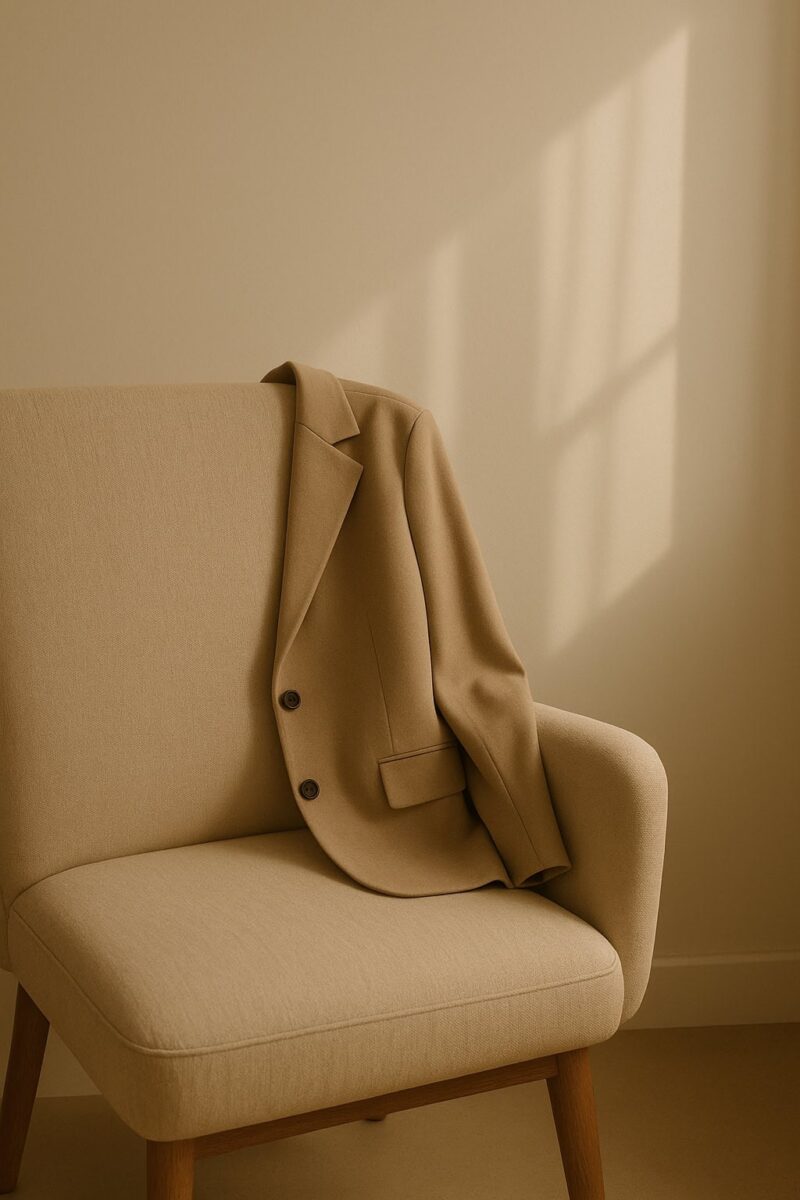
Building a Wardrobe That Feels Refined Over Time
A modern professional capsule wardrobe is not built through quantity alone. What gives it longevity is the relationship between structure, texture, repetition, and restraint — the quieter details that allow clothing to feel settled rather than simply styled.
Over time, refinement becomes less about adding newness and more about recognizing what consistently works. Certain silhouettes repeat naturally. Certain fabrics become easier to reach for. A wardrobe begins to develop its own rhythm — one shaped less by trend cycles and more by familiarity, clarity, and ease of wear.
This is often where quiet luxury is misunderstood.
Refinement is rarely created through obvious signals of expense or perfectly curated minimalism. More often, it emerges through consistency: balanced proportions, tactile fabrics, and combinations that continue to feel relevant without needing constant adjustment.
A refined wardrobe also becomes more personal over time. Not because it grows larger, but because the pieces become more integrated into daily life — worn often enough to feel reliable, expressive without becoming performative.
This is also why capsule wardrobes tend to feel easier with time rather than more limiting. Once the foundation is clear, repetition begins to create confidence. Outfits become more instinctive, mornings become quieter, and getting dressed requires less negotiation.
If you’re still refining the foundation itself, these quiet luxury wardrobe essentials help clarify which pieces tend to carry the most weight in a modern capsule wardrobe.
The sections below explore the elements that make a wardrobe feel elevated over time: structure, texture, and the understated details that allow clothing to feel calm, cohesive, and enduring.
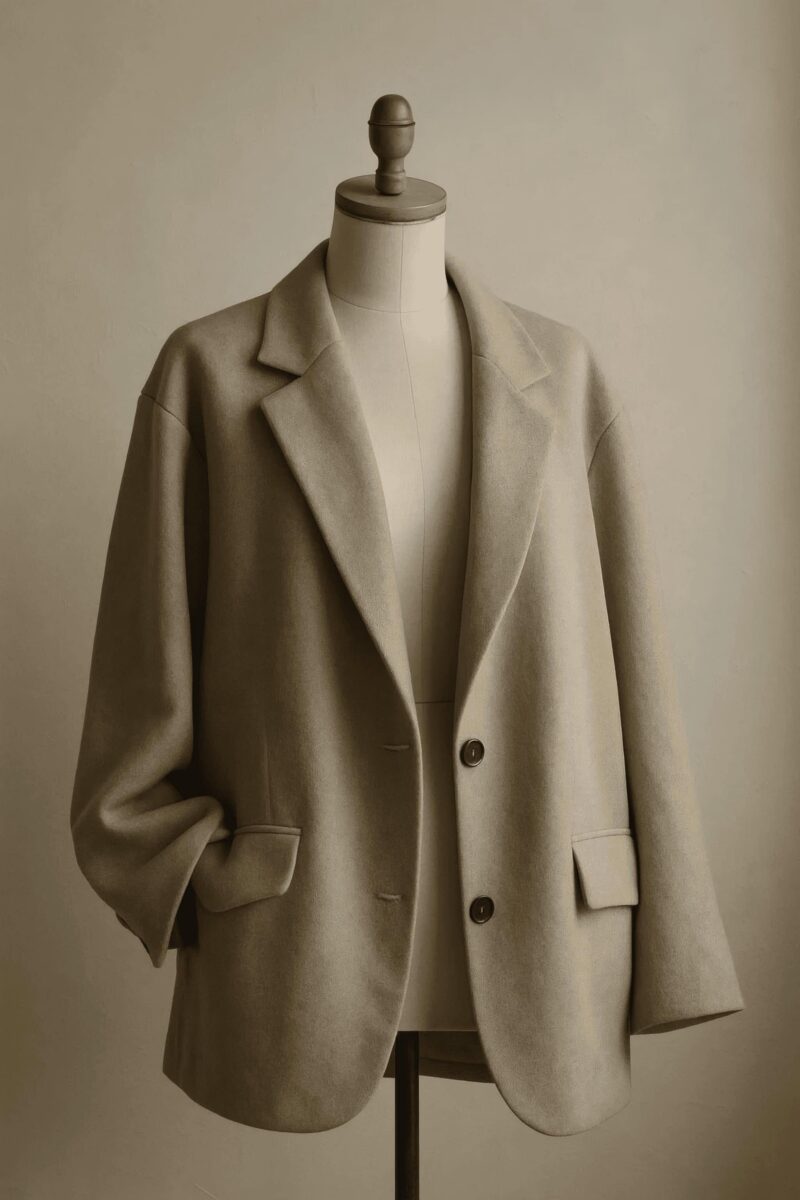
Foundations: The Architecture of Quiet Luxury
Every refined capsule wardrobe begins with structure.
These are the pieces that carry the most weight day after day — the garments that anchor the wardrobe and allow everything else to feel more cohesive around them. In a modern professional capsule wardrobe, foundations are less about statement pieces and more about reliability: silhouettes that hold their shape, layer easily, and continue to work across different settings and seasons.
The tailored trouser brings structure without rigidity. A neutral blazer sharpens the silhouette while still feeling adaptable enough for travel, dinners, or everyday wear. The crisp white shirt adds clarity and contrast, while a fluid blouse softens the wardrobe without disrupting its balance.
What makes these pieces effective is not simply their appearance, but how naturally they work together. When the foundation is consistent, outfits require less adjustment. Repetition becomes easier because the wardrobe already shares the same visual language.
This is often where a capsule wardrobe begins to feel different from a traditional closet. Instead of isolated outfits, you begin to build a smaller system of interchangeable pieces — one shaped by proportion, versatility, and ease rather than constant variety.
Over time, these foundations create what quiet luxury does best: a wardrobe that feels polished without feeling overly styled, intentional without appearing overly calculated. For a more detailed breakdown of how these pieces work together across professional and everyday settings, see the 12-piece capsule wardrobe here.
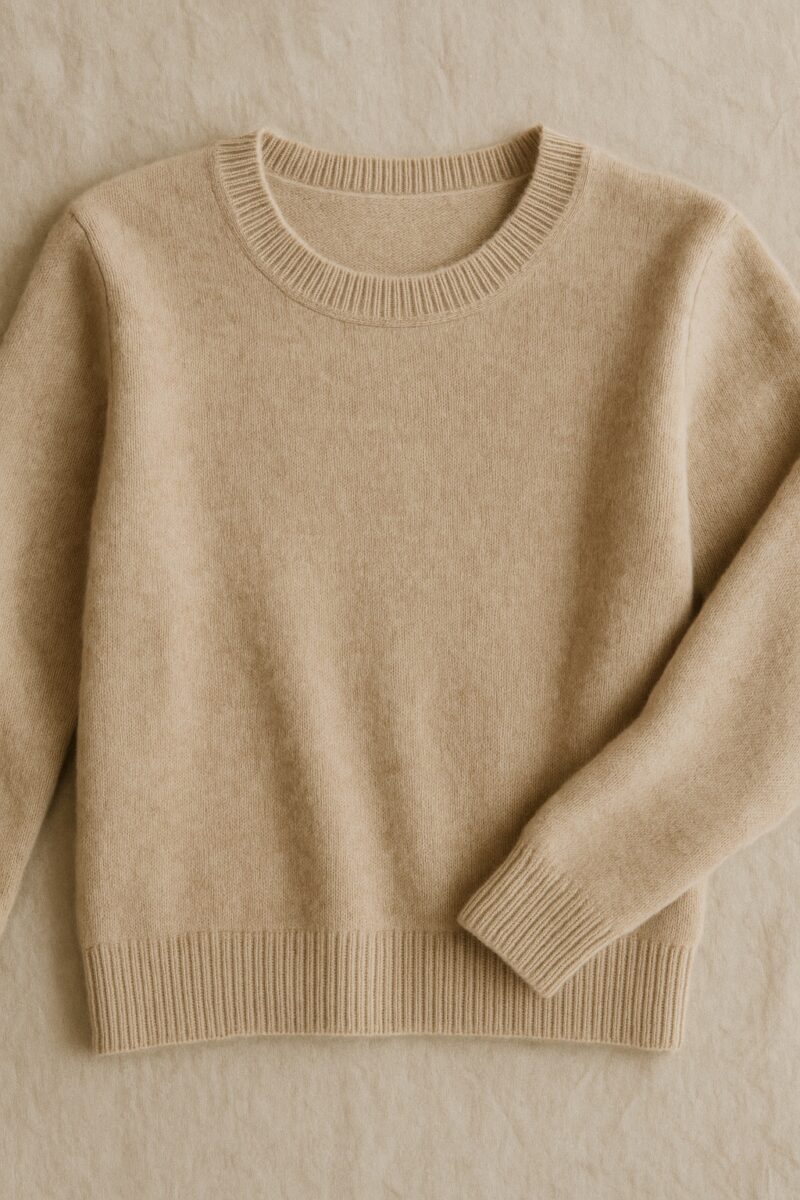
Textural Layers: The Feel of Refined Ease
If structure gives a capsule wardrobe clarity, texture is what gives it depth.
This is where a modern professional wardrobe begins to feel less functional and more lived-in — softer, more dimensional, and easier to return to over time. Texture allows a wardrobe built on relatively simple silhouettes to still feel visually rich without relying on excess, trend-driven styling, or constant variation.
A fine knit softens tailoring and brings warmth to sharper lines. A trench coat introduces movement and fluidity, while wool adds quiet structure that holds across seasons. Silk catches light differently than cotton. Cashmere relaxes the formality of a blazer. Linen develops character through wear rather than looking overly pristine.
These shifts are subtle, but they change how a wardrobe feels.
In quieter wardrobes especially, texture often replaces what color or pattern would do elsewhere. Cream beside camel. Brushed wool against smooth leather. Matte knits layered beneath structured outerwear. The interest comes not from contrast, but from variation in surface, weight, and movement.
This is also what allows capsule wardrobes to repeat without feeling flat. Even when silhouettes remain familiar, texture creates enough variation for outfits to feel layered, balanced, and visually complete.
Over time, certain fabrics also become part of the comfort of the wardrobe itself — materials that soften with wear, drape naturally, and continue to feel better the longer they are lived in. That sense of ease is part of what gives quiet luxury its staying power.
Signature Details: Understated Confidence
Once the foundation of a wardrobe is clear, refinement often comes from smaller details rather than larger additions.
These are the elements that give a capsule wardrobe personality without disrupting its cohesion — the pieces that soften structure, introduce subtle contrast, and make repeated outfits feel more individual over time.
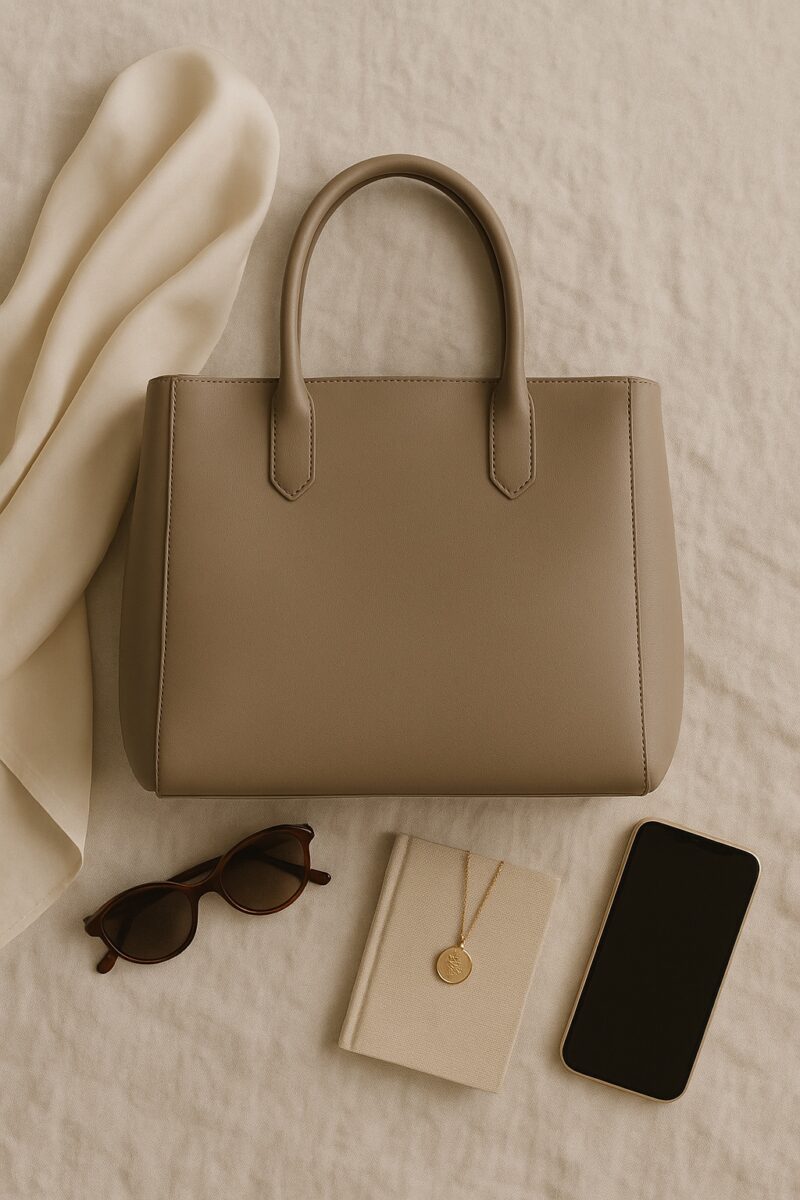
A structured leather tote brings continuity to daily dressing, balancing practicality with clean lines and understated polish. Loafers or minimal leather flats ground the wardrobe with consistency, moving easily between professional and off-duty settings without feeling overly formal. A silk scarf, fine jewelry, or a classic watch adds texture and variation in quieter ways than trend-driven accessories typically do.
What makes these details effective is restraint.
Nothing competes too loudly. Hardware remains minimal. Shapes stay clean. Accessories support the outfit rather than dominating it. Even small shifts — a change in shoe shape, a different belt, the addition of jewelry, or the texture of a handbag — can subtly change the tone of familiar combinations without requiring an entirely different wardrobe.
This is often what gives quiet luxury its sense of ease. The wardrobe feels considered, but never overworked. Personal, but not performative.
Over time, these details become part of the rhythm of dressing itself — the familiar watch worn daily, the leather tote that softens with age, the scarf that returns each season. The repetition is not what makes the wardrobe feel predictable. It is what allows it to feel recognizable, settled, and quietly refined.
For a more practical look at how these pieces function together daily, this guide on how to wear a capsule wardrobe walks through how repetition, styling, and small adjustments shape a wardrobe over time.
When a Capsule Wardrobe Begins to Feel Complete
A refined wardrobe rarely comes together all at once. More often, it settles gradually — through repetition, familiarity, and the quiet recognition that certain pieces continue to work no matter how routines, seasons, or roles evolve.
Over time, the wardrobe becomes less about acquisition and more about awareness. You begin to recognize which silhouettes feel most natural, which fabrics improve with wear, and which combinations return consistently without requiring much thought. Getting dressed becomes less performative and more instinctive.
This is often what makes a capsule wardrobe feel enduring. The pieces are not interchangeable because they are generic, but because they have been chosen with enough clarity to work together repeatedly across different parts of daily life.
Quiet luxury lives in that consistency.
The wool coat that returns each winter without feeling dated. The blazer that moves easily between work and weekends. The knitwear that softens over time and becomes more comfortable with wear. These pieces ask less from the wardrobe because they already belong within it.
As the wardrobe settles, refinement begins to feel quieter too — less connected to novelty or accumulation, and more connected to ease, cohesion, and trust in what already works. If you’re still defining the philosophy behind this approach, this guide to quiet luxury explores why refinement so often begins with restraint rather than excess.
In the end, a modern professional capsule wardrobe is not really about owning less for its own sake. It is about creating enough clarity that dressing becomes simpler, more reliable, and more reflective of how you actually want to move through daily life.
A wardrobe becomes easier when the pieces already work together.
A modern professional capsule isn’t about dressing for an imagined version of your life. It’s about creating enough structure that getting dressed requires less thought and supports the work already in front of you.
These next guides explore how many pieces are enough, what quiet authority looks like in practice, and how to build a wardrobe with clarity from the beginning.

