Quiet luxury lighting isn’t about brightness. It’s about atmosphere — how a room holds you at the end of the day, how edges soften after sunset, how a space asks less of your attention and gives more back.
Most homes are over-lit. Not because people love harsh light, but because brightness has been sold as clarity, safety, and value. Quiet luxury takes a different view: if everything is illuminated, nothing feels intentional.
Light, like clothing, doesn’t need to perform. It needs to support.
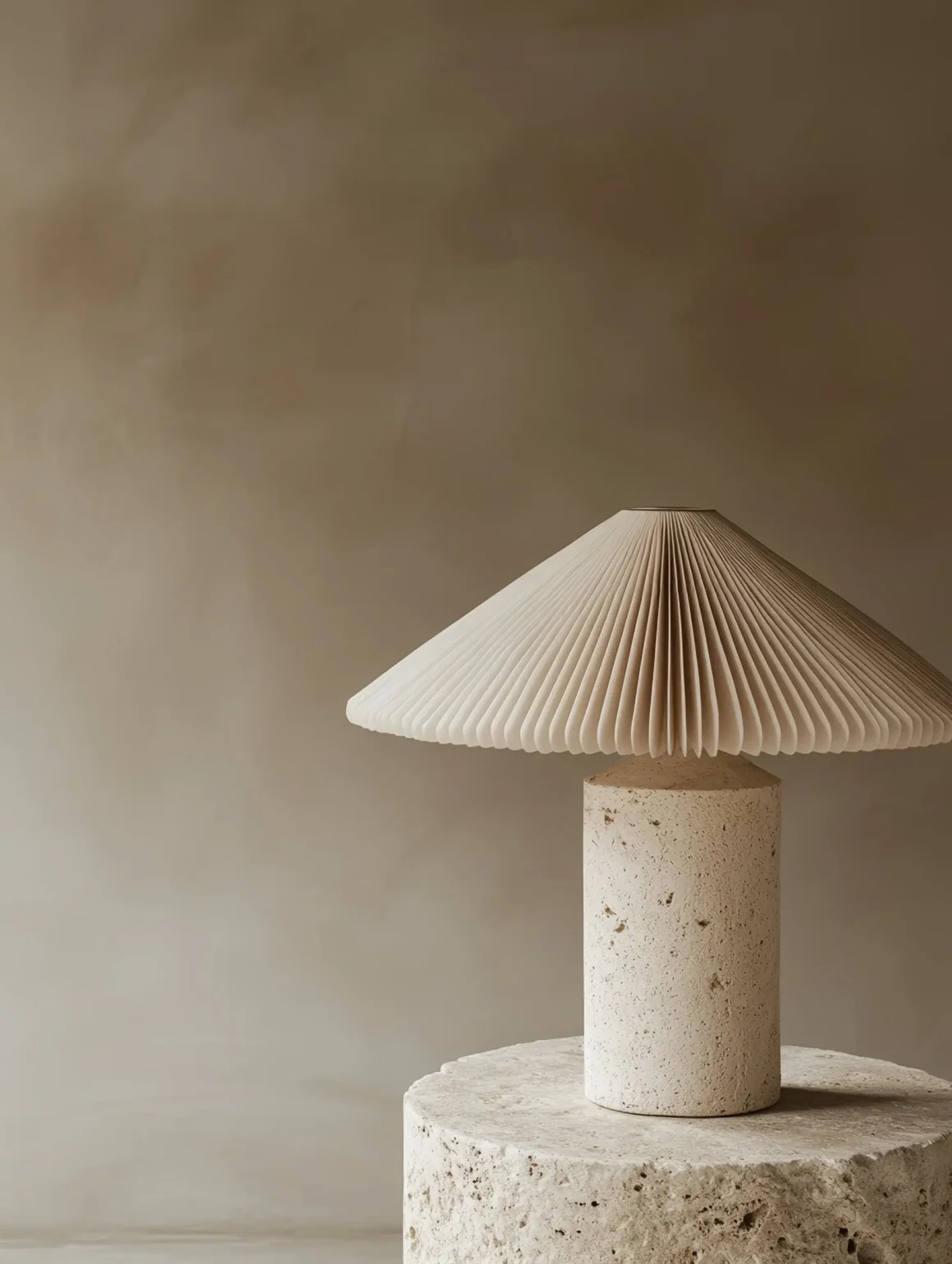
The problem with “good lighting”
What’s often called “good lighting” is usually uniform lighting — overhead fixtures designed to erase shadows, flatten surfaces, and make a room legible from every angle.
This kind of light works for offices, kitchens at noon, and open houses. But in daily life, it creates tension. There’s no hierarchy, no rest, no invitation to slow down. Quiet luxury takes a calmer approach to illumination.
Quiet luxury lighting accepts that not every corner needs to be seen. Some areas are meant to recede.
The quiet luxury rule: layers, not floods
Quiet luxury lighting relies on layers rather than intensity. Instead of one bright source doing all the work, light is distributed gently, with purpose.
Think in three simple categories:
Ambient: a soft, indirect glow that sets the overall mood.
Task: focused light where you actually need it — reading, cooking, working.
Accent: a single moment of warmth or shadow that adds depth.
Not every room needs all three. Often, one well-placed lamp does more than a ceiling full of recessed lights.
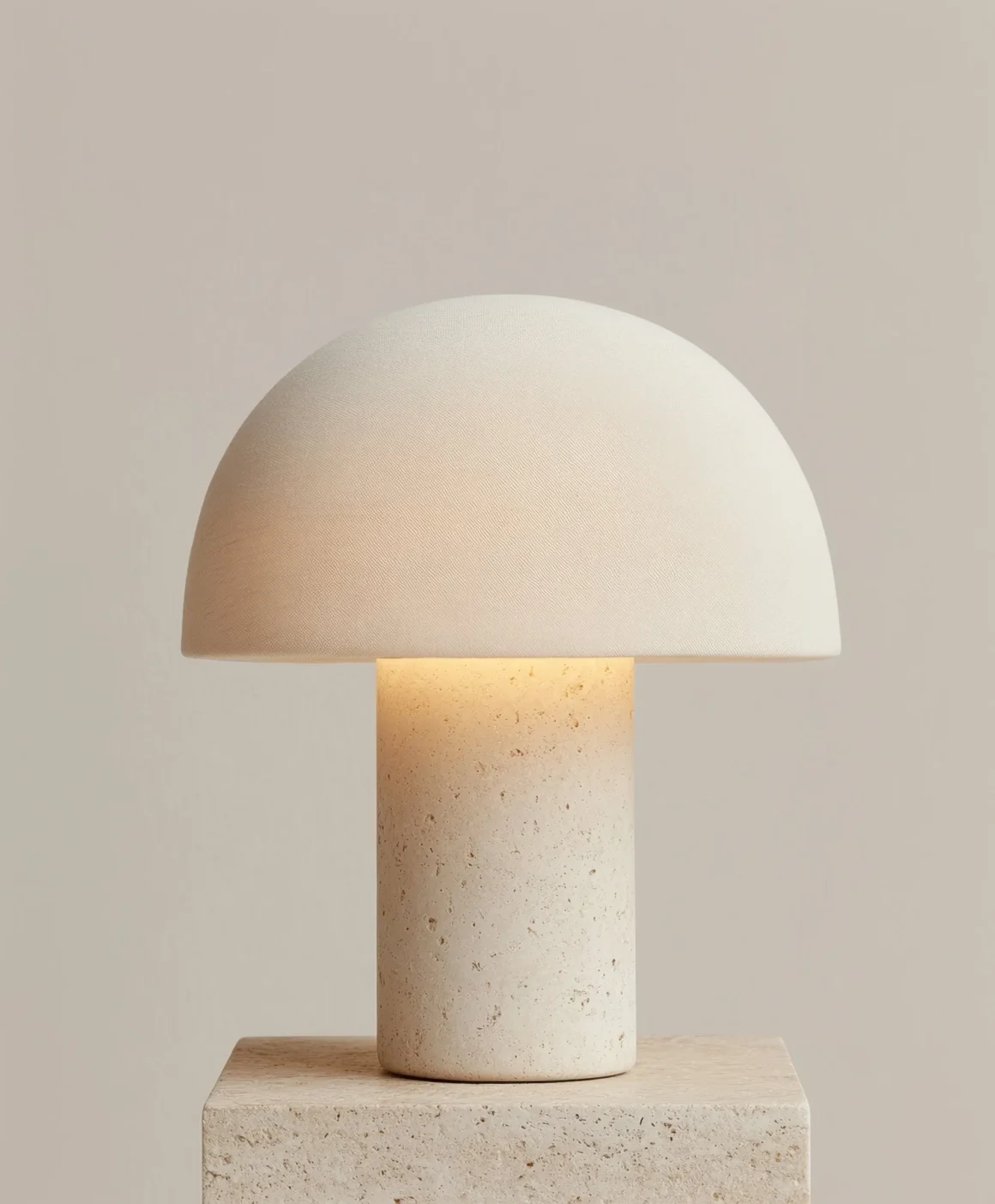
Temperature is the real luxury signal
If there’s one lighting detail that consistently separates quiet spaces from loud ones, it’s temperature.
Cool, blue-toned light reads as alert, efficient, and clinical. Warm light reads as forgiving, human, and lived-in. It softens skin, textures, and even inexpensive materials.
Warm light forgives. Cool light interrogates.
Quiet luxury lighting almost always lives on the warmer end of the spectrum — especially in the evening. It acknowledges that nighttime isn’t for productivity; it’s for transition.
Shadow is not a mistake
One of the most counterintuitive ideas in quiet luxury is that shadow is not a problem to solve. It’s a feature.
Shadow creates intimacy. It gives rooms rhythm. It allows your eye to rest. When everything is equally bright, nothing feels special.
Quiet luxury allows parts of a room to disappear.

The order of operations (no shopping required)
Before adding anything new, adjust what you already have. These small changes often do more than a new fixture.
• Turn off overhead lights first.
• Move lamps lower than you think they should be.
• Aim light at walls or surfaces, not directly into the room.
• Use fewer bulbs, not stronger ones.
• Light where life actually happens — not where symmetry suggests it should.
Many times, the most meaningful shifts begin with what you already have—a philosophy explored further in A Quiet Luxury Approach to Small Spaces.
When to add a lamp (and when not to)
Adding light should be a response to function, not decoration. A lamp earns its place when it supports a real moment — reading, winding down, gathering.
The same principle appears in our exploration of candles versus electric lighting: atmosphere is built through layers rather than uniform brightness.
Paired lamps, identical fixtures, and perfect symmetry can look polished, but they aren’t always calm. Quiet luxury favors intention over balance.
Quiet signals of good lighting
You’ve gotten the lighting right when:
• You stop adjusting lights throughout the evening.
• The room feels better after sunset, not worse.
• Guests lean in rather than squint.
• The space feels settled, not staged.
Quiet luxury lighting is often the first shift people feel — not because it’s dramatic, but because it changes how a space holds you.
When light softens, everything else follows.
That effect becomes particularly noticeable in the bedroom, where soft lighting can anchor a calm, layered room without asking the rest of the space to do much.
Quiet Luxury Lighting FAQs
What is quiet luxury lighting?
Quiet luxury lighting prioritizes atmosphere over brightness. It uses warm tones, layered sources, and softened edges to create calm, livable spaces rather than uniformly lit rooms.
What color temperature is best for quiet luxury lighting?
Warm light is usually best. Bulbs in the 2200K–2700K range tend to soften texture, flatter skin, and make a room feel more intimate than cool or clinical lighting.
Does quiet luxury lighting require expensive fixtures?
No. Quiet luxury lighting often begins with adjusting what you already have: lowering lamps, turning off overhead lights, using dimmers, and choosing fewer, warmer sources of light.
Why do quiet luxury interiors use shadows?
Shadow creates depth and rest. Quiet luxury interiors do not try to illuminate every corner. They allow contrast, softness, and negative space to make a room feel more layered and calm.
Are candles or electric lighting better for a quiet luxury home?
Both have a place. Electric lighting creates the foundation, while candles add intimacy, ritual, and movement. The goal is not choosing one over the other, but understanding how each source changes the atmosphere of a room.
Lighting is the fastest way to change a room’s nervous system.
If this landed, keep going—how you layer light connects directly to how you reset a space, and how you make even a small home feel generous.

