A quiet luxury living room does not feel expensive because of what is added.
It feels considered because of what is left out.
The absence of clutter. The weight of materials. The way light moves across a surface without interruption.
Quiet luxury at home is not about decoration. It is about composition.
And once you see it clearly, the difference becomes difficult to ignore.
What makes a quiet luxury living room feel expensive?
A quiet luxury living room feels expensive when it is built on proportion, material quality, and restraint. Rather than relying on decoration, the space is composed with fewer, better elements that work together to create a calm, cohesive environment.
A quiet luxury living room is defined by:
- Balanced proportion between furniture and space
- Natural materials like wood, linen, wool, and stone
- A controlled palette with subtle tonal variation
- Layered lighting that softens the room
- Intentional restraint with minimal visual noise
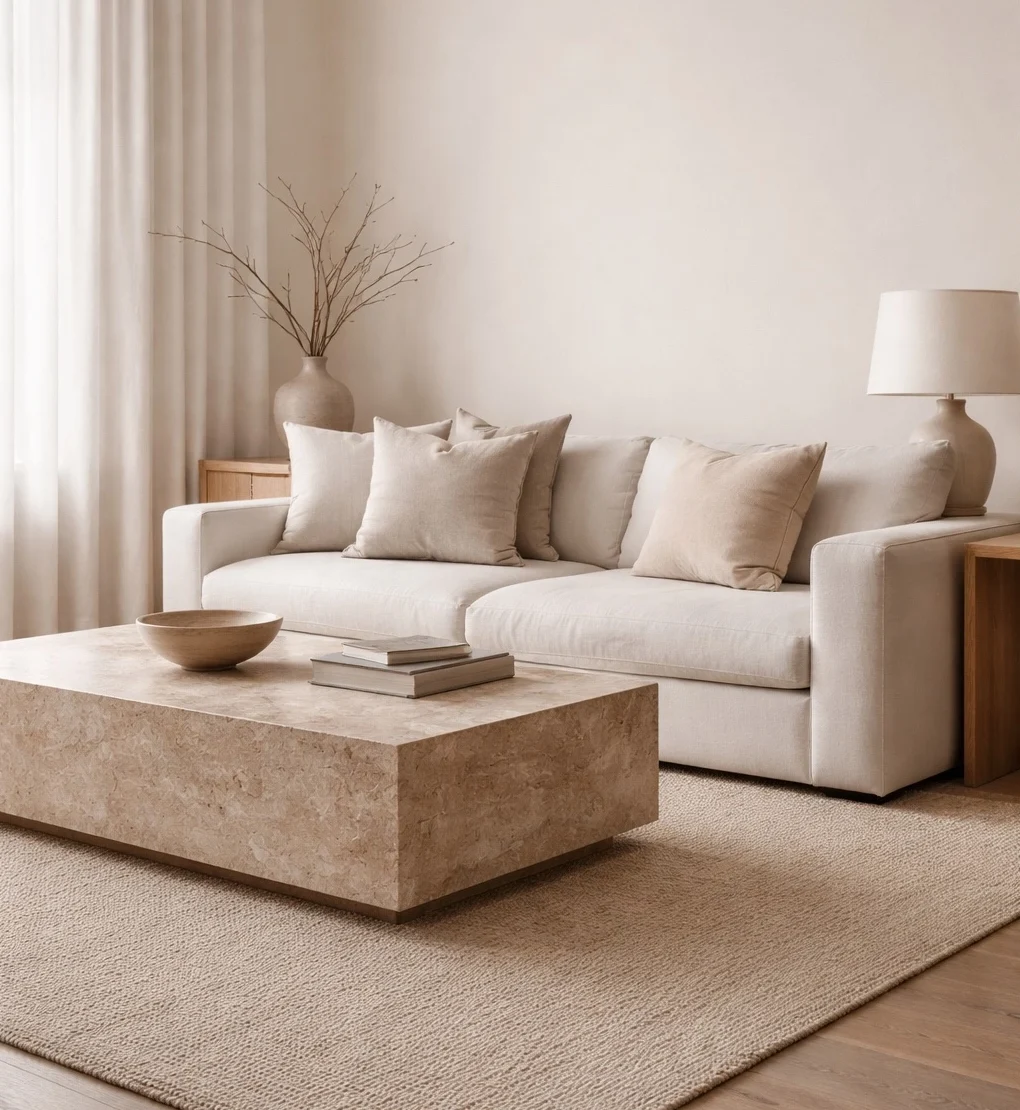
What Most Living Rooms Get Wrong
Most living rooms don’t feel unfinished because something is missing.
They feel unsettled because too many things are competing.
Adding More Instead of Editing
The instinct is to add — another chair, another object, another layer.
But without removing what doesn’t belong, each addition creates more noise.
A room becomes clearer not when it is filled, but when it is edited.
Treating Decor as the Focus
Decor is often used to create interest.
But in a quiet luxury living room, the space itself is the point.
The arrangement, the proportion, the materials — these do more than any individual object.
When decor becomes the focus, the room begins to feel staged rather than lived.
Ignoring Proportion
A large sofa with small surrounding pieces. Multiple small items instead of one considered element.
Proportion is what allows a room to feel grounded.
Without it, even well-chosen pieces feel disconnected.
Overworking the Palette
Too many tones, too many variations, too many competing neutrals.
A refined space doesn’t rely on variety.
It relies on consistency — subtle shifts within a controlled range.
What makes a space feel different is rarely what’s added — it’s what’s allowed to remain.
What Actually Creates a Quiet Luxury Living Room
A quiet luxury living room is not defined by individual pieces.
It is shaped by how everything relates — through proportion, material, and restraint.
Proportion Before Objects
Before adding anything, the room must feel balanced.
The scale of the sofa, the spacing between pieces, the visual weight of each element — these determine whether a space feels grounded or unsettled.
When proportion is right, fewer pieces are needed.
Materials That Hold Weight
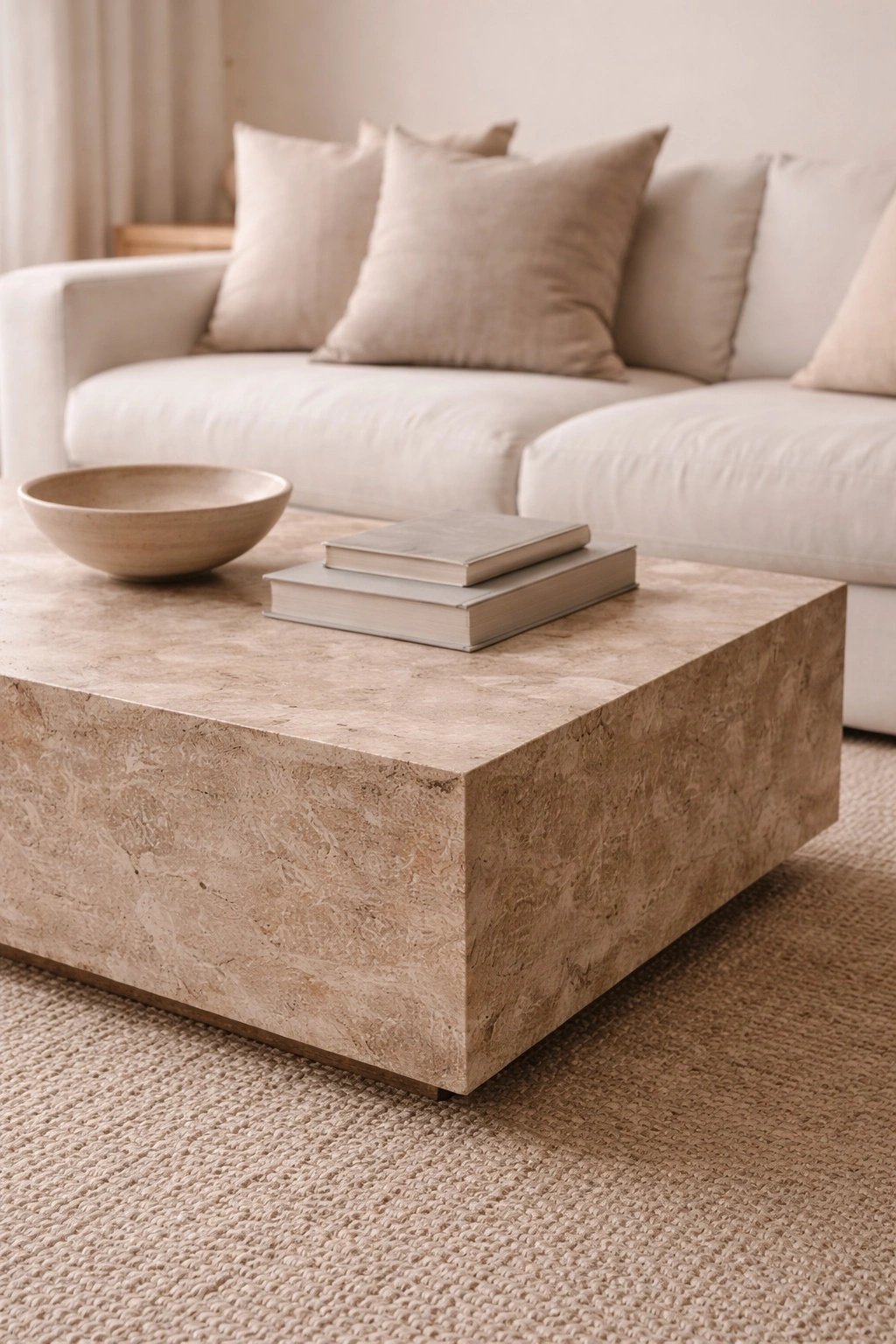
Certain materials carry a quiet presence. Much of the richness people associate with expensive interiors comes from quiet texture — wood, linen, wool, stone — surfaces that absorb light rather than reflect it. Textures that feel substantial without appearing heavy.
These materials do not need embellishment. They create interest through their natural variation. This is where material begins to carry the room.
A Controlled Palette
A quiet luxury living room is rarely defined by color.
It is defined by consistency.
Tones sit within a narrow range, allowing subtle differences in texture and material to become visible. Nothing interrupts the eye. Nothing pulls attention away.
Light as a Layer
Light shapes how a room is experienced.
Not just brightness, but direction, softness, and shadow.
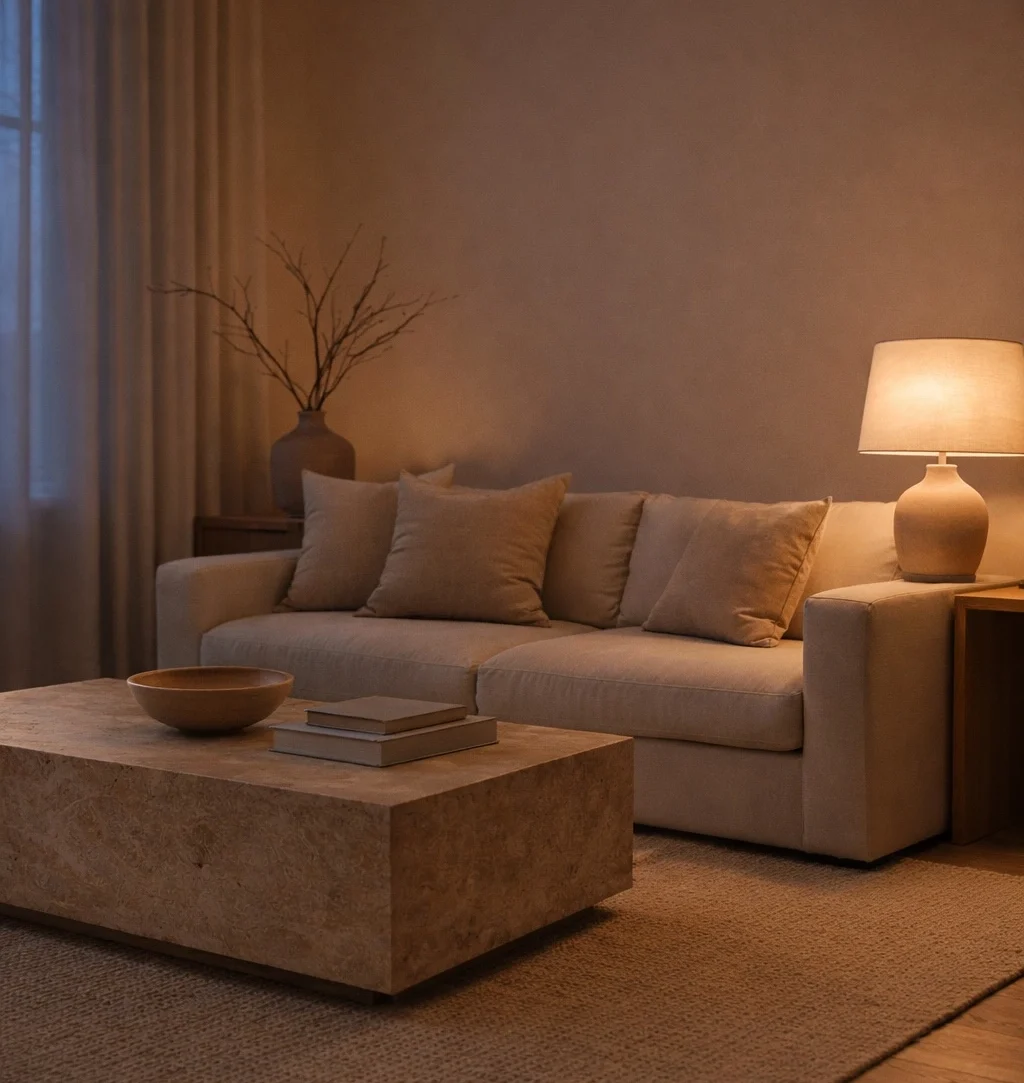
A space feels more refined when light is layered — natural light during the day, and softer, more deliberate sources in the evening.
This is where atmosphere becomes more important than visibility, a shift explored more fully in How Light Shapes Atmosphere at Home.
The shift isn’t in the objects — it’s in the atmosphere.
Space Between Things
What is not there matters as much as what is.
Empty space allows each piece to hold its place. It gives the room a sense of calm and clarity.
Without it, even well-chosen elements begin to feel crowded.
The same principle applies to smaller spaces, where clarity becomes even more essential — something explored further in A Quiet Luxury Approach to Small Spaces.
The Edit
A space doesn’t need more. It needs to be seen clearly.
Join The Edit for quiet guidance on refining your home—through light, material, and restraint.
How to Build This Without Starting Over
A quiet luxury living room is not created all at once.
It develops through small, deliberate changes — each one bringing the space into greater clarity.
Remove Before You Add
The first shift is not what you bring in.
It is what you take away.
Objects that no longer belong, pieces that compete for attention, elements that interrupt the flow of the room.
As these are removed, the space begins to settle.
What remains becomes easier to see.
Replace One Piece at a Time
There is no need to redesign the entire room.
One considered change — a better proportioned table, a more substantial fabric, a more grounded material — can shift how everything feels.
The room improves not through volume, but through the quality of each replacement.
Let the Room Settle
After each change, allow the space to remain as it is.
Resist the urge to adjust, add, or refine immediately.
A room needs time to reveal whether something works.
Clarity often comes not from doing more, but from allowing what is already there to settle into place.
A living room does not need more to feel complete. It needs few things, that belong.
What This Looks Like in Practice
A quiet luxury living room is not defined by how much is in the room.
It’s defined by how little is needed.
A Single, Grounded Arrangement
A sofa, a table, a light.
Not multiple seating areas, not layered surfaces — just one arrangement that feels complete. The scale is balanced. Nothing feels added for the sake of filling space.
Texture Instead of Decoration
A linen sofa. A wood or stone table. A wool or natural fiber rug.
There are few decorative objects.
Interest comes from the materials themselves — the way they hold light, the way they age, the way they feel.
Light That Softens the Room
Natural light during the day. A single lamp or two in the evening.
No harsh overhead brightness.
The room shifts throughout the day, becoming quieter as the light softens.
Objects That Feel Intentional
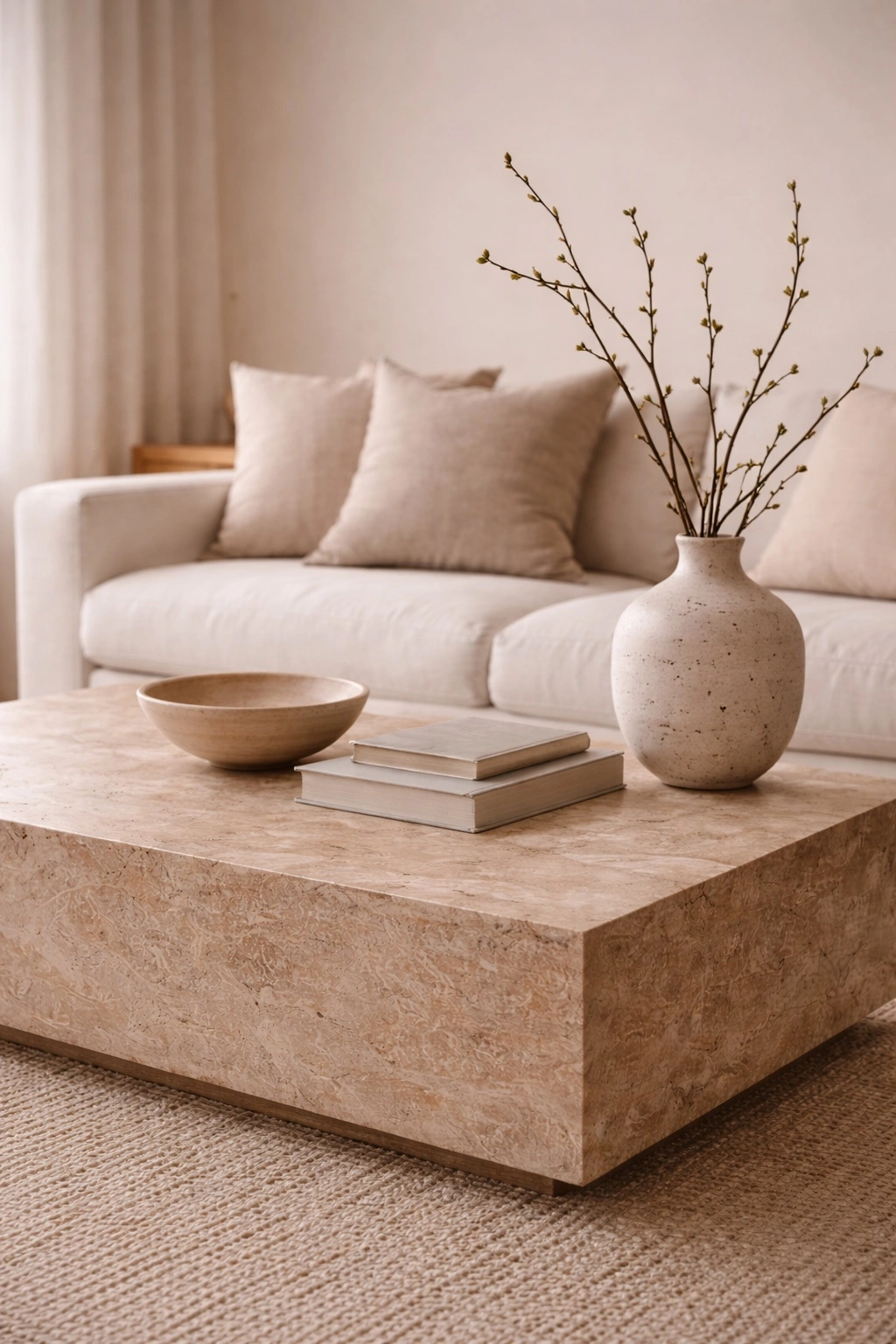
A book. A bowl. A single branch or floral element.
Each object has space around it.
Nothing is grouped for effect. Nothing is competing to be seen.
The same clarity that shapes a room is what allows a wardrobe to feel effortless.
At this point, nothing needs to be added — only chosen.
A Room That Feels Resolved
A quiet luxury living room is not created by adding the right pieces. It is created by removing what doesn’t need to be there — and allowing what remains to hold its place.
Nothing in the room is trying to stand out. Nothing is competing for attention. And yet, everything feels considered.
This is what makes a space feel expensive. Not the cost of what’s in it, but the absence of excess.
The materials are allowed to speak. The proportions are allowed to settle. The light is allowed to change the room throughout the day.
And over time, the space begins to feel less like something you’ve styled — and more like something that has resolved itself.
Not filled. Not decorated. Just…complete.
Quiet Luxury Living Room — FAQs
A few final clarifications, if you’re refining your space further.
What is a quiet luxury living room?
A quiet luxury living room is a space defined by restraint, proportion, and material quality rather than decoration. Instead of relying on trends or excess, it uses fewer, well-chosen elements to create a calm, cohesive environment that feels considered and complete.
How do you make a living room look expensive without buying more?
Start by editing what’s already there. Remove visual noise, reduce competing textures, and simplify surfaces. Often, a room feels more expensive not because something is added, but because what remains is allowed to hold its place.
What colors are used in a quiet luxury living room?
Quiet luxury living rooms typically use a controlled, neutral palette—soft whites, warm beiges, muted taupes, and deeper grounding tones. Variation comes through texture and material rather than bold color contrast.
How many pieces should be in a living room?
Most refined living rooms rely on a small number of core pieces—often just a sofa, a table, a light source, and a few supporting elements. The goal is not to fill the room, but to create balance and clarity through proportion and restraint. The same principle applies to a quiet wardrobe, where fewer, better pieces create more cohesion.
Continue building a home that feels resolved.
A quiet luxury living room is only one expression of a calmer home. Continue with the materials, lighting, and small-space principles that make refinement feel livable.
Refined spaces don’t happen by accident.
Join The Edit for quiet guidance on creating a home that feels calm, considered, and complete—without adding more.

