There’s a particular kind of morning that makes you question your entire closet.
Nothing is wrong, exactly. The hangers are full, the drawers are fine—but everything you try feels slightly off. Too loud, too flimsy, not quite you anymore. You scroll past another haul, another “10 must-haves,” and instead of feeling inspired, you feel a quiet resistance.
This is often where the idea of a quiet luxury wardrobe begins—not as a trend, but as a response.
Not a capsule, exactly—but a steady awareness that most of what you own should work across contexts, without excess and without needing to announce itself.
This is not about starting over. It’s about learning how to build a quiet luxury wardrobe through better selection: fewer pieces, stronger materials, silhouettes that support your life instead of competing with it.
How do you build a quiet luxury wardrobe in real life?
You build a quiet luxury wardrobe by editing what you own first, then adding fewer, better pieces chosen for structure, versatility, and longevity. Instead of accumulating more, the process centers on refinement—removing what creates visual noise, keeping what works, and building a wardrobe where pieces integrate seamlessly and feel effortless to wear.
Most quiet luxury wardrobes naturally settle into 10–15 pieces per season—not as a rule, but as a result of clarity.
A quiet luxury wardrobe is built by:
- Editing first — removing pieces that create visual noise
- Choosing structure — silhouettes that add clarity and shape
- Prioritizing materials — fabrics that hold weight and wear well over time
- Building versatility — pieces that work across multiple contexts
- Adding with intention — selecting only what strengthens the whole
This is not about having less—it’s about having enough of the right things.
Most quiet luxury wardrobes are built from a small number of pieces—often 10–15—chosen for how they work together. Here’s how many pieces you actually need.
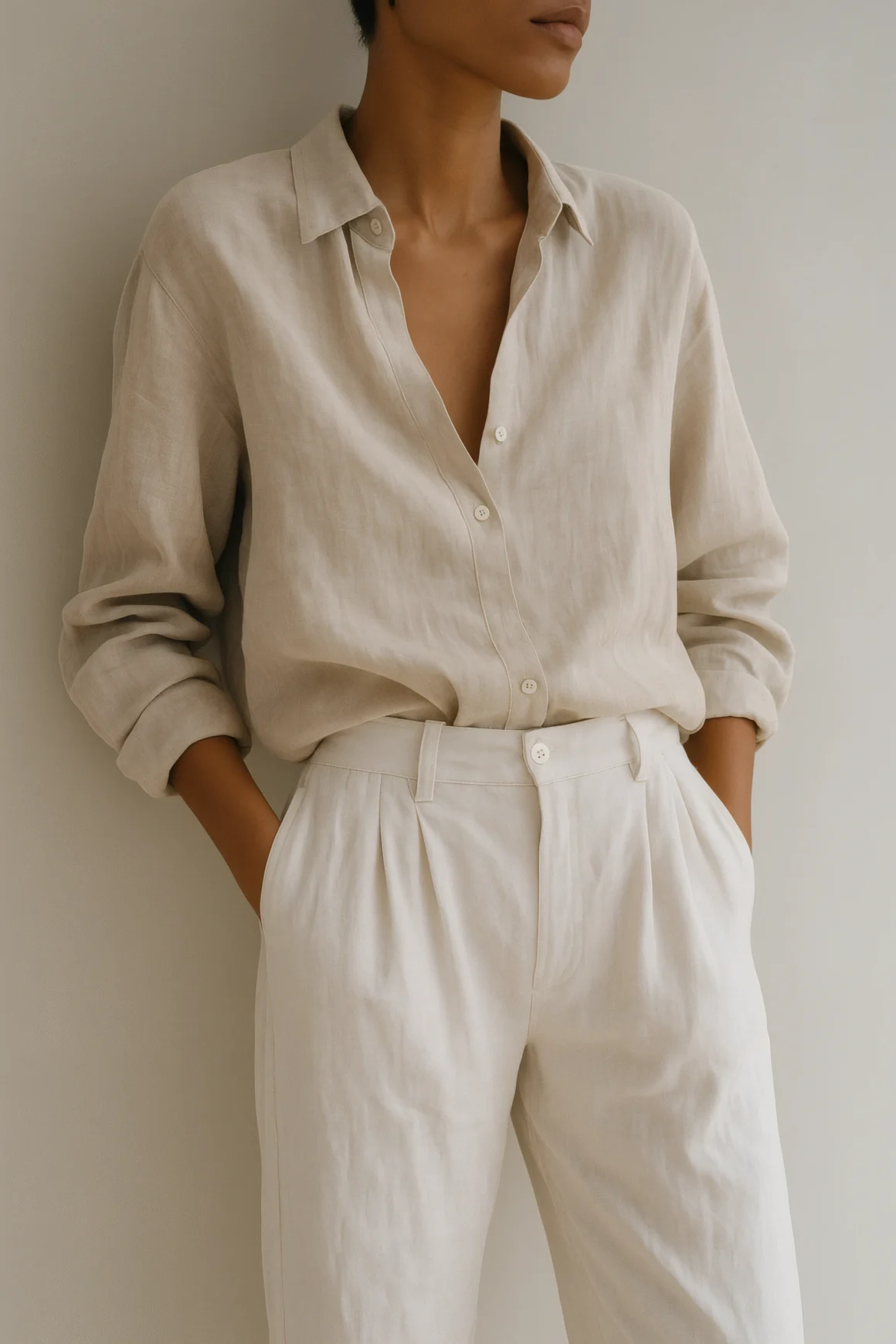
The Foundations of a Quiet Luxury Wardrobe
Before we talk about specific pieces, it helps to zoom out. Most closets feel chaotic because they were built one impulse at a time: a sale sweater here, a last-minute dress there, a “this will do” pair of shoes on the way to an event. A quiet luxury wardrobe is less about perfection and more about alignment—bringing a few key anchors into focus so the rest has something to orbit.
For our purposes, there are three:
- Silhouette
- Palette
- Fabric and finish
You can change trends around them. You can move cities, jobs, or seasons around them. But if these three are considered, almost everything you own starts to work a little harder.
Silhouette (Structure and Shape)
Most trends are just different ways of rearranging shape. Hemlines rise and fall, sleeves balloon and slim down, trousers widen and taper again. When you look at your wardrobe through the lens of silhouette, the question stops being “Is this still in?” and becomes “Does this shape feel good on my body and in my life?”
Quiet luxury style favors silhouettes that are clear more than they are tight or loose. Clean lines, a bit of structure where you need it, ease where you move most:
- Shoulder seams that sit where your shoulder actually ends.
- Trousers that fall in one intentional line, not bunching or collapsing.
- Sleeves you can push up or scrunch without feeling fussy.
This doesn’t mean everything has to be sharp and tailored. It means each piece has a point of view: a straight leg instead of a “sort of skinny, sort of bootcut,” a simple column dress instead of three different ruffles and a cut-out. The more your silhouettes harmonize, the easier it is to mix pieces without feeling like you’re starting from scratch.
If you’re not sure where to begin, notice the outfits you repeat without thinking. Are they column-on-column (slim top, straight skirt), soft-over-structured (relaxed knit over tailored trousers), or the reverse? That pattern is your silhouette baseline. Quiet luxury doesn’t swap that out for a new persona; it refines it. A better version of the shapes you already live in, rather than an entirely new costume.
Palette (A Controlled Color Story)
Color is one of the quickest ways to make a wardrobe feel either calm or chaotic. For quiet luxury clothing, the palette isn’t about removing color altogether; it’s about choosing a handful of tones that sit well together so most pieces can be mixed without much thought.
A simple way to begin is to look at what you already wear on repeat: the coat you always grab, the sweater you pack for trips, the dress or shirt you reach for on busy mornings. You’ll usually see a few clear themes:
- A base of soft whites, stone, ink or charcoal.
- One or two warmer depths—camel, tobacco, muted brown.
- Maybe a single accent you genuinely love—olive, a muted wine tone, a dusty blue.
Once you’ve noticed those families, let them guide future decisions. When you’re considering something new, ask whether it belongs with the colors you already live in, or whether it would always feel like an outlier. Tightening your palette in this way doesn’t mean every piece has to match; it means most of your clothes are at least on speaking terms.
The goal isn’t to create a perfectly coordinated capsule. It’s to reduce visual noise. When your wardrobe leans on a small group of tones that work together, each item has more ways to be worn. A single sweater can sit under several coats; a pair of trousers can work with half your tops instead of one or two.
Fabric and finish (Materials That Hold Weight)
Fabric is often the first place a garment quietly gives itself away. Two sweaters can be nearly the same shade and cut, but one holds its shape and skims the body while the other clings, pills, and goes shiny within a season. A quiet luxury wardrobe pays attention to what things are made of and how they’re finished.
You don’t need perfection or a closet full of heirloom cashmere. What you’re looking for is a general move toward:
- Natural or tactile fibers where possible—cotton poplin, wool suiting, linen, silk, tencel, washed canvas.
- A bit of weight in key pieces so they drape instead of collapse.
- Linings and facing where they matter: skirts that don’t cling, trousers that feel smooth, coats that slide easily over knits.
Fiber content alone will not tell you whether a garment is well-made. If you want to look more closely before you buy, this guide to judging fabric quality walks through what to notice in cotton, linen, wool, cashmere, silk, and blends.
Cashmere is a useful example because price alone tells you surprisingly little; learning what separates better cashmere from simply expensive cashmere makes the comparison easier.
Hardware and details matter here, too. Quiet luxury tends to favor zippers that work smoothly, buttons that feel considered, seams that sit flat. It doesn’t mean everything has to be precious; it means the garment respects its own shape. A simple cotton shirt with good buttons and a clean collar will almost always read more refined than a complicated blouse in a shiny, synthetic blend.
One practical way to approach this is to start with the pieces you wear on repeat. If you live in black trousers, that’s where an upgrade in fabric and finish will have the biggest impact. If you always throw on a cardigan, look there before chasing another novelty top. Quiet luxury isn’t about buying the most expensive option every time; it’s about quietly improving the things that touch your life most often.
Over time, as more of your wardrobe hits that “feels good in the hand, hangs well on the body” standard, the overall impression shifts. Your quiet luxury outfits start to look considered even when they’re simple, and you spend less time tugging, adjusting, or explaining what you’re wearing. The clothes are doing their job, so you can get on with the rest of yours.
Once you start to see your clothes through silhouette, palette, and fabric, a quiet luxury wardrobe becomes less abstract and more specific to you. It’s also a good moment to clear up a couple of persistent myths that can make the whole idea feel narrower than it is.
What a Quiet Luxury Wardrobe Is Not
Before we go any further, it’s worth naming two very common assumptions:
- That a quiet luxury wardrobe means only tan, beige, and no real color
- That it asks you to dress like a polished Stepford wife—a kind of pleasant uniform that erases individuality
Neither is the point here.
These assumptions are part of why quiet luxury is so often misunderstood: it is not a beige uniform, a shopping list, or a performance of restraint.
Myth 1: “You can only wear tan. No color allowed.”
Neutrals photograph beautifully, and social media loves a beige grid, so it’s easy to assume that quiet luxury equals a life in oatmeal. But color is one of the simplest ways to express yourself quietly. The difference is in how it’s used.
Instead of every piece competing for attention, a quiet luxury wardrobe asks:
- What are the two or three depths you actually love and wear?
- Where does color feel most natural on you—knitwear, dresses, accessories?
- Can this shade live with the rest of your closet, or will it always feel like a one-off?
Color here isn’t banned; it’s edited. Deep ink, soft olive, muted merlot, a dusty blue—these can all sit beautifully next to warm camel, stone, and off-white. The goal isn’t to drain your wardrobe of personality. It’s to choose color with enough intention that it supports your outfits instead of fighting them.
If you love a certain red lip, a particular green, or a blue that always makes your eyes brighter, that’s part of your quiet luxury wardrobe. It just doesn’t need to scream from every hanger.
Myth 2: “It’s a Stepford wife uniform.”
There’s also a very understandable fatigue with images of one narrow version of “quiet luxury”: long hair, soft sweater, delicate jewelry, the same coat, the same smile. If that’s not your life—or your taste—it can make the whole idea feel like a performance you’re supposed to audition for.
A quiet luxury wardrobe, the way we’re defining it here, isn’t about erasing your edge or conforming to a single template. It’s about removing noise so the parts of you that already feel true have room to show up, every day.
That might look like:
- Sharper tailoring and loafers instead of soft knits and ballet flats
- Cropped hair and a men’s-style coat, not waves and a wrap
- Monochrome ink and charcoal because that’s what makes you feel most grounded
You’re allowed to look like yourself.
The “uniform” here is less about making everyone match and more about giving you a reliable backbone: a handful of silhouettes, fabrics and color depths that make getting dressed feel settled instead of frantic. Within that, there’s plenty of room for your preferences—necklines, sleeve shapes, jewelry, a favorite watch, how relaxed or sharp you like your trousers to fall.
Quiet luxury shouldn’t feel like a character you have to play. It should feel like a version of your own style with the static turned down.

How to Organize a Quiet Luxury Wardrobe
(Fewer Categories, Clearer Roles)
Most people don’t get dressed for a lookbook. They get dressed for real days—commutes, meetings, errands, travel, dinners, and the evenings they finally stay home.
A quiet luxury wardrobe becomes much easier to build when you stop thinking in terms of outfits and start thinking in terms of roles.
Instead of dozens of categories, most wardrobes can be reduced to four:
- Work / out in the world
- Off-duty / everyday
- Evening / occasions
- At home / private hours
The goal is not to build four separate wardrobes.
It’s to understand what each part of your life requires—so the same pieces can move between them without friction.
Work (Out in the World)
In a quiet luxury wardrobe, “work” isn’t defined by a dress code—it’s defined by visibility.
These are the clothes you wear when you’re being perceived:
meetings, office days, appointments, travel, or any setting where you’re representing yourself.
The priority here is clarity.
- Trousers that hold their line throughout the day
- Shirts or knits that layer cleanly
- A third piece (blazer, coat, structured knit) that anchors the look
You don’t need endless variation.
You need a small number of combinations that feel so reliable you stop thinking about them.
When this category is working, getting dressed becomes automatic—and your attention shifts back to your work, not your clothes.
If you would like to explore more on building and editing your work wardrobe, the Modern Professional’s Capsule Wardrobe addresses the quiet luxury wardrobe through the lens of a professional setting.
Off-Duty (Errands and Everyday)
This is where most wardrobes lose coherence.
Off-duty clothing often becomes a collection of “almost” pieces—
too casual for work, but not considered enough to feel intentional.
A quiet luxury approach doesn’t make this category more formal.
It makes it more deliberate.
- Denim in a cut and wash you consistently reach for
- Knits and tees in your core palette
- Outer layers that finish the look without effort
The question becomes simple:
If I ran into someone important to me, would I feel like myself in this?
Not dressed up. Not performing.
Just not reduced.
The same principle works beautifully for travel. A well-built travel capsule relies on familiar pieces, easy repetition, and clothes that can move from transit into the rest of the day.
Evening (Occasions)
Evening is where impulse buying tends to happen.
A quiet luxury wardrobe approaches this differently—
by building a small, repeatable foundation.
Instead of a new outfit for every event:
- One or two dresses that adapt with shoes and jewelry
- Trousers that work with both structured and soft pieces
- A single outer layer that carries across occasions
You can bring in depth here—ink, olive, deep wine—but the same principles apply:
structure, material, and restraint.
The goal is not variety.
It’s reliability over time.
At Home (Loungewear That Still Feels Like You)
This is the most overlooked category—and often the most worn.
A quiet luxury wardrobe doesn’t ignore it.
It refines it.
Not for appearance—but for continuity.
- Pieces that feel good against the skin
- Simple layers you wouldn’t hesitate to answer the door in
- Footwear that feels intentional, even if no one sees it
This isn’t about elevating loungewear into something performative.
It’s about removing the disconnect between how you live and how you dress.
When you begin to see your wardrobe through these roles, the idea of “having nothing to wear” becomes more specific—and more solvable.
You’re no longer guessing.
You can say:
- I need one off-duty pant that actually works
- I’m missing a reliable third piece for work
- I don’t have a single evening option I trust
That clarity is what turns a quiet luxury wardrobe from an idea into a system.
Before you start rebuilding, it helps to have a clear starting point.
A simpler way to begin
If you’re not sure where to start, this is a complete quiet luxury capsule—10 essential pieces, already structured to work together.
It gives you a clear foundation to build from, without having to figure everything out at once.
A quiet monthly note. Unsubscribe anytime.
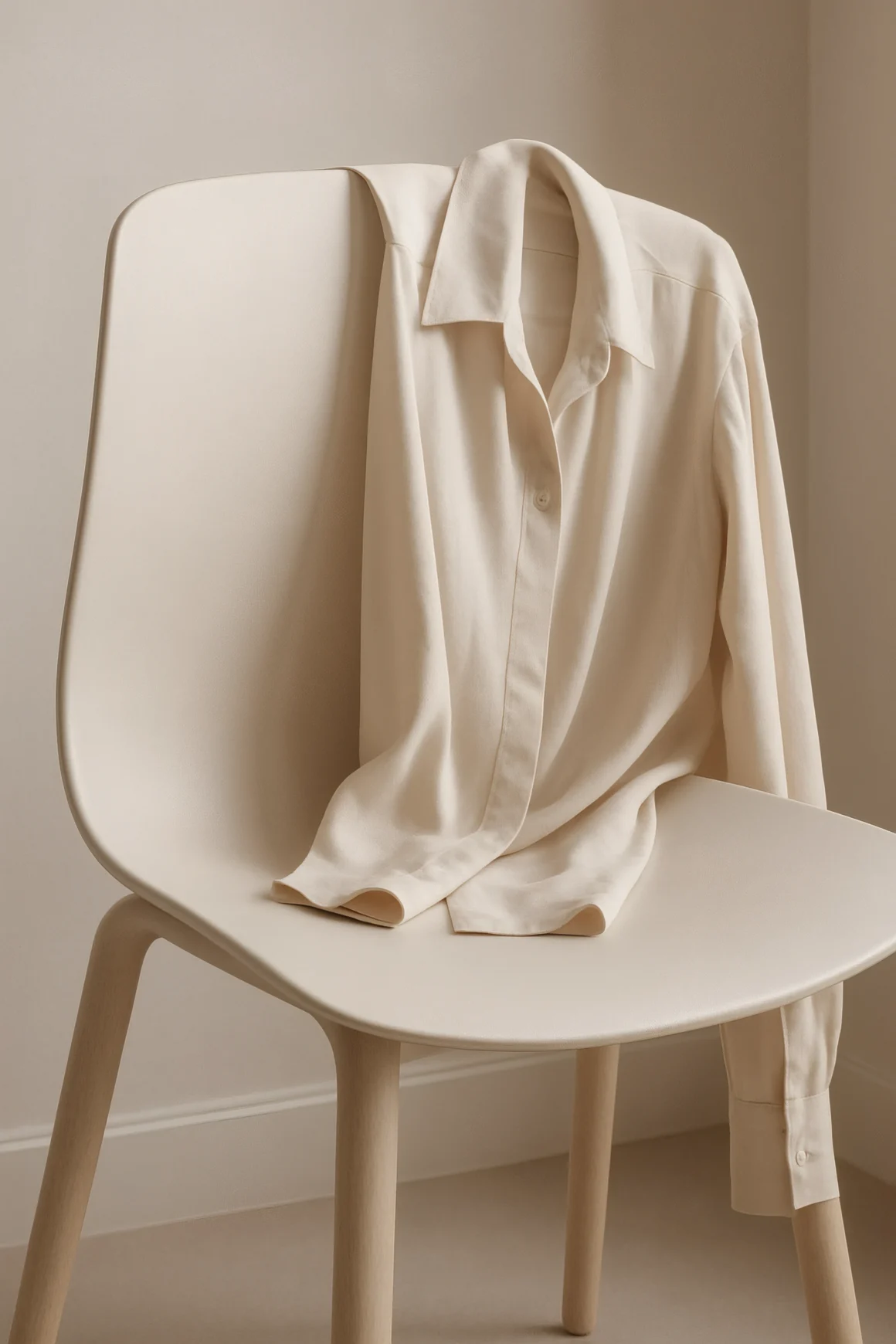
How to Build a Quiet Luxury Wardrobe (Without Starting Over)
It’s tempting to treat any new wardrobe idea as a fresh start: new list, new pieces, new you. Quiet luxury doesn’t need that kind of pressure. Instead of throwing everything out, you’re going to work with what you already own, notice the pieces that are doing their job quietly, and make a few more things feel like that.
1. Notice What You Actually Wear
For one or two weeks, don’t change anything.
Just watch.
Let your wardrobe behave as it normally would.
Notice what you reach for without thinking, and what you leave behind.
You can move the pieces you wear most often to one side of your closet, or simply keep a quiet mental note.
Pay attention to:
- Silhouette: Are you reaching for straight lines, wider shapes, or something closer to a column?
- Palette: Which colors are in steady rotation, and which rarely leave the hanger?
- Fabric: What feels comfortable against your skin at 7 AM—and still works at 7 PM?
These quiet repetitions are the backbone of your wardrobe, even if they aren’t your most “interesting” pieces.
They reflect how you actually live.
And that is always a better starting point than how you think you should.
2. Edit by Category, Not by Guilt
Instead of standing in front of your entire closet and trying to decide everything at once, move through it in parts.
Work by category:
- Trousers and jeans
- Skirts and dresses
- Shirts, blouses, knits
- Third pieces (blazers, cardigans, jackets, coats)
- Shoes and bags
Looking at one group at a time changes the process.
It becomes clearer—and far less emotional.
Within each category, set aside anything that doesn’t align with your anchors:
- silhouettes you don’t reach for
- colors that sit outside your palette
- fabrics that feel off in the hand or on the body
You don’t have to decide what happens to these pieces immediately.
A simple “not now” space—a separate rail, a box, a section of your closet—is enough.
This isn’t about forcing decisions.
It’s about creating distance.
When you remove what isn’t working from your immediate view, what remains becomes easier to see—and easier to trust.
3. Upgrade the Pieces You Repeat Most
A quiet luxury wardrobe doesn’t require upgrading everything.
It asks you to notice where an upgrade would actually change your daily experience.
Start with what you already wear on repeat.
- If you live in black trousers, that’s where fabric and fit matter most.
- If you reach for the same cardigan, a finer yarn or cleaner cut will carry further.
- If you wear the same shoes most days, they should support both your outfits and your feet without compromise.
These are the pieces that quietly define your wardrobe—not the ones you wear occasionally, but the ones you rely on without thinking.
When you choose to spend, let it be here.
One well-cut pair of trousers that holds its shape will outlast—and outperform—several that never quite sit right. A knit that keeps its structure over time will be reached for more often than one that stretches, pills, or loses form.
The goal isn’t to accumulate better things.
It’s to improve the pieces that already anchor your days.
Over time, those small upgrades shift the entire wardrobe—not through volume, but through consistency.
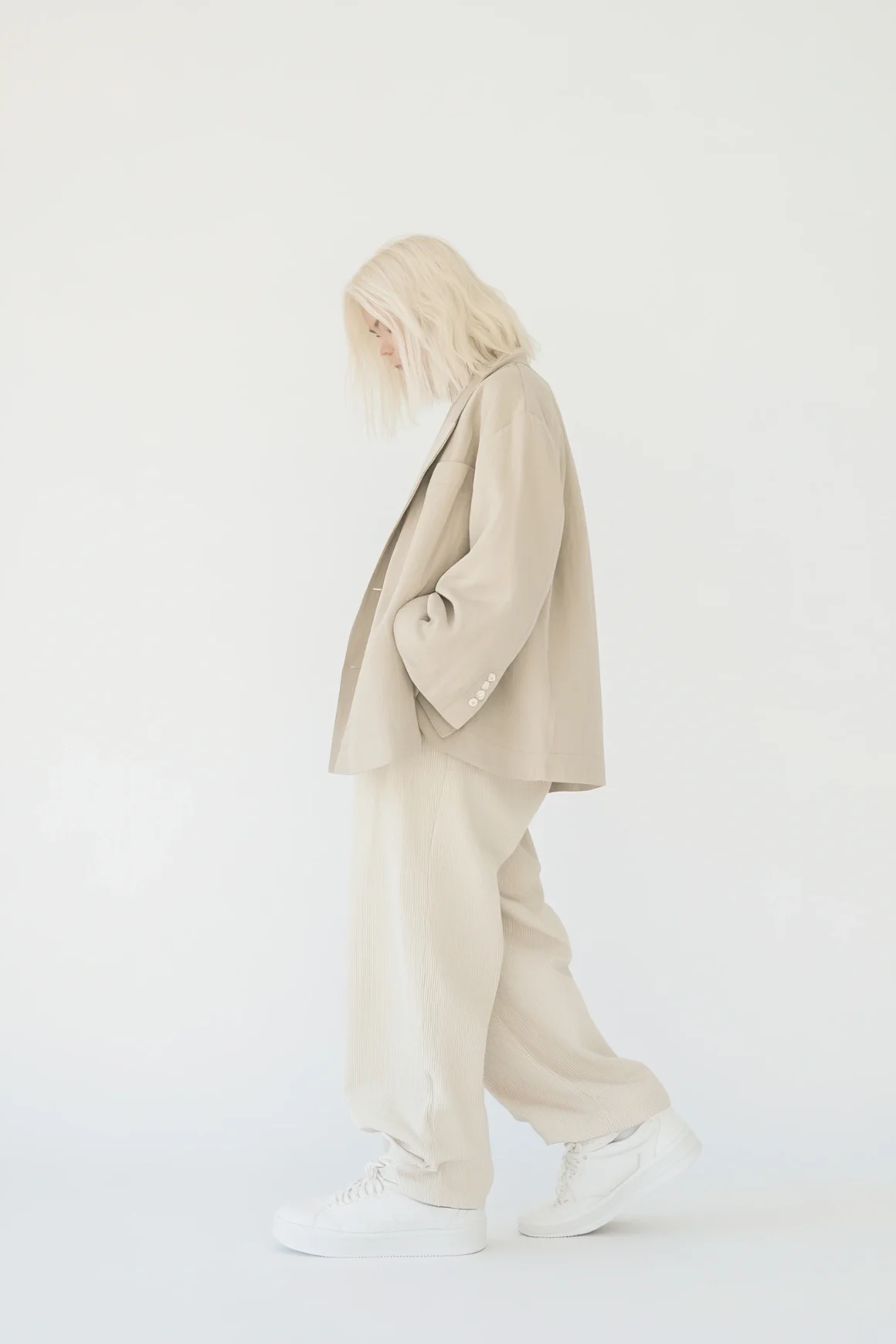
4. Create Small, Repeatable Outfits
“Uniforms” can sound restrictive, but in practice they’re clarifying.
A quiet luxury wardrobe often comes down to a small number of combinations you return to—subtly adjusted, but fundamentally the same.
For each of your four roles—work, off-duty, evening, at home—try naming:
- Two or three base combinations you consistently feel good in
- The pieces that shift them: a coat, a shoe, a change in texture or proportion
For example:
- Work: straight trouser + fine knit + blazer
- Off-duty: clean denim + tee + trench or chore jacket
- Evening: column dress + low heel + coat
- At home: soft knit pant + tee or tank + robe
You don’t need endless variation.
Two or three combinations that feel like you—across different contexts—will do more for your mornings than a closet full of disconnected outfits.
The goal isn’t to dress the same every day.
It’s to remove the need to start from scratch.
Over time, repetition becomes less about limitation and more about reliability — the same shift explored in Why Repeating Outfits Is the Point.
This is where a wardrobe begins to shift from something you assemble to something you rely on—where a few combinations carry most of the weight, quietly and without adjustment, which becomes clearer once you see how a capsule wardrobe is actually worn.
5. Add Slowly, With Context
Once you’ve edited, observed, and named a few reliable outfits, then—and only then—does it make sense to add something new.
At this stage, the question isn’t “Do I like this?”
A purchase pause can help determine whether it strengthens the wardrobe or simply repeats what is already there.
When you’re considering something, ask:
- Which role does this support—work, off-duty, evening, or at home?
- What does it actually connect to in what I already own?
- Does it align with the silhouette, palette, and materials I consistently reach for?
If you can’t see it in at least two outfits you would genuinely wear, it’s usually better left alone.
Quiet luxury is less about the moment of purchase and more about what happens after—the quiet reliability of reaching for something and knowing it will work without adjustment.
You don’t have to resolve this all at once.
Think of it as an ongoing edit: small, deliberate decisions that gradually bring your wardrobe into alignment with how you already live.
This is also where most wardrobes begin to drift again—not from lack of intention, but from unclear decisions.
Knowing what to add is often harder than knowing what to remove.
If that part feels less clear, it helps to slow the process down—to give each decision a place to be considered, rather than made in passing.
The Purchase Pause Journal
This is often where building a wardrobe becomes less about understanding—and more about deciding.
What to keep. What to replace. What to leave alone.
The Quiet Luxe Purchase Pause Journal was created for that stage: a calm way to slow purchases down, map what you already own, and choose pieces that hold up over time.
Available as a PDF, with an optional short audio guide.
Explore the Journal
Quiet Luxury Details: Texture, Finish, and Subtle Signals
Once silhouette, palette, and fabric are doing most of the work, the difference between “fine” and “quietly elevated” often comes down to texture and detail. These are the small signals your clothes send up close: how a knit feels in the hand, how a seam sits on the shoulder, how your shoes land on the floor. None of them need to shout, but together they change the overall impression. These are the subtle signs of quiet luxury: fit, fabric, finish, care, and restraint working together quietly.
There are a few simple ways clothes tend to read more refined, even when nothing about them is flashy:
- Proper pressing and steaming. A very ordinary shirt looks immediately more expensive when the placket sits flat and the collar is crisp. The same is true for trousers with a clean line and dresses without deep creases from the wardrobe. You don’t need a boutique-level press; a handheld steamer and two extra minutes can change how your whole outfit feels.
- Heavier drape and lining where it matters. Fabrics with a bit of weight tend to skim instead of cling. A lined skirt that doesn’t catch on tights, a trouser that hangs in one long line, a coat that has just enough structure to hold its shape—these small upgrades do more for the overall look than another “statement” piece ever will.
- Minimal, considered hardware. Quiet luxury doesn’t ban metal or detail; it just asks whether each element earns its place. Simple buttons that feel solid, zippers that move smoothly, buckles that don’t dominate the shoe or bag. When hardware is pared back and well chosen, the piece feels calmer and more expensive without needing a visible logo.
Texture works alongside these details. A single outfit made of five completely flat, slick fabrics can feel a bit stark. When you mix textures within your palette, everything softens:
- A fine-gauge knit against a matte, structured trouser.
- A crisp poplin shirt under a brushed wool or cashmere coat.
- Leather or suede shoes against a fluid dress or skirt.
You don’t need dramatic contrast—just a few thoughtful shifts from piece to piece so your eye has somewhere to rest. If you love wearing all black or all camel, texture is what keeps those outfits from feeling flat or heavy.
Then there are the details that make your wardrobe feel like yours: the small “personal tells” that show up again and again.
- A certain neckline that always makes you stand a little taller.
- A sleeve shape you love—a pushed-up cuff, a bracelet-length sleeve, a clean, straight line.
- A preferred shoe shape: a low block heel, a sharp almond toe, a soft slipper you’d happily wear every evening.
These recurring details are quiet signatures. They keep your clothes from feeling generic, even when the palette is neutral and the silhouettes are simple. When you combine them with good pressing, considered drape, and thoughtful hardware, very modest pieces can start to read as quietly expensive—not because of the price tag, but because nothing feels accidental.
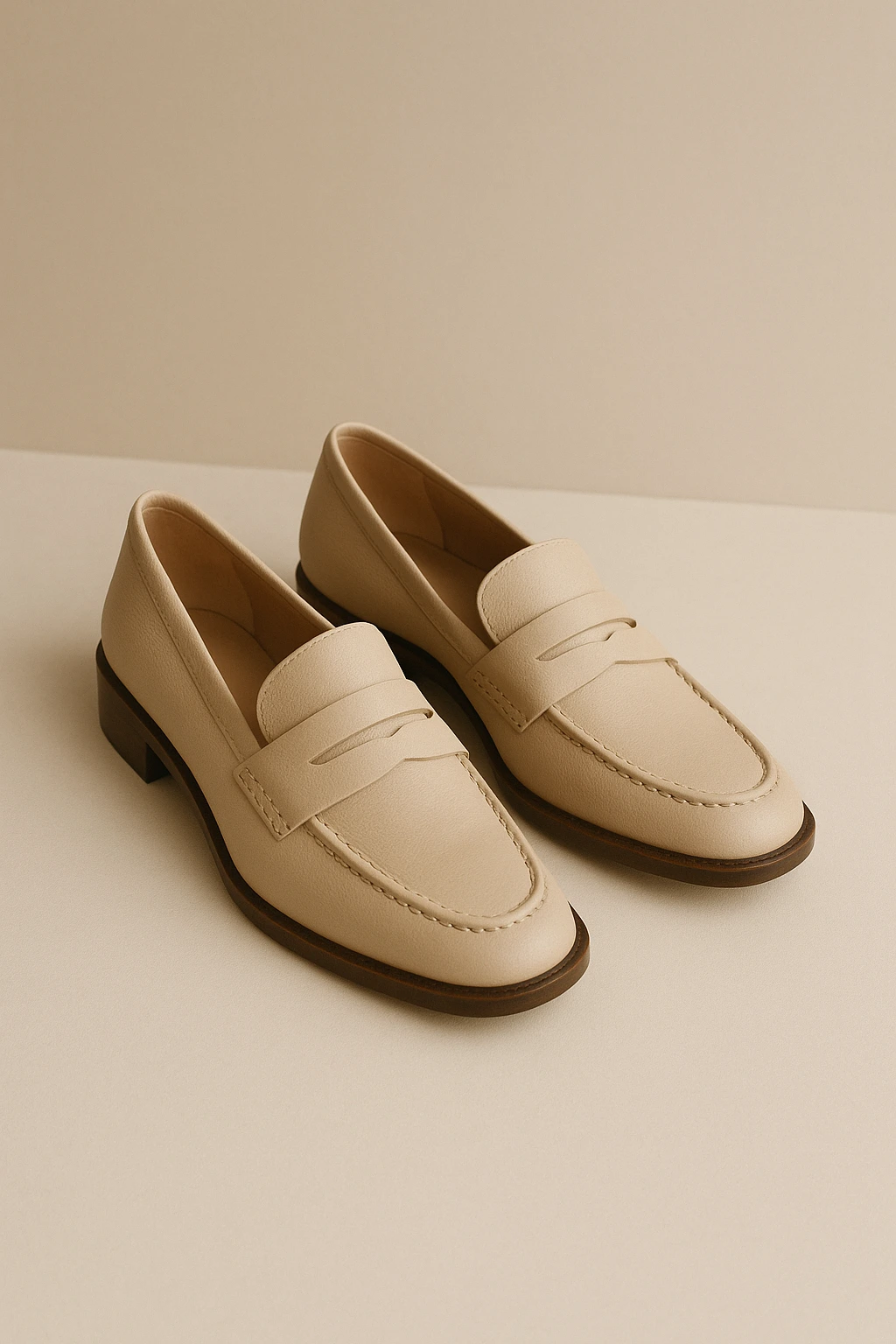
Once you’ve started to see your wardrobe through silhouette, palette, fabric, and real-life roles, it can be helpful to have a small starting point—not a mandate, just a shortlist. The pieces below aren’t a full capsule or a set of rules. They’re quiet anchors: the kinds of garments that tend to do a disproportionate amount of work once they’re right.
You don’t need all of them at once. You might already own versions of some. Think of this mini edit as a way to focus your attention when you’re ready to upgrade: one blazer that truly fits, a trench that works over nearly everything, a pair of trousers and a shoe that make half your closet more wearable. The goal is not to build a new persona, but to make the clothes you reach for most feel more like you.
Quiet-Luxury Wardrobe — Mini Edit
Eight pieces that do most of the work: a single blazer, one trench, two pairs of pants, a dress, two foundational knits, and a grounded loafer. Rotate them through work, dinner, and travel; let accessories and beauty carry the seasonal shifts.

Layer Investment
Toteme — Tailored Blazer
A sharp, slightly relaxed blazer that makes denim, dresses, and trousers feel finished in seconds.
Shop blazer
Outer layer Elevated
Massimo Dutti — Classic Cotton-Blend Trench
A mid-length trench in soft stone that slips over everything from suiting to weekend denim.
Shop trench
Trouser Elevated
Aritzia — Agency Pant
A straight, draped trouser that anchors blazers, knits, and tees without feeling stiff.
Shop trousers
Knit Elevated
Naadam — Original Cashmere Crew
A classic cashmere crew that layers under the blazer, over the dress, and with denim on off-days.
Shop sweater
One-and-done Elevated
Toteme — Everyday Dress
A fluid column that reads polished with a blazer and boots, or pared-back with flats and minimal jewelry.
Shop dress
Shoe Elevated
Aeyde — Oscar Leather Loafers
A streamlined loafer that works with trousers, denim, and dresses without feeling preppy or too formal.
Shop loafers
Denim Attainable
Levi’s — Ribcage Straight Jeans
High-rise, straight-leg denim that balances the blazer, trenches, and slimmer knits.
Shop jeans
Base layer Attainable
Everlane — Slim Crew in Essential Cotton
A smooth, slim tee that disappears under blazers and knits, or stands alone with denim on casual days.
Shop teeThis mini edit includes affiliate links. If you choose to purchase through them, The Quiet Luxe Edit may earn a small commission at no additional cost to you.
How to wear this week
Think in simple pairings rather than full outfits. A few ideas to put this mini edit to work:
- Monday: Toteme blazer + Agency pant + Everlane slim crew + loafers.
- Tuesday: Naadam cashmere over the Toteme dress with boots or loafers.
- Wednesday: Trench + jeans + slim crew for casual meetings; add blazer for late calls.
- Thursday: Blazer over Naadam cashmere + Agency pant for your sharpest day.
- Friday: Toteme dress on its own, trench on top, loafers or a low heel for dinner.
Everything should mix, repeat, and layer so getting dressed feels like a quiet ritual, not a decision tree.
Save for later: Screenshot or pin this mini edit and “How to wear this week” to reuse each season with the pieces you already own.
What It Feels Like to Live with a Quiet Luxury Wardrobe
A quiet luxury wardrobe isn’t something you arrive at and then freeze. It’s more like a conversation you keep having with yourself: What do I actually wear? What feels good on my body now? Where do I want a little more ease, or a little more structure? The silhouettes, palette and fabrics you choose today might shift as your life does, but the underlying intention stays the same. If you’d like to see how this looks across a real week, How to Wear a Quiet Luxury Wardrobe This Week walks through five calm outfits using this framework.
You’re not trying to impress an algorithm or match a grid. You’re building a small, steady collection of pieces that let you move through your days with a bit more clarity and a bit less noise. Clothes that support the work you do, the people you love, and the way you want to show up—for others and for yourself.
If that sounds slow, that’s the point. Quiet luxury has room for a life lived over years, not just a season.
You don’t need to change everything at once. Pick one role in your life — work, off-duty, evenings, or at home — and make that corner of your wardrobe a little quieter, a little clearer, and a little more yours. The rest can follow at your pace.
The Quiet Luxe Framework
If you want a more complete view of this system, The Quiet Luxe Framework gathers the principles behind building a wardrobe with intention—one that feels coherent, wearable, and quietly complete.
Explore the FrameworkBuild the wardrobe from here.
A quiet wardrobe becomes useful through structure, not accumulation. Start with the question you’re trying to solve, then follow the path that fits where you are now.
You don’t need to apply all of this at once. A clear starting point makes everything easier to build from.

