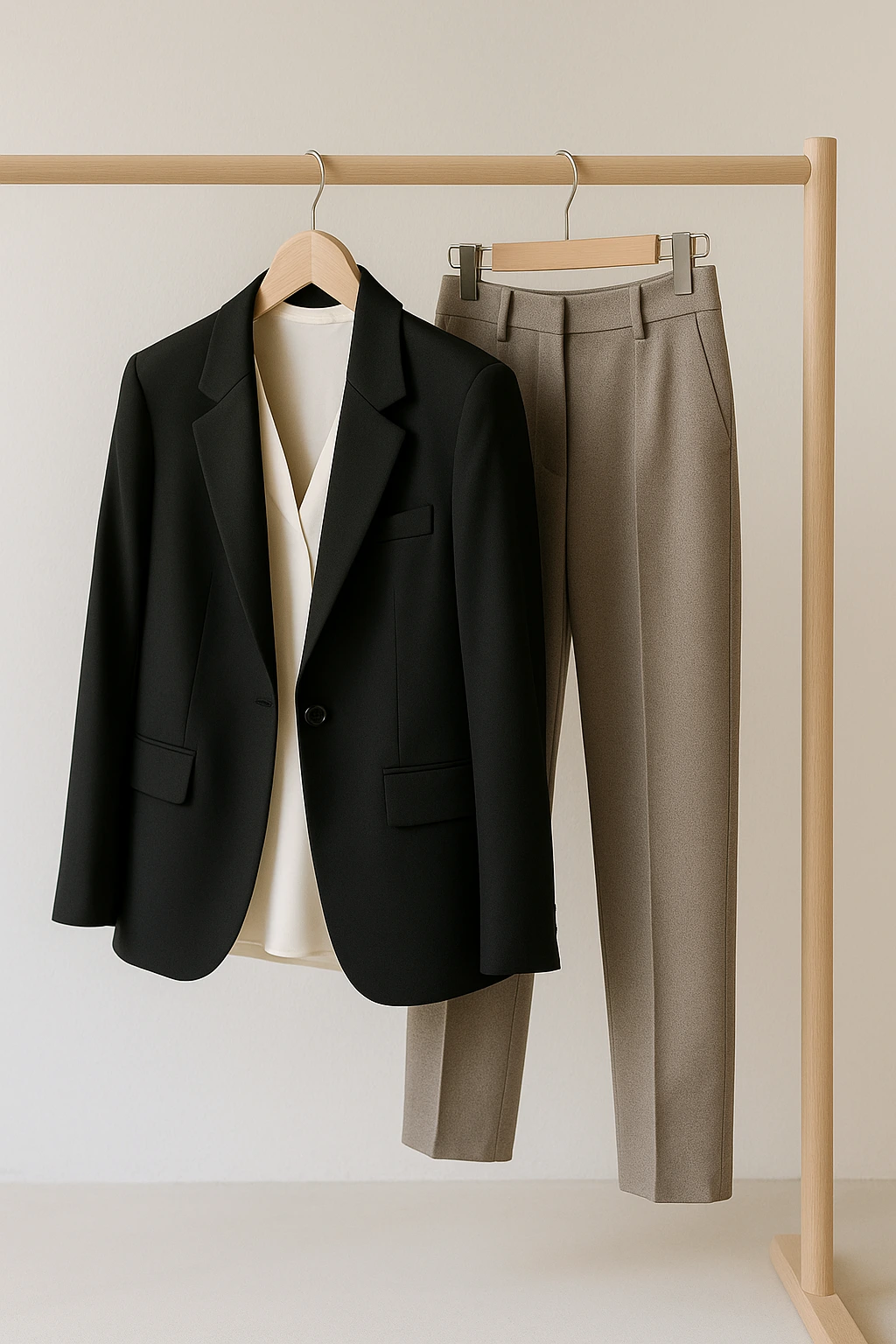
A Quiet Authority Capsule is a small professional wardrobe built for days when your attention needs to be somewhere other than your clothes.
It is designed for long hours, consequential decisions, travel, meetings, and the ordinary unpredictability of work that carries responsibility. The pieces repeat easily, move comfortably, and hold their shape without requiring constant adjustment.
This is not a capsule built around novelty. It is built around reliability: familiar silhouettes, restrained color, supportive structure, and clothes that become easier to wear the more often you return to them.
If you want the philosophy behind this approach, Dressing for Quiet Authority explores why clothing can support presence without trying to signal it. What follows here is the practical version: the rules, the situations, and the 12 pieces that make the system work.
The Rules of Quiet Authority
1. Every piece should reduce friction
Nothing should require special underwear, constant adjustment, complicated styling, or a second thought once you leave the house.
2. Structure should support, not restrict
Tailoring matters when it gives a garment shape. It stops being useful when you cannot sit, reach, walk, or work comfortably in it.
3. Comfort is part of performance
Breathability, movement, weight, and fit matter because discomfort consumes attention. The goal is not softness for its own sake; it is physical ease that still reads polished.
4. Repetition is intentional
The same trouser shape, coat, knit, or shoe can become a signature. A Quiet Authority wardrobe does not need constant visual change to feel complete.
5. Nothing should compete with the wearer
Interest can come from proportion, fabric, and finish. The clothes do not need to become the subject of the room.
These rules naturally favor pieces that can be worn for years rather than a season. Longevity is less an aesthetic here than the result of choosing clothes you already know you will want to repeat.
How the Quiet Authority Capsule Works in Practice
This is where the capsule stops being theoretical.
The pieces are designed to work across contexts rather than specific occasions. They repeat easily, hold their shape, and require very little recalibration as the day changes.
Rather than asking, What do I wear to this? the capsule answers a quieter question:
What will allow me to stay present, composed, and comfortable as the day unfolds?
High-Stakes and Decision-Heavy Days
On days filled with meetings, evaluations, presentations, or difficult decisions, clothing should remove friction rather than add to it.
A familiar trouser eliminates fit questions. A blazer gives the look enough structure. Shoes you have already broken in let you forget about your feet.
Nothing pulls. Nothing needs checking.
The clothes recede so your attention can stay where it belongs.
Long Days, Travel, and Compressed Schedules
A Quiet Authority Capsule should survive a day that changes shape.
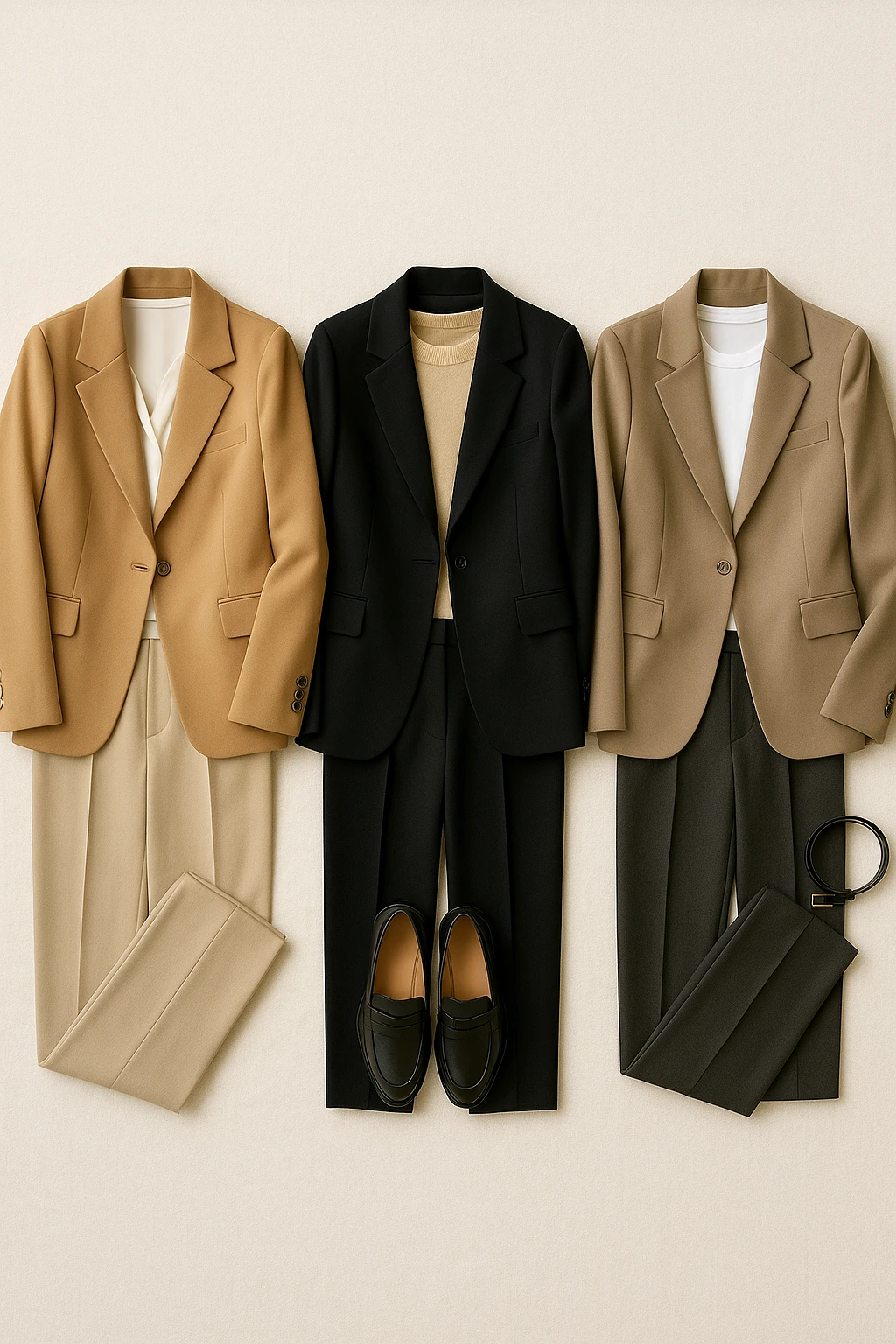
The same trousers, knit, and blazer can move from a morning meeting to travel to dinner without requiring an entirely new outfit. A small number of dependable pieces becomes an advantage because you already know how they behave together.
Repetition is not a limitation here. It is what makes the system reliable.
Days When You Don’t Want to Think About Clothes
This may be the most important test.
A well-built capsule should work even when you are tired, distracted, rushed, or simply uninterested in getting dressed.
You should not have to ask:
Does this work?
Is this appropriate?
Do I need something else?
The wardrobe has already answered those questions.
Quiet authority is not about being noticed.
It is about being uninterrupted.
The Quiet Authority Capsule
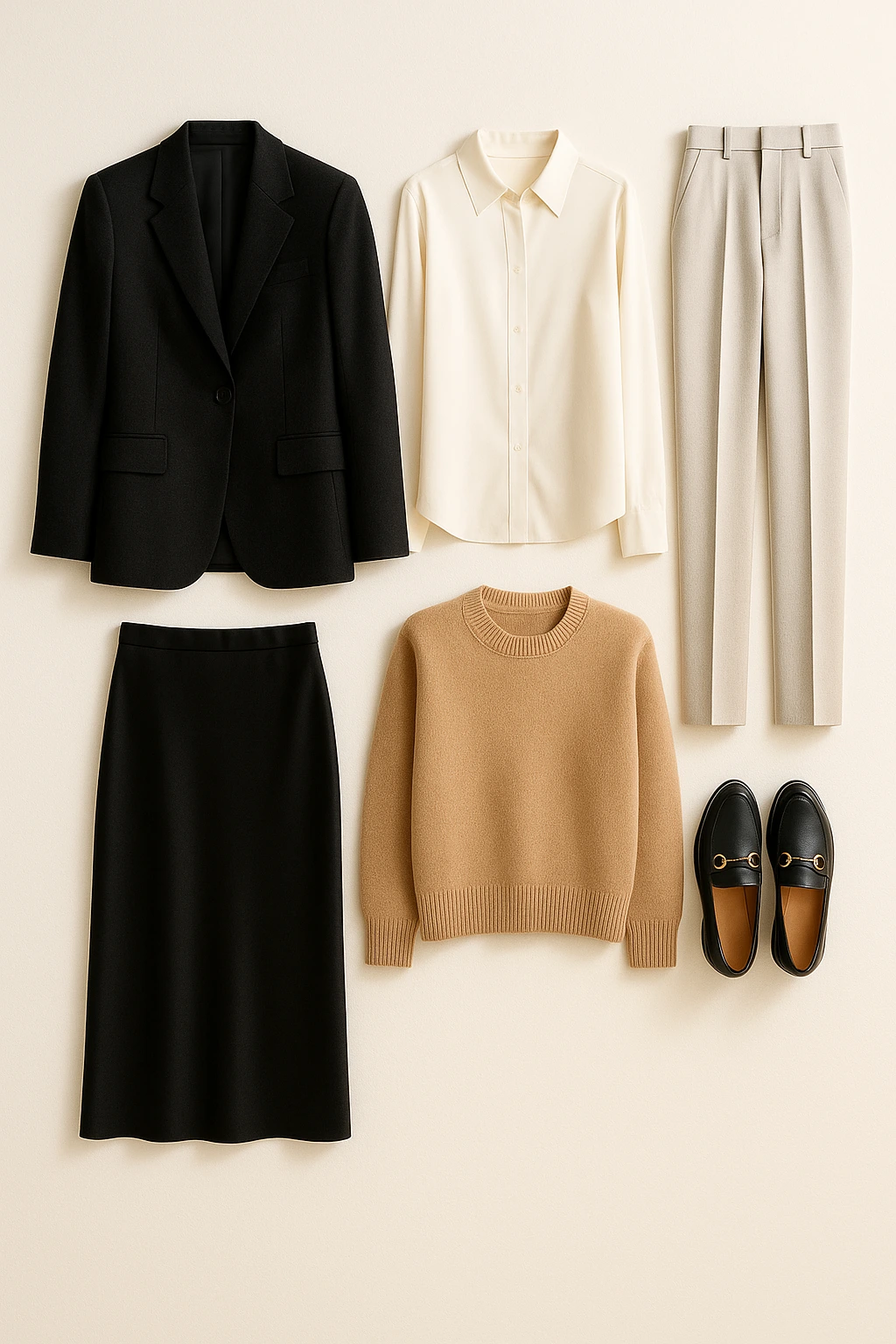
A small, disciplined set of pieces that reads capable without announcing itself—tailoring you can breathe in, a palette that holds steady, and textures that settle the whole look. Use this as an anchor for high-responsibility days, not a checklist to shop in a rush.

Outer layer Elevated
Tailored Coat
Example: COS — Tailored Wool-Twill Coat
The layer that quiets everything underneath—clean line, useful weight, and enough structure to pull a look together.
Shop this coat
Work bag Investment
Structured Work Tote
Example: Cuyana — System Tote
Holds a laptop and a day’s decisions without looking busy.
Shop this tote
Blazer Elevated
Relaxed Tailored Blazer
Example: Theory — Etiennette Blazer
Sharper than knitwear, softer than armor—the layer that gives an ordinary base enough authority.
Shop this blazer
Trouser Elevated
Draped Trouser
Example: Aritzia — New Agency Pant
A trouser that creates a long, controlled line without feeling rigid.
Shop these trousers
Shirt Elevated
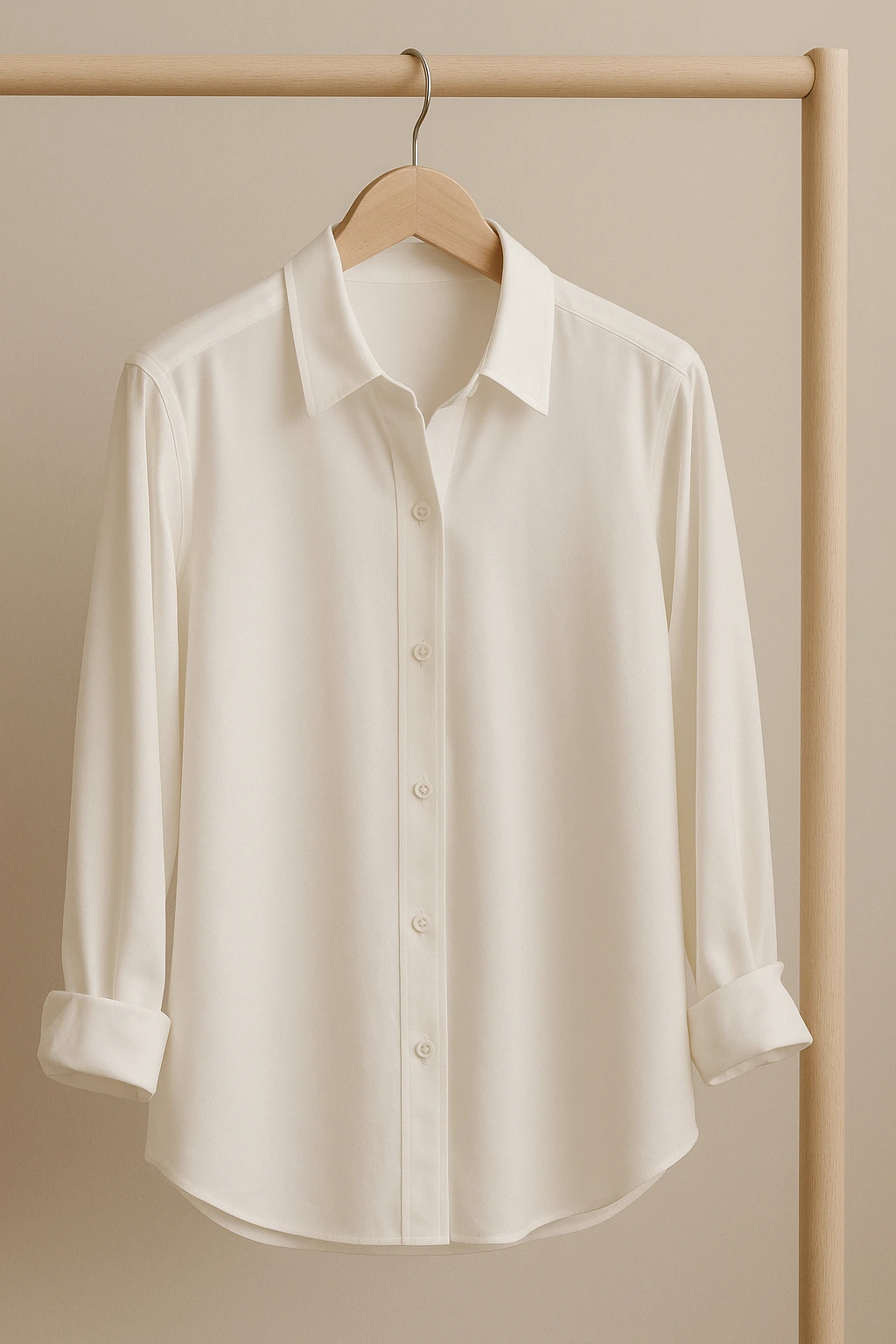
Fluid Silk Shirt
Example: Vince — Stretch-Silk Button-Front Blouse
Softness and movement keep tailoring from becoming too severe.
Shop this shirt
Knit Elevated
Fine-Gauge Knit
Example: COS — Merino Wool Crew
Authority without stiffness—a clean neckline and enough drape to sit easily with tailoring.
Shop this knit
One-and-done Elevated
Column Dress
Example: Toteme — Everyday Column Dress
One clean line when the easiest answer needs to be the polished one.
Shop this dress
Boot Elevated
Streamlined Ankle Boot
Example: Aeyde — Ayla Ankle Boots
A clean, narrow-profile boot that works under trousers and with skirts or dresses.
Shop these boots
Flat Elevated
Supportive Leather Flat
Example: Naturalizer 27 Edit — Carla Ballet Flat
A polished alternative to the ankle boot for warmer days, travel, and long hours on your feet.
Shop these flats
Skirt Attainable
Structured Midi Skirt
Example: Quince — Ponte Midi Skirt
The easiest quiet-suit alternative when you do not want another trouser.
Shop this skirt
Base layer Attainable
Refined Cotton Base Layer
Example: Everlane — Slim Crew in Essential Cotton
A clean tee that disappears beneath tailoring—which is precisely the job.
Shop this tee
Denim Attainable
Dark Structured Denim
Example: Levi’s — Ribcage Straight
For lower-formality workdays when trousers are unnecessary but polish still matters.
Shop this denimThis mini edit includes affiliate links. If you choose to purchase through them, The Quiet Luxe Edit may earn a small commission at no additional cost to you.
Quiet Authority Capsule FAQs
What is a quiet authority capsule?
A quiet authority capsule is a small, intentionally chosen wardrobe that signals competence and taste without relying on logos, trends, or loud styling. Think clean lines, thoughtful fabric, repeatable formulas, and pieces that hold their shape over time.
How is this different from a basic capsule wardrobe?
A basic capsule wardrobe usually optimizes for minimalism and versatility. A quiet authority capsule adds presence: stronger structure, sharper proportions, and elevated materials. It is less “I own fewer things” and more “everything I own has a point of view.”
How many pieces do I need?
If you are building from scratch, aim for 10–12 pieces you can wear in rotation without overthinking. If you already have a closet, start with 5 anchor pieces—coat, trousers or denim, knit, shoe, and bag—and refine from there.
Can this be done on a budget?
You can build the look without spending a fortune. The authority comes from fit, fabric hand, and restraint, not price alone. Investment pieces can help because they often deliver structure and longevity more reliably, but they are not required.
Do I need to wear black?
Black is optional. Quiet authority works beautifully in charcoal, navy, espresso, stone, and ivory. The key is keeping contrast and texture intentional while avoiding too many competing undertones at once.
When this capsule isn’t the right choice
The Quiet Authority Capsule is intentional—but it isn’t universal.
It works best when repetition, restraints, and familiarity make getting dressed easier. There are times when a different approach will serve you better.
Your role depends on visible creativity.
If novelty, experimentation, or strong visual signaling is part of the work—fashion, creative direction, brand-facing media—this capsule may feel too restrained.
Quiet authority does not need to perform. It holds.
You’re still learning your physical preferences.
If you are still discovering which fabrics, proportions, or silhouettes actually support you, a more exploratory wardrobe may be useful first.
This capsule assumes a degree of self-knowledge.
You prefer frequent rotation and visible change.
This system is built around repetition. If repeating outfits feels limiting rather than grounding, the structure may work against you instead of for you.
Quiet authority favors familiarity over variety.
This is one version of a system — but the structure behind it matters more than the number. Here’s how to build a quiet luxury wardrobe in practice.
The number matters less than the structure behind it.
Quiet authority isn’t a style upgrade. It’s a decision about how much attention you want your clothing to ask for.
If that decision does not suit your life right now, this approach can wait.
It isn’t going anywhere.
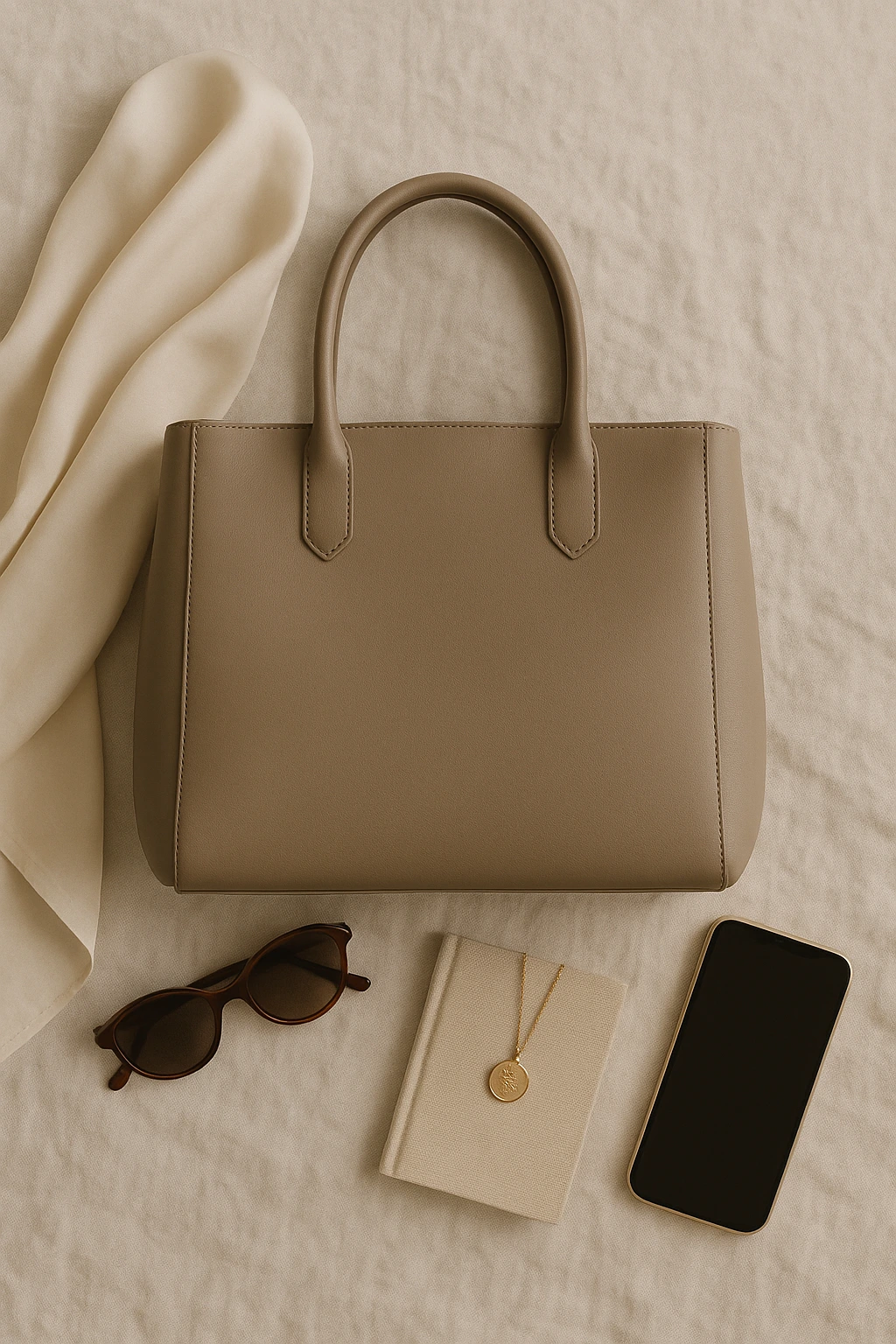
A refined wardrobe works because the pieces work together.
This capsule is one expression of that idea: a smaller system built around clarity, repetition, and ease.
If you want to keep refining the structure, the next questions are how many pieces are enough, which essentials earn their place, and how to make repetition work in practice.
Seeing the pieces is one thing. Having a version you can actually use is what makes the difference.

