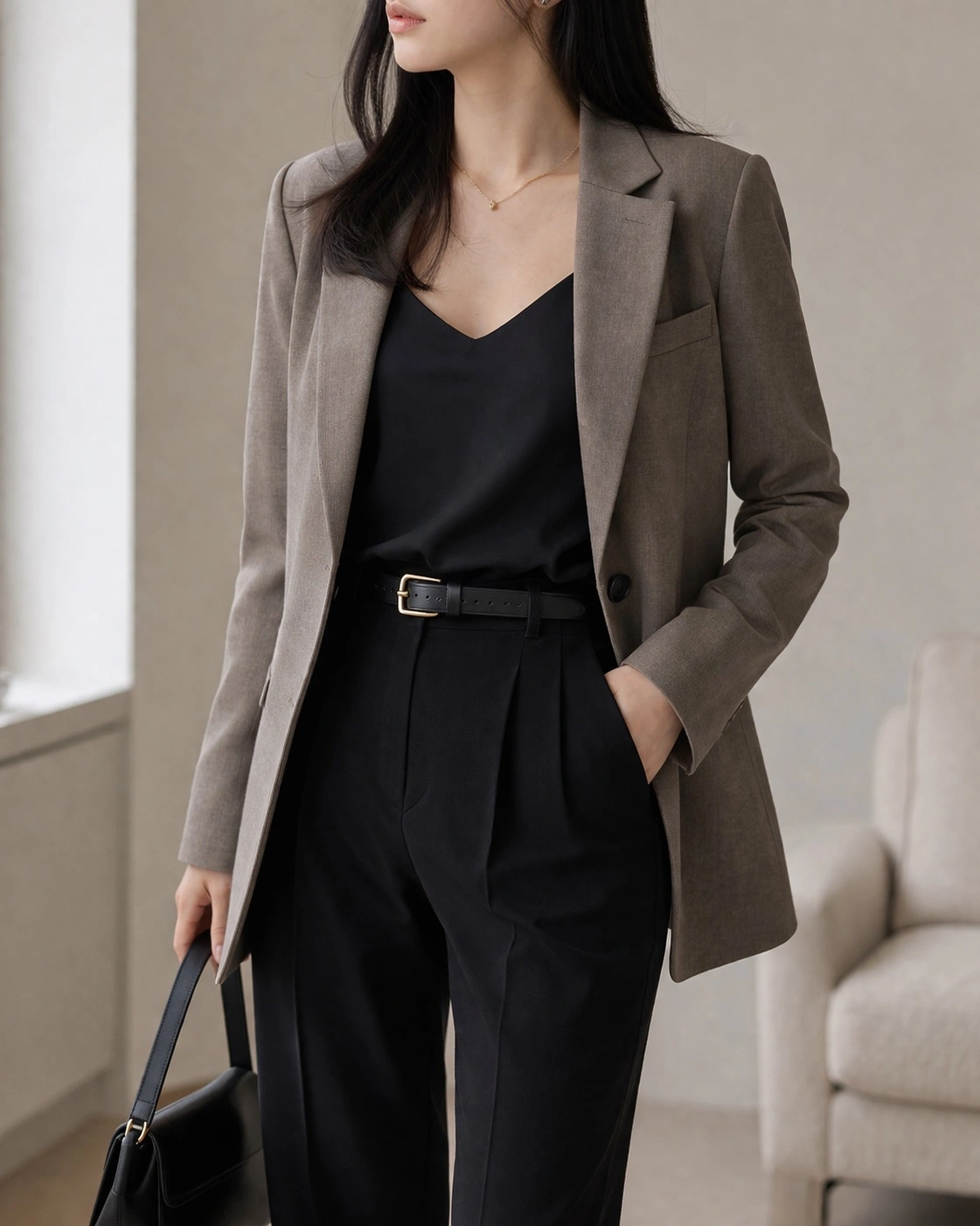
A capsule wardrobe doesn’t become useful because it offers more. It becomes useful when it settles.
The same pieces, worn often enough to feel familiar.
The same combinations, returned to without hesitation.
This is the part most guides miss when they explain how to wear a capsule wardrobe. They focus on variety — how to create more outfits, more combinations, more interest.
But a wardrobe rarely becomes easier as it expands. It becomes easier when it repeats quietly, without effort.
That kind of repetition only works when the foundation is clear—when the pieces themselves are considered, not just collected. If that foundation still feels undefined, it helps to return to what actually counts as essential.
This is where a wardrobe shifts from something you manage to something you rely on — and where learning how to wear a capsule wardrobe actually begins.
Why Repetition Feels Uncomfortable in a Capsule Wardrobe
Repetition often feels like something to avoid.
We’re used to thinking that variety signals creativity—that newness keeps things interesting, that more options create more possibility. A wardrobe, then, becomes something to rotate, update, and expand.
Some of that discomfort also comes from uncertainty — how many pieces you actually need, and whether you have enough to make a wardrobe work.
If you’re still building that foundation, it helps to start with a clearer sense of scale. A quiet luxury capsule wardrobe is often smaller than expected, but more deliberate in how it comes together—something that becomes easier to understand once you’ve seen what that range actually is.
In practice, more rarely makes things easier. It creates more decisions, more second-guessing, more subtle friction.
What feels like boredom is often something else entirely.
It’s the unfamiliarity of wearing the same pieces without changing them. The hesitation of reaching for something again before it feels “due.” The sense that an outfit should be different, even when it already works.
Many people assume repetition means the wardrobe has stopped evolving. In reality, repetition is often the first sign that clothing is beginning to cooperate instead of compete.
Over time, that discomfort begins to settle.
Repetition stops feeling like limitation and starts to feel like clarity. You reach for the same pieces not because you have to, but because they continue to hold—visually, practically, and without effort.
What Happens When You Actually Wear a Capsule Wardrobe
Something shifts when you begin wearing the same pieces more often.
At first, it can feel like you’re repeating outfits without getting bored—but not yet convinced that it will last. There’s a tendency to adjust, to change something slightly, to reintroduce variety.
But over time, the repetition settles.
Decisions become quieter. You reach for the same combinations without pausing to reconsider them. What once felt limited begins to feel reliable.
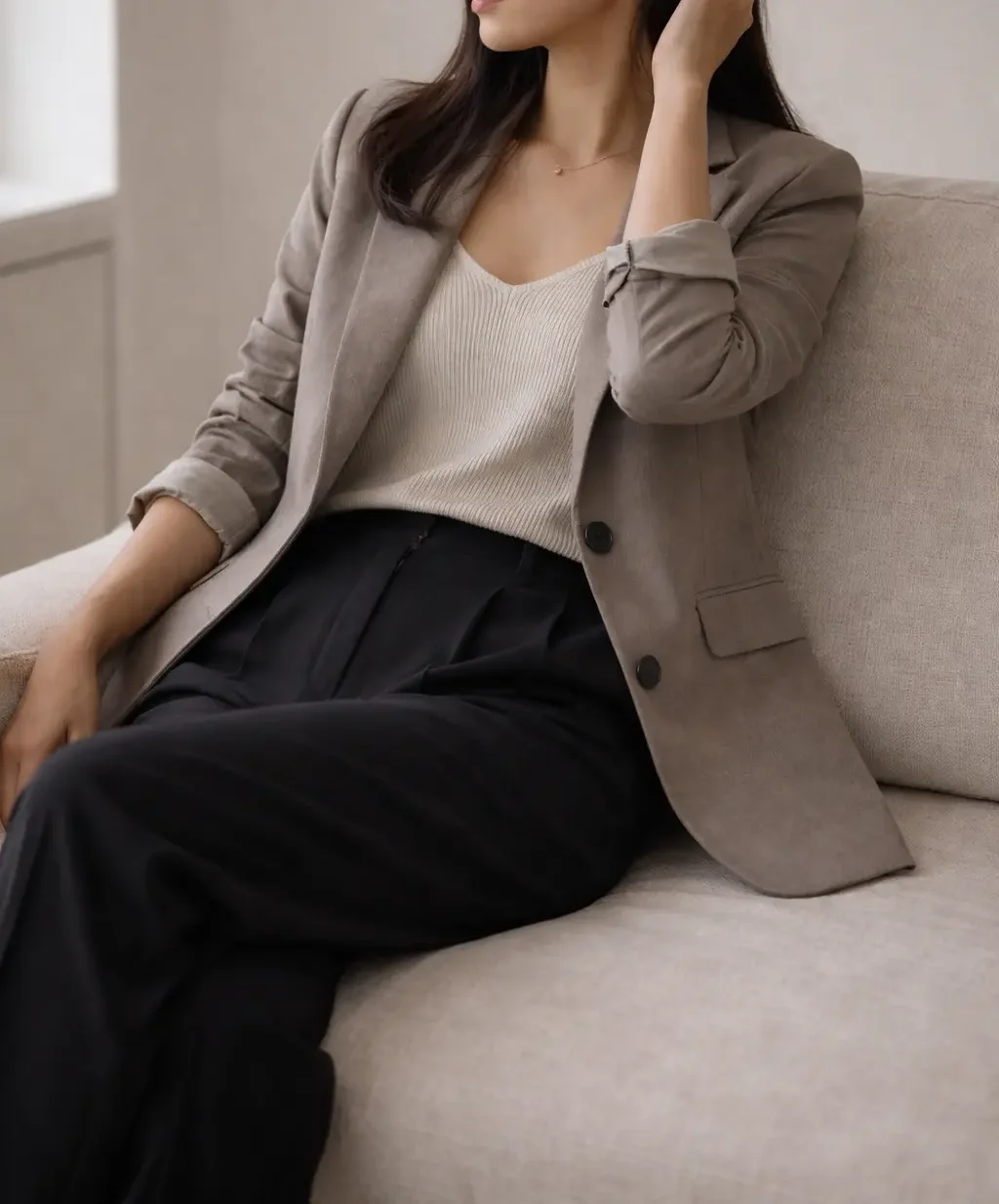
This is where capsule wardrobe outfits begin to take shape—not as something you construct each morning, but as something that already exists.
The pieces begin to hold their place. A blazer that works across days without needing to be reimagined. Trousers that anchor multiple outfits without drawing attention. A shirt that moves easily between combinations without disruption.
Nothing feels new. But everything feels resolved.
This is often where the idea of quiet luxury begins to make sense — not as an aesthetic, but as a way of dressing that relies on consistency rather than novelty.
If that distinction still feels abstract, I’ve written more about it here: what quiet luxury actually means.
With that, a different kind of ease appears—one that doesn’t rely on more options, only on better ones.
3 Ways to Keep a Capsule Wardrobe Interesting
A capsule wardrobe doesn’t rely on constant change to feel complete.
Instead, interest comes from small shifts—subtle adjustments that allow the same pieces to feel different without adding more.
This is how repetition holds its shape without becoming static.
1. Proportion, Not New Pieces
Most variation comes from proportion, not from adding something new.
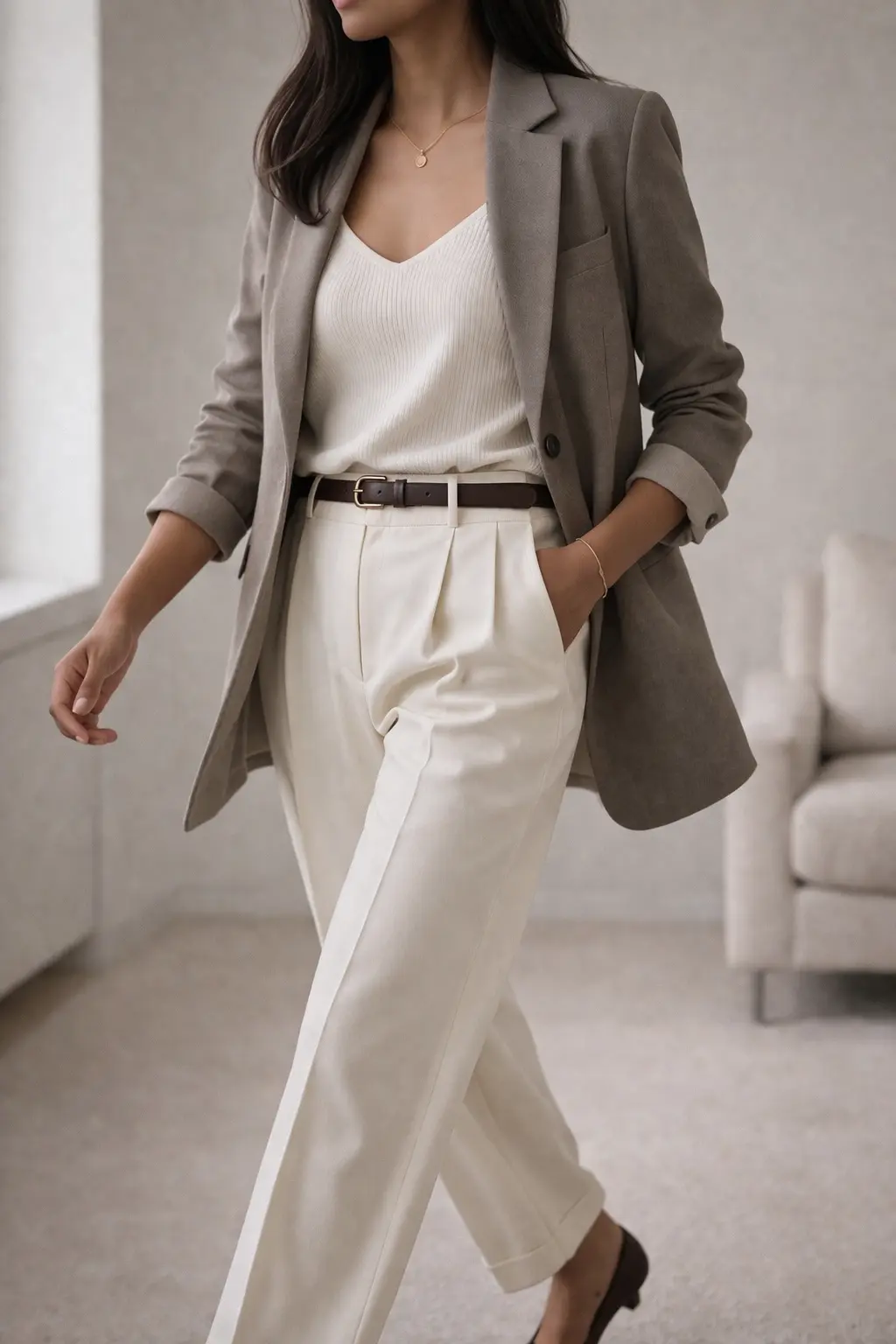
The same blazer can feel different depending on what sits beneath it—a fluid top, a structured shirt, a longer layer that shifts the line of the outfit. Trousers can read sharper or softer depending on where they sit and how they fall.
These are small changes, but they alter the overall silhouette enough to create distinction.
This is where capsule wardrobe outfits evolve—through balance, not replacement.
2. Texture, Not Quantity
Texture introduces depth without increasing the number of pieces.
A matte knit against a smoother trouser. A structured wool layered over something softer. Subtle contrast allows an outfit to feel considered, even when the pieces remain the same.
This is often what prevents repetition from feeling flat. The wardrobe stays minimal, but the experience of wearing it does not.
Quiet luxury rarely depends on constant novelty. More often, it relies on texture, proportion, restraint, and repetition.
3. Repetition with Variation
The goal is not to avoid repeating outfits—but to repeat them with ease.
A familiar combination can return with only slight adjustment: a different shoe, a shift in layering, a change in proportion. The structure remains intact, but the feeling shifts just enough.
This is how you begin repeating outfits without getting bored. Not by creating something entirely new, but by allowing what already works to return in a slightly different form.
Capsule Wardrobe Outfits You’ll Actually Wear
A wardrobe rarely feels complete when everything is new.
It begins to feel complete when certain combinations return—without effort, without reconsideration, without the sense that something needs to be added.
These are not outfits you create.
They are outfits you recognize.
These combinations don’t come from having more options. They come from having more options. They come from working within a smaller, more deliberate set of pieces—one that’s edited enough to repeat without feeling limited.
In many cases, that structure is simpler than expected, often settling into a core set that carries most of the wardrobe.
Travel is one of the clearest places to put that idea into practice. A well-built travel capsule relies less on creating a different outfit every day and more on bringing pieces you already trust to work together.
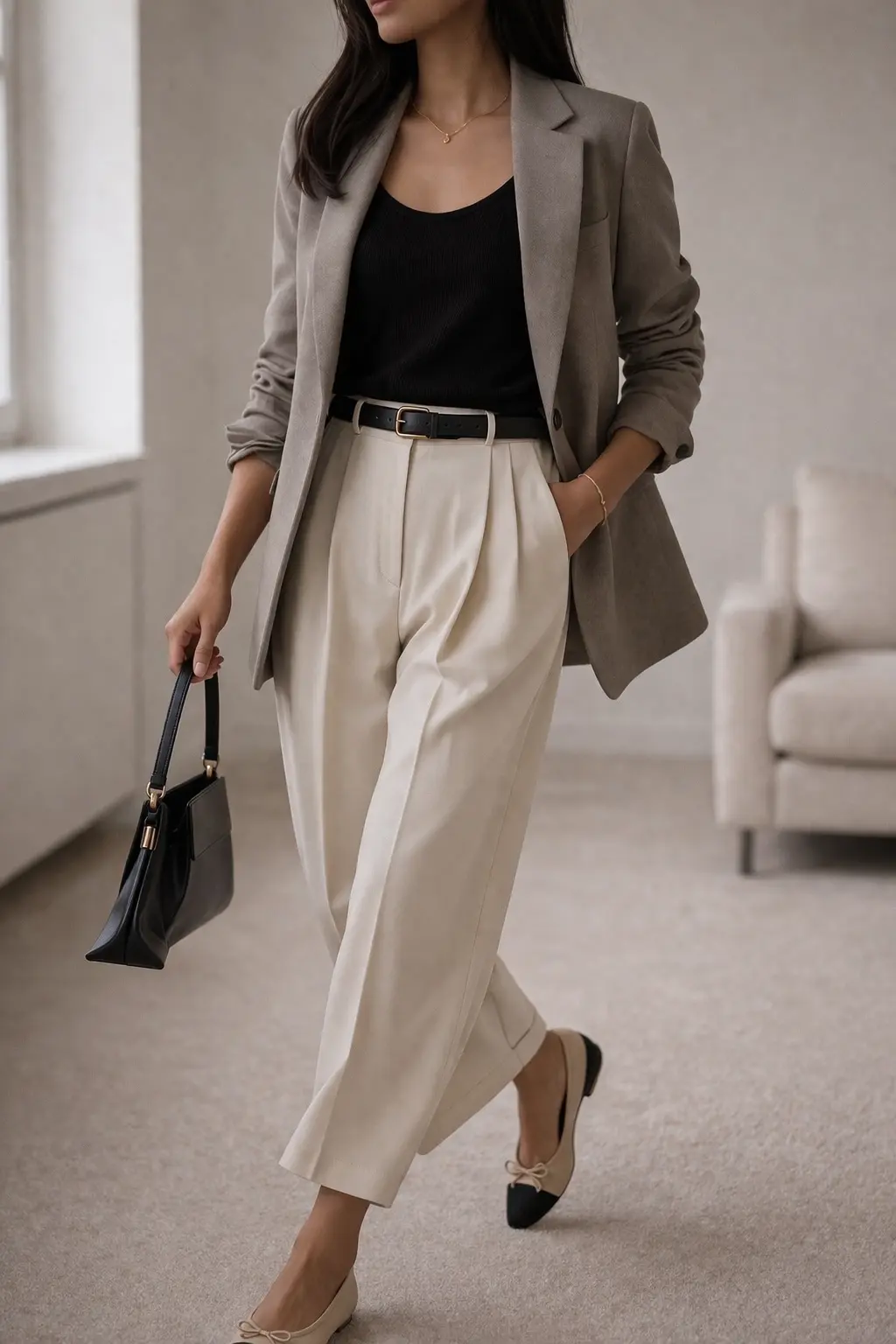
1. Structured layer + fluid base
A blazer or tailored jacket worn over something softer—a knit, a silk top, or a simple shirt—paired with a trouser that holds its line.
This balance between structure and ease is often what makes an outfit feel composed without becoming rigid.
2. Knit + trouser + quiet detail
A knit paired with a well-cut trouser creates a foundation that is both comfortable and refined.
A belt, a shoe, or a slight shift in proportion becomes the detail that completes it—subtle, but enough.
3. Shirt + trouser + restraint
A crisp or softly structured shirt with a tailored trouser.
Nothing added beyond what is necessary. The clarity of the pieces carries the outfit, rather than any additional styling.
4. Dress + grounding layer
A simple dress, paired with a structured outer layer or grounded by a more substantial shoe.
This keeps the look from feeling delicate, allowing it to hold its shape across different settings.
Over time, these combinations stop feeling like choices.
They become defaults—returned to not out of limitation, but because they continue to work.
Wearing a Capsule Wardrobe — FAQs
Will I get bored wearing the same clothes?
Not in the way most people expect. What feels like boredom at first is often unfamiliarity. Over time, repetition begins to feel easier and more natural, as outfits settle into combinations that consistently work.
How do you repeat outfits without getting bored?
Repetition becomes easier when small elements shift—proportion, texture, or layering. The structure of the outfit remains the same, but subtle variation keeps it from feeling static.
How many outfits should a capsule wardrobe have?
A capsule wardrobe does not need a large number of outfits. Instead, a small set of repeatable combinations—built from well-chosen pieces—can cover most daily needs with ease.
What if I like variety in my wardrobe?
Variety can still exist within a capsule wardrobe. The difference is that it comes from how pieces are worn and combined, rather than from constantly adding something new.
When a Wardrobe Starts to Feel Complete
A wardrobe doesn’t become complete because it contains more. It becomes complete when it begins to settle.
The same pieces, worn without hesitation. The same combinations, returned to without question.
Not because there is nothing else to wear — but because what’s already there continues to work.
This is where ease begins. And where a wardrobe starts to feel like something you can rely on.
And once that sense of reliability becomes consistent, the process shifts—from wearing what works to building a wardrobe that works this way by design.
A calmer wardrobe begins with what you repeat.
Wearing a capsule wardrobe is less about creating endless variety and more about learning to trust the pieces you return to again and again.
If you’d like to go deeper, explore the guides that explain why repetition works, how clothing can feel polished without stiffness, and the details that make outfits look quietly refined.
