Many professionals want work outfits that feel polished, authoritative, and appropriate for modern workplaces. They also want to be comfortable enough to move through long meetings, commutes, presentations, and ordinary workdays without constantly adjusting what they’re wearing.
For a long time, these goals were treated as opposites. Looking credible meant looking controlled. Structured jackets, rigid fabrics, and clothing that restricted movement became part of the visual language of professionalism. Discomfort was framed as the price of authority.
But authority doesn’t actually come from stiffness.
It comes from clarity.
The outfits that project the most confidence are rarely the ones that feel the most restrictive. More often, they are built from garments that hold their line, move well, and allow the wearer to remain fully at ease. Professional style doesn’t have to feel stiff. In many cases, comfort and composure are working toward the same result.
Understanding the difference between structure and stiffness changes the way a professional wardrobe is built. Once you stop equating authority with discomfort, it becomes easier to create polished but comfortable work outfits that support the work you’re actually doing.
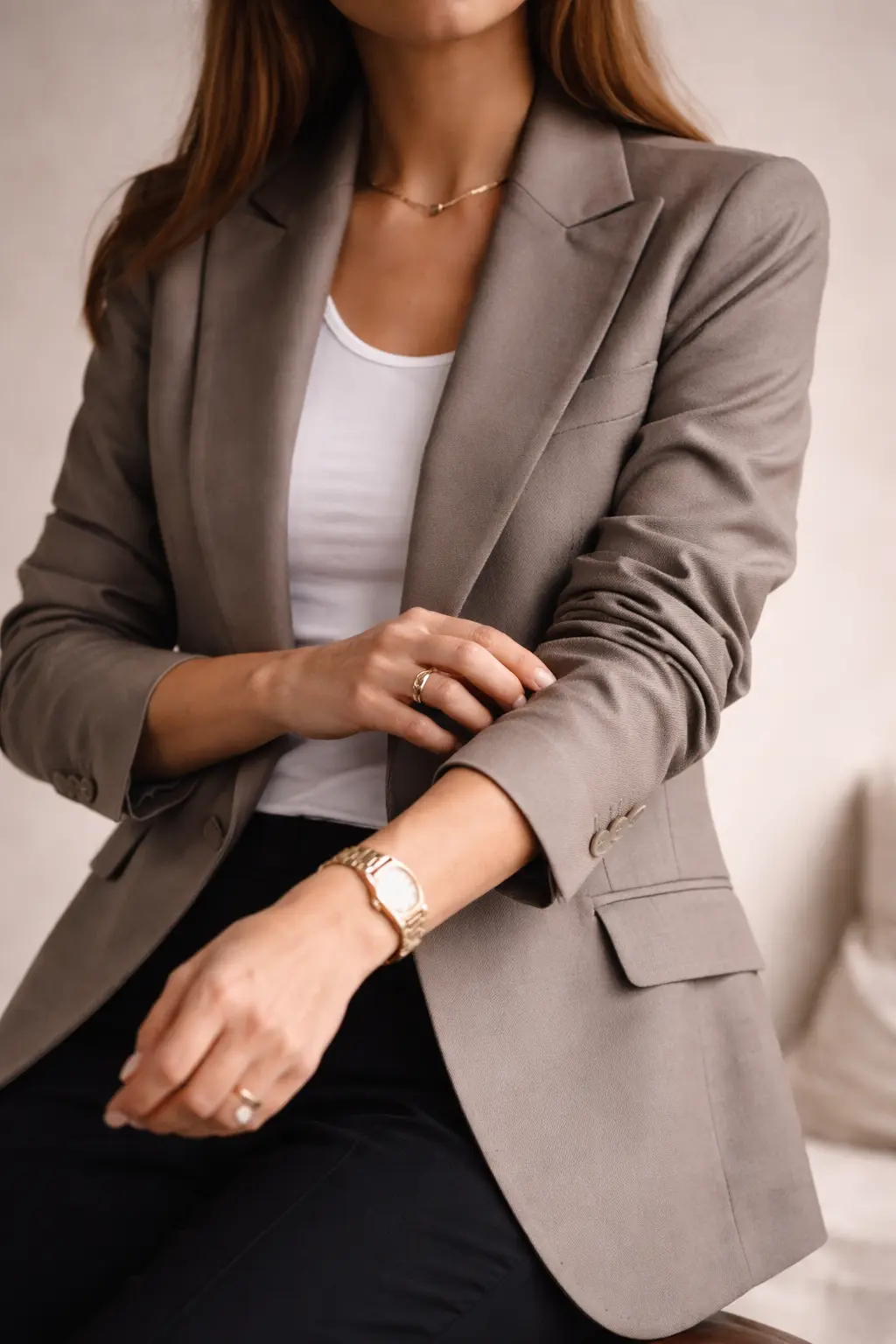
Why Professional Clothing Feels So Uncomfortable
If you’ve ever changed out of your work clothes the moment you arrived home, you’re not alone.
For decades, discomfort was treated as evidence that professional clothing was doing its job. Structured suiting, starched shirting, rigid fabrics, and shoes that prioritized appearance over wearability became visual shorthand for discipline and seriousness. Looking polished often meant looking controlled.
These signals developed in workplaces shaped by hierarchy and formality. Many traditional professional wardrobes assumed limited movement: sitting at a desk, attending meetings, and maintaining a sharp appearance throughout the day. Comfort was rarely part of the equation.
Even as workplaces evolved, the association remained.
The result is a lingering belief that to look credible, clothing must feel restrictive. If a blazer feels soft, a trouser has stretch, or a shoe is genuinely comfortable, it can seem somehow less professional—as though ease undermines authority.
But most people aren’t responding to stiffness itself.
They’re responding to what stiffness was trying to communicate.
Professional style tends to signal steadiness. Reliability. Intentionality. The visual impression of someone who appears composed and prepared.
The mistake is assuming those qualities require discomfort.
They don’t.
In fact, once clothing becomes distracting—waistbands that pinch, sleeves that need constant adjustment, shoes that demand endurance rather than support—it begins to pull attention away from the person wearing it.
The goal of a professional wardrobe was never discomfort.
It was confidence.
And understanding that distinction changes everything.
The Difference Between Structure and Stiffness
The confusion between professionalism and discomfort often comes from treating structure and stiffness as though they are the same thing.
They are not.
At first glance, the two can look similar. Both create clean lines. Both suggest intention. Both can make an outfit appear polished.
But they create very different experiences once the clothing is actually worn.
Structure supports the body.
Stiffness resists it.
A structured garment maintains its shape while allowing movement. It sits comfortably, holds its line, and lets the wearer move through the day without constantly thinking about what they’re wearing.
A stiff garment asks something in return.
It pinches. Restricts. Requires adjustment. It insists on being managed.
The difference becomes visible in small ways.
A blazer with quiet structure stays in place as you move through meetings, presentations, and long afternoons at your desk. A stiff jacket may encourage you to tug at the sleeves, shift the shoulders, or count the hours until you can take it off.
Trousers that drape cleanly allow you to sit, stand, and walk without interruption. Trousers that pull, pinch, or lose their shape divide your attention between the work itself and the clothing meant to support it.
This is why modern professional wardrobes increasingly favor pieces that balance stability with ease: knit blazers that maintain a clean shoulder line, trousers cut from fabrics with fluidity and weight, or shoes substantial enough to anchor an outfit without becoming a source of distraction.
In many cases, a single structured element is enough to steady the entire look.
A blazer.
A polished shoe.
A well-cut trouser.
Once that foundation exists, softer pieces often read differently. Fine knits feel intentional. Fluid fabrics feel composed. Even a simple tee can appear professional when paired with garments that provide enough visual structure.
The goal is not to eliminate structure from a professional wardrobe.
It is to choose structure that works with you rather than against you.
Because authority rarely comes from appearing rigid.
More often, it comes from the quiet confidence of someone whose clothing allows them to remain fully present.
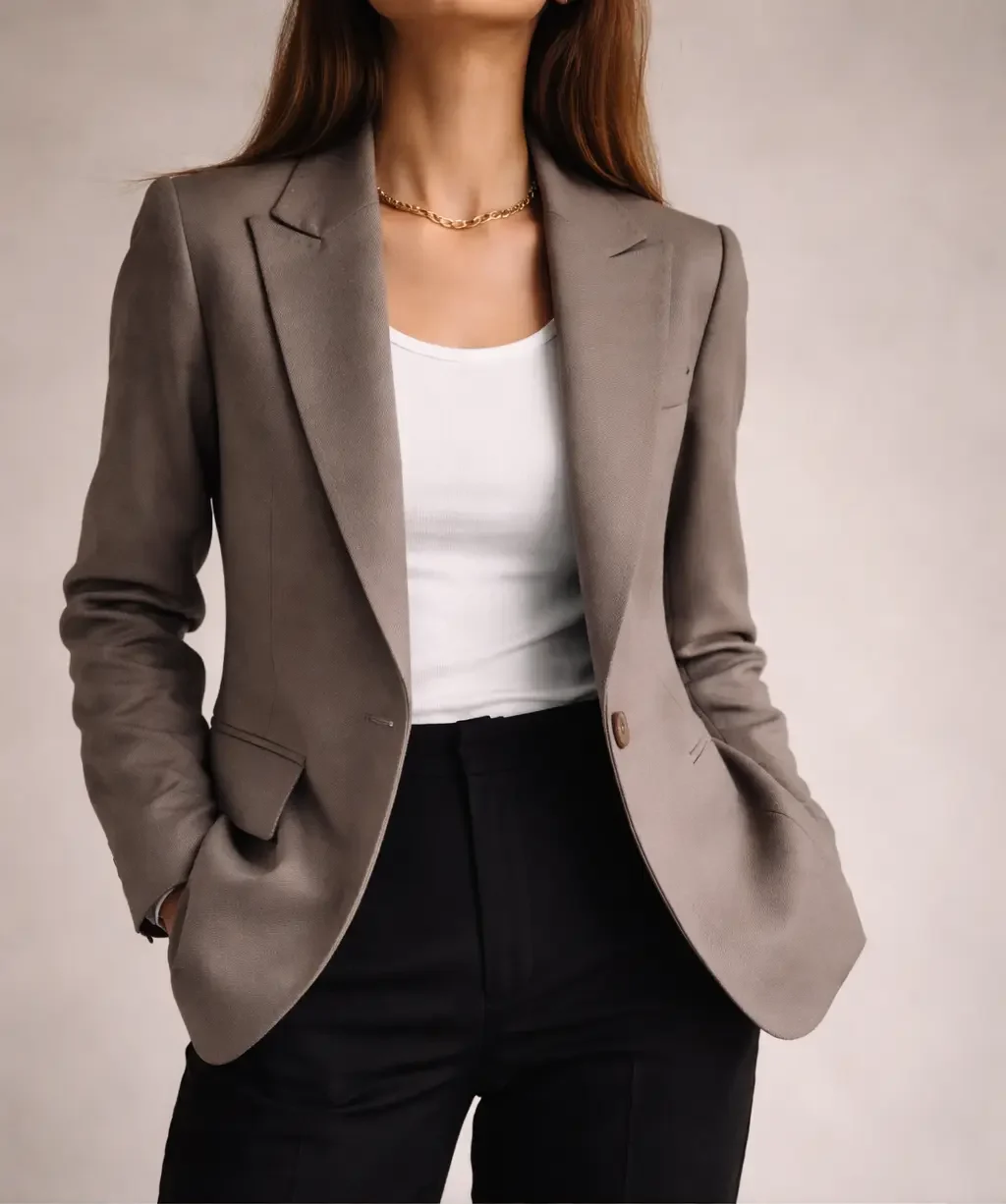
Why Stiffness Actually Works Against Authority
Stiff clothing often does the opposite of what it intends.
When garments restrict movement or feel uncomfortable, the body compensates. Shoulders tense. Sleeves are adjusted. Waistbands are shifted. Attention drifts toward the clothing instead of the work at hand.
These small interruptions are easy to overlook, but they subtly undermine the sense of composure an outfit is meant to create.
Authority tends to read as calm, steady, and self-contained.
Clothing that demands constant adjustment introduces friction into that impression.
By contrast, garments that move easily and remain stable on the body allow attention to stay where it belongs — on the conversation, the decision, or the work itself.
In that sense, comfort and authority are not opposing ideas.
They are often working toward the same result.
It is possible to have professional polish without stiffness.
What Actually Makes an Outfit Look Professional
Professional style is often misunderstood.
It isn’t created through rigidity or excessive formality. Instead, it emerges from a small set of visual signals that communicate steadiness, intention, and composure.
The most consistent of these signals is structure.
A garment that holds its line—through the shoulder, the waist, or the base of the outfit—gives the eye something stable to register. Once that line exists, other elements begin to read differently. Knitwear feels intentional. Pull-on trousers look polished. Even a simple tee can appear considered rather than casual.
Fabric also plays an important role.
Materials with enough weight to drape well tend to look more composed than those that cling, wrinkle excessively, or lose their shape throughout the day. Wool blends, compact knits, structured cotton, and crepe often create a sense of ease because they support the silhouette without restricting movement.
Proportion matters, too.
A blazer that fits comfortably through the shoulders. Trousers that skim rather than squeeze. Hemlines that feel deliberate rather than distracting. Professional style rarely depends on extreme silhouettes. More often, it relies on clothing that appears balanced and settled on the body.
And then there is repetition.
Many women with polished professional wardrobes aren’t reinventing themselves every morning. They rely on a small number of combinations that consistently work: pieces they trust, fabrics they enjoy wearing, and silhouettes that support the way they actually move through their days.
In that sense, professionalism has less to do with dressing formally and more to do with dressing intentionally.
The impression of authority often comes from clothing that behaves well—garments that maintain their shape, remain comfortable, and allow the wearer to focus on the conversation rather than the outfit itself.
Because when clothing stops demanding attention, your presence becomes the most noticeable thing in the room.
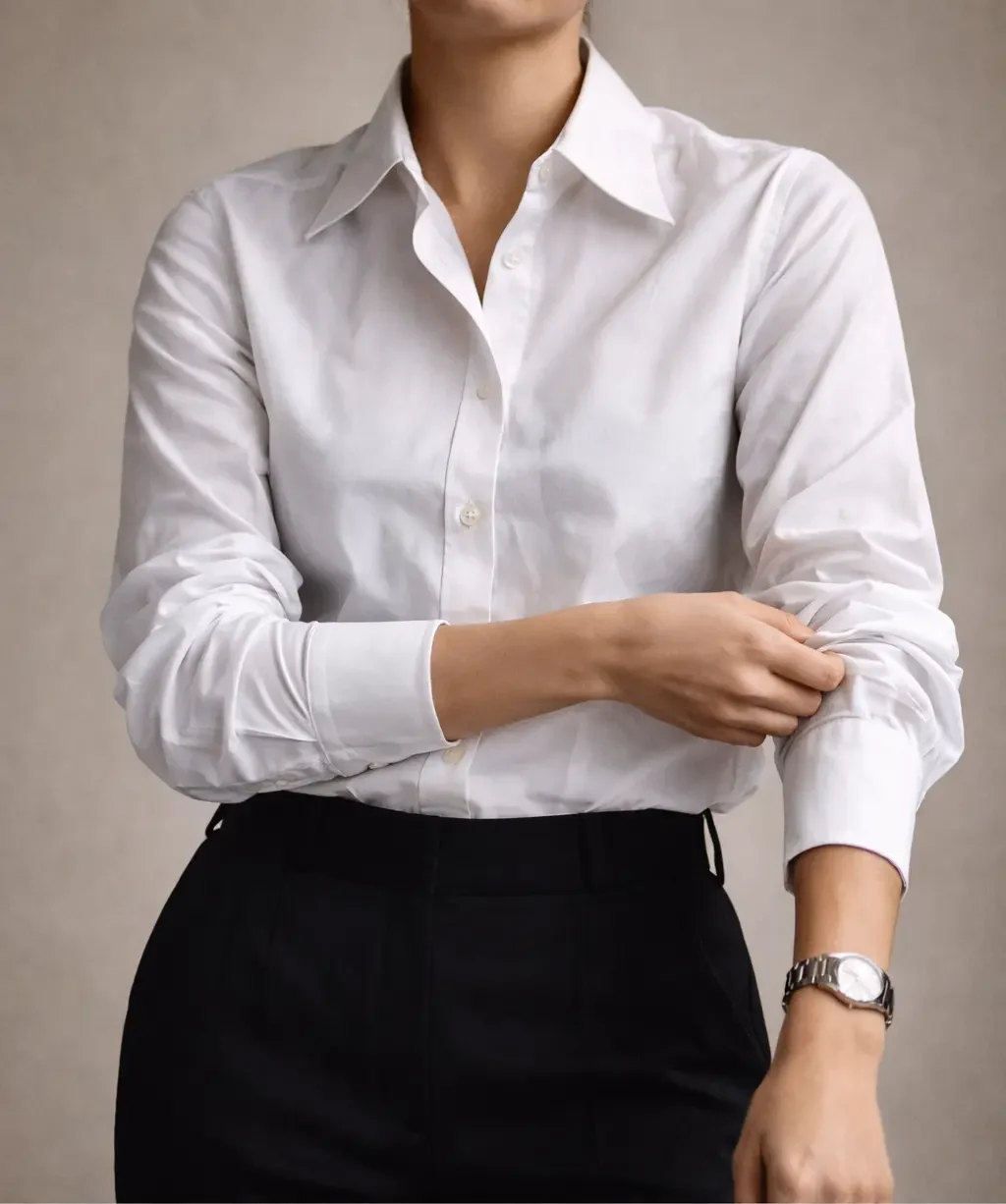
5 Ways to Look Professional Without Feeling Stiff
Looking polished at work doesn’t require sacrificing comfort. In many cases, the women who appear the most composed have simply learned which elements matter—and which ones don’t.
These five principles make it easier to build a professional wardrobe that supports both authority and ease.
1. Choose One Structured Piece
Professional outfits rarely need to be structured from head to toe.
Often, a single piece is enough to stabilize the entire look.
A blazer over a knit top.
A tailored trouser paired with a soft sweater.
A polished shoe beneath an otherwise relaxed outfit.
Once one element provides visual structure, the rest of the outfit can become considerably more comfortable without losing its sense of professionalism.
Authority doesn’t come from rigidity.
It comes from balance.
2. Prioritize Fabrics That Move Well
The most wearable professional wardrobes rely on fabrics that maintain their shape while allowing movement.
Look for materials with enough weight to drape cleanly:
- compact knits,
- wool blends,
- crepe,
- structured cotton,
- ponte.
These fabrics tend to look composed throughout the day without feeling restrictive.
When clothing moves with you instead of against you, it becomes easier to forget you’re wearing it at all.
3. Let Shoes Support the Outfit
Shoes often determine whether an outfit feels sustainable beyond the first hour.
A polished loafer.
A sleek flat.
A refined ankle boot.
Even a low block heel.
The goal isn’t endurance through discomfort.
It’s choosing footwear substantial enough to anchor the outfit while allowing you to move through your day comfortably.
A shoe that constantly demands attention undermines the composure the rest of the outfit is trying to create.
4. Repeat What Already Works
Many polished professionals rely on far fewer outfit combinations than people imagine.
Rather than reinventing themselves each morning, they return to pieces they trust.
The blazer that always fits well.
The trousers that never require adjustment.
The sweater that looks polished under pressure.
Repetition isn’t a failure of creativity.
It’s often evidence of clarity.
The easier it becomes to get dressed, the more energy remains for the work itself.
5. Dress for the Day You’re Actually Having
One of the quickest ways to feel uncomfortable is to dress for an imagined version of your life.
A day filled with meetings may require something different than a day spent commuting, traveling between offices, or working primarily at a desk.
Professional style works best when it reflects the reality of how you’ll spend your time.
Clothing that supports your actual responsibilities tends to project more confidence than clothing chosen to perform a version of professionalism that no longer fits.
Comfort isn’t the opposite of credibility.
It’s often what allows credibility to feel natural.
These principles are deceptively simple.
But together, they create the foundation of a professional wardrobe that feels polished without becoming rigid.
Because looking professional was never meant to be an endurance test.
It was meant to support the work you were there to do.
Outfit Formulas That Balance Comfort and Authority
Outfit Formulas That Balance Comfort and Authority
Understanding the principles behind professional style is helpful. Seeing how they translate into everyday dressing makes them easier to trust.
These outfit formulas balance structure with ease, allowing you to look polished without feeling stiff.
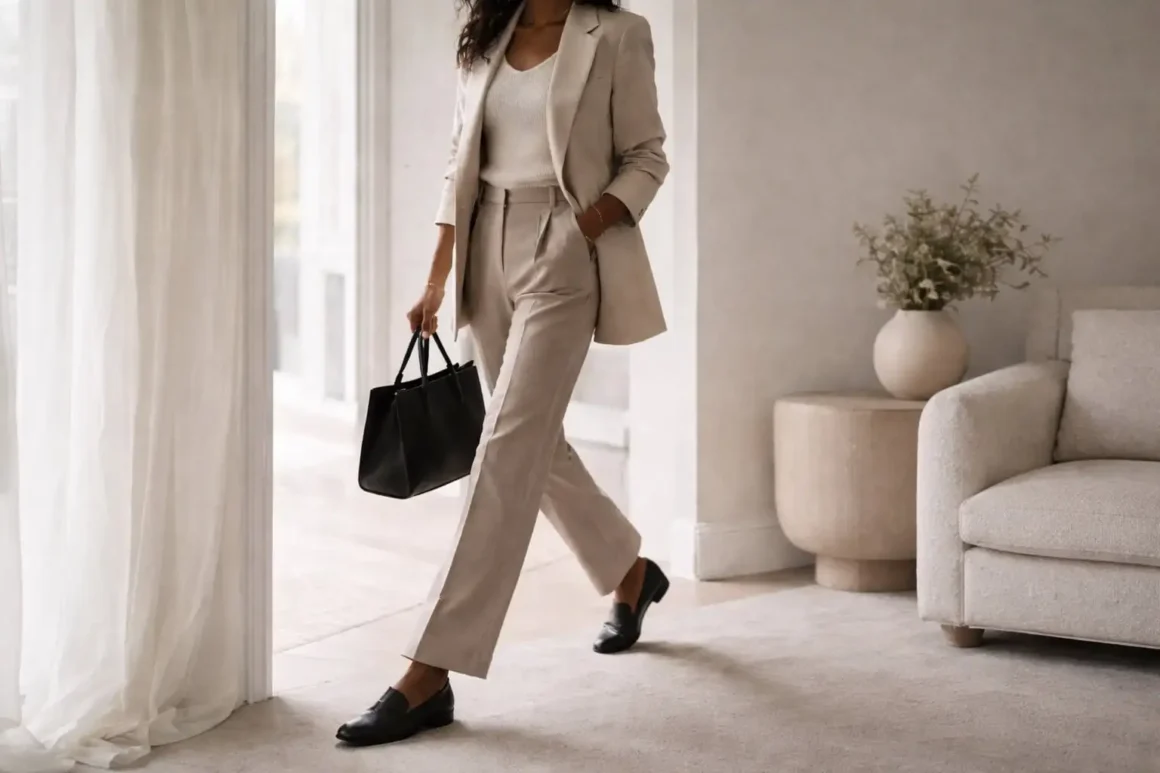
The Knit Blazer Formula
A knit blazer offers the visual structure of traditional tailoring without the rigidity that often accompanies it.
Try pairing:
- a knit blazer,
- a compact tee or fine-gauge knit,
- tailored trousers, and
- polished loafers.
The blazer establishes a clean line through the shoulders, while the softer fabrics allow for comfortable movement throughout the day.
This formula works particularly well for meeting-heavy schedules or workplaces that favor business casual dress.
The Refined Sweater Formula
Not every professional outfit requires a blazer.
A fine-gauge sweater paired with well-cut trousers often communicates the same sense of composure in a quieter way.
Consider:
- a fitted or softly structured sweater,
- wide-leg or straight-leg trousers,
- a simple belt, and
- structured flats or loafers.
The result feels polished without appearing overly formal.
It’s an outfit that supports concentration rather than competing with it.
The Modern Dress Formula
A dress can eliminate much of the decision-making involved in getting dressed while still looking intentional.
Look for:
- a midi dress with clean lines,
- minimal jewelry,
- a low block heel or refined flat, and
- a tailored coat or blazer when needed.
Because the silhouette is already complete, a single structured layer is often enough to anchor the look.
The impression is composed rather than complicated.
The Elevated Casual Friday Formula
Professional style doesn’t disappear at the end of the week.
It simply becomes more relaxed.
Try combining:
- a crisp button-down,
- dark-wash denim,
- an unstructured blazer, and
- polished flats or loafers.
The structured elements prevent the outfit from feeling overly casual, while the softer pieces allow for greater ease.
It’s proof that comfort and credibility can coexist.
Perhaps the most reassuring part of these formulas is how repeatable they are.
Many women with polished professional wardrobes rely on variations of the same combinations week after week. They refine rather than reinvent, returning to silhouettes and pieces that consistently support the way they live and work.
Authority rarely comes from novelty.
More often, it comes from showing up with clarity, confidence, and enough ease to focus on what matters most.
What This Means for Your Wardrobe
Understanding the difference between structure and stiffness changes how professional clothing is perceived.
Instead of asking whether an outfit looks formal enough, the more useful question becomes whether it feels stable and composed once it is worn. Clothing that holds its line, moves easily, and stays comfortable throughout the day tends to project authority more effectively than garments that feel rigid or difficult to manage.
This is one reason many modern professional wardrobes appear simpler than expected. The focus shifts away from visible formality and toward garments that behave well — fabrics that drape naturally, pieces that maintain their shape, and silhouettes that allow the wearer to move freely without constant adjustment.
When these elements come together, the result often feels quieter than traditional ideas of professional dress. The clothing is not trying to assert authority through stiffness. Instead, it supports the person wearing it, allowing attention to remain on the work itself.
Over time, this reframes the goal of dressing for authority.
It is not about appearing rigid or controlled. It is about choosing clothing that removes friction, so composure becomes the most visible signal.
If this article resonated, the Quiet Luxury Capsule expands on these ideas with a practical framework for creating a wardrobe that feels cohesive, refined, and easy to wear.

