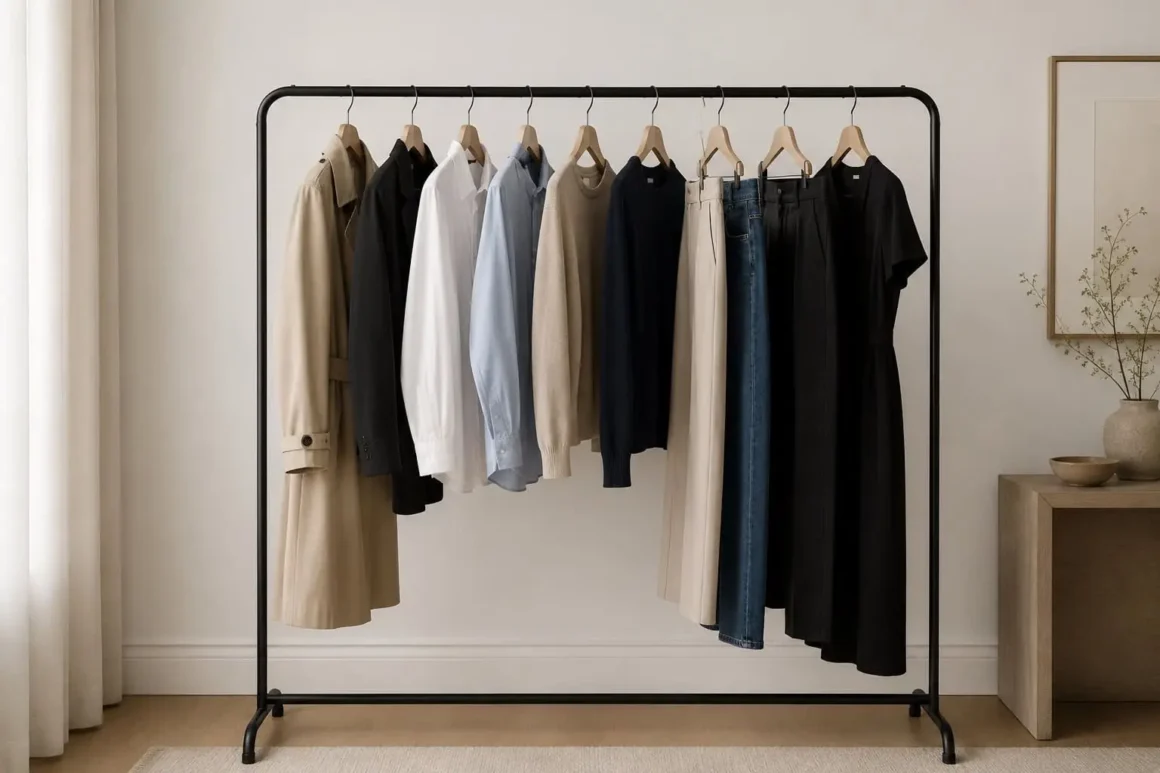
The best quiet wardrobe rarely belongs to the person with the most clothes.
More often, it belongs to the person who knows exactly what works.
In a culture that often encourages constant reinvention, it can be surprisingly reassuring to discover that getting dressed well doesn’t require endless options. The women whose wardrobes appear effortless aren’t necessarily shopping more. More often, they’ve simply learned to choose differently. They understand which pieces support their daily lives, which combinations they return to repeatedly, and what deserves a permanent place in their closets.
A quiet wardrobe isn’t restrictive. It isn’t trend-proof perfection, and it certainly isn’t about replacing everything you own with expensive basics in shades of beige.
It is thoughtful rather than reactive.
It values repetition over novelty, ease over excess, and confidence over constant consumption.
Perhaps most importantly, it allows getting dressed to become less about decision-making and more about returning to yourself.
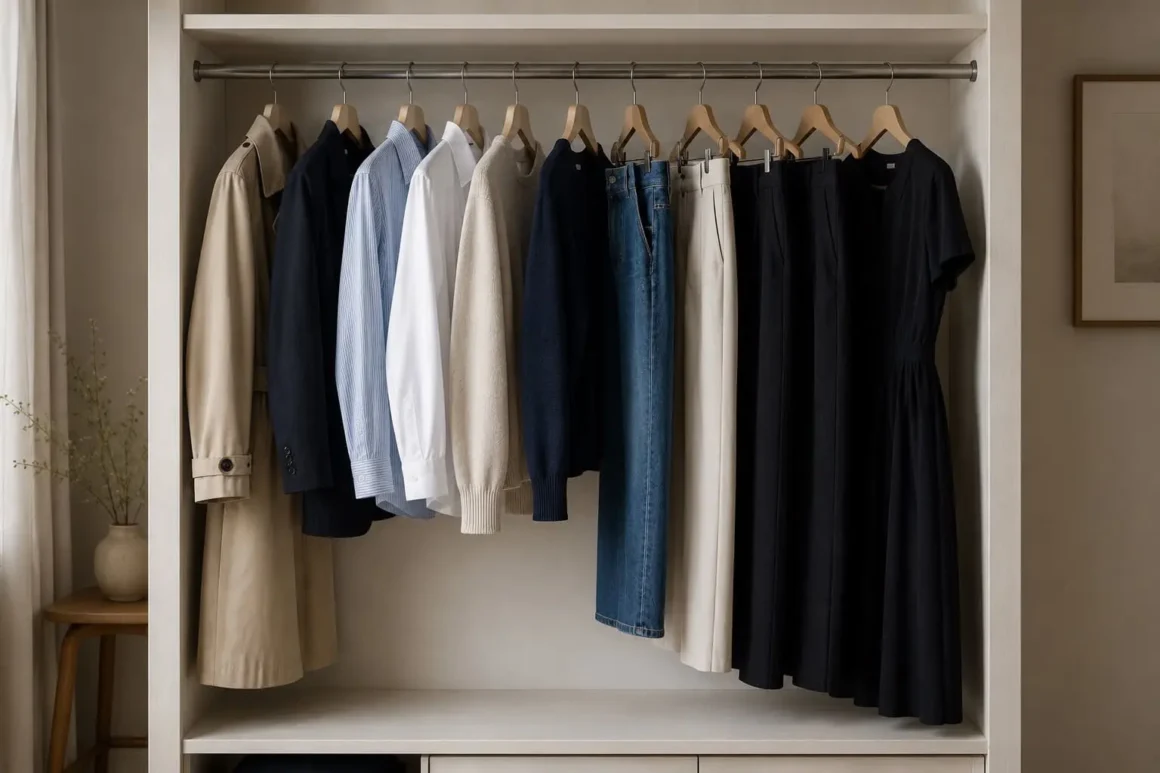
This isn’t a universal checklist or a prescription for what every wardrobe should contain. It’s one practical 10-piece example: the pieces I would prioritize first if I were building a quiet wardrobe from scratch today, chosen because they work together easily, repeat well, and earn their place in everyday life.
What Makes a Wardrobe “Quiet”?
Before discussing specific pieces, it’s worth understanding why certain wardrobes feel calm and effortless while others quickly become overwhelming. A quiet wardrobe is less about aesthetics alone and more about the principles that shape the choices behind it.
A quiet wardrobe is often mistaken for an aesthetic.
It isn’t simply a collection of neutral clothing, timeless basics, or expensive labels. Those elements may appear within it, but they aren’t what create the feeling most people are trying to achieve.
What makes a wardrobe feel quiet is its ability to support daily life without demanding constant attention.
The pieces work together naturally. They can be repeated without feeling tired, adapted across occasions, and worn often enough to justify the space they occupy. Rather than asking, What else do I need? a quiet wardrobe invites a different question:
What already works, and how can I build from there?
It is thoughtful rather than reactive.
It values versatility over novelty, comfort alongside polish, and consistency over the pressure to constantly reinvent yourself.
Perhaps more importantly, it reflects the person wearing it.
A quiet wardrobe should not erase individuality in pursuit of minimalism. It should clarify it. The goal isn’t to own less simply for the sake of less, nor is it to dress according to someone else’s formula. The goal is to create enough coherence that getting dressed becomes easier — and enough flexibility that you still recognize yourself within it.
If you’ve every wondered why certain pieces consistently feel polished while others quickly lose their appeal, it often comes down to a handful of characteristics that allow a wardrobe to function as a whole rather than a collection of separate purchases. Many of those characteristics are explored in what pieces define a quiet luxury wardrobe and why they work, from versatility and fabrication to repetition and ease.
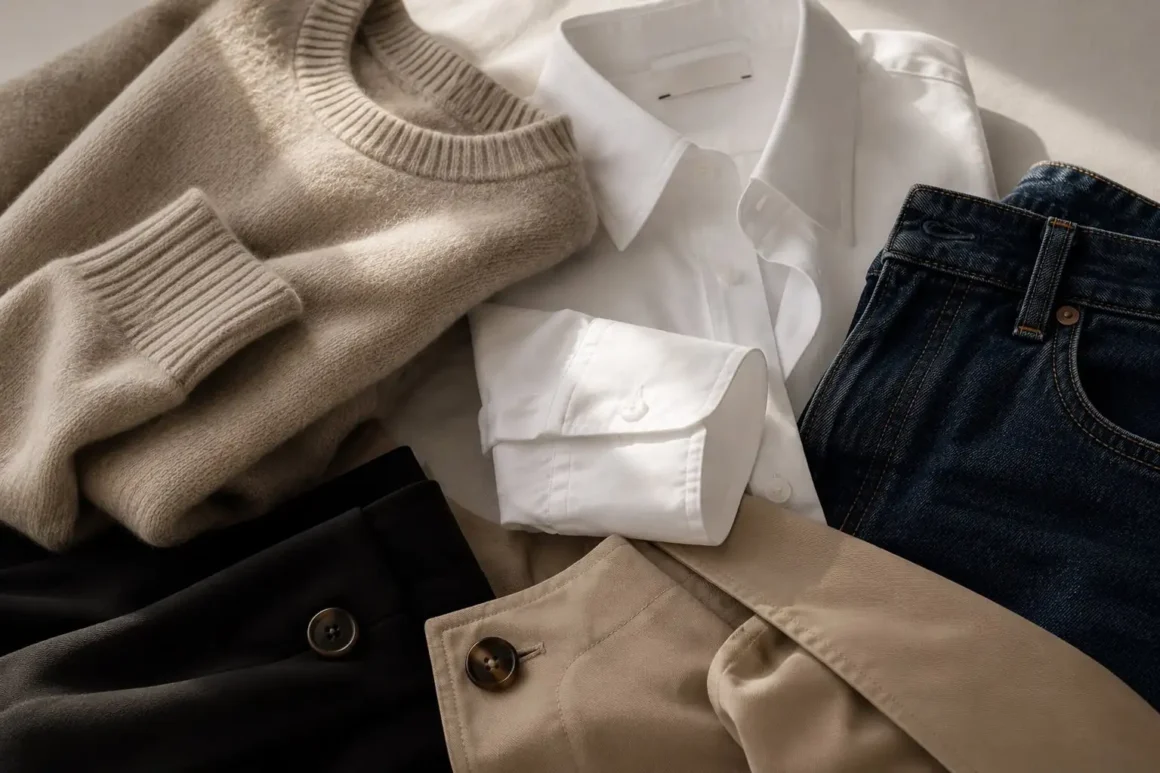
The 10 Pieces That Form the Best Quiet Wardrobe
The best quiet wardrobe is not defined by specific brands, trend cycles, or a prescribed color palette.
Instead, it is built around pieces that earn their place through repetition. They work across occasions, combine easily with one another, and support the life you actually live rather than the life you imagine yourself living someday.
These ten categories are not meant to be purchased all at once. Think of them instead as a framework for evaluating what already exists in your wardrobe and identifying where genuine gaps remain.
When chosen thoughtfully, they create a wardrobe that feels cohesive, versatile, and remarkably easy to wear.
1. Beautifully Fitting Trousers
A great pair of trousers is often where a quiet wardrobe begins.
Unlike trend-driven pieces that quickly lose momentum, well-fitting trousers can anchor an extraordinary number of outfits. They bring structure to simple knits, balance relaxed shirts, and make even the most casual combinations feel intentional.
The most important detail is not the silhouette itself but the fit. Wide-leg, straight-leg, cropped, or full length can all work beautifully when they align with your proportions and daily life.
The best pair is usually the one you reach for repeatedly without having to think about it.
2. A Polished Knit
A polished knit offers something many wardrobes lack: ease without sacrificing refinement.
Whether it’s a lightweight merino crewneck, a fine-gauge cashmere sweater, or a simple cotton knit, this piece softens the wardrobe while remaining versatile enough for everyday wear.
It can be layered over a button-down, paired with denim, or worn with tailored trousers, making it one of the most adaptable pieces in a quiet wardrobe.
The goal is not formality. The goal is comfort that still feels considered.
3. A Crisp Button-Down
Few pieces communicate effortless polish more consistently than a well-made button-down shirt.
It works equally well tucked into trousers, worn open over a tank, layered beneath a sweater, or paired with denim on a casual weekend.
Because of its versatility, a button-down often becomes one of the hardest-working pieces in a wardrobe.
White remains a classic choice, but soft blue, subtle stripes, and lightweight linen versions can be just as effective.
4. A Blazer That Feels Like a Cardigan
The best blazers rarely feel restrictive.
They move comfortably, layer easily, and provide structure without sacrificing ease. A softly tailored blazer can transform a simple combination of denim and a knit while remaining comfortable enough to wear throughout the day.
This is one of the reasons it appears so frequently in quiet wardrobes. It offers polish without requiring effort.
When choosing one, prioritize fit, comfort, and versatility over dramatic details. The pieces you wear most are rarely the ones that demand the most attention.
5. Dark Denim
Dark denim occupies a unique place in a wardrobe because it bridges the gap between casual and polished.
It works with nearly everything already discussed: button-downs, knits, blazers, and simple footwear. It can feel relaxed or refined depending on how it’s styled, making it one of the most adaptable pieces you can own.
A quiet wardrobe depends on flexibility, and few pieces offer more of it than a well-fitting pair of dark jeans.
6. A Versatile Dress
A versatile dress simplifies dressing in a way few other garments can.
Whether worn alone, layered beneath a jacket, or paired with flats and a sweater, it creates an entire outfit with minimal effort.
The most successful dresses are rarely the most dramatic. They are the ones that can move comfortably through multiple settings and seasons without feeling out of place.
A piece that works for lunch, travel, dinner, and everyday life will always outperform one reserved for a single occasion.
7. Refined, Comfortable Shoes
A wardrobe can only be as practical as the shoes that support it.
The quietest wardrobes tend to include footwear that balances comfort and polish rather than prioritizing one at the expense of the other.
Loafers, sleek flats, simple sneakers, and low block heels often win because they integrate easily with the rest of the wardrobe while remaining wearable throughout the day.
The goal is not to own more shoes. It is to own shoes you genuinely want to wear.
8. A Practical Everyday Bag
A bag earns its place when it supports your routine rather than complicates it.
The best everyday bags are durable, functional, and versatile enough to accompany you through most of your week. They hold what you need, work with the majority of your outfits, and age gracefully with use.
Like many elements of a quiet wardrobe, their value often comes from reliability rather than novelty.
9. A Layering Piece
Every wardrobe benefits from a piece that can bridge seasons and add flexibility to existing outfits.
For some, this may be a trench coat. For others, a cardigan, lightweight jacket, or wool coat may serve the same purpose.
What matters is not the category itself but the function it performs. Layering pieces extend the usefulness of the clothes you already own and allow a smaller wardrobe to work much harder.
10. One Piece That Feels Distinctly Like You
The best quiet wardrobes are not generic.
They contain at least one element that reflects the person wearing them — a watch worn daily, a favorite scarf, a signature piece of jewelry, a beloved pair of loafers, or another detail that feels personal.
This piece may not be the most practical item in the wardrobe, but it often becomes one of the most meaningful.
A quiet wardrobe should not erase individuality in pursuit of simplicity. It should create enough clarity for personal style to emerge more clearly.
Why the Best Quiet Wardrobe Works
At first glance, a quiet wardrobe may appear deceptively simple.
After all, many of its pieces are familiar: trousers, knits, denim, a well-loved blazer. Yet the ease these wardrobes create rarely happens by accident. Beneath the simplicity is a set of principles that make getting dressed feel less overwhelming and more intuitive.
The best quiet wardrobes work not because they eliminate choice altogether, but because they reduce unnecessary friction.
They create enough structure to support everyday life while leaving room for individuality, spontaneity, and changing seasons.
Repetition Builds Confidence
There is a reason we return to certain outfits again and again.
Repetition allows us to move through our days without renegotiating who we are each morning. We learn which silhouettes feel most comfortable, which combinations consistently work, and which pieces allow us to focus on everything beyond our closets.
Rather than signaling a lack of creativity, repetition often reflects clarity.
It frees us from the pressure to reinvent ourselves daily and replaces it with the quiet confidence that comes from knowing what suits us.
Quality Matters More Than Quantity
A quiet wardrobe does not require luxury labels, nor does it demand perfection.
Instead, it encourages a shift in perspective: choosing fewer pieces with greater intention.
Quality might mean better construction, fabrics that improve with wear, or simply selecting items that genuinely align with your lifestyle. A thoughtfully chosen piece worn repeatedly often provides more value than a closet full of garments that never quite earn their place.
The goal is not to own the “right” things.
The goal is to own things that work.
Ease Is an Underrated Luxury
Perhaps the greatest gift of a quiet wardrobe is ease.
Ease in getting dressed.
Ease in packing for a trip.
Ease in understanding what you already own and what you genuinely need.
In a culture that often celebrates more, faster, and newer, there is something deeply luxurious about removing unnecessary decisions from everyday life.
When your wardrobe supports rather than competes for your attention, you gain something far more valuable than another outfit.
You gain time, energy, and the freedom to direct your attention elsewhere.
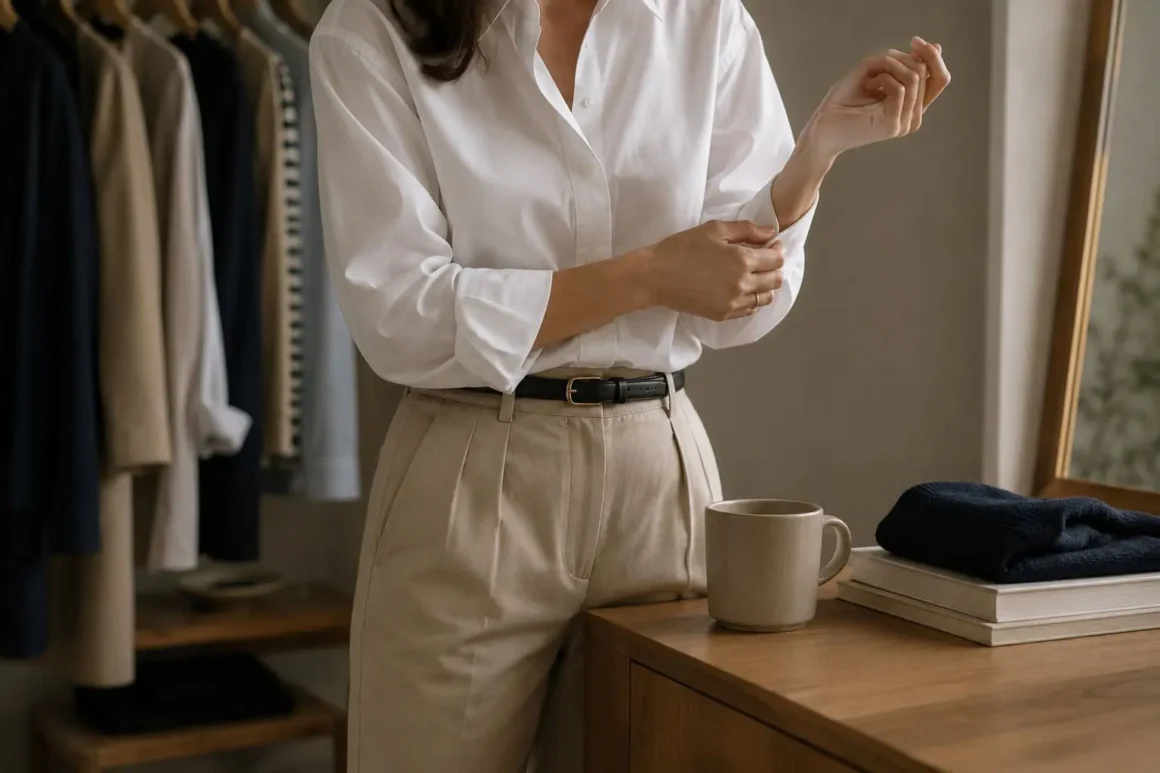
Building This Wardrobe in Real Life
Most quiet wardrobes aren’t assembled in a weekend.
They emerge slowly, through clearer decisions and a growing understanding of what truly supports daily life.
If your closet doesn’t resemble the one you’ve imagined while reading this article, that isn’t a sign that you’ve failed. More ofte, it simply means you’re in the middle of the process.
A quiet wardrobe is built piece by piece.
Start With What You Already Wear
Before identifying what is missing, pay attention to what you already reach for.
Which pieces are consistently in rotation?
Which combinations make you feel most like yourself?
Which items leave you feeling comfortable, capable, and at ease?
The answers often reveal more than any shopping list ever could.
Patterns begin to emerge. You may notice that you favor certain silhouettes, fabrics, colors, or proportions. Those observations become the foundation for future decisions.
Identify True Gaps
Not every desire to purchase signals a genuine need.
Sometimes what appears to be a wardrobe gap is simply boredom, aspiration, or the temporary excitement of imagining a different version of ourselves.
A true gap is more practical.
Perhaps your favorite trousers have worn out. Perhaps you need footwear suited to your daily routine. Perhaps you have nothing appropriate for client meetings or weekend errands.
The distinction matters.
When purchases solve real problems, they are far more likely to earn their place.
Replace Slowly
A quieter wardrobe rarely arrives through a dramatic purge.
It develops through gradual refinement.
As pieces wear out, lose relevance, or no longer reflect your needs, they can be replaced more thoughtfully. There is no deadline and no prize for completing the process quickly.
Small shifts accumulate over time.
A sweater that fits beautifully.
Shoes you genuinely enjoy wearing.
A bag that simplifies your mornings.
Eventually, those choices begin to transform the wardrobe as a whole.
Buy With Repetition in Mind
Before bringing something new home, ask yourself a simple question:
How many ways can I realistically imagine wearing this?
Can it be styled with pieces you already own?
Would you choose it on an ordinary Tuesday?
Will you still reach for it once the excitement of acquiring something new has faded?
The pieces that quietly become favorites are often the ones that integrate most naturally into the life you’re already living.
Rather than striving for a finished wardrobe, aim for a more supportive one.
One thoughtful purchase.
One useful replacement.
One clearer decision at a time.
Because the best quiet wardrobes are rarely built through perfection.
They are built through attention.
QLE Pathway
Starting from scratch?
If you’re rebuilding after a life transition, years of impulse purchases, or simply no longer recognize the person your wardrobe was designed for, How to Build a Quiet Luxury Wardrobe from Scratch offers a practical, step-by-step approach to editing what you own, identifying genuine gaps, and rebuilding slowly.
How Many Pieces Do You Actually Need?
The best quiet wardrobe is not defined by a perfect number.
For many women, somewhere between 10 and 15 thoughtfully chosen core pieces is enough to create a surprising amount of ease. That number usually allows for structure, layering, repetition, and flexibility without becoming so large that the wardrobe starts to feel visually noisy again.
But the number itself is not the point.
A quiet wardrobe should respond to your actual life: your climate, your work, your routines, your laundry rhythm, and the level of variety that makes you feel comfortable rather than overwhelmed. Someone who works in an office five days a week may need a different foundation than someone who works from home, travels often, or dresses casually most days.
The more useful question is not:
How few pieces can I own?
It is:
How many pieces do I need for getting dressed to feel easier?
For some, that may be 10 core items. For others, it may be closer to 20. The goal is not to meet an arbitrary capsule wardrobe number, but to create enough cohesion that the wardrobe begins to support you without constant reconsideration.
A quiet wardrobe becomes successful when most pieces can be worn repeatedly, combined naturally, and trusted to work across ordinary days. That is where the ease comes from — not from owning the smallest possible wardrobe, but from owning a wardrobe with less friction.
QLE Pathway
Wondering how much is enough?
If you want a more detailed framework for wardrobe size, How Many Pieces Should a Capsule Wardrobe Have? explains why 10–15 core pieces often create more flexibility than a crowded closet.
Continue the conversation
Join The Edit
The ideas in this article are only the beginning.
The Edit arrives monthly with thoughtful wardrobe guidance, seasonal reflections, and practical notes on creating a quieter way of dressing, decorating, and living.
Bringing It All Together
A quiet wardrobe is often easier to recognize in practice than it is to define in theory.
If you’re wondering how these principles translate into everyday dressing, these articles offer examples of what a quieter approach to getting dressed can look like in real life.
QLE Pathways
Bringing it all together
A quiet wardrobe is often easier to recognize in practice than it is to define in theory. If you are wondering how these principles translate into everyday dressing, these pieces offer useful places to begin.
- See a complete example: 12-Piece Capsule Wardrobe: How to Always Look Polished with Less
- Learn how to repeat outfits without feeling repetitive: How to Wear a Capsule Wardrobe That Actually Works in Real Life
- Explore the pieces that anchor a refined wardrobe: Quiet Luxury Wardrobe Essentials
A Few Clarifications
Quiet Wardrobe FAQs
Is a quiet wardrobe the same as quiet luxury?
Not exactly. A quiet wardrobe focuses specifically on clothing and the decisions that support getting dressed with ease and confidence. Quiet luxury is a broader philosophy that often extends beyond clothing into home, lifestyle, and consumption habits.
The two frequently overlap, but a quiet wardrobe can exist regardless of budget, brand, or aesthetic.
Does a quiet wardrobe have to be neutral?
No. Many quiet wardrobes include neutrals because they mix easily, but color can absolutely belong in a cohesive wardrobe.
The goal is not to eliminate color. The goal is to choose colors intentionally and wear them often enough that they become part of a cohesive whole.
How many pieces are in a quiet wardrobe?
There is no perfect number. Many women find that 10–15 core pieces create a strong foundation, but the right number depends on lifestyle, climate, work requirements, and personal preference.
Rather than asking how few pieces you can own, it is often more helpful to ask how many pieces allow getting dressed to feel easy.
Can a quiet wardrobe work for casual lifestyles?
Absolutely. A quiet wardrobe is not about dressing formally. It is about choosing pieces that support your daily life with ease and consistency.
For some women, that may mean tailored trousers and blazers. For others, it may look like denim, knits, and simple sneakers. The goal is not a particular dress code. It is intention.
Do I need to replace everything I already own?
Not at all. Most quiet wardrobes are built gradually. Begin by identifying the pieces you already wear and trust.
Over time, replace items that no longer fit your needs and focus future purchases on genuine gaps rather than impulse additions.
A quieter wardrobe is rarely the result of starting over. More often, it emerges through paying closer attention to what already works.
What Remains
The best quiet wardrobe is not necessarily the smallest one.
Nor is it the most expensive, the most aspirational, or the most perfectly curated.
More often, it is simply the wardrobe that allows you to move through your days with greater ease.
It reflects the life you actually live rather than the life you imagine yourself living someday. It contains pieces you trust, combinations you return to without hesitation, and enough coherence that getting dressed no longer feels like a daily negotiation.
There is no finish line.
No perfectly edited closet waiting to be achieved.
Only the gradual process of paying closer attention to what supports you, what earns its place, and what quietly makes everyday life a little lighter.
A quieter wardrobe is rarely built through dramatic reinvention.
It emerges through repetition.
Through discernment.
Through choosing again and again what already works.
And perhaps that is the real luxury:
Not having more to choose from, but having enough confidence in what you already have.
Where This Leads
A quieter wardrobe begins with what already works.
If this article helped clarify what a quiet wardrobe can look like, these guides continue the path from understanding to practice—helping you refine what you already own before adding anything new.

