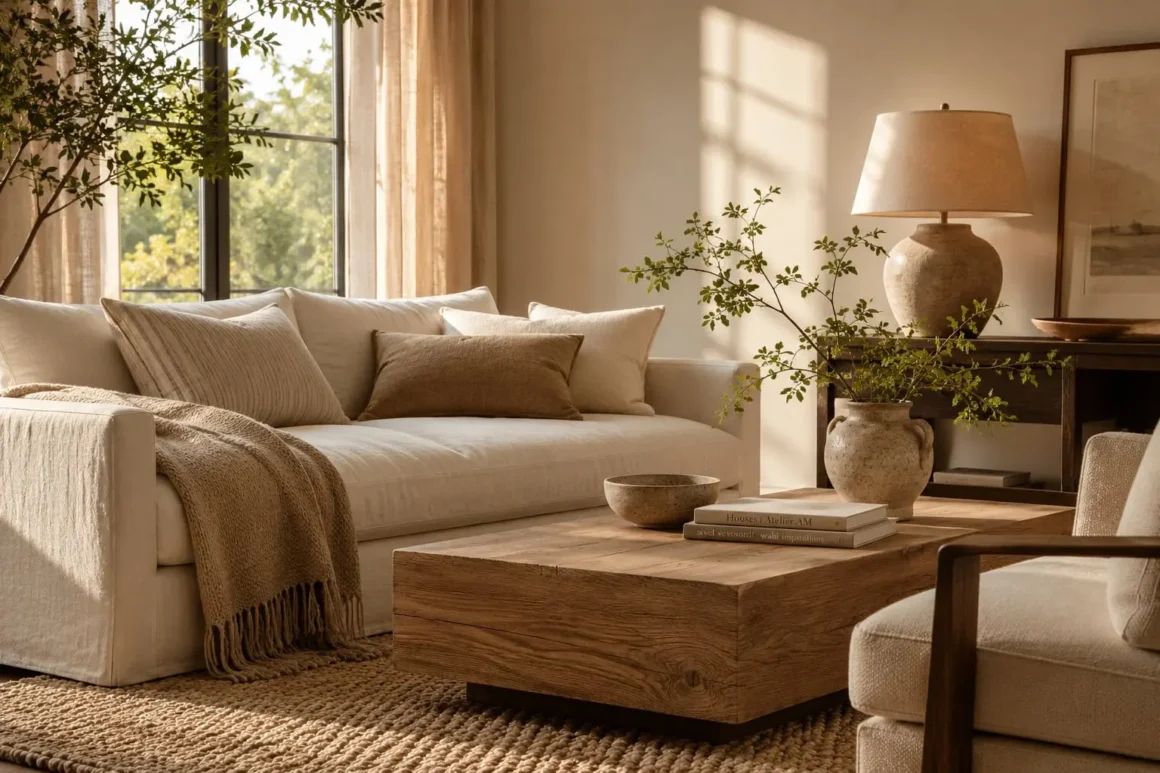
Most rooms don’t feel unfinished because they’re missing decoration.
More often, they’re missing quiet texture.
It’s easy to assume that warmth comes from adding more: another decorative object, another pillow, another shelf to style. But the rooms that linger in our memory rarely rely on abundance. They feel calm rather than crowded, layered rather than busy. Even with restrained palettes and minimal accessories, they possess a depth that’s difficult to name and impossible to ignore.
That depth is often texture.
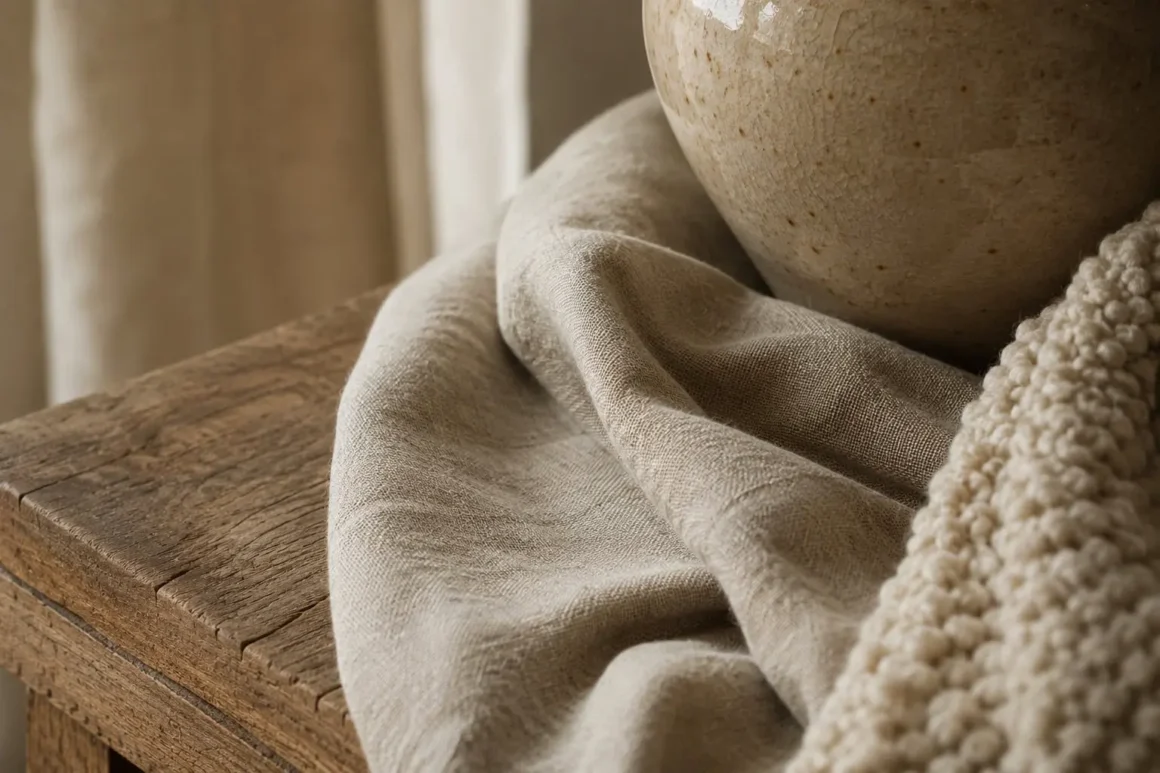
In quiet luxury interiors, texture does much of the work that color, pattern, and ornamentation do elsewhere. Linen softens a room without demanding attention. A weathered oak table brings warmth that glossy finishes cannot. Stone, wool, leather, and woven materials create richness through contrast rather than excess. The result is a home that feels considered and inviting without appearing overly styled.
Quiet texture isn’t about buying more things. It’s about learning to notice the materials that make a room feel lived in, balanced, and beautifully complete.
What is Quiet Texture?
Quiet texture is the subtle layering of materials that creates depth, warmth, and visual interest without relying on bold color, pattern, or decoration.
It’s the reason one room feels calm and inviting while another, furnished with similar pieces, feels flat.
In a quiet luxury home, texture often replaces excess. Instead of filling a space with accessories, the room draws its character from the materials themselves. Linen curtains filter light differently than synthetic fabrics. A worn oak table tells a different story than a high-gloss surface. Wool, stone, leather, plaster, and woven fibers each contribute something distinct, even when their colors remain neutral.
The effect is often felt before it is noticed.
A room rich in quiet texture feels layered rather than decorated. Comfortable rather than crowded. Refined rather than styled for attention.
This is why many of the most beautiful interiors appear deceptively simple. Their richness doesn’t come from having more objects. It comes from the conversation between materials—the softness of linen against stone, the warmth of wood beside plaster, the contrast of smooth and rough surfaces existing together.
When people describe a room as feeling “finished,” “elevated,” or “expensive,” they are often responding to texture, whether they realize it or not.
Quiet texture is what gives a restrained room its depth.
Why Texture Matters More Than Decoration
When a room feels flat, our instinct is often to add something.
Another pillow.
A decorative object.
Artwork for the empty wall.
A tray for the coffee table.
Sometimes those additions help. But just as often, they create visual noise without addressing the real issue.
What many rooms are missing isn’t decoration.
It’s dimension.
Texture introduces that dimension in a quieter way.
Consider two living rooms.
Both may contain a neutral sofa, a coffee table, and a pair of lamps. Yet one feels layered and inviting while the other feels unfinished. The difference is rarely found in the quantity of objects. More often, it lies in the contrast between materials.
A linen sofa beside a walnut table.
A woven rug beneath smooth stone.
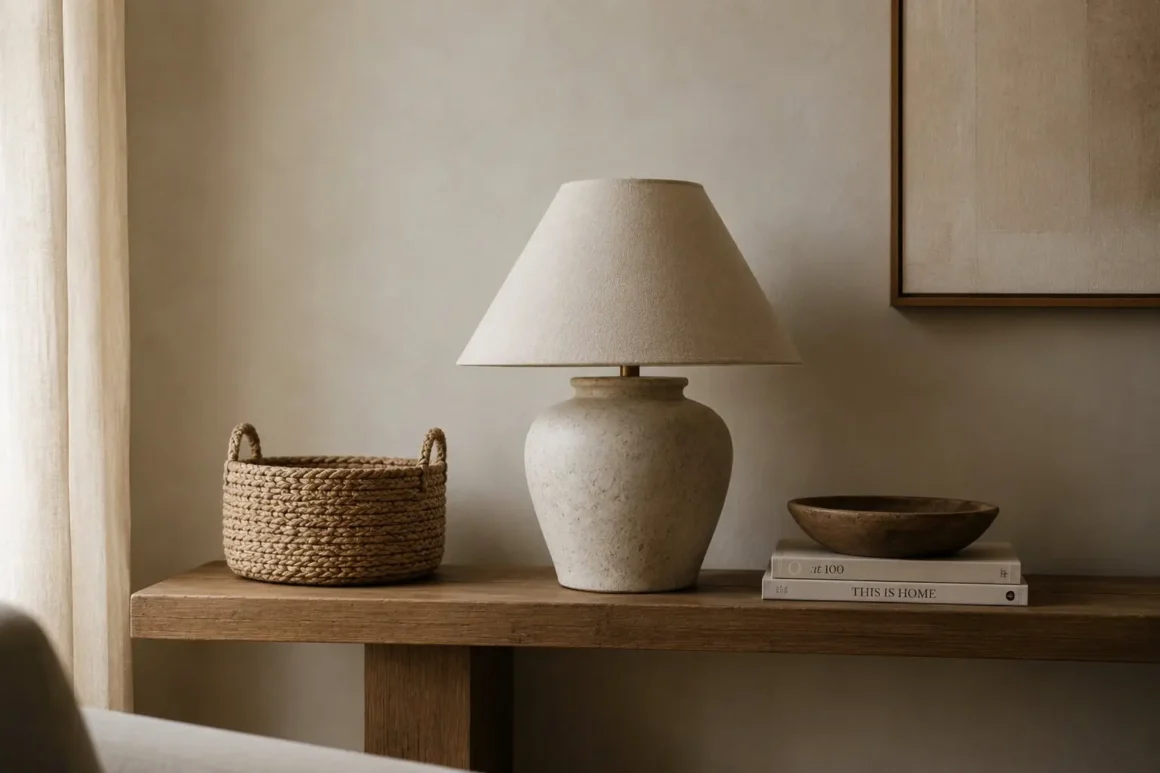
A ceramic lamp against a plaster wall.
These combinations create depth without demanding attention. They allow the eye to move naturally through the room, discovering subtle variations rather than competing focal points.
Decoration asks to be noticed.
Texture asks to be experienced.
Perhaps this is why some of the most memorable interiors feel so calm. They do not rely on quantity to create interest. Instead, they invite you to slow down long enough to appreciate the grain of wood, the softness of wool, the coolness of stone beneath your fingertips.
A room layered thoughtfully through texture often requires less styling because the materials themselves carry the conversation.
The result is not minimalism for its own sake.
It is kind of visual exhale.
A home that feels warm rather than busy, collected rather than crowded, and complete without needing to prove it.
The Five Textures Every Quiet Luxury Home Uses
Quiet texture rarely comes from a single statement piece.
Instead, it emerges through the interaction of materials that complement one another. While every home is different, certain textures appear repeatedly in interiors that feel calm, layered, and enduring.
Natural Fibers
Few materials soften a room as effortlessly as natural fibers.
Linen, cotton, wool, and cashmere introduce warmth without visual heaviness. They absorb light differently than synthetic materials, creating a softness that makes a space feel lived in rather than staged.
A linen curtain moving gently beside a window. A wool throw draped across the arm of a chair. Crisp cotton bedding layered beneath a textured quilt.
These details may seem small individually, but together they create comfort that can be both seen and felt.
Wood
Wood brings an organic warmth that is difficult to replicate through any other material.
Whether light oak, rich walnut, or weathered reclaimed finishes, wood introduces natural variation through its grain, tone, and imperfections. No two pieces are exactly alike, which is part of what makes it feel so inviting.
In a quiet luxury home, wood often serves as a grounding element. It balances smoother surfaces and prevents neutral spaces from feeling sterile.
Even a simple wooden side table can add more character than a collection of decorative accessories.
Stone
Stone contributes a different kind of texture: one that feels substantial, timeless, and quietly luxurious.
Marble, travertine, limestone, soapstone, and even simple ceramics create contrast through their density and subtle irregularities. Their surfaces catch light differently throughout the day, adding visual depth even when the color palette remains restrained.
A room does not need an entire marble kitchen to benefit from stone.
Often, a single thoughtful element is enough.
Leather
Leather introduces richness through age and use.
Unlike many materials that deteriorate over time, quality leather often becomes more beautiful as it develops character. It softens, deepens in tone, and records the quiet evidence of everyday life.
Whether it appears in a chair, an ottoman, a bound book, or a small decorative object, leather adds warmth and depth without feeling decorative for its own sake.
Its appeal lies in its restraint.
Woven Materials
If wood grounds a room, woven materials help connect it.
Rattan, cane, rush, jute, sisal, seagrass, and woven baskets introduce texture through pattern rather than color. They create visual movement while maintaining the calmness that defines a quiet interior.
A woven tray on a coffee table. A rush-seated dining chair. A simple basket tucked beside a sofa.
These elements bring an approachable informality that keeps a room from feeling overly polished.
They remind us that beautiful spaces should still feel comfortable to live in.
When layered thoughtfully, these materials create the kind of depth that many people try to achieve through decoration alone. The room feels warmer, more complete, and more interesting—not because it contains more things, but because the materials themselves have something to say.
QLE Pathway
Looking at the whole home?
If quiet texture helped you see how materials shape the feeling of a room, Quiet Luxury at Home explores the broader principles behind creating a calmer, more considered space.
How to Layer Texture Without Creating Clutter
One of the most common misconceptions about creating a quiet luxury home is that layering requires adding more.
More pillows.
More decorative objects.
More accessories to fill every empty surface.
But quiet texture works differently.
Rather than increasing the quantity of what you own, it invites you to pay closer attention to the materials already present in the room.
A space layered through texture often contains fewer objects than a heavily decorated one. The difference is that each element contributes something distinct.
A linen sofa paired with an oak coffee table.
A wool throw draped across a woven chair.
A ceramic lamp resting on a stone console.
The room feels rich not because it is full, but because the materials create contrast and conversation.
Before introducing something new into a space, pause to ask:
Does this add another object, or does it add another layer?
The distinction matters.
A stack of decorative accessories may create visual busyness without adding depth. By contrast, a woven basket that introduces texture while providing storage can serve both a practical and aesthetic purpose.
The goal is not to eliminate styling altogether.
It is to allow each element to contribute meaningfully.
A few thoughtful layers often create more warmth than an abundance of decoration ever could.
If you’re unsure where to begin, look for opportunities to vary textures rather than increase quantity. Pair smooth surfaces with rougher ones. Introduce softness alongside structure. Combine materials that age gracefully and invite touch.
Then stop.
A room should have space to breathe.
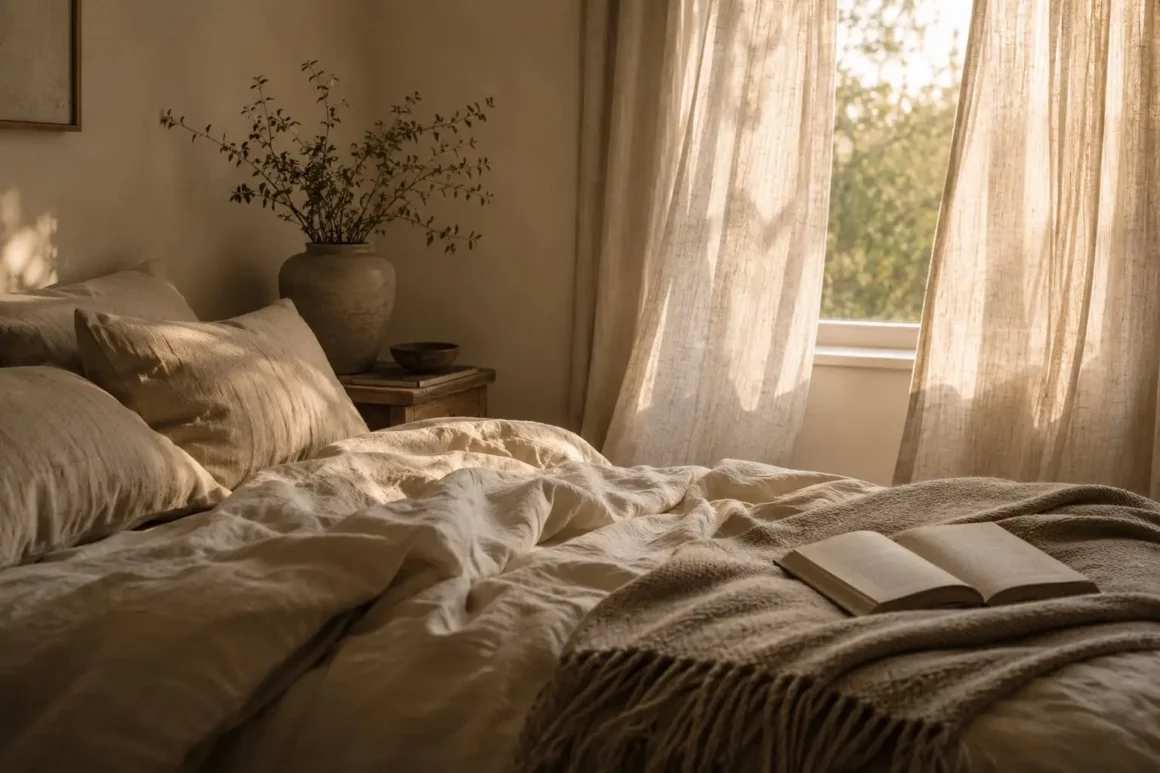
In a bedroom, this kind of layering is especially effective: linen, wool, wood, and soft lighting can create depth without making the room feel overstyled.
The quietest homes understand that restraint is not the absence of beauty. It is the confidence to let beautiful materials speak for themselves.
A Simple Formula for Creating Quiet Texture
If the idea of layering texture feels abstract, start small.
You don’t need to redesign an entire room to create more depth. Often, the most inviting spaces rely on a simple balance of materials repeated thoughtfully throughout the home.
As a starting point, consider including four categories of texture within a room:
One Soft Texture
This is the element that introduces comfort.
Think:
- linen upholstery,
- wool throws,
- cotton bedding,
- velvet cushions,
- cashmere accents.
Soft textures invite you to settle in. They absorb sound, soften hard edges, and help a room feel lived in rather than merely styled.
One Natural Texture
Natural materials ground a space.
Wood is often the easiest place to begin:
- an oak coffee table,
- walnut dining chairs,
- a weathered console,
- exposed wood grain.
These elements add warmth and subtle variation that manufactured finishes often lack.
One Hard Texture
Every room benefits from contrast.
Stone, ceramic, plaster, glass, and metal provide visual structure and prevent softness from becoming monotonous.
A ceramic lamp beside a linen sofa.
A marble tray atop a wooden dresser.
A plaster wall behind woven furnishings.
The interplay between hard and soft textures is often what makes a room feel layered rather than flat.
One Woven Texture
Woven elements introduce movement.
Jute rugs.
Rush seating.
Rattan details.
Seagrass baskets.
Grasscloth shades.
Because they contain natural variation, woven materials add interest quietly, without overwhelming the space.
They are often the detail that makes a room feel approachable rather than overly polished.
The beauty of this formula lies in its flexibility.
You do not need to include every category perfectly, nor should you purchase something simply to check a box. Instead, use these textures as a way of noticing what is already present and identifying what may be missing.
You may discover that your room already has beautiful wood and soft linen but could benefit from the contrast of stone or ceramic. Or perhaps woven elements would bring warmth to an otherwise sleek space.
The goal is not to create a formulaic home.
It is to create balance.
When softness meets structure, when roughness meets refinement, and when natural materials are allowed to take the lead, a room begins to feel complete.
Not because it contains more.
But because everything within it has something to contribute.
Continue the conversation
Join The Edit
The ideas in this article are only the beginning.
The Edit arrives monthly with thoughtful reflections on home, style, and the quieter systems that shape how we live. If these conversations resonate with you, I’d be delighted to continue them there.
What Quiet Texture Looks Like in Practice
Quiet texture rarely announces itself.
You may notice how a room feels long before you identify why it feels that way. The effect is often subtle: warmth without heaviness, simplicity without starkness, interest without clutter.
Once you begin paying attention, you start to see it everywhere.
In the Living Room
A quiet living room might combine a linen sofa with a weathered wood coffee table and a wool rug beneathfoot. A ceramic lamp rests beside a stack of well-loved books, while woven baskets provide storage without adding visual noise.
Nothing competes for attention.
Instead, the materials create depth through contrast: smooth beside rough, soft beside structured, polished beside imperfect.
The room feels inviting because it prioritizes comfort over display.
In the Bedroom
Bedrooms often rely on quiet texture more than decoration.
Crisp cotton sheets layered beneath a quilt. Linen drapery that softens the morning light. An upholstered headboard paired with wooden nightstands that reveal the natural grain of the material.
Even in a restrained palette, these elements prevent the space from feeling flat.
The result is restorative rather than styled.
In the Dining Room
Texture in a dining room frequently appears through materials that invite gathering.
A wooden table marked by everyday use. Stoneware dishes stacked casually in a cabinet. Rush-seated dining chairs that balance refinement with practicality.
These details bring warmth to a room often associated with entertaining.
They remind us that beautiful spaces are meant to be lived in, not preserved.
In the Entryway
Even the smallest spaces benefit from texture.
A woven runner beneathfoot.
A ceramic bowl placed where keys naturally land.
The softness of a linen shade filtering afternoon light.
Because entryways shape first impressions, these quiet details can establish the feeling of the home before a guest ever moves beyond the front door.
Perhaps this is the true appeal of quiet texture.
It asks us to notice what is already there: the grain of wood beneath our hands, the softness of linen at the end of the day, the familiar objects that become more beautiful through use.
A thoughtfully layered home rarely depends on dramatic gestures.
More often, it is built through ordinary materials chosen with care and allowed enough space to be appreciated.
The Difference You Can Feel
Quiet texture is easy to overlook because it rarely asks for attention.
It doesn’t arrive in the form of a dramatic statement piece or a perfectly styled shelf. It reveals itself more gradually—in the warmth of wood beneath your hands, the softness of linen filtering the morning light, the familiar comfort of materials that become more beautiful through use.
Perhaps this is why the rooms we remember most are not always the most elaborate.
They are the rooms that invite us to settle in.
The ones that feel calm without feeling sparse, layered without feeling busy, and beautiful without trying too hard to prove it.
A thoughtfully textured home is rarely built through constant additions or dramatic reinvention.
More often, it emerges through observation.
Through learning to notice what is already working.
Through choosing materials with care and allowing them enough space to be appreciated.
The difference is subtle.
But once you experience it, it becomes difficult to ignore.
Because the homes that support us most often share the same quiet quality:
They ask less of us.
They soften the edges of ordinary days.
And they remind us that comfort, beauty, and enough can coexist in the very places we return to again and again.
Where this leads
The quietest homes are built through attention.
If this article changed the way you think about texture, these guides continue the conversation through light, space, and the principles that shape a calm and intentional home.

