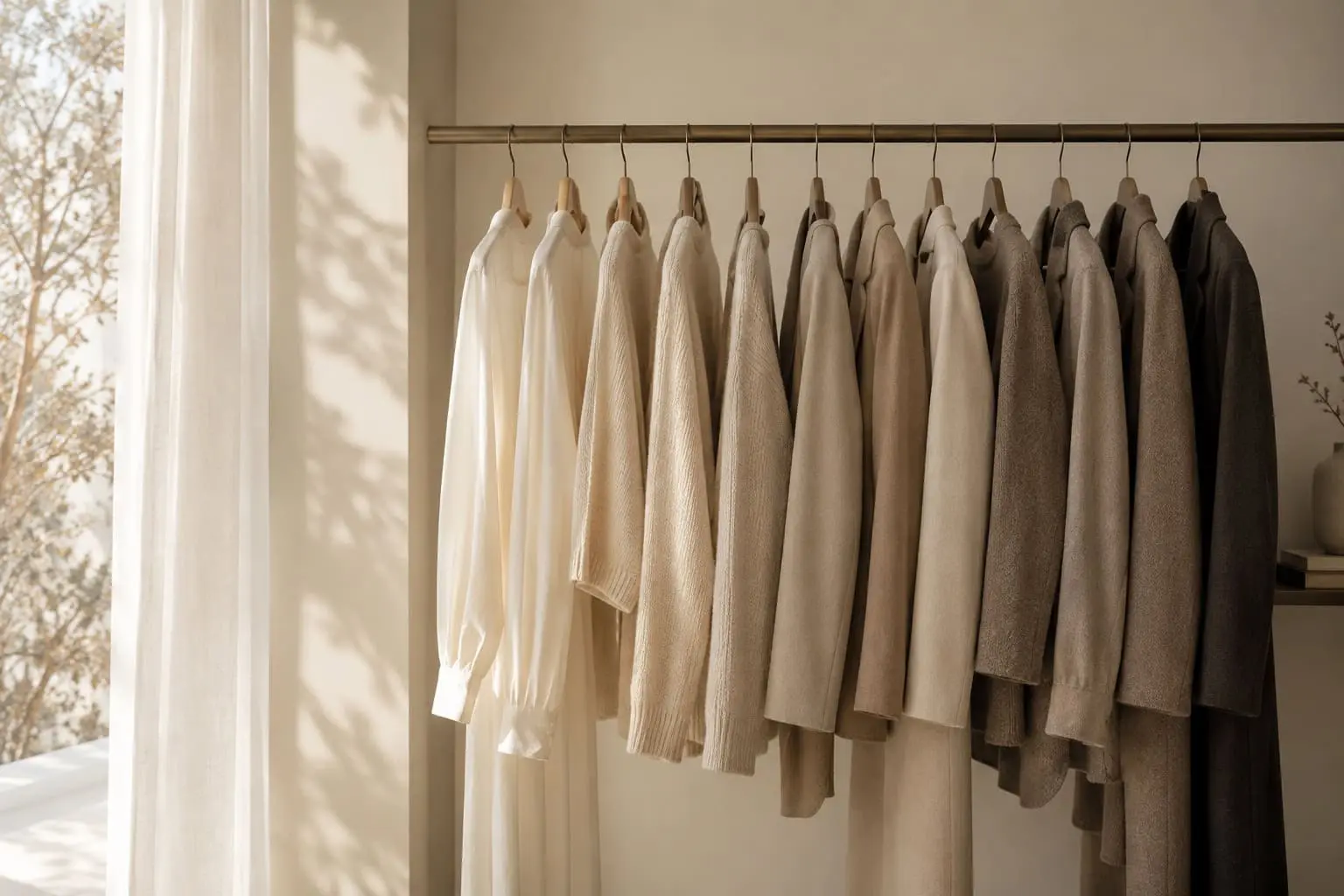
A calm wardrobe changes more than the way you look. It changes the way you move through the day.
When clothing constantly asks for attention — through discomfort, excess choice, trend-driven styling, or visual noise — getting dressed becomes another source of friction. Even beautiful pieces can feel mentally exhausting when nothing works together easily. A calm wardrobe does the opposite. It reduces decision fatigue, creates visual cohesion, and allows you to move through the day with greater ease and clarity.
This is part of why quiet luxury style feels so appealing right now. The appeal is not only aesthetic. It is psychological. Soft structure, restrained color palettes, comfortable tailoring, and repeated silhouettes create a sense of steadiness that loud or overly complicated wardrobes often cannot.
A calm wardrobe is not about owning less for the sake of minimalism, nor is it a formula for building the perfect closet. It is about what happens once your wardrobe begins to support your life quietly—when getting dressed asks less of you, familiar pieces become easier to trust, and clothing stops competing for attention.
Over time, that kind of consistency changes not only how your clothing looks, but how you feel wearing it.
A Calm Wardrobe Reduces Visual Noise
Most people think wardrobe stress comes from not having enough clothes. More often, it comes from having too much visual noise in the wardrobe.
A wardrobe filled with competing colors, inconsistent fits, trend-driven purchases, and pieces that only work in isolation creates friction before the day even begins. Nothing feels cohesive. Getting dressed becomes a process of correcting, balancing, adjusting, and second-guessing. Even beautiful clothing can feel mentally loud when everything competes for attention at once.
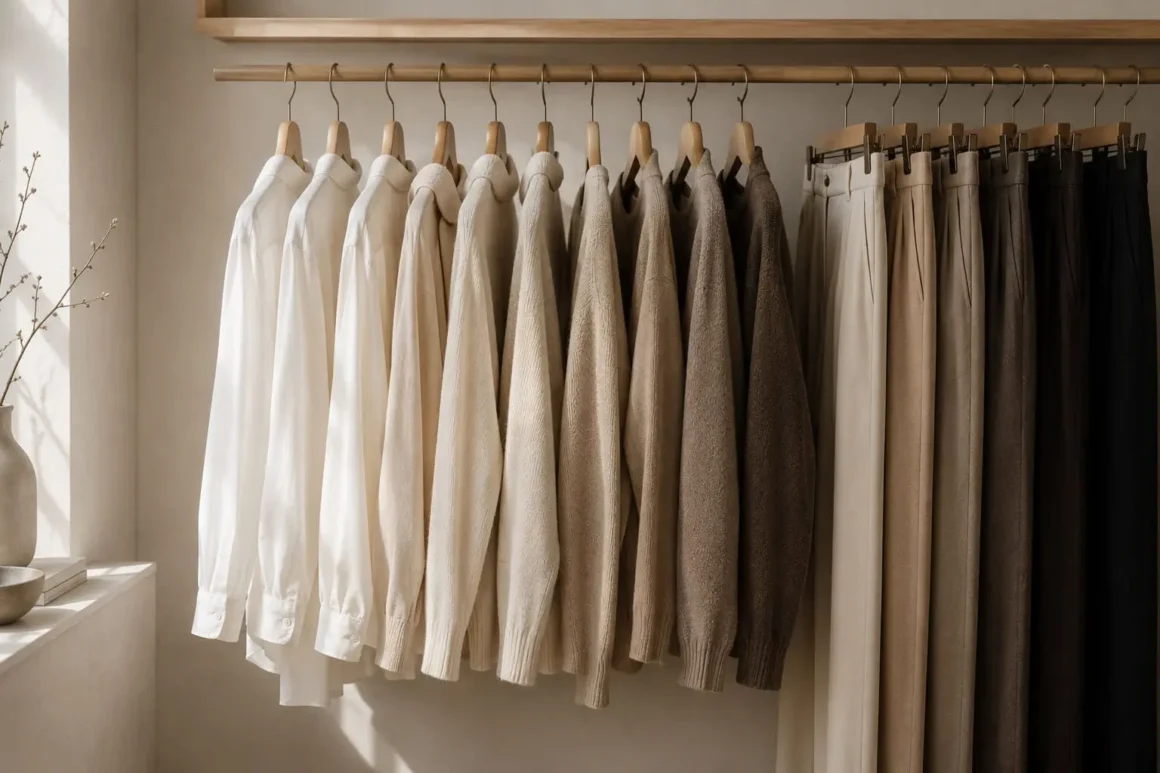
A calm wardrobe creates the opposite effect. The eye settles. Pieces relate naturally to one another. Colors repeat softly. Fabrics share a similar mood and texture. Silhouettes become familiar instead of performative. The result is not boring dressing, but quieter dressing — clothing that supports presence rather than distracting from it.
This is also where quiet luxury and minimalism begin to separate. A calm wardrobe is not necessarily strict or sparse. The goal is not visual emptiness. The goal is cohesion. A wardrobe can still feel warm, layered, textured, and personal without feeling overstimulating.
Repetition plays an important role here too. The real value of repeating outfits is not simply practicality. Familiar combinations reduce mental clutter. When you already trust the way certain pieces work together, getting dressed requires less negotiation with yourself. Over time, that consistency creates a quieter relationship with clothing altogether.
The best wardrobes rarely feel chaotic. They feel resolved.
Clothing Affects Mental Pace More Than We Admit
Most people notice immediately when clothing feels physically uncomfortable. What often goes unnoticed is how much certain wardrobes create mental tension as well.
An outfit that constantly needs adjustment pulls attention outward. Shoes that interrupt movement, fabrics that never quite settle, or combinations that feel slightly “off” can create low-level distraction throughout the day. The clothing may look acceptable, but it never fully disappears into the background of your life.
A calm wardrobe changes that experience.
When clothing fits well, layers naturally, and feels visually cohesive, the mind stops negotiating with it constantly. Getting dressed becomes faster. Movement becomes easier. You spend less time correcting sleeves, questioning proportions, changing outfits repeatedly, or feeling disconnected from what you are wearing.
This is one reason refined wardrobes often appear quieter overall. The clothing is not competing with the person wearing it. It creates enough structure, softness, and familiarity to allow attention to settle elsewhere — on work, conversation, movement, routine, or simply the pace of the day itself.
The effect is subtle but cumulative.
A wardrobe filled with visual excess, trend-driven purchases, or disconnected styling choices can create a feeling of overstimulation even when every individual piece is attractive on its own. In contrast, repeated silhouettes, restrained palettes, and fabrics that move comfortably together tend to create steadiness instead of interruption.
This is also why many people describe a cohesive wardrobe as feeling calming long before they describe it as fashionable.
The calm does not come from perfection. It comes from reduced friction. From clothing that feels aligned with the life around it rather than constantly asking to be reconsidered.
Why Repetition Creates Confidence
Many people assume repeating outfits will make their wardrobe feel less interesting. In practice, the opposite is often true.
Repetition creates familiarity, and familiarity creates ease.
When certain silhouettes, colors, fabrics, and combinations appear consistently in a wardrobe, getting dressed becomes less performative and more instinctive. You stop relying on constant novelty to feel polished because the wardrobe already contains combinations you trust.
This is one reason people with strong personal style often repeat clothing more than expected.
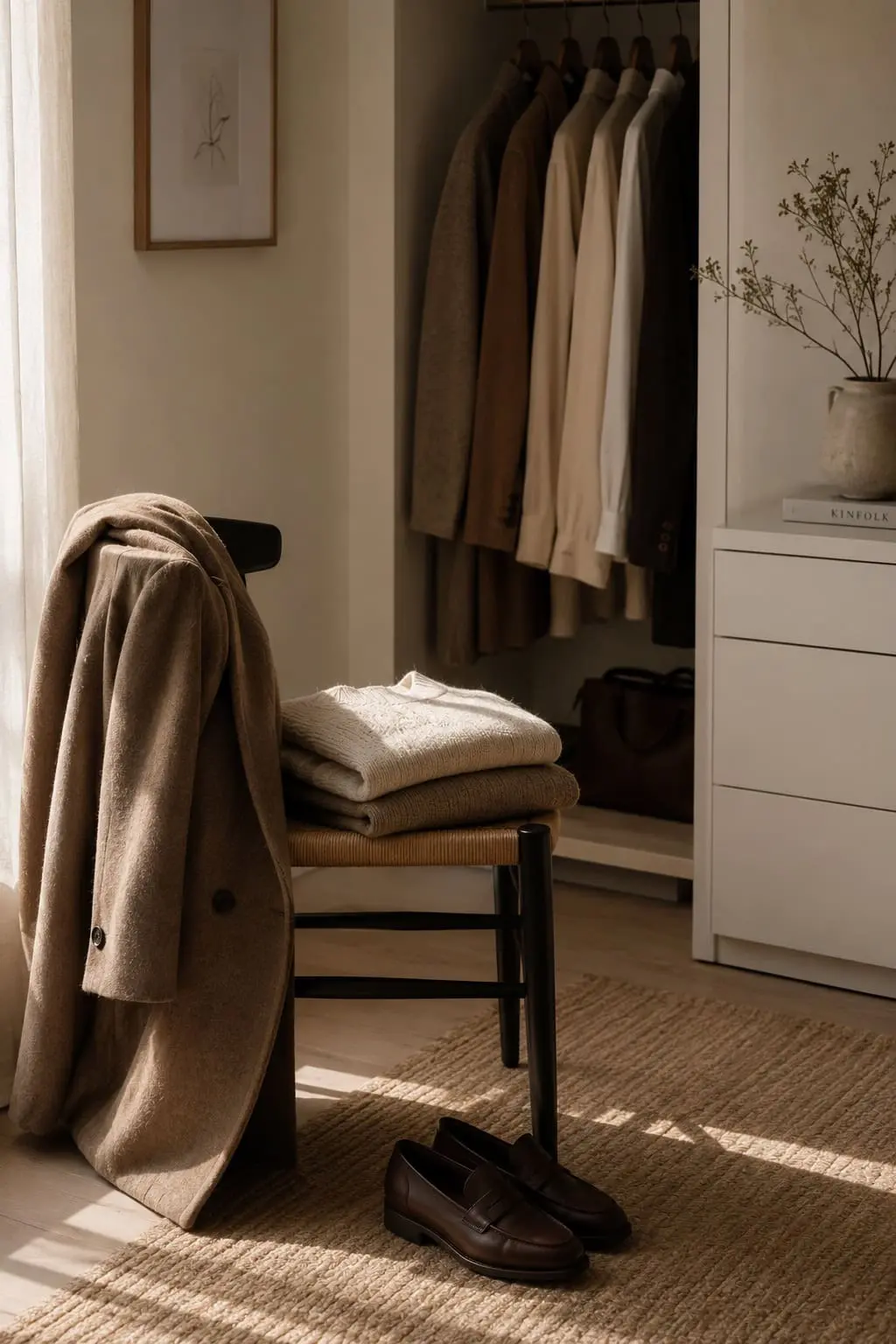
The consisteny creates visual clarity. A familiar blazer, the same tailored trouser, a coat that returns every winter, knitwear worn repeatedly across different settings — these pieces begin to form a recognizable visual language over time. Instead of looking repetitive, the wardrobe starts to feel settled.
Confidence often grows from that steadiness.
Clothing that is constantly changing can sometimes create hesitation because nothing feels fully integrated yet. Repeated silhouettes create the opposite effect. You already understand how the fabric moves, how the proportions feel, how the outfit behaves throughout the day. The clothing becomes easier to inhabit naturally rather than consciously manage.
This is also why quiet wardrobes often appear calmer and more elegant than wardrobes built around constant variation.
The refinement comes less from having endless options and more from developing enough cohesion that repetition no longer feels limiting. Familiar combinations reduce visual noise, decision fatigue, and the pressure to continually reinvent yourself through clothing.
Over time, the wardrobe begins to function less like a collection of separate outfits and more like a consistent environment — one that supports movement, routine, confidence, and clarity quietly in the background of everyday life.
A Calm Wardrobe Isn’t Boring — It’s Intentional
A calm wardrobe is often misunderstood as a wardrobe without personality. In reality, the difference is usually not less style, but less visual competition.
Intentional wardrobes still contain texture, contrast, softness, shape, and indiciduality. The difference is that the elements work together instead of competing for attention all at once. A tonal outfit in layered wool, suede, cotton, and silk can feel far more visually interesting than an outfit built around louder color, excessive trend layering, or constant statement pieces.
This is one reason quiet luxury wardrobes rarely depend on obvious excess to feel elevated.
The interest comes through proportion, fabric, tailoring, repetition, and subtle variation rather than novelty alone. A familiar palette repeated across different textures creates depth without chaos. A structured coat over soft knitwear feels composed because the contrast is controlled. Even simple outfits begin to feel richer when the wardrobe shares a consistent visual language.
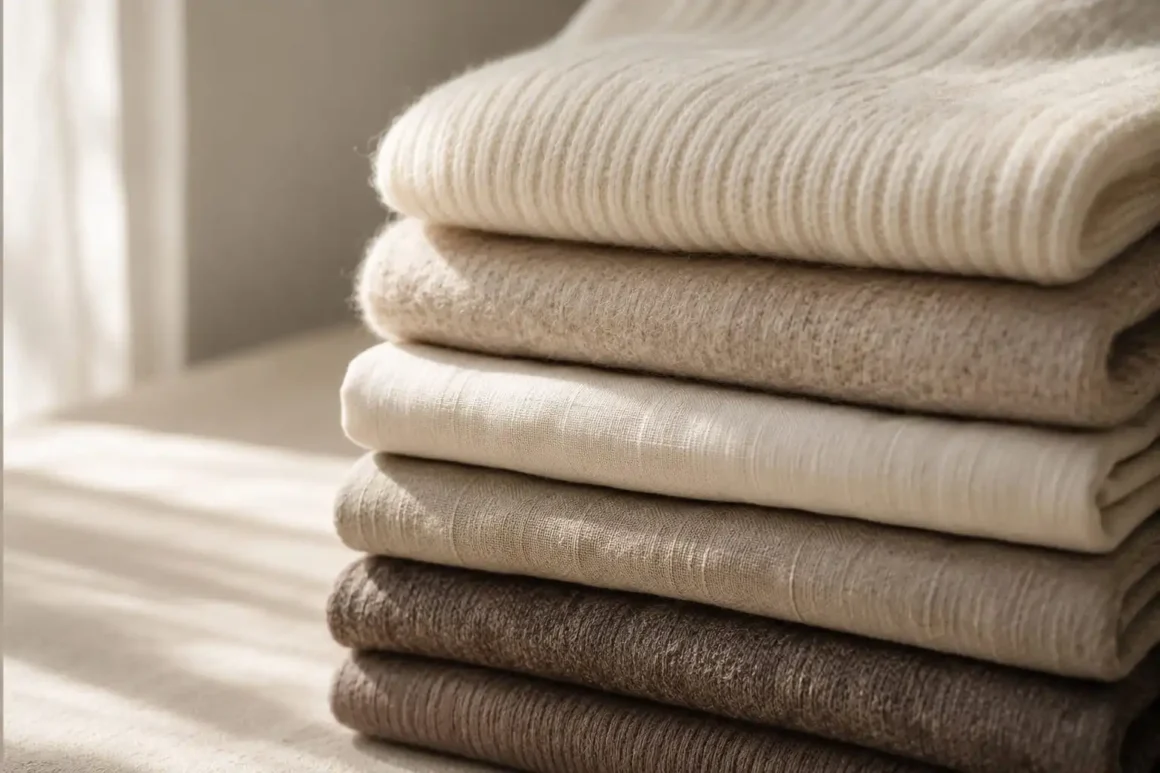
Texture and finish often create more refinement than decoration itself. Matte wool, brushed cashmere, crisp cotton, soft suede, and fabrics with natural drape add dimension quietly, allowing clothing to feel layered without becoming visually loud.
Movement matters too. Drape changes how garments settle, move, and interact with the body. Clothing with good drape creates softness and continuity throughout the silhouette, which is one reason calm wardrobes often feel more elegant even when they remain simple.
Intentional dressing also depends on editing.
Not every interesting piece belongs in the same outfit. Calm wardrobes tend to repeat certain shapes, textures, and proportions consistently enough that getting dressed feels cohesive erather than improvisational. Over time, this creates a wardrobe that feels recognizable, personal, and steady without relying on constant reinvention.
The result is not emptiness. It is clarity.
The Best Wardrobes Support Your Life Quietly
The most effective wardrobes are rarely the ones demanding the most attention.
Instead, they tend to support daily life almost invisibly — simplifying decisions, reducing friction, and creating enough consistency that getting dressed no longer feels like a performance to manage each morning.
This is part of why calm wardrobes often feel luxurious even when they remain relatively simple.
The clothing works with the rhythm of the day rather than against it. Fabrics move comfortably. Layers combine naturally. Shoes support movement. Colors coordinate without effort. Pieces repeat easily across work, travel, errands, dinners, and quieter moments at home. The wardrobe becomes dependable instead of mentally demanding.
Over time, this quiet dependability changes the emotional relationship people have with clothing.
You spend less energy searching for the “right” outfit because more of the wardrobe already feels aligned with your life. Less adjustment is required throughout the day. Less second-guessing. Less visual overstimulation. The clothing begins to feel integrated into routine rather than separate from it.
This is also why many refined wardrobes appear restrained from the outside.
The goal is not to impress constantly. It is to create enough cohesion that the wardrobe supports clarity, movement, and presence naturally. The best clothing does not pull attention away from your life. It allows you to move through it more easily.
In that sense, a calm wardrobe is not really about owning less or dressing minimally for its own sake. It is about creating an environment — visually, mentally, and physically — that feels settled enough to return to repeatedly without exhaustion.
The result is not only a quieter wardrobe, but often a quieter relationship with getting dressed altogether.
Calm Style Creates Mental Space
A calm wardrobe does not solve every form of stress or uncertainty. But it can remove a surprising amount of unnecessary noise from daily life.
When clothing feels cohesive, comfortable, and visually settled, less attention is pulled toward constant adjustment, decision-making, or self-consciousness. The wardrobe begins to create steadiness rather than interruption. Getting dressed becomes simpler. Movement feels easier. The mind has fewer small decisions competing for energy before the day has even fully begun.
This is often why refined personal style looks quieter over time.
The confidence does not come from constant novelty or perfectly curated outfits. It comes from familiarity, repetition, restraint, and the ability to trust what already works. A calm wardrobe creates enough clarity that clothing no longer needs to dominate attention in order to feel expressive or complete.
That shift changes more than appearance alone.
It changes the pace of mornings. The emotional tone of getting dressed. The relationship between clothing and daily life. Over time, style begins to feel less like performance and more like support — something integrated quietly into routine rather than constantly asking to be reconsidered.
In the end, a calm wardrobe is not really about owning fewer pieces or following a specific aesthetic perfectly. It is about creating enough visual and mental space that your attention can return to the life moving around the clothing itself.
How you dress quietly shapes how you move through the day.
A calm wardrobe doesn’t eliminate decisions altogether. It reduces the small points of friction that compete for your attention, creating more space for the work, relationships, and responsibilities that matter most.
These guides explore what happens next: how repetition becomes supportive rather than limiting, why structure doesn’t have to feel rigid, and the practical choices that make a wardrobe easier to live with.

