Clothing doesn’t just sit on the body — it moves, folds, and falls in different ways depending on the fabric. Understanding what drape means in clothing is one of the simplest ways to start noticing why some garments look polished and fluid while others appear stiff or awkward.
When people ask what drape means, they’re really asking how fabric behaves once it’s worn. Some materials hold their shape and create crisp lines. Others fall softly into folds, creating movement and ease. Learning what drape is in fashion helps explain why a silk blouse feels relaxed and elegant, while a structured cotton shirt looks sharper and more defined.
Once you begin paying attention to drape, it becomes easier to understand why some outfits look refined without trying too hard. Often, the difference isn’t about brands or trends — it’s simply how the fabric behaves.
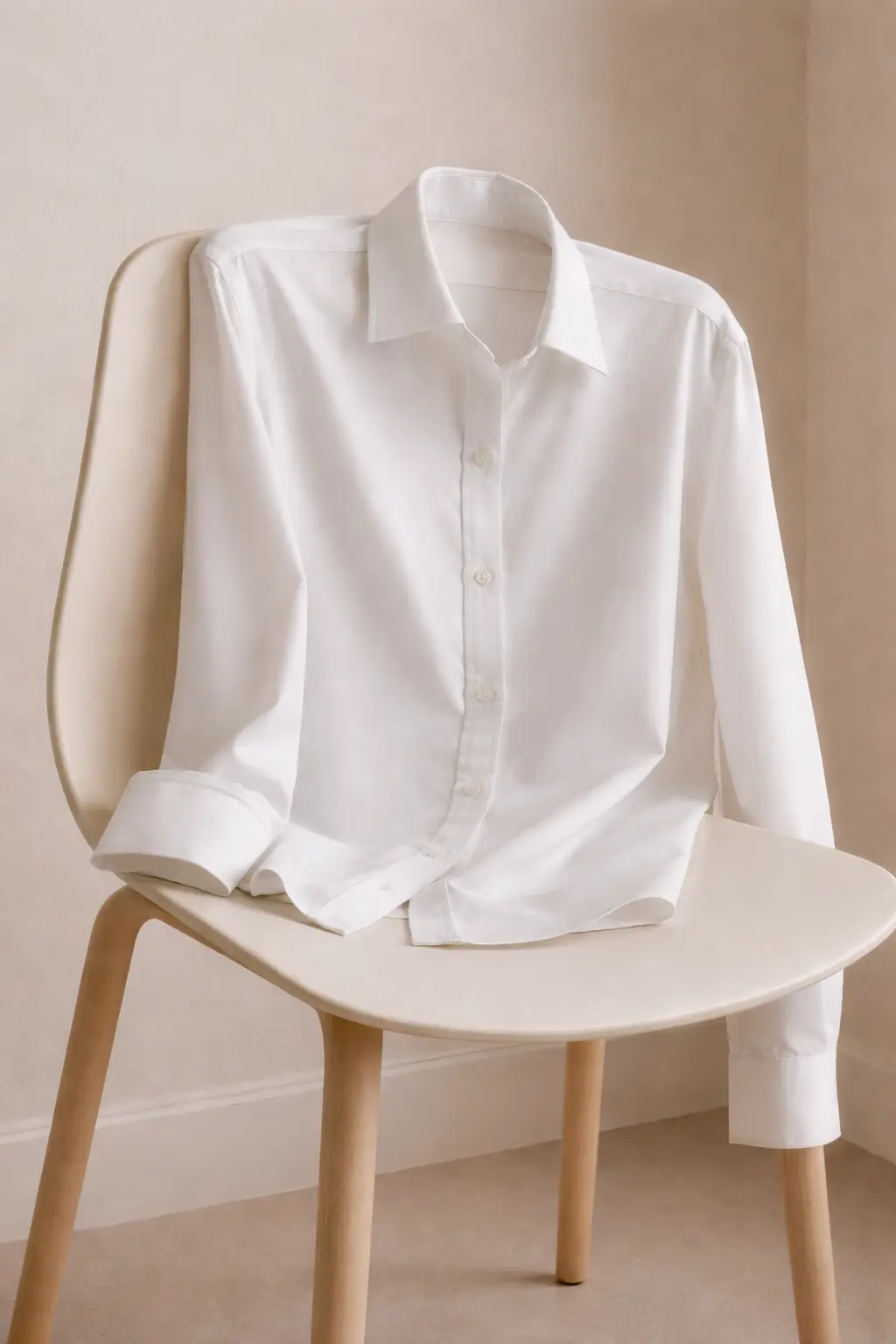
What Drape Means in Clothing
In simple terms, drape describes how fabric falls and hangs on the body or over a surface. When people ask what drape means in clothing or what is drape in fashion, they are referring to the way a material moves under its own weight.
Some fabrics hold their shape and create clean, structured lines. Others fall into soft folds and follow the natural movement of the body. This difference comes from the fabric’s weight, fiber type, weave, and flexibility.
For example, a crisp cotton shirt may appear structured and slightly stiff because the fabric resists folding. A silk or viscose blouse, on the other hand, tends to fall into gentle curves and soft folds, creating what is known as high drape.
Understanding fabric drape helps explain why some clothes hang beautifully while others look rigid, even when the garments are cut in similar shapes.
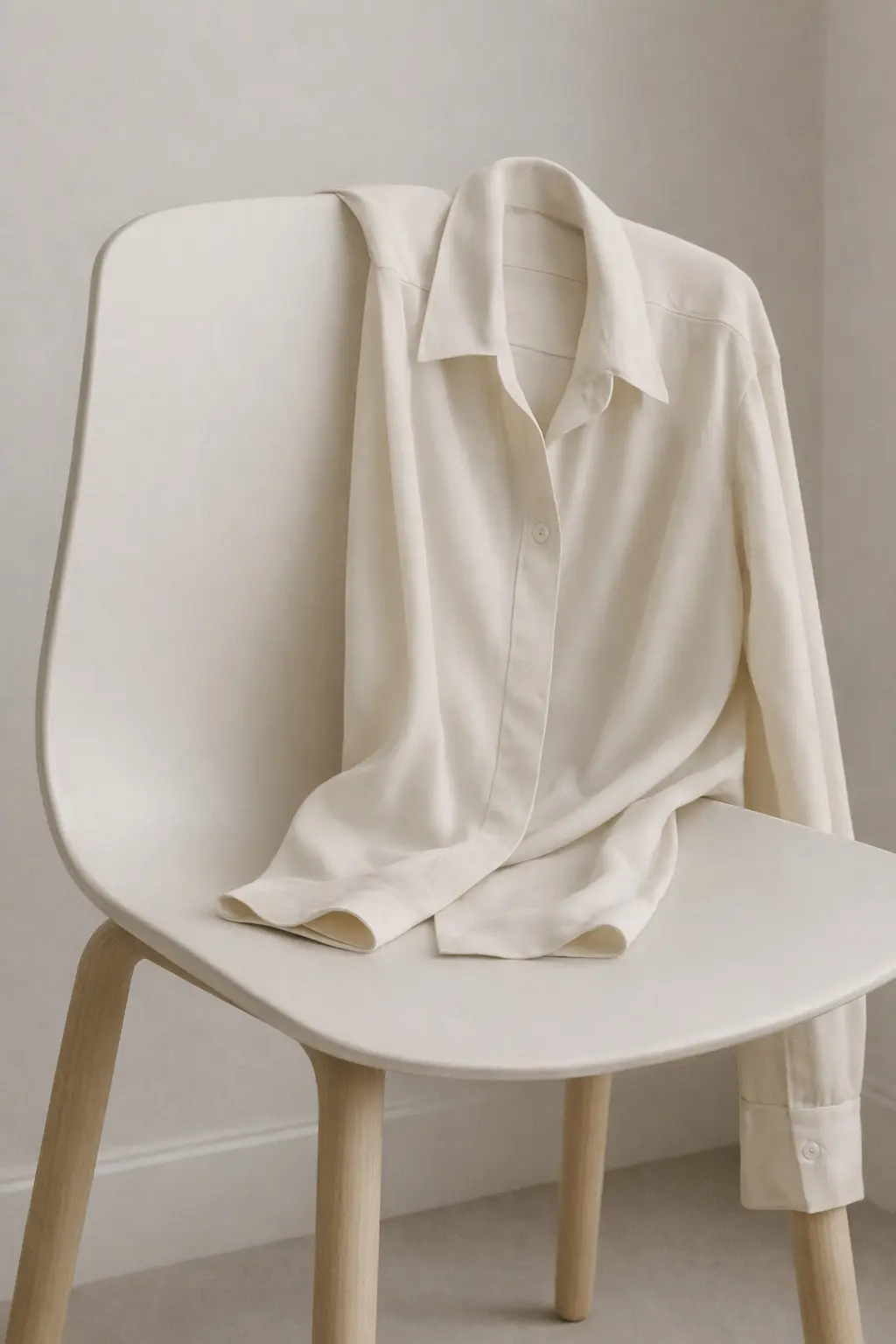
Why Fabric Drape Changes How Clothing Looks
The way fabric drapes has a quiet but powerful influence on how clothing appears. Two garments can have the same cut and silhouette, yet look completely different depending on how the fabric falls.
Structured fabrics tend to hold their shape. Materials like crisp cotton, denim, or some wool blends resist folding and create cleaner, sharper lines. This can make clothing appear more tailored or formal, but it can also create a slightly rigid look if the fabric is too stiff for the design.
Fabrics with higher drape behave differently. Materials such as silk, viscose, crepe, or lightweight wool move more easily and fall into natural folds. Instead of holding a firm outline, they follow the shape of the body and create softer, more fluid lines.
This is one reason some clothes look polished and effortless while others appear stiff or awkward, even when they are designed in similar styles. Often the difference is not the garment itself, but the way the fabric moves.
Learning to recognize fabric drape makes it easier to understand why some pieces feel refined and comfortable at the same time—a quality often associated with quiet luxury clothing.
Low Drape vs High Drape Fabric
One of the easiest ways to understand drape is to compare fabrics that behave differently. In fashion, materials are often described as having either low drape or high drape, depending on how they fall.
Fabrics with low drape tend to hold their shape. Crisp cotton, poplin, denim, and some structured wools resist folding and create clean, stable lines. These materials are often used for shirts, tailored garments, or structured silhouettes because they maintain their form.
Fabrics with high drape behave very differently. Materials such as silk, viscose, crepe, or lightweight wool fall into soft folds and move easily with the body. Instead of holding a rigid shape, the fabric follows gravity and creates fluid lines.
This difference is easy to see when fabric is placed on a surface or worn. Structured fabrics appear smooth and controlled, while high-drape fabrics form gentle folds and movement. Neither quality is inherently better — they simply create different visual effects.
Understanding the difference between low and high drape helps explain why some clothes hang beautifully while others feel stiff, even when the garments themselves are well designed.
Why Drape Matters for Comfortable Work Outfits
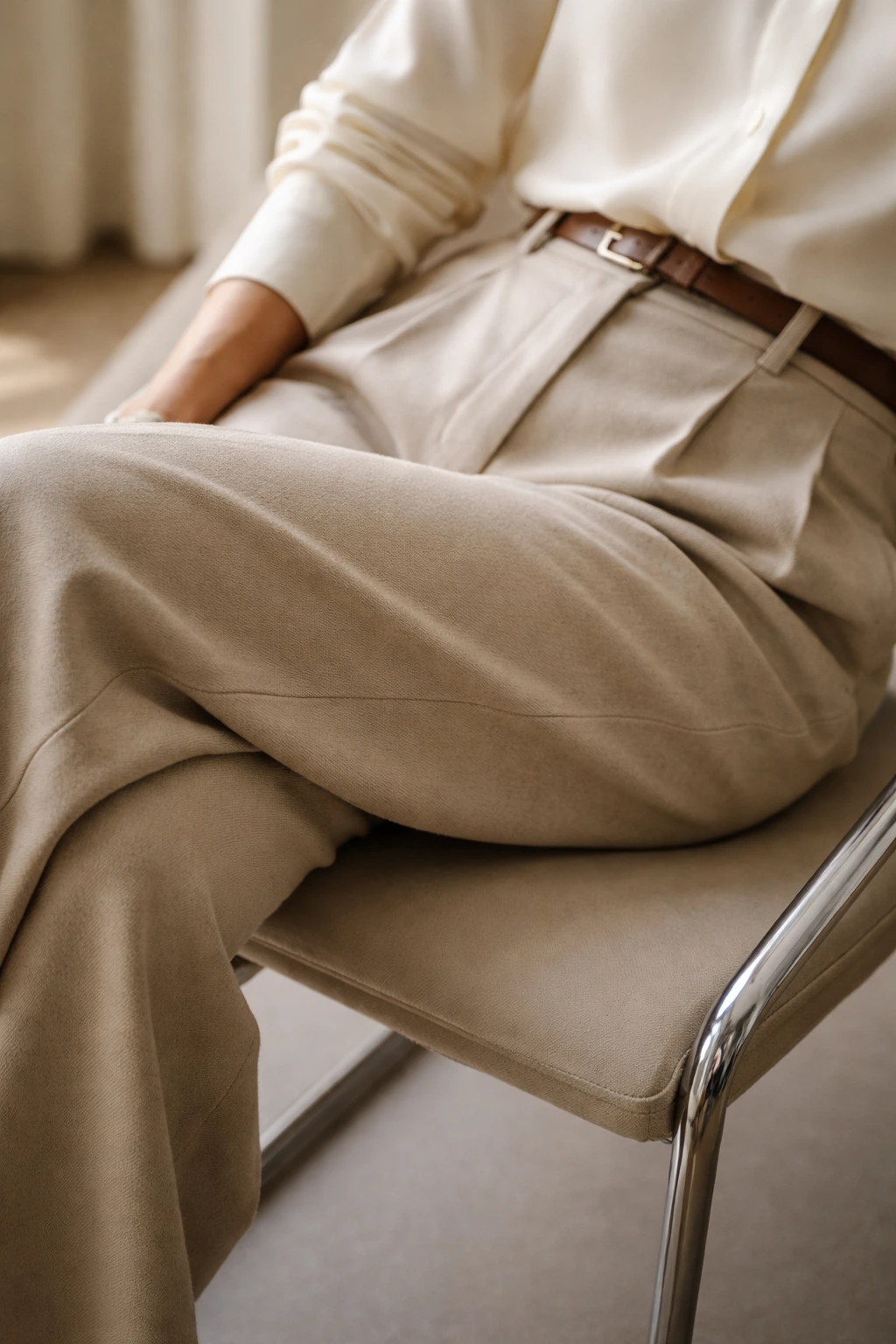
Drape becomes especially important when clothing is meant to feel comfortable but still look composed. Many garments designed for ease — knit tops, soft trousers, relaxed dresses — rely on fabric behavior to maintain their shape.
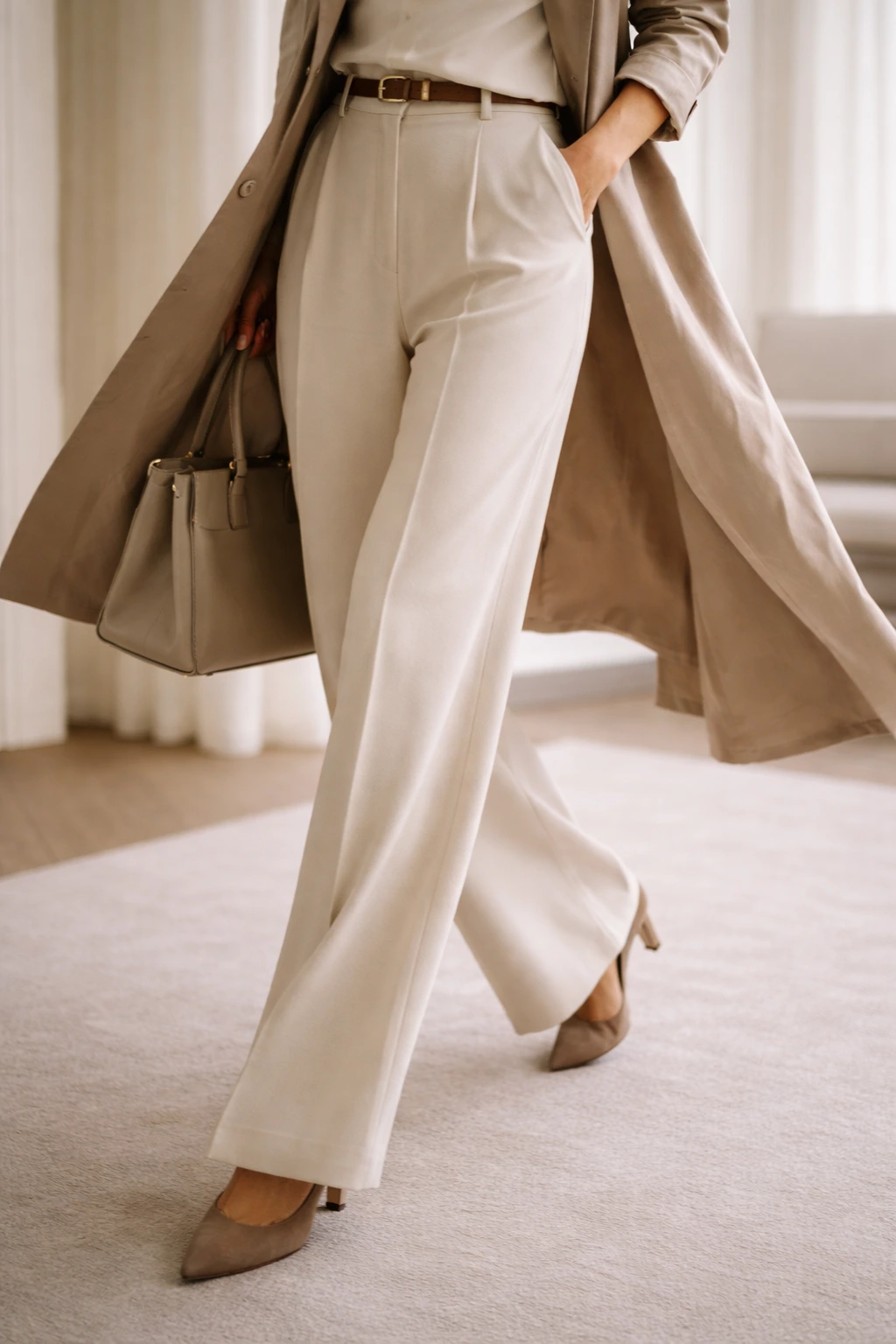
When fabric has good drape, it moves with the body while still creating clean lines. The garment follows natural movement instead of bunching, clinging, or collapsing. This allows clothing to feel soft and flexible without appearing sloppy.
This is one reason certain fabrics appear more refined in everyday wardrobes. Wool trousers, silk blouses, and well-cut knit dresses often combine comfort with fluid movement. The fabric falls naturally, allowing the silhouette to remain calm and balanced.
Drape also helps explain why some comfortable outfits look polished while others appear overly casual. When fabric hangs well, even simple garments can feel intentional. When fabric is too stiff or too flimsy, the same outfit can lose its sense of structure.
This balance between softness and stability is also part of what makes comfortable work outfits look polished. When fabric drapes well and at least one element of the outfit holds its shape, the overall effect feels composed rather than casual. This balance between fluid fabric and quiet structure is also part of what makes a quiet authority capsule work so well in practice.
Careful attention to how fabric falls is one of the quiet signals people often associate with refined or understated wardrobes.
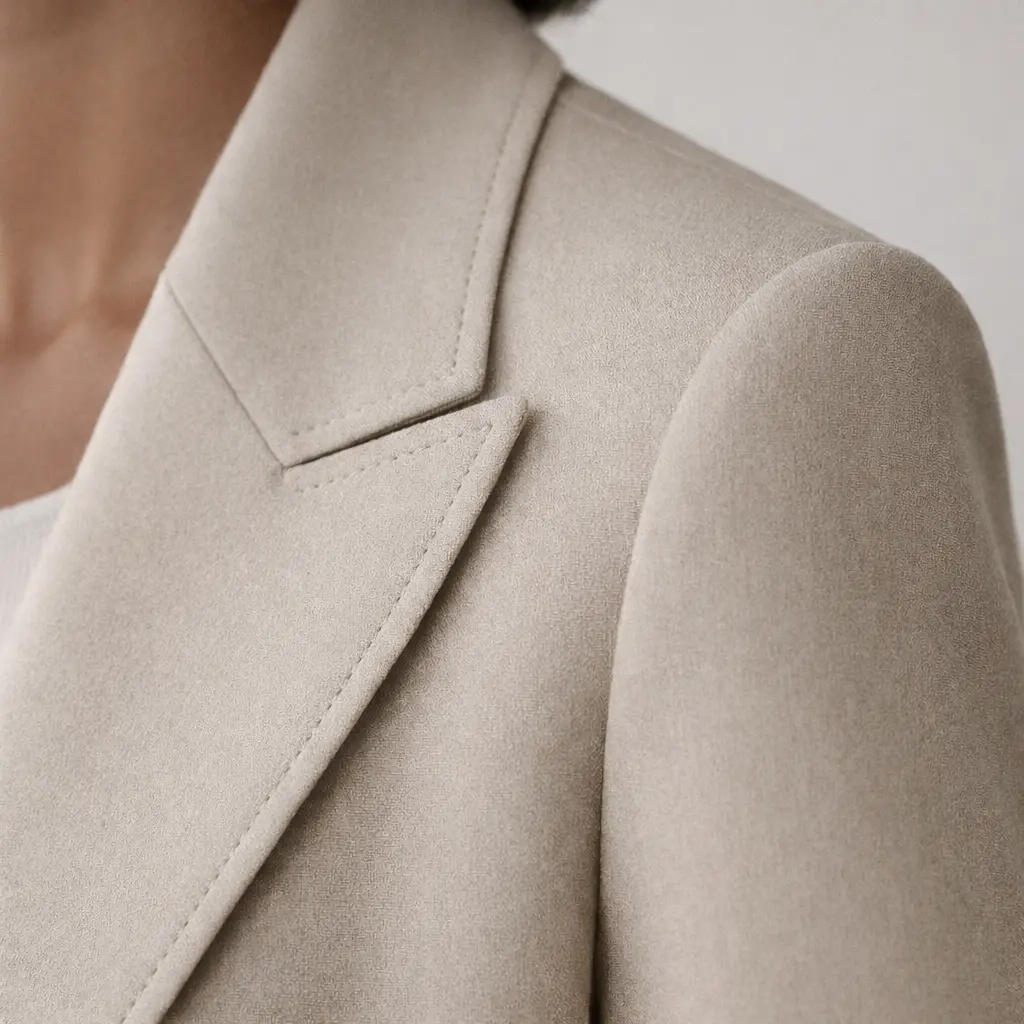
Where You Notice Fabric Drape First
Once you begin paying attention to fabric drape, it becomes surprisingly easy to recognize.
You’ll usually notice it in a few places first.
At the shoulder and sleeve.
Structured fabrics tend to hold a firm line across the shoulder, while fabrics with more drape soften and fall naturally along the arm. The difference is subtle but noticeable — one reads architectural, the other fluid.
Along the torso.
Fabrics with good drape tend to fall smoothly over the body rather than clinging or ballooning outward. Instead of forcing a shape, they follow the body’s movement while still maintaining visual balance.
At the hemline.
This is often where the difference becomes most obvious. A stiff fabric may stand away from the body, while a fluid one falls into soft folds. The way a garment settles at the hem can change the entire impression of an outfit.
These small details are part of why certain pieces feel quietly refined even when they are simple. The fabric behaves well, and the eye reads that behavior as composure.
How to Start Noticing Fabric Drape
The easiest way to understand drape is simply to observe it.
Pay attention to how fabric behaves when someone walks, sits, or reaches for something. Notice whether the garment falls smoothly back into place or whether it wrinkles, twists, or holds its shape too rigidly.
You can also compare fabrics directly.
Hold a cotton shirt next to a silk blouse, or a structured trouser beside one made of a softer fabric. Even before wearing them, the difference in how the material falls will often be visible.
Over time, this awareness becomes instinctive. You begin to recognize which fabrics create calm, balanced lines and which ones introduce tension into an outfit.
This is one of the quiet skills behind a polished wardrobe. When you understand how fabric moves, it becomes much easier to choose pieces that feel comfortable while still looking composed.
And when those fabrics are paired with at least one element that holds its line — a structured layer, a tailored trouser, or a defined shoe — comfort begins to read as intentional rather than casual. This idea is explored further in the One Structured Thing Rule.
FAQ: Fabric Drape
Frequently Asked Questions
A few simple answers to the questions people often ask when learning what drape means in clothing.
What is drape in fashion?
In fashion, drape describes how fabric hangs and moves under its own weight. Some materials hold their shape and create structured lines, while others fall into soft folds that move more fluidly with the body.
Why do some clothes drape better than others?
Drape depends on the fabric’s fiber, weight, weave, and flexibility. Materials such as silk, viscose, and crepe often have higher drape because they are softer and more fluid. Structured fabrics like cotton poplin or denim resist folding and create firmer, cleaner lines.
Is drape the same as fit?
No. Fit refers to how a garment is cut and sized for the body, while drape describes how the fabric behaves once the garment is worn. Two garments can have a similar fit but look very different if their fabrics drape differently.
What This Means for Your Wardrobe
Understanding drape doesn’t require technical knowledge. It simply requires attention to how fabric behaves.
Some fabrics hold a sharp line. Others fall into soft folds. Neither is inherently better — but each creates a different visual effect. When the fabric of a garment moves well, the entire outfit begins to feel calmer and more settled.
This is one reason clothing that appears simple can still feel quietly refined. The fabric hangs correctly, the silhouette remains balanced, and the body is free to move without disruption.
In everyday wardrobes, this quality often works alongside another principle: at least one element of the outfit provides structure. When a fluid fabric is paired with a piece that holds its line — a blazer, a tailored trouser, or a defined shoe — comfort begins to read as intentional rather than casual.
Once you begin noticing how garments fall and move, it becomes easier to build outfits that feel comfortable while still looking composed.
If you’d like to see how these principles translate into everyday dressing, seven outfit formulas for polished but comfortable work outfits show how structure and fluid fabrics work together in practice.
Over time, noticing details like drape changes how you see clothing. Instead of focusing only on style or trend, you begin to recognize the quieter signals — how fabric falls, how garments move, and why certain pieces feel composed even on the most ordinary days.

