A capsule wardrobe is often defined by the pieces it contains.
But in practice, what matters more is how those pieces come together.
The most useful wardrobes aren’t built on endless combinations. They’re built on a small number of outfits that work — consistently, quietly, and without adjustment.
If you’ve ever found yourself returning to the same combination without thinking, that’s not a limitation. It’s a signal.
These are the capsule wardrobe outfits that hold everything else in place.
Not because they’re new, but because they don’t need to be.
The Capsule Wardrobe Outfits You Return To
A wardrobe rarely feels complete because of how many pieces it contains.
It begins to feel complete when certain combinations return — without effort, without adjustment, without the sense that something needs to be added.
These are not outfits you create each morning. They are outfits you recognize.
Over time, most capsule wardrobe outfits settle into a small number of formulas — simple structures that repeat because they work.
Not because they are new, but because they hold.
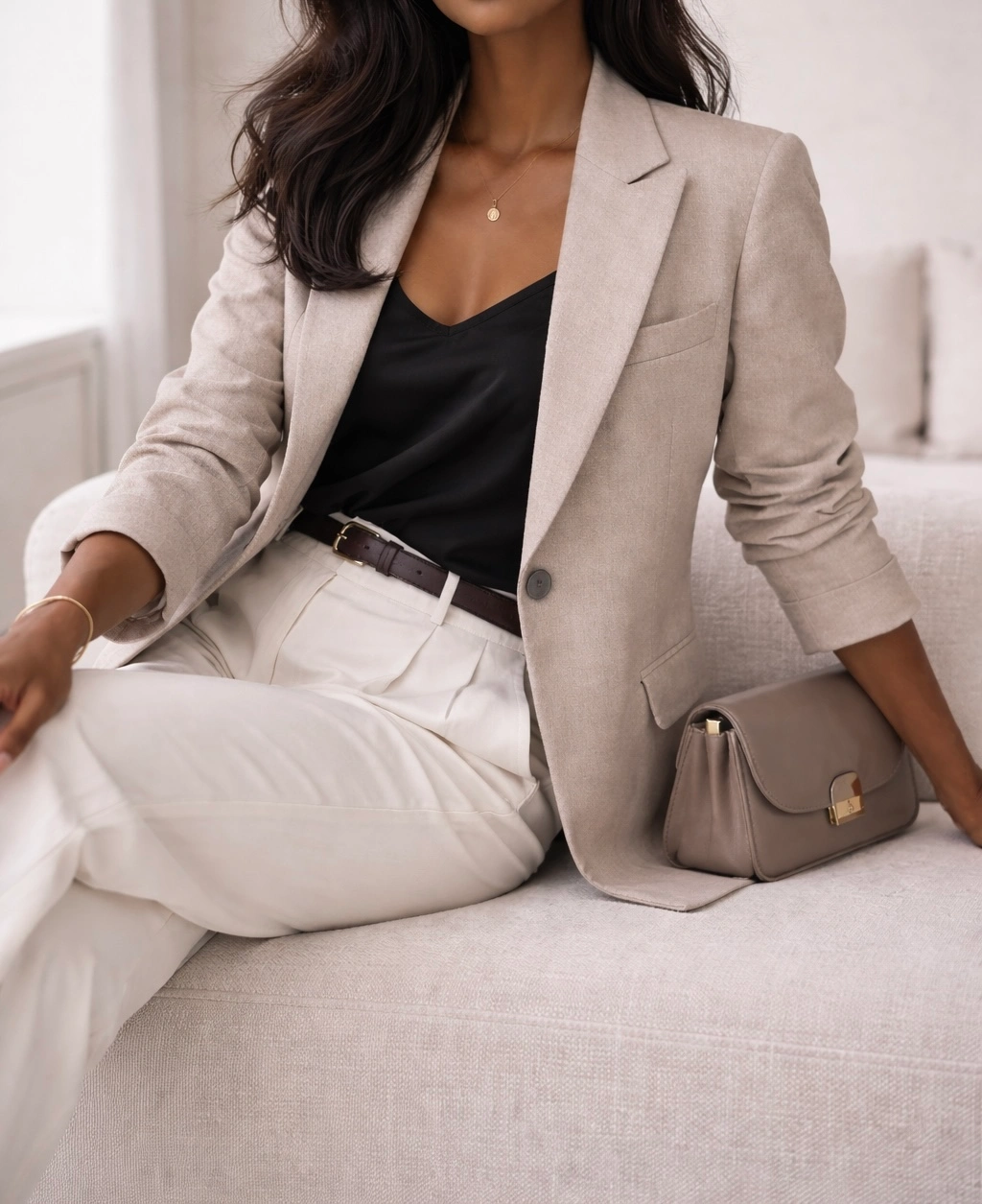
1. Structured Layer + Fluid Base
A tailored layer worn over something softer is often what gives an outfit balance.
A blazer paired with a fluid top — silk, cotton, or a fine knit — and a well-cut trouser creates a composition that feels both stable and easy. The structure sits on the outside, while the base remains relaxed.
This contrast is what allows the outfit to repeat without feeling rigid.
The same blazer can be worn across multiple days without needing to be reimagined. The base layer can shift slightly — a different texture, slightly different drape — but the overall structure remains intact.
This is one of the most reliable capsule wardrobe outfits because it doesn’t rely on novelty. It relies on proportion.
And once that proportion is right, it rarely needs to be adjusted.
2. Knit + Trouser + Quiet Detail
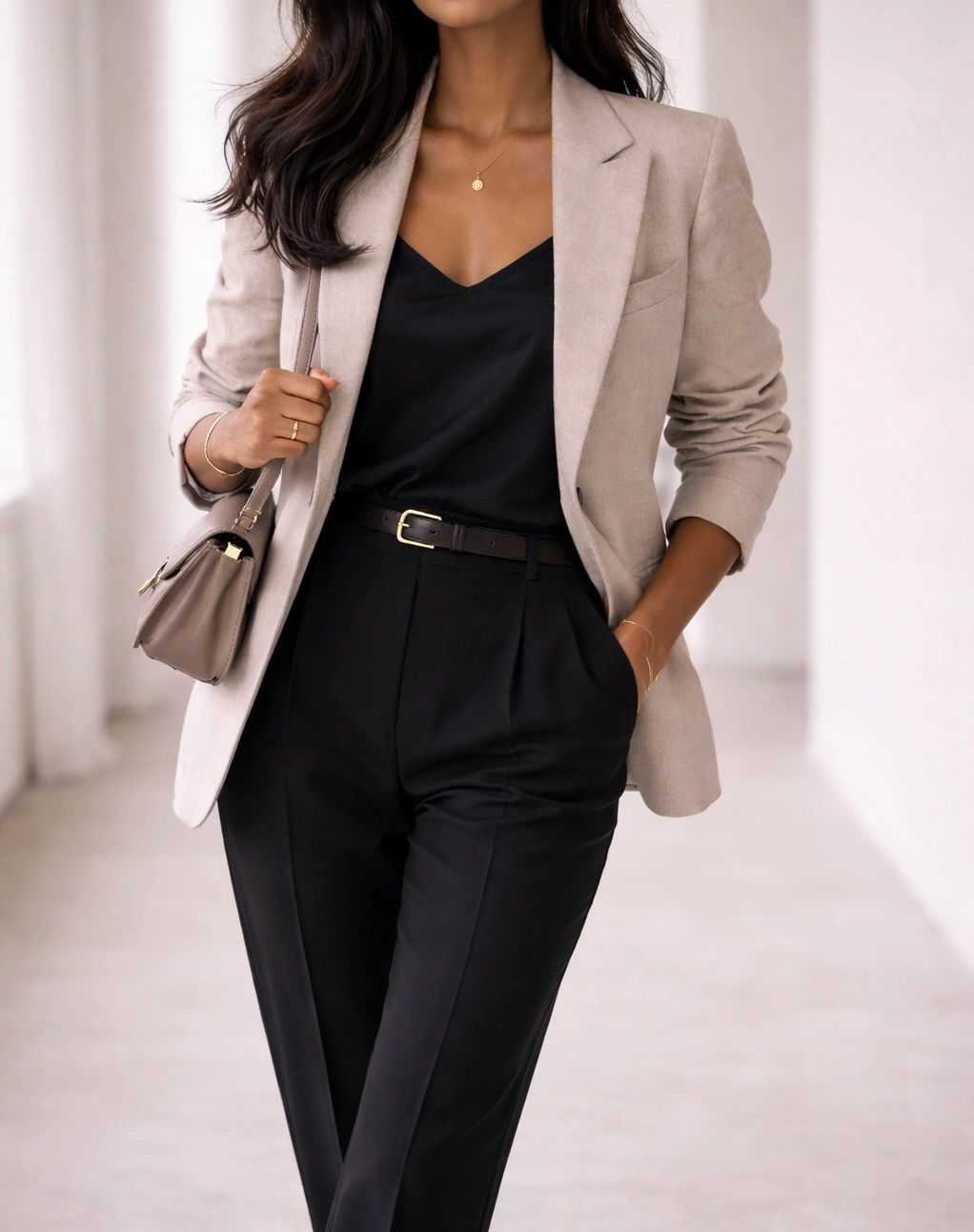
A soft knit paired with a tailored trouser is one of the most dependable combinations in a capsule wardrobe.
It works because it doesn’t try to do too much.
The knit softens the structure of the trouser, while the trouser gives shape to what would otherwise feel too relaxed. The balance is immediate — nothing needs to be corrected.
What changes here is often minimal.
A sleeve pushed slightly higher. A belt added or removed. A small piece of jewelry that catches the light without drawing attention.
These details don’t redefine the outfit. They simply give it a different emphasis.
This is what allows the combination to repeat without feeling static.
Because the foundation is already resolved, the smallest adjustment is enough.
3. Shirt + Trouser + Restraint
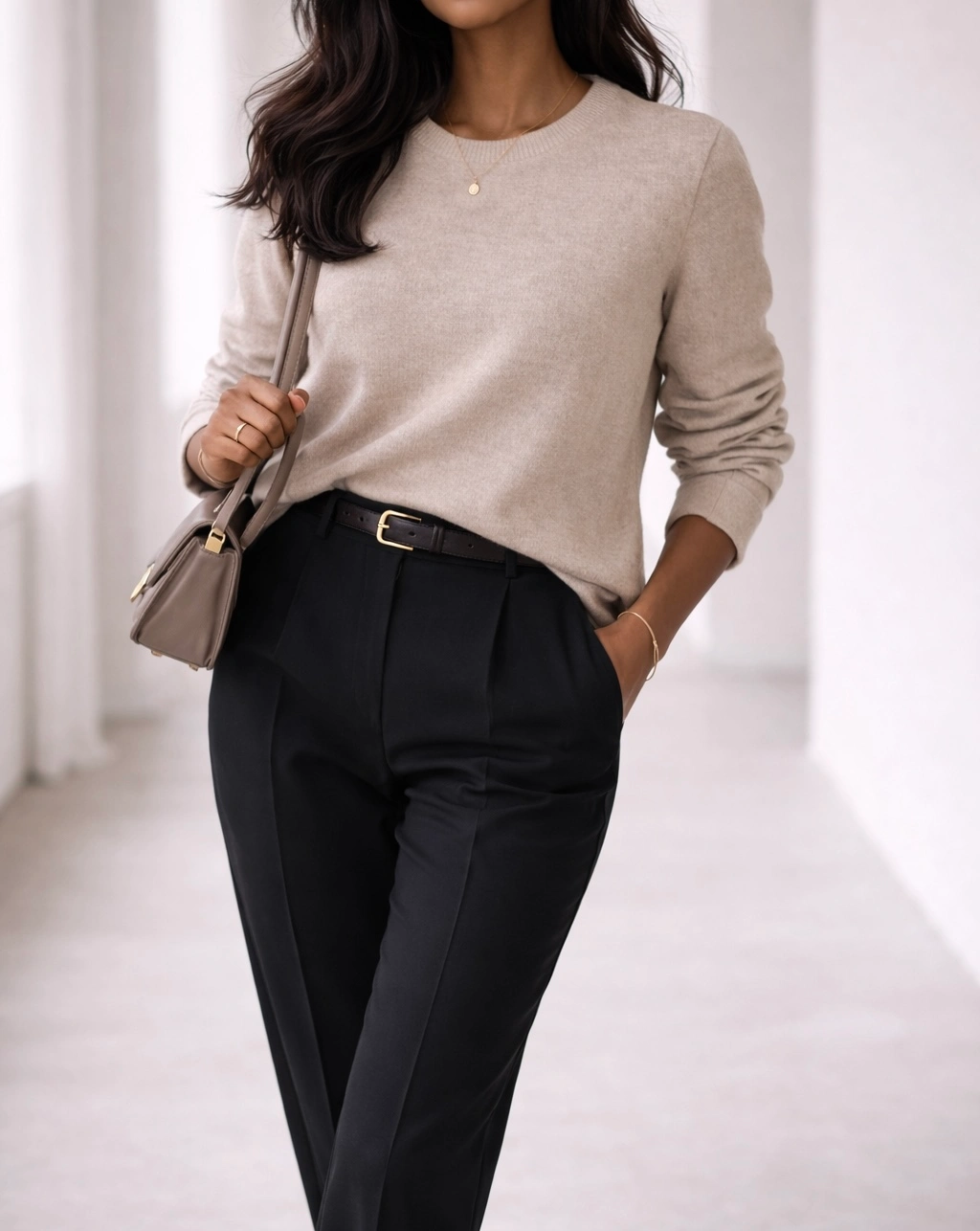
A shirt and trouser is one of the simplest combinations — and one of the easiest to overwork.
Left alone, it has a kind of clarity.
A well-cut shirt, worn with a tailored trouser, doesn’t require much beyond fit and proportion. The line is clean. The structure is already there.
The instinct is often to add something — to layer, to accessorize, to create more variation.
But this is one of the combinations that benefits most from restraint.
A slight change in how the shirt is worn can be enough. A looser tuck. A more open neckline. A sleeve adjusted slightly.
Nothing added — just refined.
This is where repetition becomes most visible.
Because when an outfit is reduced to its essentials, what reemains has to work on its own.
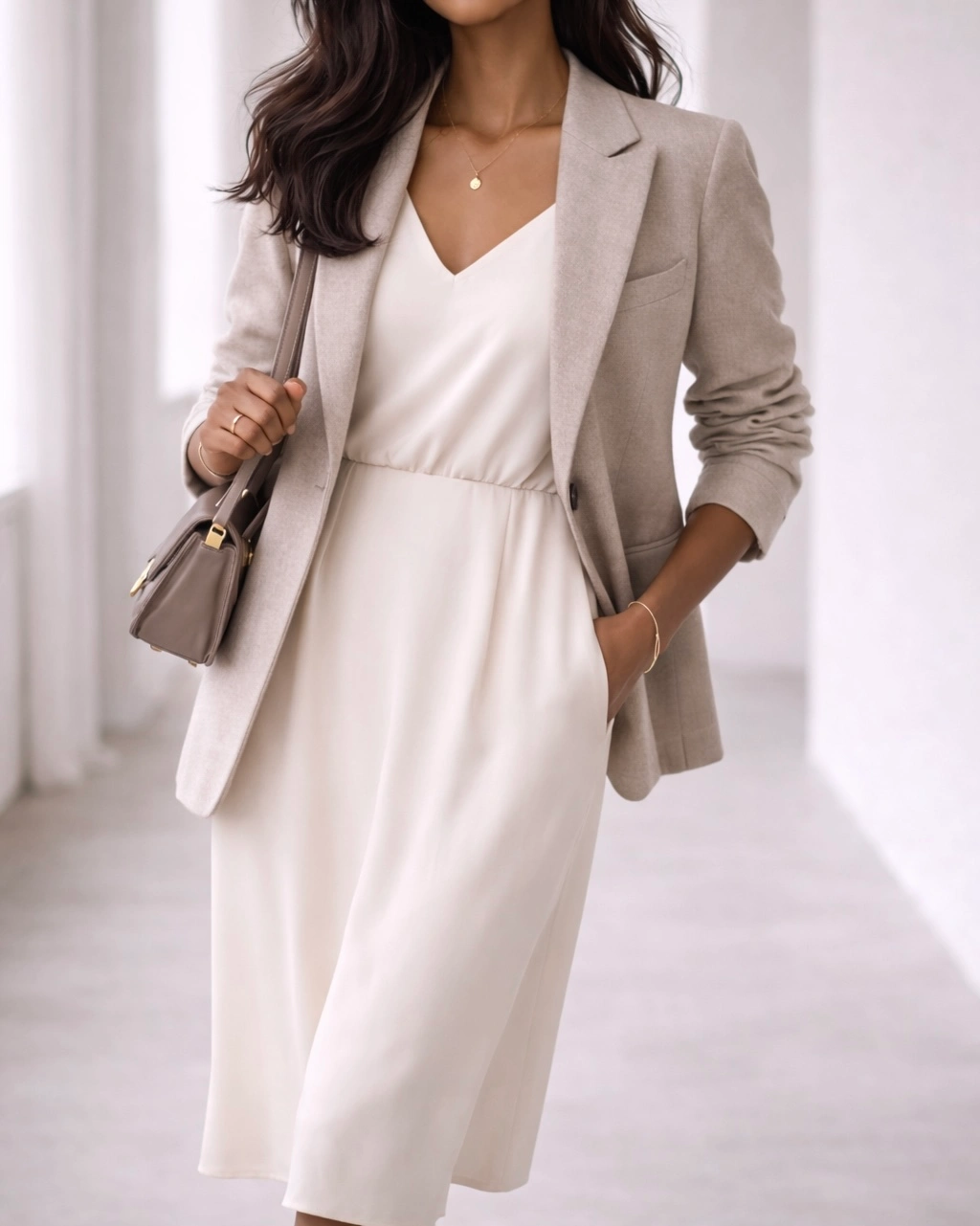
4. Dress + Grounding Layer
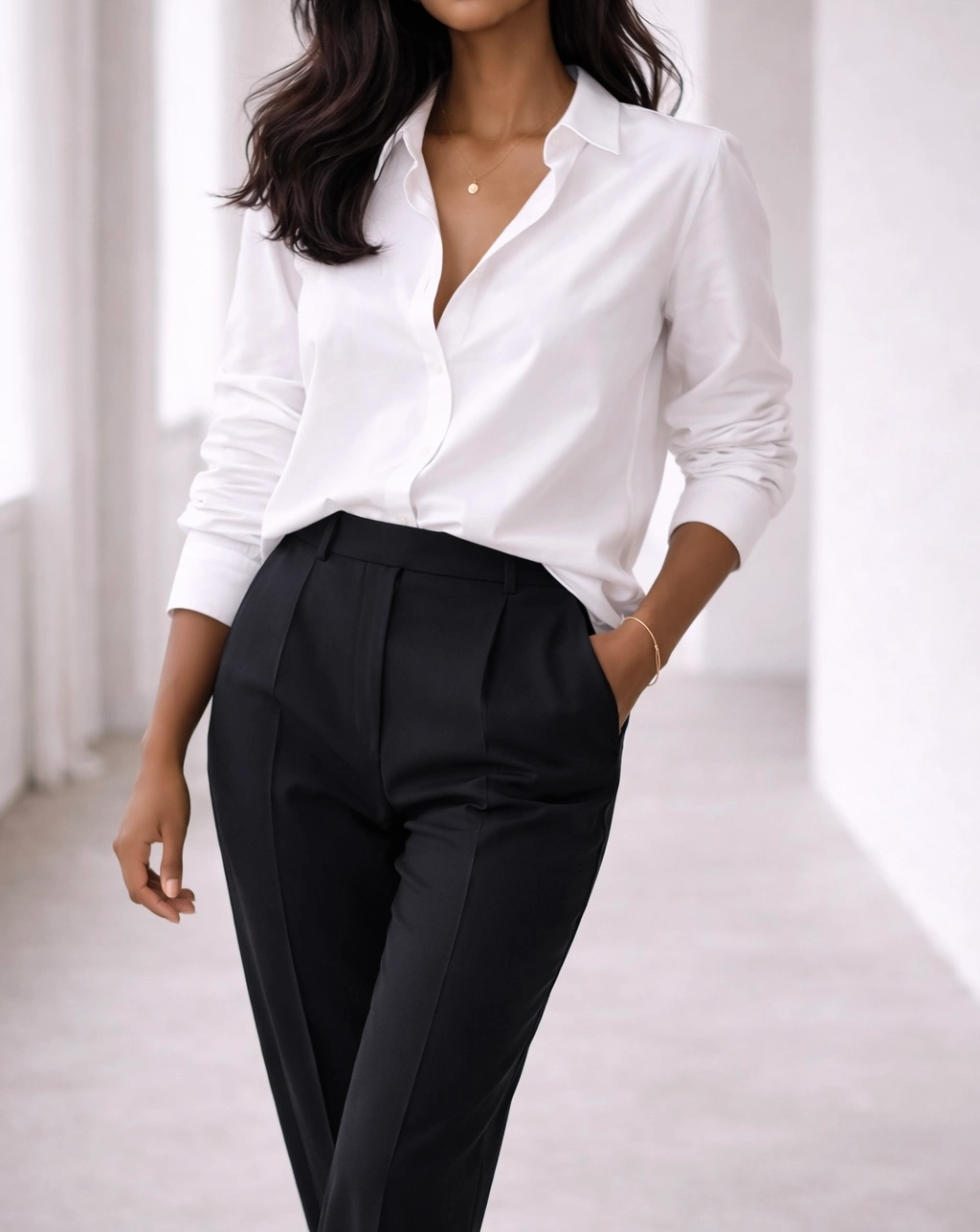
A dress becomes more repeatable when it’s anchored.
On its own, it can feel complete — but also limited, as though it belongs to a specific moment rather than everyday use.
Adding a grounding layer — a blazer, a knit, or a structured outer layer — changes that.
It brings the dress into the same visual language as the rest of the wardrobe. It gives it weight, context, and the ability to be worn more often.
The dress remains the same.
But the way it sits within the outfit shifts.
This is what allows it to repeat.
Not as a standalone piece, but as part of a system that supports it.
These are not the only outfits a wardrobe can hold. But they are often the ones that remain — because they continue to work.
Closing
A wardrobe doesn’t become easier because it offers more options.
It becomes easier when certain combinations begin to return — without effort, without adjustment, without the need to be reconsidered.
The same blazer, worn again. The same knit, paired the same way. The same dress, anchored slightly differently.
Not because there is nothing else to wear, but because these combinations continue to work.
Over time, these become the outfits that define a wardrobe.
Not the ones that stand out, but the ones that remain.
The ones you reach for without thinking. The ones that feel resolved the moment you put them on.
And once those are in place, a wardrobe rarely asks for more.
What works tends to return. And what returns is usually enough.
The outfits that repeat best are usually built on the right pieces.
A wardrobe becomes easier when a small number of combinations return without effort. These pieces explore the structure behind that ease—how many pieces are enough, why repetition matters, and how a quieter wardrobe begins to work in real life.

