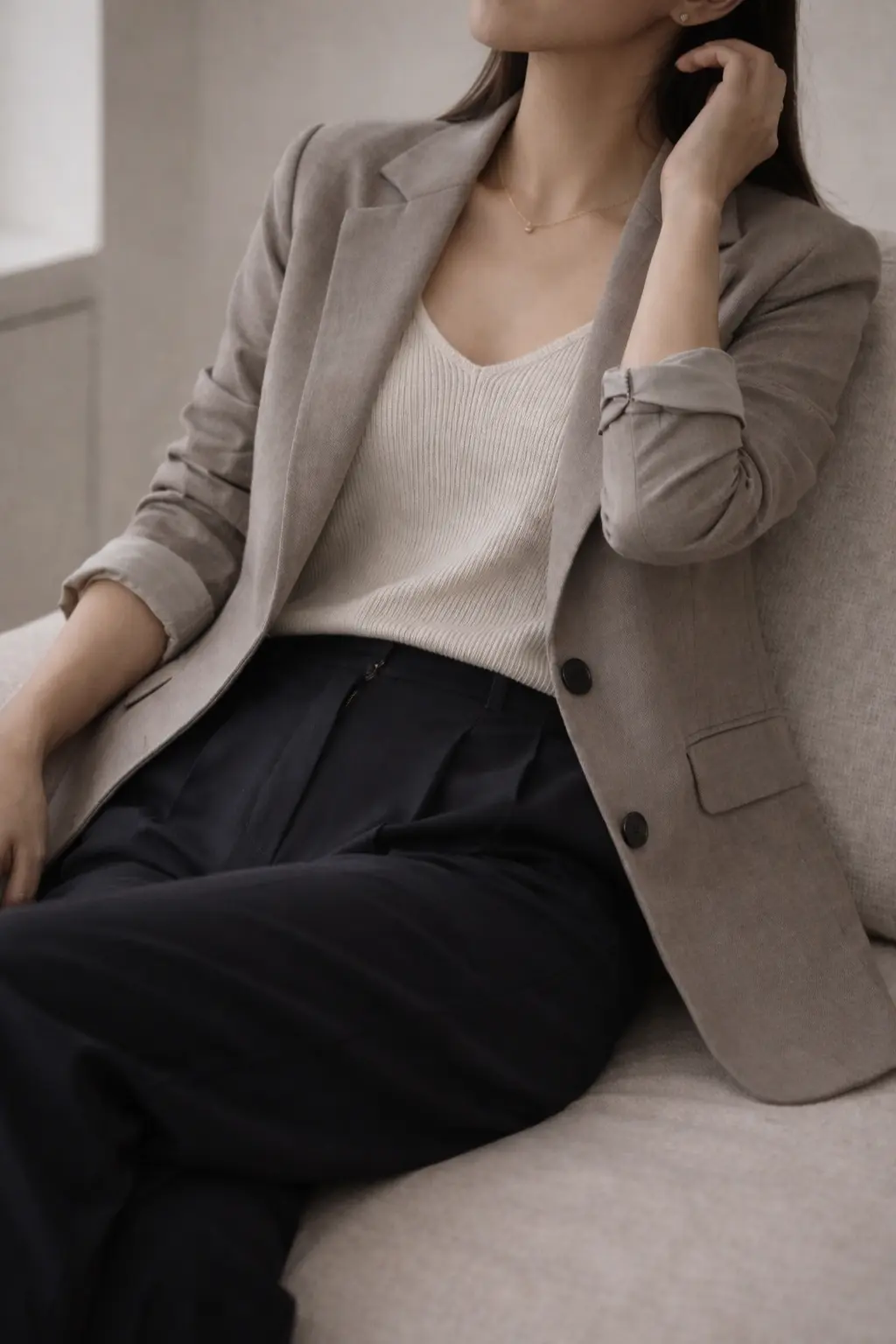
We tend to think the goal of getting dressed is variety — more outfits, more combinations, more ways to wear what we own.
But the wardrobes that feel easiest to live in are rarely built on constant novelty. They’re built on repetition: reliable outfits returned to often enough to feel natural.
If you’ve ever wondered how to repeat outfits without getting bored, the answer is usually not adding more clothes. It’s refining what already works.
Why We Resist Repeating Outfits
Repeating outfits sounds simple in theory. In practice, it often feels uncomfortable.
Not because it doesn’t work — but because we’ve been taught to expect something else.
There’s a subtle pressure to appear new. To look as though each outfit was assembled just for that moment, rather than returned to. Even in everyday life, repetition can feel like a lack of effort, rather than a sign of clarity.
So we compensate.
We add another piece.
We try a different combination.
We reach for something we haven’t worn in a while — just to avoid repeating what already worked.
But this is where wardrobes begin to feel complicated.
Because the goal was never to create endless variation. It was to create something reliable.
And reliability, by definition, requires repetition.
A capsule wardrobe makes this more visible. With fewer pieces, you see your outfits more clearly — and you notice how often you return to the same combinations.
If you’ve every questioned whether that’s “enough,” it helps to understand what a complete wardrobe actually looks like in practice. You can explore that more here: how many pieces a capsule wardrobe really needs.
What feels like limitation at first is often just unfamiliarity.
Because most of us haven’t experienced a wardrobe that works well enough to repeat without hesitation.
What Actually Happens When You Repeat Outfits
Repeating outfits doesn’t make a wardrobe feel smaller. It makes it clearer.
At first, it can feel like you’re wearing the same thing too often — as though something is missing, or not changing quickly enough. But with repetition, something subtle begins to shift.
You start to see what actually works.
Not in theory, but in practice — how a jacket sits when you move, how a trouser falls over a shoe, how a neckline frames the rest of the outfit. Often, the difference comes down to these small details—proportion, texture, maintenance, restraint—the quiet signals that make an outfit feel more resolved over time.
This is why the best capsule wardrobe outfits aren’t created all at once. They’re refined over time.
The same combination, worn again, but adjusted slightly. A different shoe. A softer layer. A shift in proportion.
Nothing dramatic. Just enough to notice.
Over time, these small refinements accumulate.
Outfits begin to feel easier to return to. You reach for them without hesitation. You stop second-guessing whether something works — because you already know that it does.
This is also where the idea of trying to repeat outfits without getting bored starts to change.
Because boredom usually comes from uncertainty — from not quite trusting the pieces, or the combination, or how it comes together.
But when something is right, repetition doesn’t feel limiting. It feels stabilizing.
You’re no longer trying to create something new each day. You’re returning to something that already works — and letting it become better through use.
If you’ve noticed certain outfits quietly become your default, that’s not a lack of variety. It’s a sign that your wardrobe is beginning to take shape.
This is often the point where a wardrobe begins to feel less like something you’re managing, and more like something you can rely on — a shift I wrote more about in Wearing What Works.
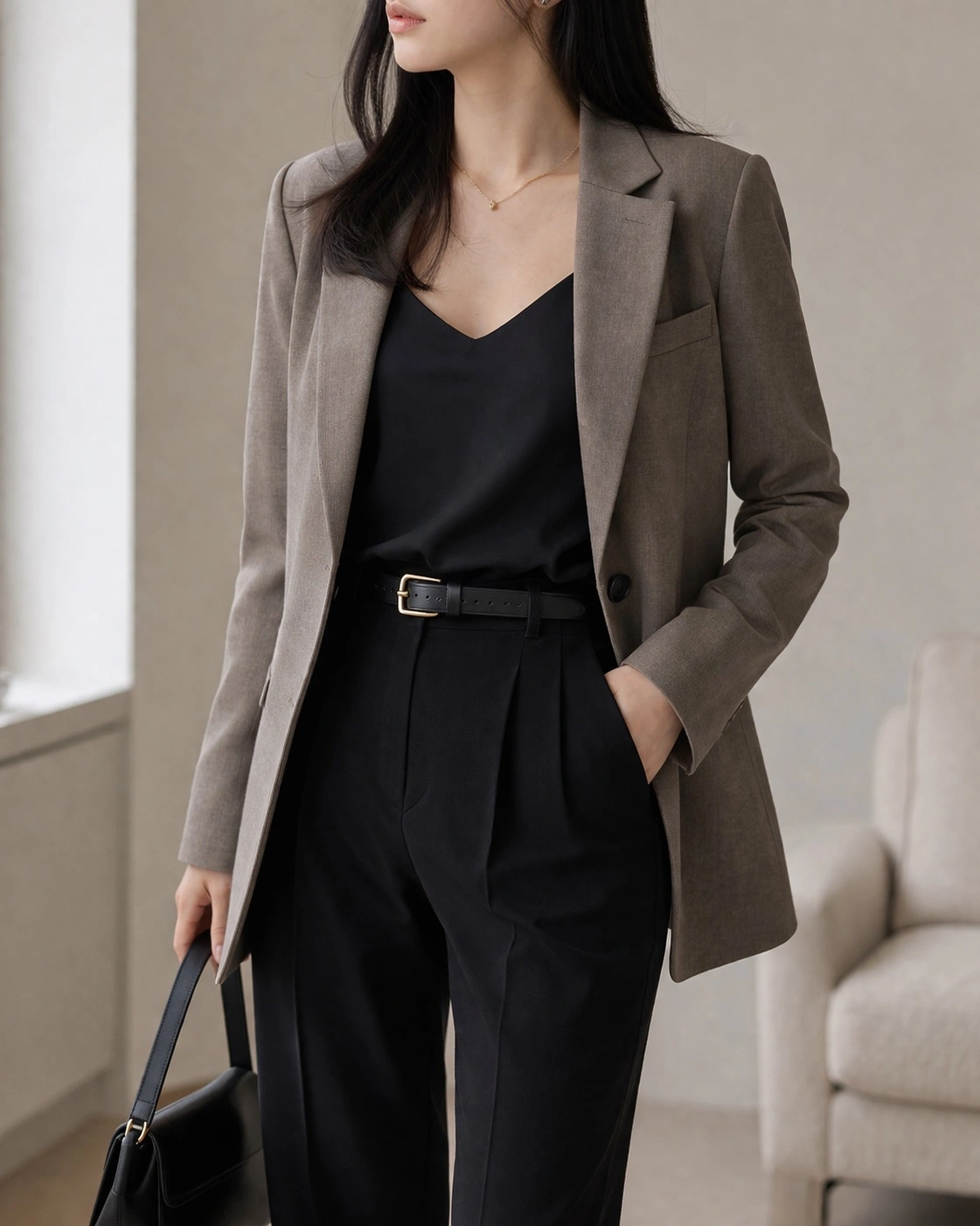
How to Repeat Outfits Without Getting Bored
Repeating outfits isn’t what makes a wardrobe feel limiting.
It’s repeating them without understanding why they work.
When a combination feels flat or unresolved, wearing it again only makes that more visible. But when something is balanced — when the proportions, textures, and structure feel right — repetition tends to deepen it.
This is where small shifts begin to matter.
Not new pieces. Just a different way of wearing what’s already there.
1. Adjust the Proportion
Most outfits are defined by their overall shape.
A longer line, a higher waist, a slightly looser layer — these changes are often enough to make the same pieces feel different. A blazer worn open instead of closed. A top tucked more loosely. A trouser sitting just slightly higher.
The piece remain the same, but the silhouette shifts.
2. Change the Texture
Texture is often what gives an outfit depth.
A soft knit against a structured trouser. A matte fabric paired with something with a slight sheen. These contrasts are subtle, but they prevent repetition from feeling flat.
This is why two outfits built from the same pieces can feel entirely different — simply because of how those pieces interact.
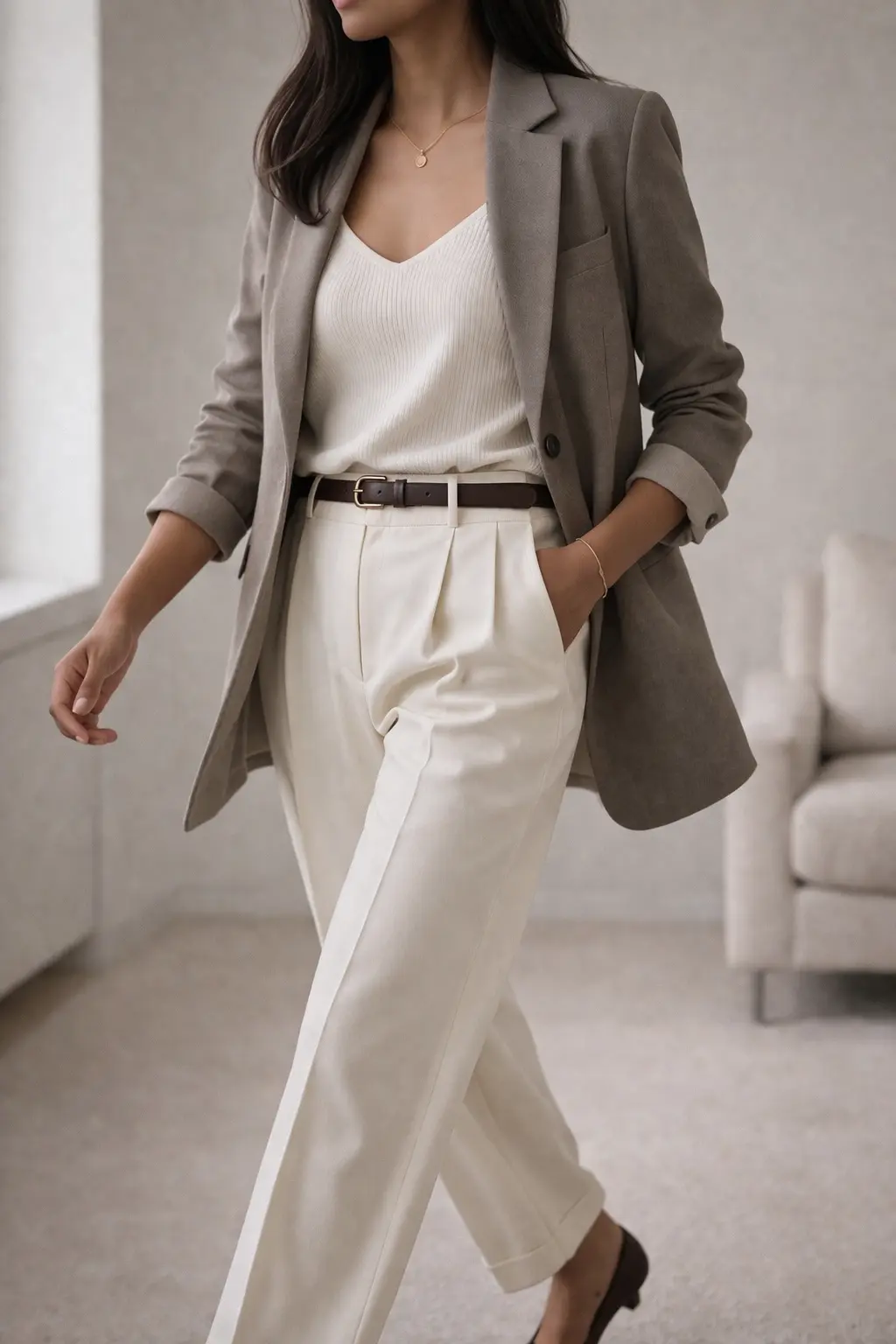
3. Keep the Structure, Vary the Detail
Most capsule wardrobe outfits are built on a consistent foundation.
A jacket, a base layer, a trouser. A shirt, a trouser, a shoe.
When that structure stays the same, small changes become more noticeable. A different shoe. A belt added or removed. A sleeve pushed up slightly higher.
Nothing changes dramatically — but the outfit doesn’t feel static.
4. Let Repetition Do the Work
Not every outfit needs to be adjusted.
Some combinations work best when they’re left alone — worn exactly as they are, without trying to improve them.
These are the outfits you return to without thinking.
And over time, they become the ones that define your wardrobe.
Repeating outfits isn’t about keeping things interesting.
It’s about recognizing when something is already resolved — and allowing it to stay that way.
The Difference Between Repetition and Stagnation
Repetition and stagnation can look similar from the outside.
The same pieces.
The same combinations.
A sense of familiarity.
But they are not the same.
Stagnation comes from disengagement—wearing something without attention, without adjustment, without consideration for how it actually looks or feels.
Repetition, by contrast, comes from refinement.
You’re not wearing the same outfit because you have nothing else.
You’re wearing it because it continues to work.
There’s a subtle awareness behind it.
You notice how the fabric moves.
How the proportions sit.
What feels slightly off, and what feels resolved.
And over time, those observations shape what you wear next.
A sleeve pushed a little higher.
A different shoe.
A piece removed rather than added.
Nothing dramatic. But intentional.
This is what separates a wardrobe that feels repetitive from one that feels stable.
Stagnation resists change, even when something isn’t working.
Repetition allows for small adjustments—just enough to keep the overall structure intact, while improving how it comes together.
And eventually, those adjustments become less necessary.
Not because you’ve stopped trying, but because the pieces—and the combinations—have already settled into place.
At that point, the question is no longer what to add, but whether you have enough to support that consistency.
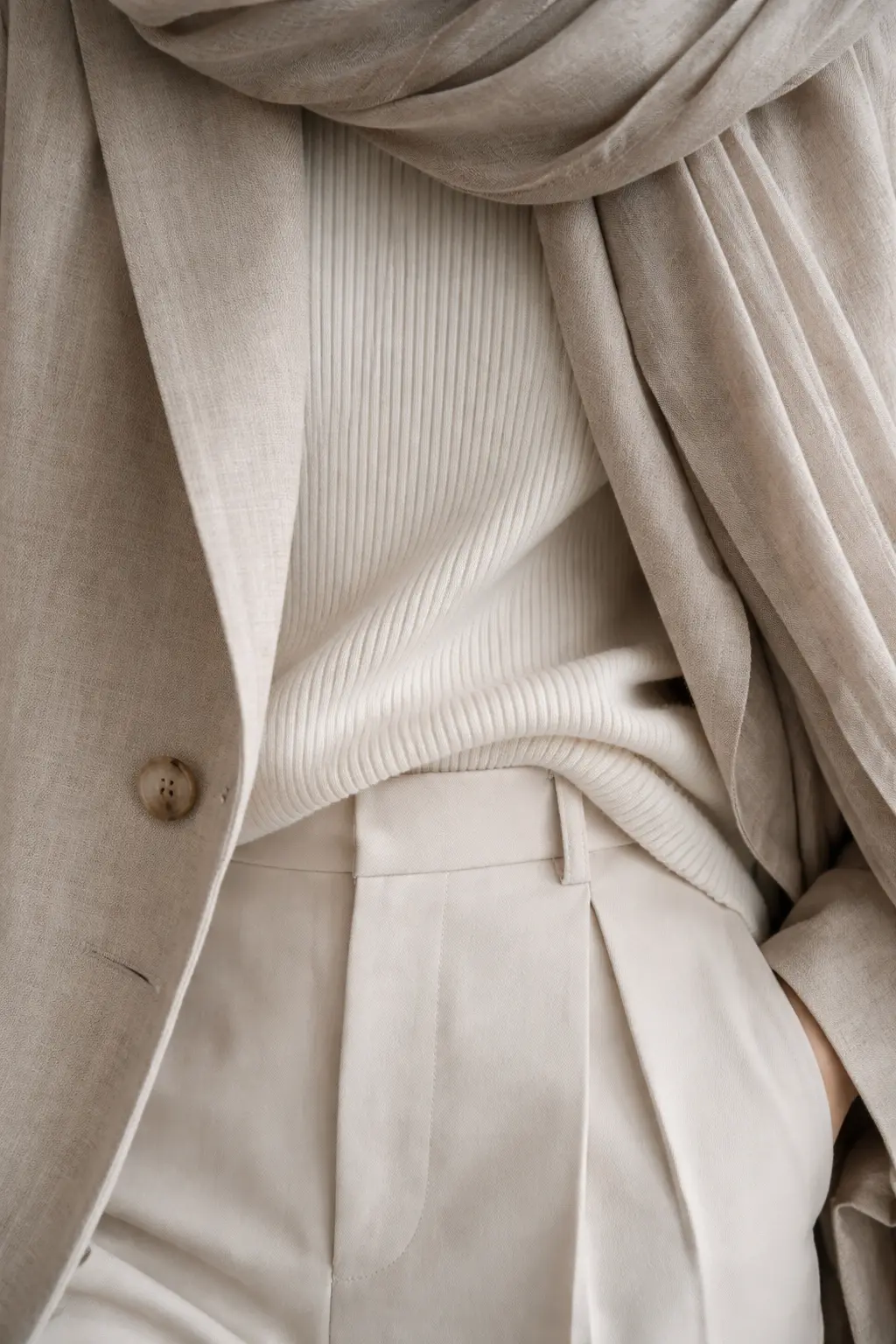
Why Repeatability Is the Goal of a Capsule Wardrobe
A capsule wardrobe is often described in terms of limitation—fewer pieces, fewer options, fewer decisions.
But that framing misses the point.
The goal isn’t to have less.
It’s to have something that works well enough to repeat.
A well-formed wardrobe doesn’t rely on constant variation to feel complete. It relies on a small number of pieces that hold their shape—visually, practically, and over time.
Pieces that can be worn often without needing to be rethought.
Combinations that return without effort.
This is where repeatability becomes the measure.
Not how many outfits you can create, but how many you can return to without hesitation.
In that sense, a capsule wardrobe isn’t restrictive.
It’s stabilizing.
It removes the pressure to constantly create something new, and replaces it with something quieter—recognition.
You begin to see which pieces anchor everything else.
Which combinations resolve on their own.
Which outfits don’t need to be adjusted to feel right.
And over time, those become your defaults.
Not because you’ve run out of options, but because you’ve found what works.
This is often where a wardrobe begins to feel complete — not because more has been added, but because what’s already there works consistently, much like the pieces outlined in a quiet luxury wardrobe essentials list.
The Reliability of Repeating Outfits
A wardrobe doesn’t become better because it offers more.
It becomes better when it begins to repeat — quietly, without effort, without hesitation.
The same pieces.
The same combinations.
Returned to often enough that they no longer need to be reconsidered.
Not because there is nothing else to wear, but because what’s already there continues to work.
This is where ease begins.
And where a wardrobe starts to feel like something you can rely on.
The outfits you return to are rarely accidental. They’re the result of a wardrobe that has already been quietly resolved.
Repeating Outfits FAQs
How do you repeat outfits without getting bored?
Repeating outfits becomes easier when the pieces are well chosen and the variation comes from small shifts—proportion, texture, layering, or detail.
The structure of the outfit remains consistent, but the experience of wearing it changes subtly over time.
Is repeating outfits the point of a capsule wardrobe?
Yes. A capsule wardrobe is designed to make repetition easier, not to avoid it.
The goal is to build a small number of combinations that work well enough to return to without hesitation.
Will a capsule wardrobe feel too repetitive?
It can at first, especially if you are used to equating variety with interest.
Over time, repetition tends to feel less limiting and more stabilizing—particularly when the wardrobe is built on pieces that fit, layer, and repeat well.
What is the difference between repeating outfits and stagnation?
Repetition comes from refinement. Stagnation comes from disengagement.
Repeating outfits means returning to combinations that continue to work; stagnation means wearing something without attention to whether it still does.
What repeats well usually reveals what works.
Repetition isn’t the opposite of refinement. It’s often the clearest sign of it. Once outfits begin to return without hesitation, a wardrobe starts to feel more settled—less like something you manage, and more like something you can rely on. These pieces explore the structure, scale, and quiet logic behind that shift.

