Professional Style Without Stiffness: Dressing for Authority
Many professionals still assume that to look credible at work, clothing must feel rigid or uncomfortable.
Structured jackets. Rigid fabrics. Clothes that restrict movement or feel uncomfortable after a few hours at a desk.
For a long time, this was treated as the cost of credibility. Looking authoritative meant looking controlled, formal, and slightly uncomfortable.
But authority in clothing doesn’t actually come from stiffness.
It comes from clarity.
Professional style doesn’t have to feel stiff.
In reality, professional style works best when structure and comfort work together. When garments hold their line, move well, and sit comfortably on the body, the result reads composed rather than rigid. The outfit feels settled instead of forced.
This is why some of the most authoritative wardrobes today look surprisingly relaxed. The pieces are structured where they need to be, but the fabrics, proportions, and movement allow the wearer to remain fully at ease.
Authority, in other words, isn’t about wearing stiff clothes.
It’s about removing friction so your presence reads steady.
This idea often surprises people, especially those who were taught that professionalism requires a certain level of discomfort. However, the relationship between authority and comfort is nuanced — something explored further in Why Comfort Isn’t Casual.
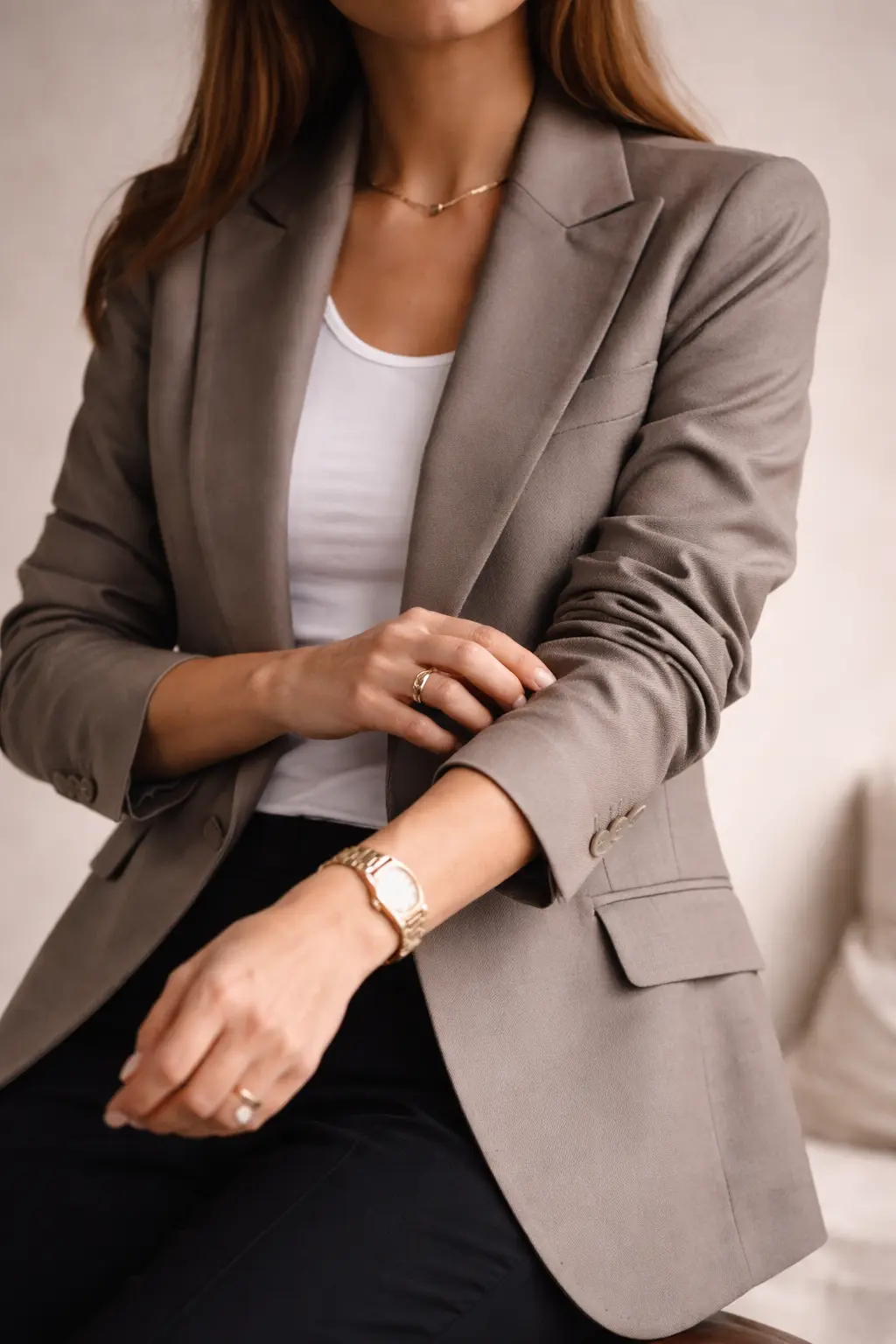
Where the “Stiff Professional Clothing” Idea Came From
The association between professionalism and stiffness didn’t appear by accident.
Traditional business dress evolved from formal tailoring — wool suits, starched shirts, and garments designed to maintain a sharp silhouette throughout the day. These clothes projected discipline and seriousness, which made them effective signals in hierarchical workplaces.
But they were also designed for a very different working environment.
Many traditional professional wardrobes assumed limited movement: sitting at a desk, attending meetings, standing briefly, and returning home. Comfort, flexibility, and long hours of active work were rarely part of the equation.
As workplaces changed, the expectation that dressing for authority must look rigid quietly remained.
The result is a common misunderstanding: that to appear credible, clothing must feel restrictive.
In reality, the signal people respond to is not stiffness itself.
It’s stability.
Why Stiffness Actually Works Against Authority
Stiff clothing often does the opposite of what it intends.
When garments restrict movement or feel uncomfortable, the body compensates. Shoulders tense. Sleeves are adjusted. Waistbands are shifted. Attention drifts toward the clothing instead of the work at hand.
These small interruptions are easy to overlook, but they subtly undermine the sense of composure an outfit is meant to create.
Authority tends to read as calm, steady, and self-contained.
Clothing that demands constant adjustment introduces friction into that impression.
By contrast, garments that move easily and remain stable on the body allow attention to stay where it belongs — on the conversation, the decision, or the work itself.
In that sense, comfort and authority are not opposing ideas.
They are often working toward the same result.
It is possible to have professional style without stiffness.
What Authority in Clothing Actually Looks Like
Authority in clothing is often misunderstood.
It isn’t created by rigidity or excessive formality. Instead, it emerges from a small set of visual signals that make an outfit appear stable and intentional.
The most consistent of these signals is structure.
A garment that holds its line — through the shoulder, the waist, or the base of the outfit — gives the eye something steady to register. Once that line exists, softer elements begin to read differently. Knitwear looks intentional. Pull-on trousers look composed. Even a simple tee can feel finished.
This is one reason a small number of carefully chosen pieces can carry so much of a professional wardrobe. When garments combine quiet structure with fabrics that move comfortably, the overall impression becomes calm rather than rigid.
This balance between ease and structure is also the principle behind the Quiet Authority Capsule, where a limited set of pieces repeat easily while still projecting composure.
In practice, authority rarely comes from wearing more formal clothing.
Dressing for authority comes from wearing clothing that behaves well — garments that sit comfortably, maintain their shape, and allow the wearer to move through the day without disruption.
Structure vs Stiffness
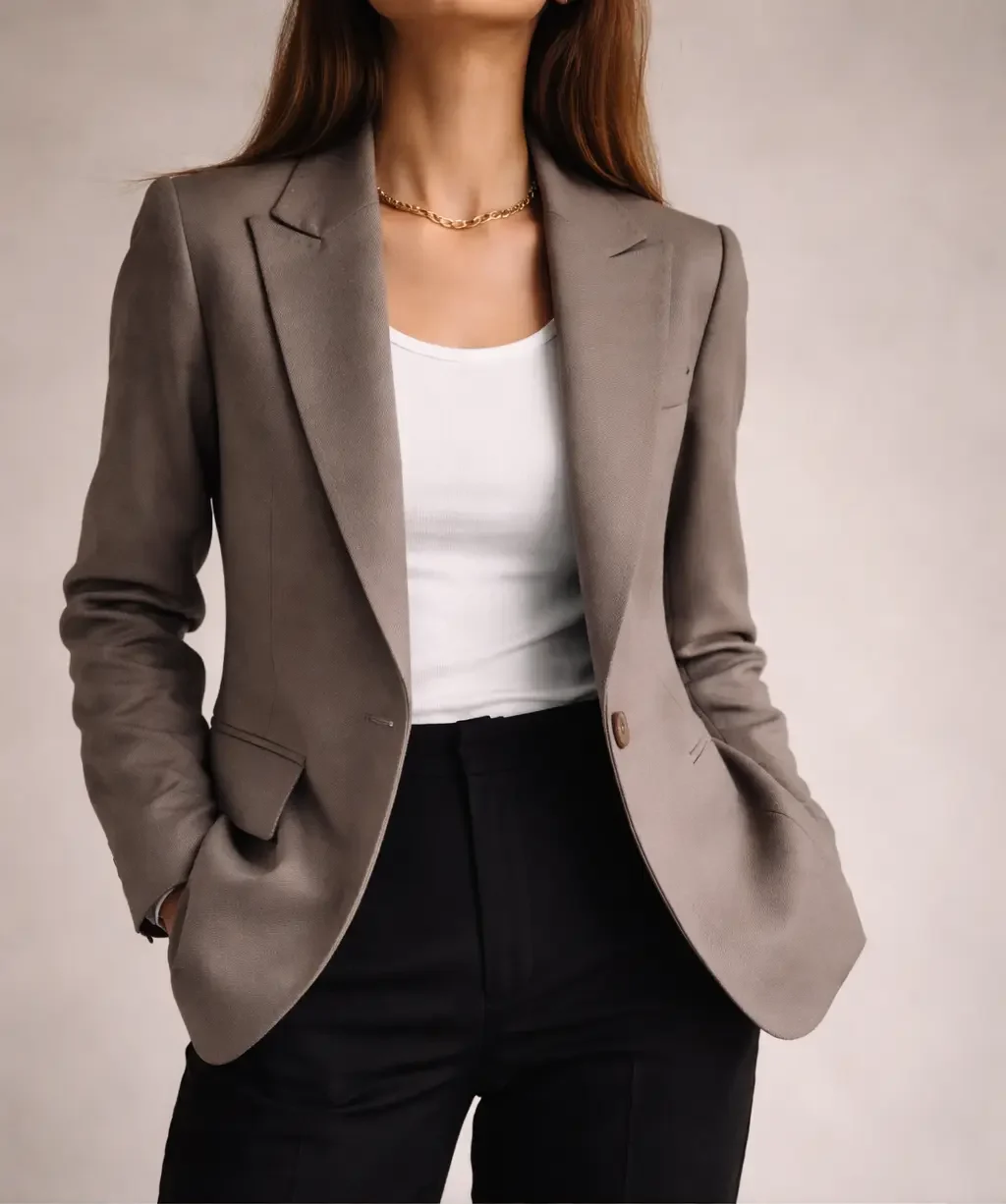
The confusion between authority and stiffness often comes from treating these two ideas as if they were the same.
They are not.
Structure and stiffness may look similar at first glance, but they create very different experiences once the clothing is worn.
Structure supports the body.
Stiffness resists it.
A structured garment holds a clean line while still allowing movement. A stiff garment feels rigid and often restricts the body’s natural motion.
The difference becomes visible in how clothing behaves throughout the day. Structured pieces remain composed without constant adjustment, while stiff garments often require the wearer to manage them — straightening, tugging, or shifting to stay comfortable.
This is why modern professional wardrobes increasingly rely on pieces that balance stability with ease: knit blazers that hold shape without rigidity, trousers with fabric weight that drapes cleanly, or shoes that anchor an outfit without feeling heavy.
In many cases, a single structured element is enough to stabilize the entire outfit. This idea is explored more fully in the one structured thing rule, which explains why one garment that holds its line can allow the rest of the outfit to remain comfortable.
Once this balance becomes clear, dressing for authority stops feeling like a trade-off between comfort and credibility.
It becomes a matter of choosing garments that support both.
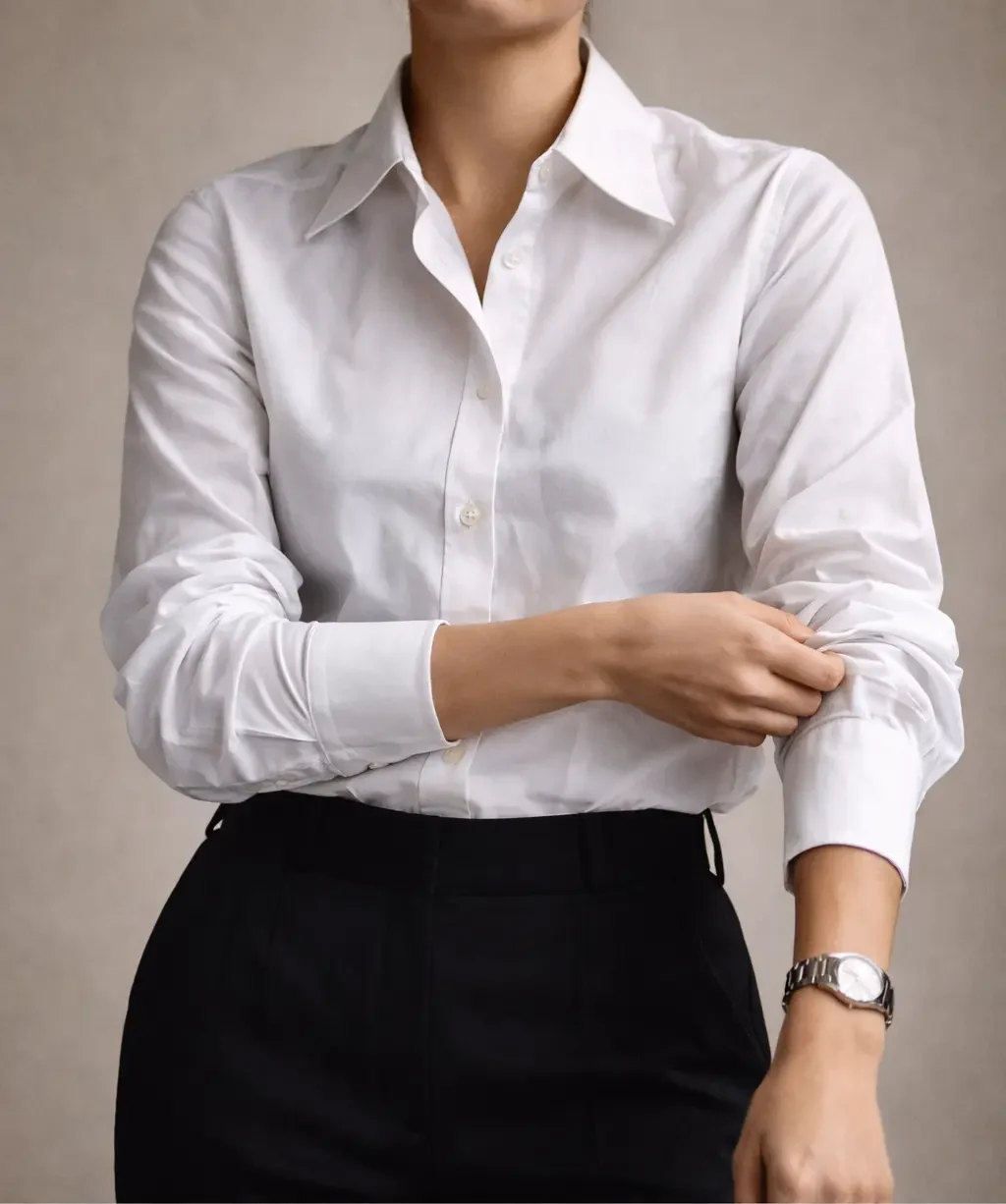
How Modern Professional Wardrobes Solve This
Modern professional wardrobes tend to approach authority differently.
Rather than relying on rigid formality, they focus on garments that maintain structure while allowing the body to move comfortably. Many modern workplaces now favor comfortable work outfits that still look polished and intentional.
This often begins with fabric choice. Materials that drape well and maintain their shape — wool twill, compact knits, crepe, or structured cotton — allow clothing to remain composed without feeling restrictive.
Cut and proportion also play an important role. A blazer that holds a clean shoulder line, trousers that fall smoothly through the leg, or a shoe that anchors the base of the outfit can provide stability without requiring the rest of the clothing to feel rigid.
In many cases, this means combining one element of structure with softer pieces that allow ease throughout the day. A knit blazer over a compact tee, tailored trousers with a comfortable rise, or a structured coat layered over fluid fabrics can create a balanced impression without feeling formal in the traditional sense.
Once this balance becomes familiar, it also becomes repeatable. Many professionals rely on a small number of dependable outfit combinations that consistently deliver both comfort and composure.
If you’d like to see how these ideas translate into everyday dressing, seven outfit formulas for polished but comfortable work outfits show how structure and ease work together in practice.
What This Means for Your Wardrobe
Understanding the difference between structure and stiffness changes how professional clothing is perceived.
Instead of asking whether an outfit looks formal enough, the more useful question becomes whether it feels stable and composed once it is worn. Clothing that holds its line, moves easily, and stays comfortable throughout the day tends to project authority more effectively than garments that feel rigid or difficult to manage.
This is one reason many modern professional wardrobes appear simpler than expected. The focus shifts away from visible formality and toward garments that behave well — fabrics that drape naturally, pieces that maintain their shape, and silhouettes that allow the wearer to move freely without constant adjustment.
When these elements come together, the result often feels quieter than traditional ideas of professional dress. The clothing is not trying to assert authority through stiffness. Instead, it supports the person wearing it, allowing attention to remain on the work itself.
Over time, this reframes the goal of dressing for authority.
It is not about appearing rigid or controlled. It is about choosing clothing that removes friction, so composure becomes the most visible signal.
