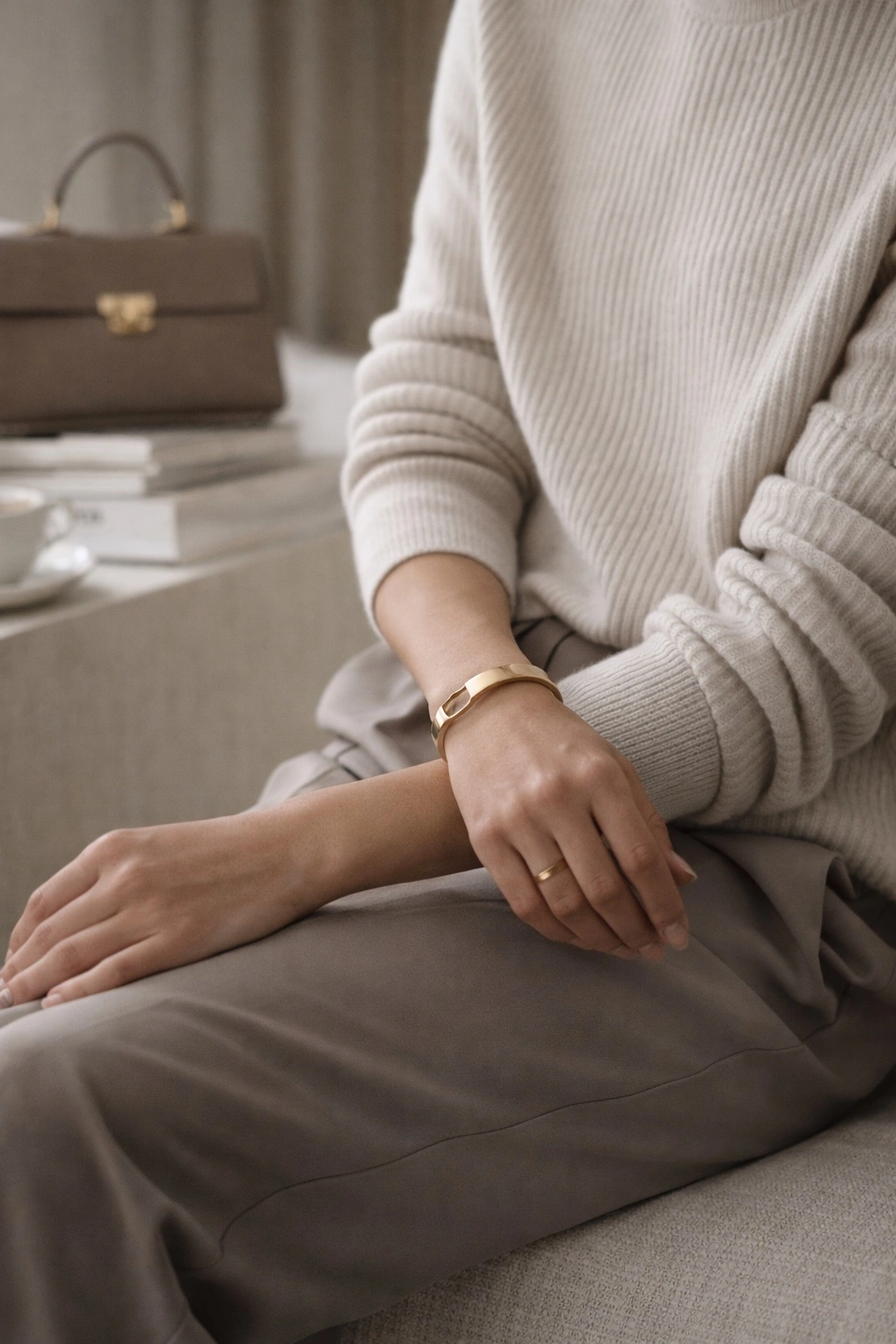
Most comfortable outfits fail for a surprisingly simple reason.
When every piece is soft, elastic, lightweight, or unstructured, the outfit loses its visual anchor. Nothing holds the line.
This is often the difference between comfortable outfits that feel polished and those that quietly drift toward casual.
Usually, the shift comes down to one element.
A blazer with shape. A trouser that holds its structure. A shoe with enough definition to ground the rest of the look.
I call this the one structured thing rule.
It’s not about dressing more formally. It’s about giving comfort enough structure to feel intentional.
For professionals trying to build comfortable work outfits that still look polished, this small adjustment changes the entire read of an outfit.
Why comfortable outfits sometimes look too casual
Comfort alone isn’t the issue.
What changes how an outfit reads is whether anything in the look introduces visual structure.
Comfort only starts to feel sloppy when an outfit loses all definition—which is why polished comfort depends less on formality and more on balance, a distinction explored further in Polished but Comfortable Work Outfits: Why Comfort Isn’t Casual.
When every piece is elastic, slouchy, lightweight, or unlined, the eye reads ease — not intention. Lines blur. Proportions soften. Even well-made clothing can begin to resemble loungewear when nothing anchors the look.
This is why two outfits built from similarly comfortable pieces can feel very different.
One contains a point of structure: a jacket with shape, a trouser that holds its line, a shoe with definition.
The other does not.
And that single difference often determines whether an outfit feels quietly polished or unintentionally casual.
The rule that makes comfortable work outfits look polished
Many comfortable work outfits fall apart for the same reason: every piece in the look is soft.
When knitwear, elastic waist trousers, lightweight shoes, and fluid fabrics appear together without any structure, the outfit can begin to drift toward casual — even when the individual pieces are well made.
The shift usually comes down to one missing element: definition.
A blazer with shape. A structured knit. A trouser that holds its line. A shoe with enough weight to ground the outfit.
Once that visual anchor exists, the rest of the clothing can remain comfortable without looking unfinished.
This is the idea behind the one structured thing rule.
In practice, many polished but comfortable work outfits follow this same balance — softness supported by one clear line, repeated in slightly different ways over time.
The One Structured Thing Rule
A polished outfit doesn’t require multiple tailored pieces.
It only requires one element that holds its line.
That element can appear in different places:
• near the face
• through the torso
• at the base of the outfit
Where it sits matters less than the effect it creates.
Structure gives the eye something stable to register — a clean shoulder line, a defined trouser line, a shoe with presence.
Once that line exists, softer pieces begin to read differently. Knitwear looks intentional. Pull-on trousers look composed. Even a simple tee can feel finished.
Comfort becomes credible because something in the outfit is carrying the visual weight.
Once you start noticing this pattern, you’ll see it everywhere. The outfits that feel calm and capable almost always include one element that stabilizes the rest.
In practice, this becomes easier when you repeat a small number of outfit formulas. If you want to see how the structure works in real wardrobes, these seven polished but comfortable work outfit formulas show exactly how the principle plays out.
Where structure usually appears
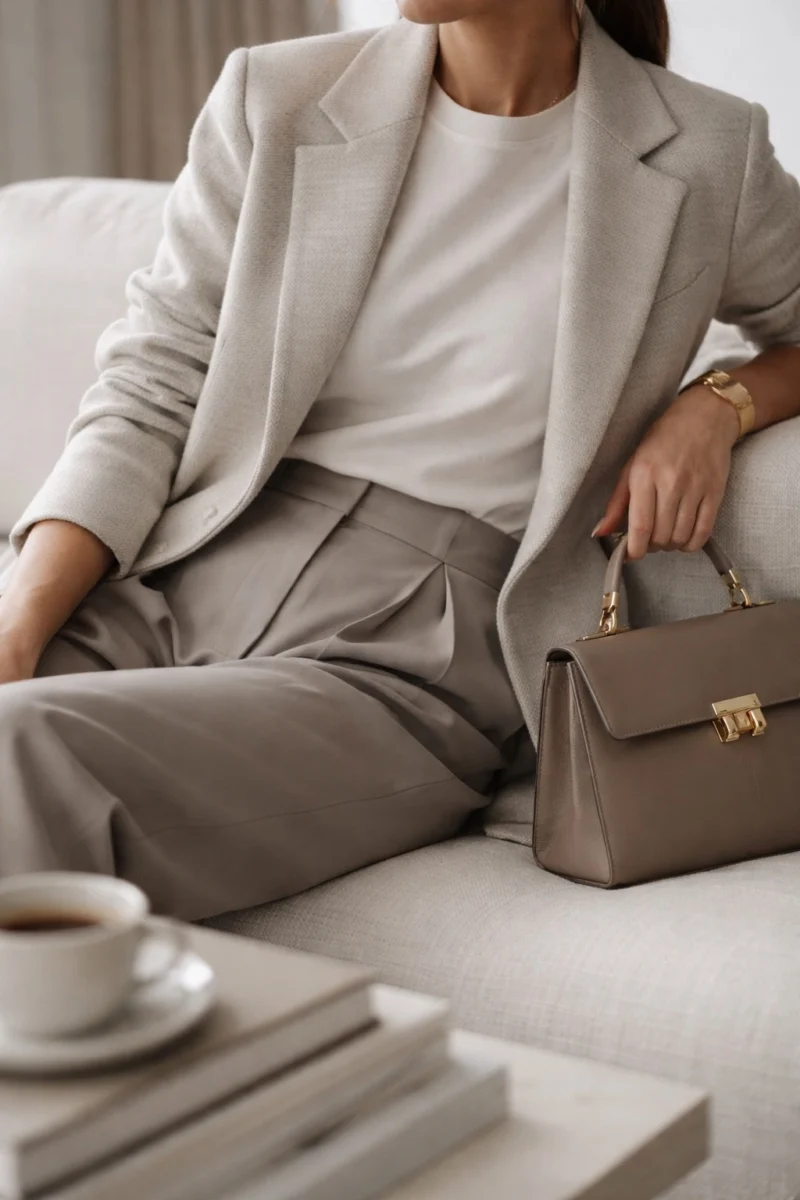
1. Near the face: jackets and structured knits
The upper half of the body communicates the most visual information.
A knit blazer, tailored cardigan, or structured sweater stabilizes the shoulder line and immediately changes how the rest of the outfit reads.
This is why a tee paired with a blazer feels composed while the same tee alone can feel unfinished.
2. Through the body: trousers that hold their line
Soft trousers can still feel polished when the fabric carries weight.
Wool twill, ponte, structured crepe, and compact knits create vertical clarity even when the waistband is elastic or pull-on.
The difference is not the waistband — it’s the fabric behavior.
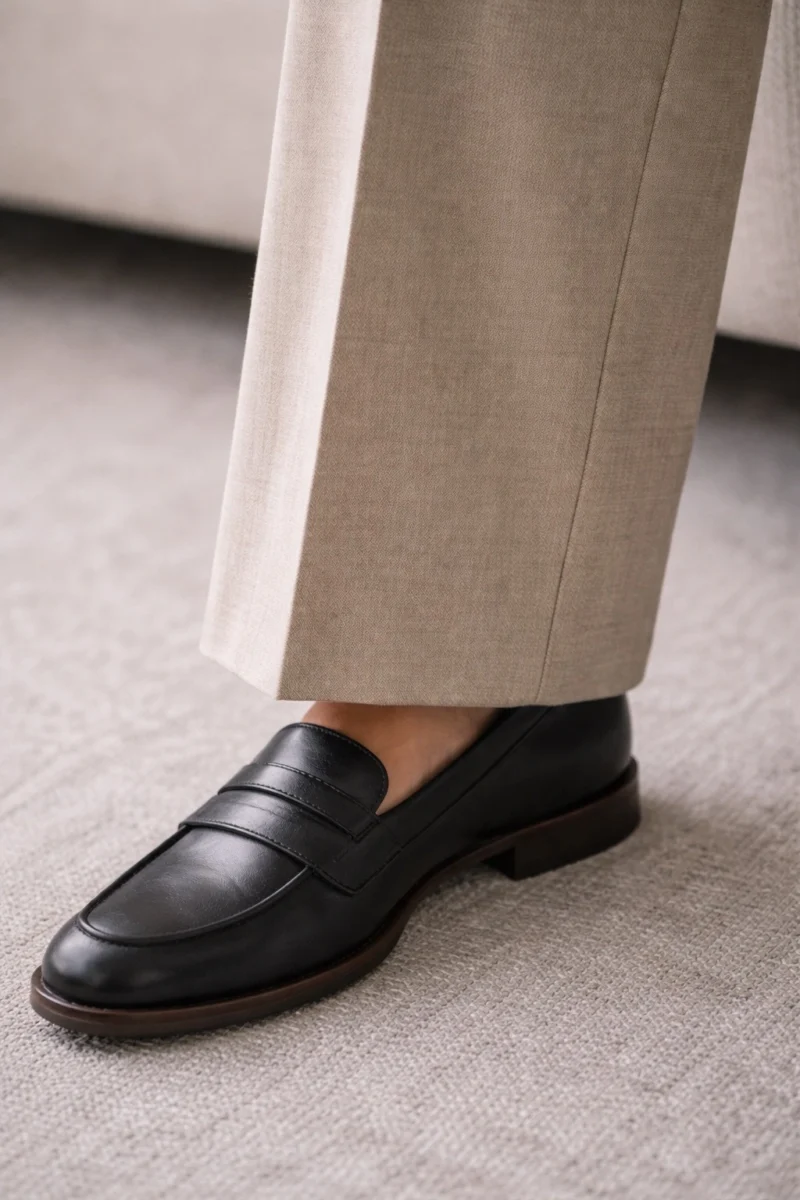
3. At the ground: shoes with definition
Many comfortable outfits unravel at the shoe.
Lightweight knitwear and relaxed trousers need something grounded beneath them: loafers, structured flats, or boots with presence.
This anchoring element prevents the outfit from drifting into loungewear territory.
Why this rule works
The one structured thing rule works because clothing is read visually, not logically.
The eye searches for lines.
Once it finds one — a shoulder, a hem, a shoe — it assumes the rest of the outfit is intentional.
This is why polished but comfortable outfits often rely on fewer pieces, not more.
A single stabilizing element allows the rest of the clothing to remain soft, flexible, and easy to wear.
A soft knit and elastic-waist trouser can feel effortless — but without structure the outfit may feel unfinished. Add a loafer with a firm sole or a blazer that holds its shape, and the entire look stabilizes. Comfort remains, but the impression shifts toward polish.
How this fits into a repeatable wardrobe
Many professionals eventually notice that their most reliable outfits follow a similar pattern:
soft piece + soft piece + one structured element
A fluid trouser balanced by a sharper jacket. Relaxed knitwear anchored by a defined shoe. Ease supported by one clear line.
This pattern appears again and again in comfortable work outfits that still read polished. And over time, those combinations often beome the foundation of a smaller, more repeatable wardrobe.
Not because the outfits are identical — but beause the structure continues to work.
Once an outfit feels resolved, you stop needing to reinvent it. You return to the same combinations with small adjustments, greater ease, and less hesitation — the same shift explore in Why Repeating Outfits Is the Point (Not the Problem).
Because the goal of a functional wardrobe is rarely endless variety.
It’s reliability.
When Comfort and Structure Work Together
Once you start noticing structure, you begin to recognize how often polished outfits rely on very little.
Not more pieces. Not more styling. Just enough definition to give softness a clear shape.
A structured jacket over fluid trousers. A knit dress grounded by a sharper shoe. Relaxed layers anchored by one clean line. These small contrasts are often what make comfortable outfits feel intentional rather than unfinished.
The one structured piece rule doesn’t ask you to dress more formally. It simply ensures that comfort never dissolves into visual noise.
Over time, these small balances between softness and structure become easer to recognize — and easier to repeat. Many professionals eventually build wardrobes around these quiet consistencies: pieces that feel comfortable, polished, and reliable without needing constant reinventions, much like the approach behind The Modern Professional’s Capsule Wardrobe.
Because the goal is rarely to look overdressed.
It’s to look settled.

