If you’ve ever changed outfits not because you looked wrong, but because you felt distracted — this is for you.
Comfortable work outfits should reduce friction, not create it. High-responsibility days don’t leave room for clothes that pinch, pull, cling, overheat, or require managing. The goal isn’t to dress softer. It’s to dress structured enough that comfort doesn’t read casual.
If you want the deeper reframe behind this idea — why comfort is not casual when it’s built correctly — start with Why Comfort Isn’t Casual.
What follows is practical: repeatable formulas for polished but comfortable work outfits that hold their shape, move with you, and allow you to stay inside your own attention.
Why Comfortable Work Outfits Often Look Too Casual
Most outfits don’t fail because they’re comfortable.
They fail because everything is soft at once.
Comfortable workwear begins to look casual when:
- every piece is elastic, slouchy, or unlined
- fabric weight is too light to hold a line
- shoes remove structure instead of anchoring it
- proportion collapses from top to bottom
When there is no visual ballast — no defined shoulder, no stable waistband, no grounded shoe — the eye reads ease, but not intention.
The solution isn’t more effort. It’s strategic structure.
If your comfortable work outfits still feel slightly off, it’s usually structural. The 3 pieces that change how comfort reads are outlined here -> 3 Pieces That Make Comfortable Work Outfits Look Polished.
The 5 rules of polished comfort
Before the formulas, use this filter. When an outfit reads comfortable but professional, it’s rarely accidental.
Rule 1: Structure, Not Stiffness
Authority comes from a clean line — a blazer that holds its shape, a trouser that drapes, a shoe with definition. Stiffness is optional. Shape is not.
You often need only one of those elements. The One Structured Piece Rule explains how a single anchoring piece can give and otherwise comfortable outfit enough definition to read as intentional.
Rule 2: Ease Lives in the Cut, Not the Size
Sizing up adds fabric. It doesn’t automatically add comfort. Look for rises that sit correctly, armholes that allow reach, and waistbands that don’t negotiate.
Rule 3: Fabric Behavior Matters
Matte, substantial fabrics read steadier. Shine, cling, and thin synthetics read fragile. Compact knits, wool twill, crepe, and structured cotton tend to behave well under real conditions.
Rule 4: Solve the Pressure Points First
Discomfort usually lives at the waist, underarm, neckline, or shoe. Fix those, and your entire wardrobe becomes easier.
Rule 5: Repeatability Is the Standard
If you wouldn’t wear it twice in one week, it’s not a reliable work formula. The best comfortable work outfits are repeatable.
The goal is not to create endlessly new outfits, but to create reliable combinations that continue working under real-life pressure. A thoughtful capsule wardrobe system makes that repeatability much easier to maintain.
Use these five rules as your yes/no filter. If an outfit meets them, it will almost always read composed.
7 Outfit Formulas for Work
Polished, comfortable, repeatable. Choose two or three that feel like you, then rotate them on high-responsibility days.
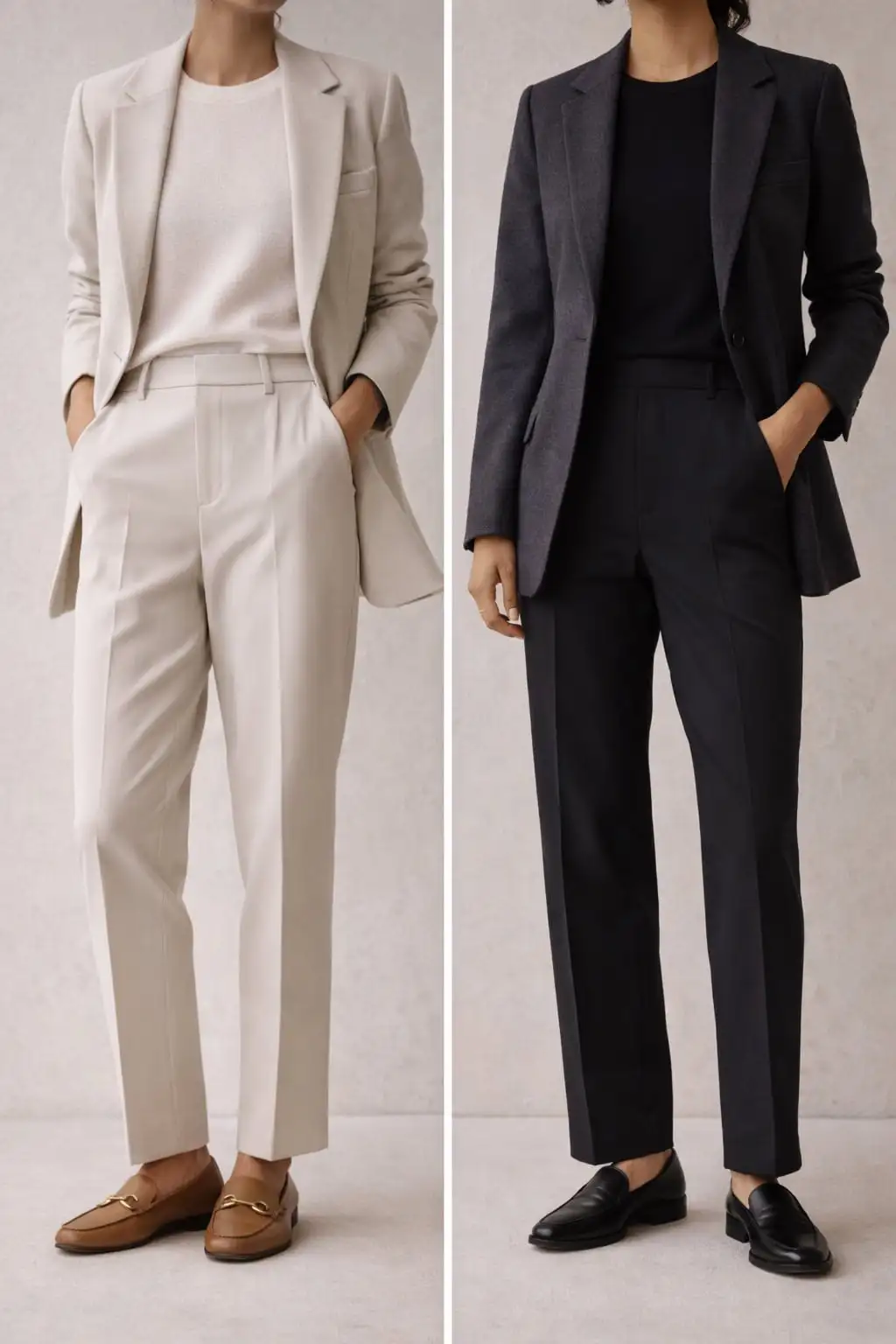
1) The Structured Ease Uniform
- Base: sensory-quiet knit or polished tee
- Bottom: tailored trouser (comfortable rise, clean drape)
- Layer: knit blazer or soft-structured blazer
- Shoe: loafer or low-heel boot
Why it works: Authority lives in the trouser line and the structure of the layer. Comfort lives in the base and the cut.
Comfort cue: a waistband that doesn’t negotiate when you sit, plus sleeves/armholes that let you move without pulling.
Quiet swap: if a blazer feels stiff, choose a knit blazer or an unlined jacket in a matte fabric.
2) The Calm Column
- Top: tonal knit or blouse (matte, not clingy)
- Bottom: matching-tone trouser or skirt (clean line)
- Outer: long coat, trench, or longline layer
- Shoe: pointed flat or sleek boot
Why it works: A tonal column reads composed with almost no styling. It’s the easiest route to “together” when you’re tired.
Comfort cue: fabric weight that holds a line—nothing thin, shiny, or static-prone.
Quiet swap: if a blouse feels fussy, choose a fine-gauge knit with a clean neckline.
3) The Shirt + Soft Structure Formula
- Top: crisp button-down (or smooth poplin shirt)
- Layer: knit blazer or refined cardigan-coat
- Bottom: straight trouser or clean denim
- Shoe: loafer (or minimal sneaker if your office allows)
Why it works: The shirt supplies polish; the soft structure supplies ease—capable without the “stiff collar” feeling.
Comfort cue: room in shoulders and upper back so you can reach, type, and move without tugging.
Quiet swap: if shirts pull or gape, try a matte blouse shape or a compact knit with the same neckline.
4) The Refined Tee + Trouser + Chore Jacket
- Base: refined tee (opaque, holds shape)
- Bottom: tailored trouser (or straight denim)
- Layer: chore jacket or short coat with clean lines
- Shoe: loafers or low-profile boot
Why it works: Quiet competence for casual-leaning environments: easy base, intentional trouser, structured layer.
Comfort cue: a tee that doesn’t twist and a jacket that doesn’t bind at the underarm.
Quiet swap: choose compact wool or structured cotton twill with minimal hardware to keep it polished.
5) The Knit + Midi + Boot
- Top: fine knit (slim, not tight)
- Bottom: midi skirt with movement (no cling)
- Layer: blazer or long coat
- Shoe: sleek boot (stable sole)
Why it works: A midi can be remarkably comfortable when it moves and stays put. Paired with structure, it reads quietly authoritative.
Comfort cue: skirt waistband that lies flat and fabric that doesn’t grab when you walk.
Quiet swap: translate the idea with wide-leg trousers if skirts aren’t your lane.
6) The Sweater Shell + Wide-Leg Trouser
- Top: sweater shell or compact knit tee
- Bottom: wide-leg trouser with drape (comfortable rise)
- Finish: clean waistband or minimal belt
- Shoe: loafer, low heel, or sleek boot
Why it works: Wide-leg trousers feel like permission while still reading tailored. A compact top keeps proportion intentional.
Comfort cue: drape + recovery—the trouser should fall cleanly after sitting.
Quiet swap: if wide-leg overwhelms, choose a straight trouser in the same fabric weight.
7) The One-and-Done Dress + Long Layer
- Base: knit or crepe dress (matte, substantial, not bodycon)
- Outer: long coat, trench, or cardigan-coat
- Shoe: flat, loafer, or boot
- Jewelry: one quiet piece
Why it works: One piece removes decision fatigue. The long layer adds structure and keeps the look anchored.
Comfort cue: a dress that doesn’t twist, ride up, or require smoothing.
Quiet swap: if dresses aren’t your lane, use a tonal set (top + bottom in the same shade) for the same “one decision” effect.
How to build comfortable but professional outfits around these
The fastest way to feel polished is to stop reinventing.
Choose:
- 2 core formulas for most weeks
- 1 backup formula for travel or long days
- A light and dark version of each
Repeat the same shoe and bag until it feels automatic.
Consistency is what makes comfortable work outfits look intentional rather than improvised.
If you want to see how this logic works in a small, repeatable wardrobe, the Quiet Authority Capsule breaks it down piece by piece.
What to Look for When Shopping for Comfortable Workwear
If your day involves sitting, presenting, walking, and concentrating, your clothes must behave well.
When evaluating comfortable work outfits, look for:
1. The Outfit Holds Its Line
No tugging. No smoothing. No resetting.
2. The Fabric Recovers
After sitting, it falls cleanly again. No sagging knees. No collapsed waistbands.
3. The Cut Accommodates Movement
Armholes allow reach. Rises sit naturally. Silhouettes tolerate sitting and standing.
4. There Is One Anchoring Element
A structured layer, tailored trouser, or defined shoe prevents softness from reading casual.
5. You Could Wear It Again Tomorrow
If it’s mentally tiring to repeat, it isn’t a formula yet.
Small upgrades that change how comfort reads
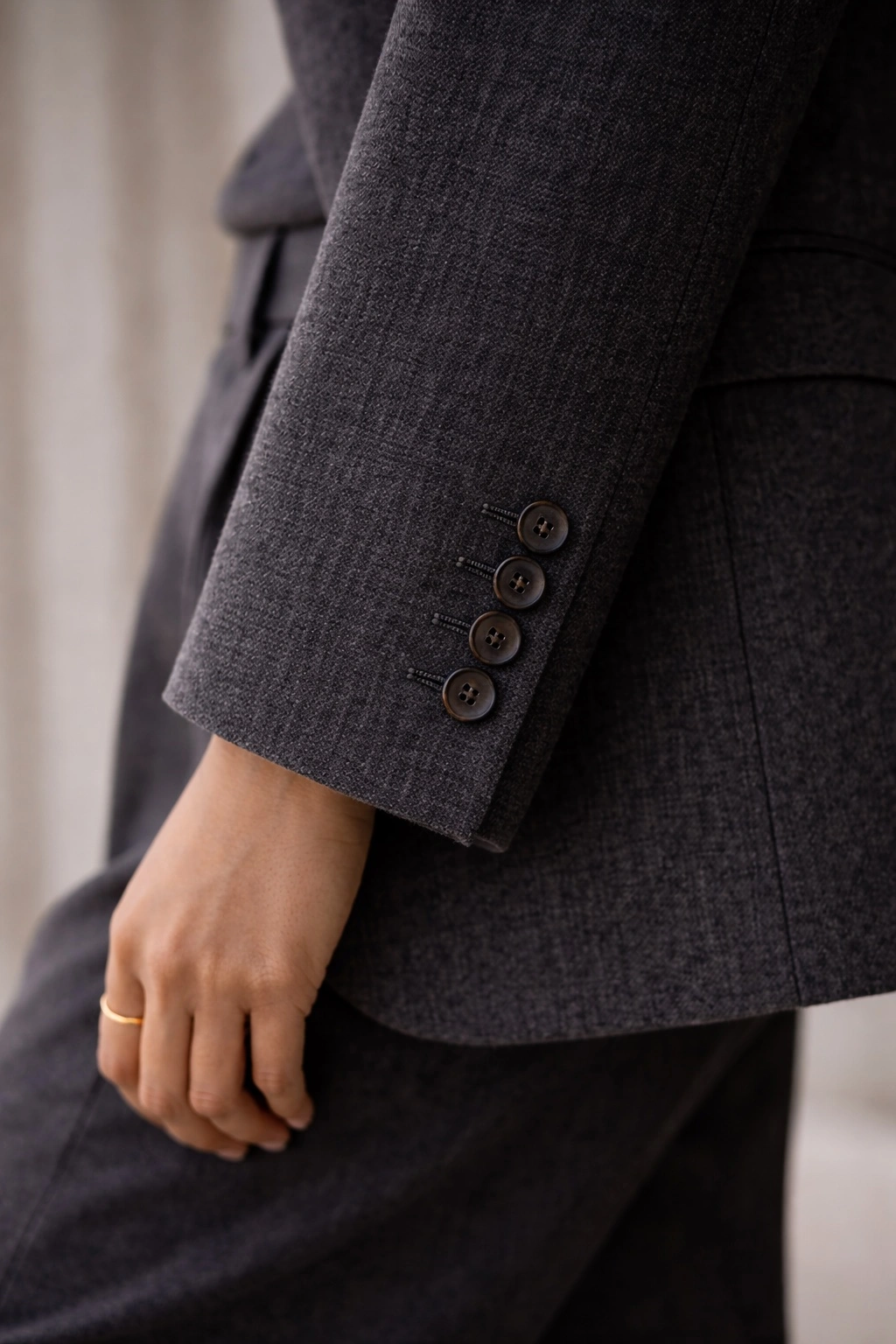
You don’t need more clothing. You need better construction.
Upgrade the Waistband
Flat fronts, contoured waists, side zips, or partial elastic backs often feel better than fully elastic designs.
Add Structure Near the Face
A knit blazer, crisp shirt, or structured cardigan stabilizes the upper body immediately.
This is part of the larger logic behind Dressing for Authority — presence is often structural, not decorative.
Choose Matte Over Shiny
Shine signals fragility. Matte signals steadiness.
Anchor the Outfit With One Reliable Shoe
Loafers, low boots, or stable flats reduce visual drift.
Reduce Variables
Wear the same bag and shoe for an entire week. Repetition creates authority.
Comfort, built into authority
Polished but comfortable work outfits don’t require more options. They require fewer formulas that work under pressure.
When comfort is built into the cut, the fabric, and the structure, ease stops reading casual. It reads capable.
Authority is rarely about formality.
It’s about steadiness — and steadiness is often a construction choice.

