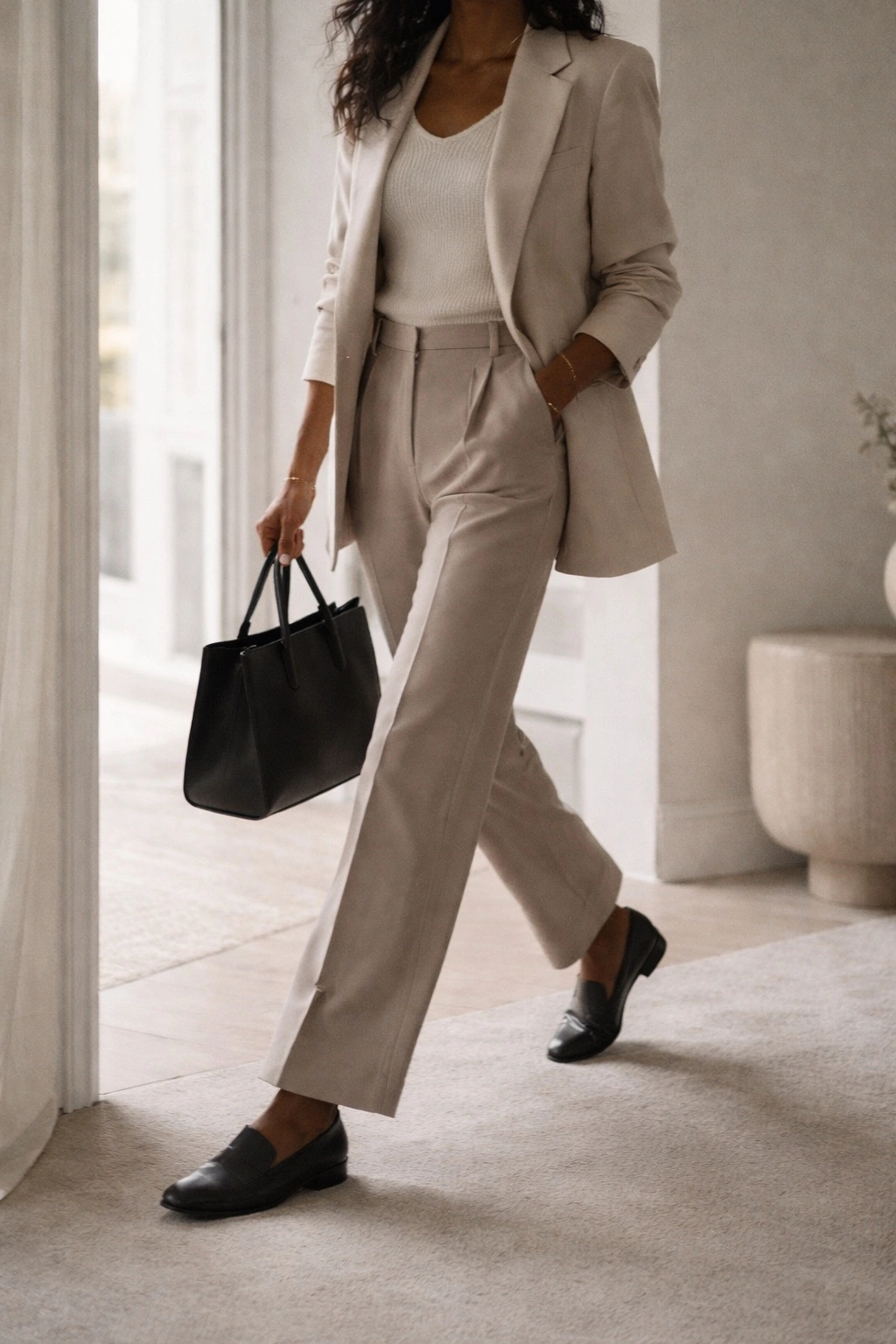
Some days the exhaustion isn’t the workload — it’s the outfit you had to endure to get through it.
Not the obvious discomfort. The small, constant interruptions: a waistband you keep adjusting. A hem you tug back into place. A neckline that shifts when you lean forward. Shoes you’re aware of every time you cross a room. Nothing dramatic. Just persistent enough to pull a thread of attention away from what you’re doing—and keep pulling.
And that’s the point: in high-responsibility days, discomfort becomes a cognitive tax. When you’re managing your clothing, you’re not managing the room.
If you’ve ever searched for polished but comfortable work outfits and found only sweatshirts styled with blazers, you’re not alone.
This is for anyone looking for clothes that look polished but feel comfortable — the kind you can wear on high-responsibility days without stiffness, performance, or noise.
If you’re building this from the ground up start with Dressing for Authority — it’s the foundation of the whole series.
Comfort is often treated as the opposite of authority—something you earn only after the work is done, or something that automatically reads as casual. But true comfort isn’t slouch. It isn’t “off-duty.” It’s non-distraction: clothing that holds its shape, moves with you, and lets you stay inside your own attention.
Quiet authority doesn’t require stiffness. It requires steadiness. And steadiness is difficult to sustain when your clothes won’t let you forget them.
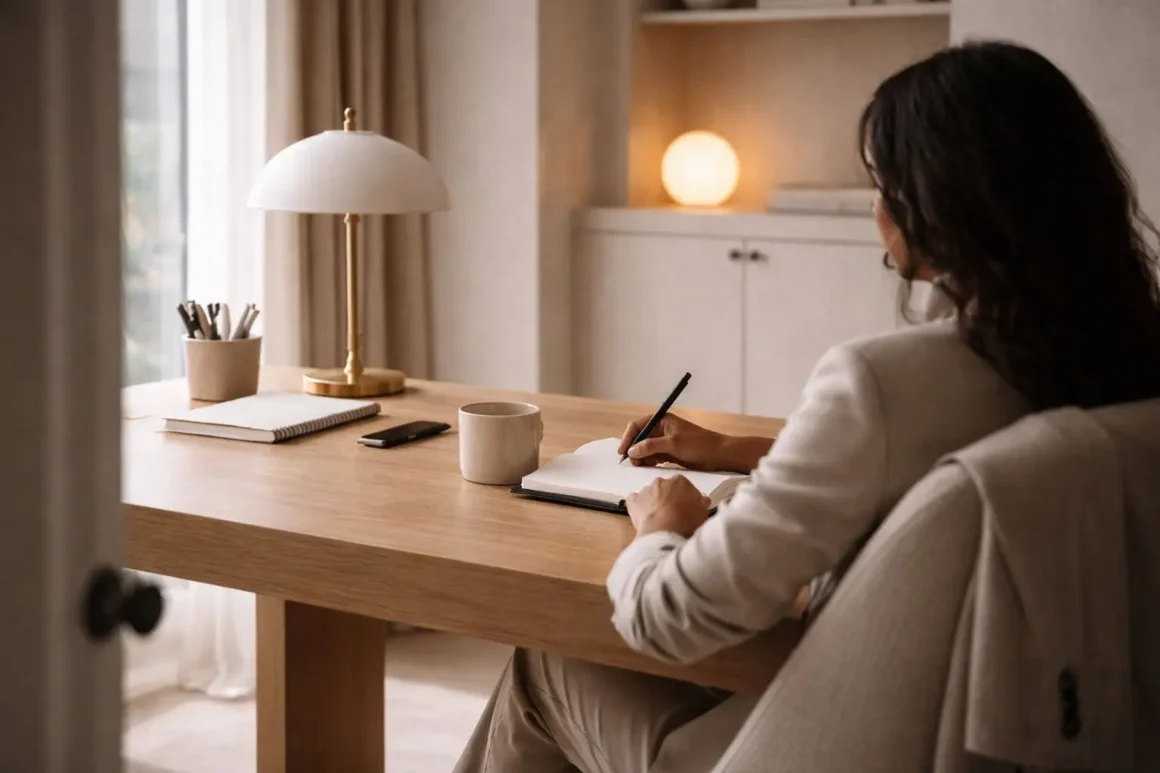
What makes a comfortable outfit look polished?
Comfort is not casual. Comfort is non-distraction.
Casual is an aesthetic choice—relaxed silhouettes, softer edges, less structure. Comfort is something else entirely: the ability to move through your day without your clothes asking for attention. Without the subtle self-monitoring that turns a meeting, a hallway, a dinner, or a long flight into a series of micro-adjustments.
Many comfortable outfits look casual simply because they’re missing structure. The same idea appears in the One Structured Thing Rule, which explains how a single structured element can stabilize an entire outfit.
In an authority wardrobe, comfort isn’t created by “softness” alone. It’s created by precision: a waistband that sits where your body actually is, not where a brand decided it should. Sleeves that allow you to reach without pulling. Fabric that drapes cleanly instead of clinging. A shoe that supports you so you can stop thinking about it.
This is why comfort doesn’t have to look casual—and why the most polished people often look the most at ease. Their clothing is doing its job quietly. It holds its shape, keeps its line, and gives them room to move. The result reads as steadiness: capable, contained, unhurried.
If comfort has ever felt like it “dresses you down,” it’s rarely because comfort is the problem. It’s because the garment solved comfort by removing structure—when what you actually needed was a better cut, better fabric, or a more intentional silhouette.
The goal isn’t to dress softer. It’s comfortable work outfits that hold their shape and let you lead.
The 5 principles of polished comfort
Principle 1: Structure carries authority, not stiffness
Quiet authority doesn’t come from tightness. It comes from shape—clothing that holds a clean line without asking you to brace against it. The goal is not to feel “contained.” The goal is to feel steady.
What this looks like:
- a structured layer that holds its silhouette (blazer, coat, chore jacket) without rigid shoulder tension
- trousers or denim that fall cleanly and don’t collapse into wrinkles the moment you sit
- compact knits that skim, rather than cling or stretch out by noon
Principle 2: Ease belongs in the pattern, not the sizing
Sizing up is a temporary fix. It adds fabric, but it doesn’t always add room where you actually need it—so you end up with bulk in the wrong places and discomfort in the same ones. Real comfort is built into the cut.
What this looks like:
- a rise that sits where your waist naturally is (so you stop adjusting all day)
- armholes that allow movement without pulling the body of the garment upward
- subtle shaping—darts, pleats, or a contoured waistband—that creates room without looking “relaxed”
Principle 3: Sensory quiet is part of professional polish
If a piece is scratchy, clingy, shiny, noisy, or heat-trapping, it will announce itself—first to you, then to everyone else in the form of fidgeting. Quiet luxury comfort begins at the level of touch.
What this looks like:
- matte fabrics that drape rather than cling
- linings and interior finishes that feel smooth against skin (no itching, no static)
- fibers that breathe and regulate—so you don’t spend the day half-overheated, half-distracted
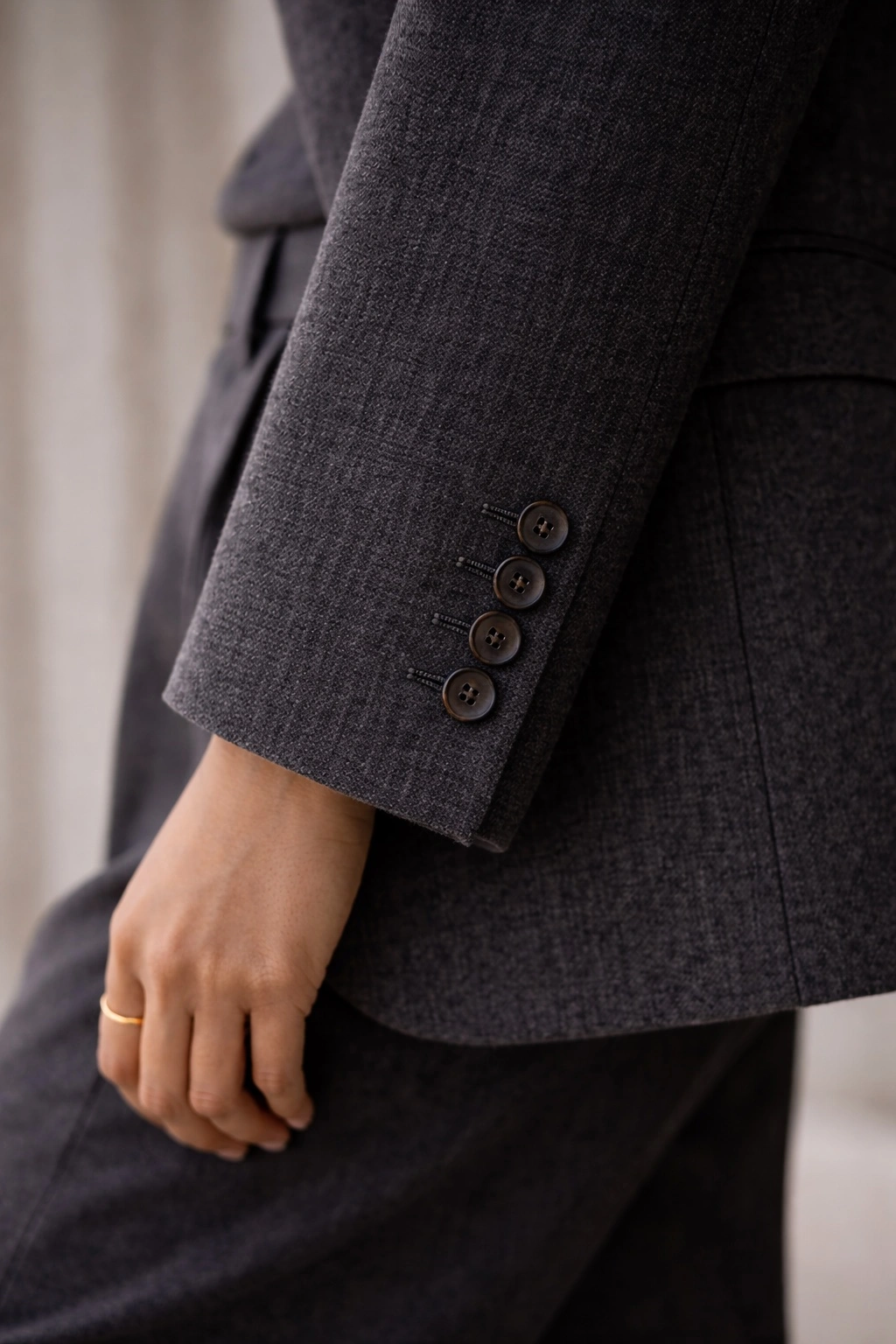
Principle 4: Solve the pressure points first
Most “I can’t wait to take this off” discomfort isn’t everywhere. It concentrates in a few predictable places: waist, underarm, neckline, bra line, toe box, heel. When you solve those, your whole wardrobe gets easier.
What this looks like:
- waistbands that don’t dig when you sit (or after lunch)
- necklines that don’t shift when you lean forward
- shoes you can walk in without planning your exits
- layers that don’t bind at the underarm or ride up when you reach
Principle 5: Repeatability is the definition of real comfort
The truest comfort test is simple: can you wear it twice in a week—on different kinds of days—and still feel like yourself in it? If a piece only works on “perfect” days, it isn’t comfort. It’s a performance with a short shelf life.
What this looks like:
an edited closet where your best items are also your easiest items
a short list of outfits you can repeat without overthinking
pieces that travel well, photograph well, and hold their shape across long hours
If you want the wardrobe version of these principles — pieces that hold shape and feel livable — see the Quiet Authority Capsule.
Comfort Audit
A quick check before you replace anything. The goal: fewer distractions, more steadiness. You’re looking for clothes that look polished but feel comfortable — pieces that disappear once you put them on.
- Does it stay put? (no tugging at hems, straps, waistbands, or necklines)
- Does it stay comfortable when you sit? (no digging, gaping, riding up, or pulling)
- Is it sensory quiet? (no itch, cling, shine, static, rustle, or overheating)
- Can you move without thinking? (reach, walk quickly, carry a bag, climb stairs)
- Would you wear it twice in a week? (on normal days—not just “perfect” ones)
If you answered “no” to two or more, that piece isn’t supporting you—it’s asking you to manage it. Start there.
This is quiet luxury in practice: fewer adjustments, fewer compromises. If you want the definition, start here: Quiet Luxury, Defined.
Once you know where the friction is, the fixes are surprisingly specific — and they don’t have to change your style.
The Details to look for in Clothes That Will Be Both Comfortable AND Polished
Comfort doesn’t have to read casual. The difference is usually not “more softness,” but better decisions in the places your body notices first—waist, underarm, fabric hand, and shoes. These are the upgrades that change the feeling instantly.
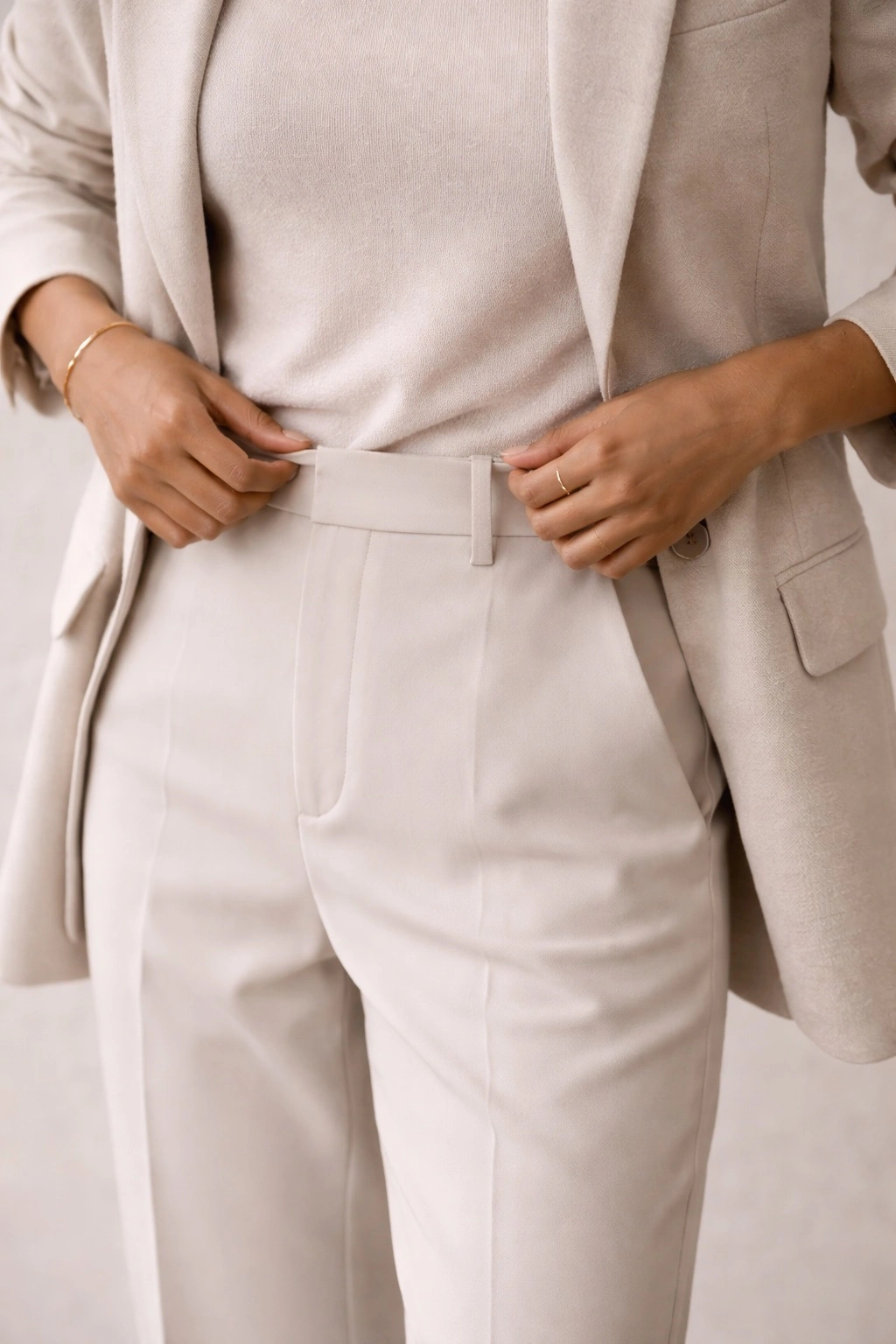
1) A waistband that holds its line
- contoured waistband (curves with you instead of cutting across)
- higher rise that sits where your waist actually is
- flat front + subtle back elastic (comfort without a visible “comfort waistband”)
- closures that lie flat (no pulling, no gaping)
2) Armholes and sleeves that allow movement
- higher armhole + shaped sleeve = better reach with less pulling
- avoid low armholes that lift the whole garment when you raise your arms
- look for a sleeve head that sits cleanly (no constant tugging at the shoulder)
3) Fabric that Doesn’t Cling
- matte, substantial fabrics that drape instead of cling
- avoid thin knits that show every line and require monitoring
- choose materials with recovery (they return to shape after sitting)
4) Interior finish that feels considered
- smooth linings that prevent cling and static
- soft seams / clean finishing (no itch, no scratch, no rubbing)
- less “noise” on the body = more steadiness in the room
5) Shoes that ground the outfit
- a stable sole and secure heel (so you don’t grip with your toes)
- a toe box that doesn’t compress (especially for long days)
- a low, stable heel often feels better than a flat that forces tension
6) Tailoring that removes fidgeting
- hem trousers to the right break so you stop stepping on them
- adjust sleeves so cuffs sit deliberately (no pushing up, no pulling down)
- waist/seat tweaks to eliminate shifting and readjusting
These changes don’t make you look “dressed up.” They make you look settled—which is often the most authoritative thing you can wear.
If you want comfort that still reads as authority, start with two repeatable formulas. Wear them on the days you can’t afford to think about clothes.
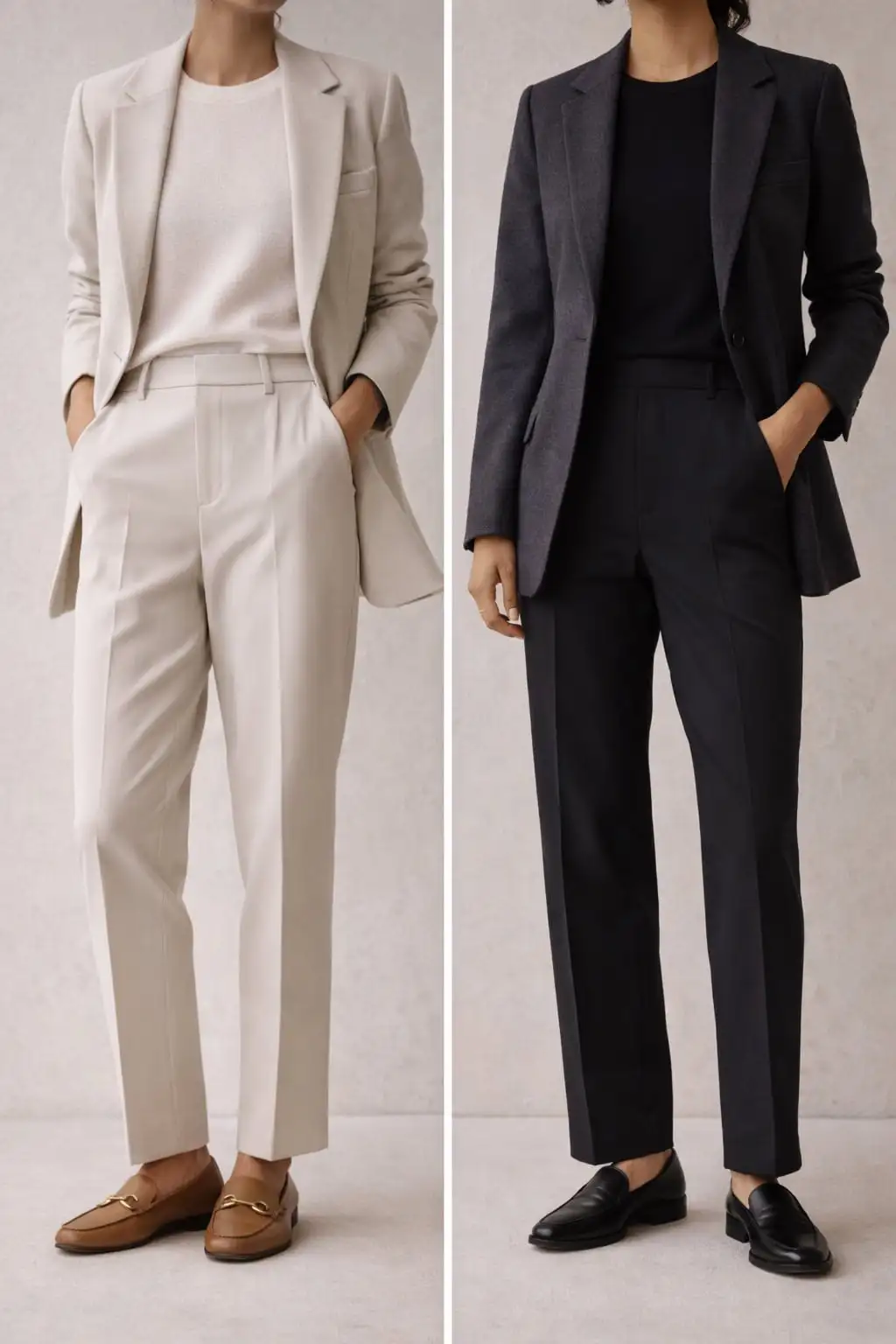
Examples of polished but comfortable work outfit combinations
If you want comfort that still reads as authority, start with two repeatable outfit formulas for work — so you stop overthinking. Wear them on the days you can’t afford to think about clothes.
1) The Structured Ease Uniform
- Base: sensory-quiet knit (fine merino, compact cotton) or a polished tee
- Bottom: tailored trouser with a comfortable rise (or straight denim that doesn’t pinch)
- Layer: knit blazer / soft-structured blazer / refined chore jacket
- Shoe: sleek loafer or low-heel boot
Why it works: Structure lives in the outer layer and trouser line; comfort lives in the base and the cut. You look finished—but you can breathe.
Comfort notes: If you overheat, swap blazer → unlined knit blazer or chore jacket. If waistbands are your issue, prioritize a contoured waistband or subtle back elastic (invisible from the front).
2) The Calm Column
- Top: tonal knit or blouse (matte, not clingy)
- Bottom: matching-tone trouser or skirt (clean line, no constant adjusting)
- Outer layer: long coat / trench / longline cardigan-coat
- Shoe: pointed flat, refined sneaker, or boot (depending on your day)
Why it works: A tonal column reads composed instantly—no extra styling required. It’s the easiest way to look “together” when you’re tired.
Comfort notes: Keep contrast intentional: one deep tone + one light tone (or fully tonal). Choose fabrics with weight and drape; avoid thin, shiny knits that cling and require monitoring.
Comfort isn’t an indulgence. It’s a form of control—because it keeps you inside your own attention. The goal is not to dress softer. It’s to dress quieter: pieces that hold their line, hold their shape, and let you lead without self-monitoring. If something distracts you, it costs you. Start there.
And if you want a few quick clarifications as you refine, these answers tend to help.
For a full set of mix-and-match building block, the Modern Professional’s Capsule Wardrobe is the cleanest place to start.
Why Comfort Is Not Casual — FAQs
Is stretch fabric always too casual for authority?
Not always. Stretch becomes casual when the fabric is thin, shiny, clingy, or loses shape quickly. The better test is structure: does the garment hold a clean line after you’ve worn it for a few hours?
A small amount of stretch in a substantial weave can improve comfort without changing the message. Look for matte fabrics with weight and recovery—pieces that return to shape rather than relaxing into softness.
What’s the difference between comfortable and sloppy?
Comfort is non-distraction. Sloppy is a loss of intention. Comfortable pieces stay in place, hold their shape, and look deliberate from multiple angles. Sloppy pieces collapse, bag out, twist, or require constant adjusting.
A useful shortcut: if it photographs well and wears well across a full day, it’s comfort done correctly.
How do I know if something fits—or if I’m just used to discomfort?
Wear the piece for two hours at home while you sit, stand, reach, and walk. If you find yourself adjusting it—even subtly—that’s information. A well-fitting garment should feel quiet: it stays put, moves with you, and lets you forget it’s there.
Pay attention to where discomfort lives. Waistbands, underarms, necklines, and shoes are common pressure points. When those are solved, the rest of your wardrobe often feels easier overnight.
What are the best comfort upgrades that still look polished?
Focus on a few high-impact improvements:
• Shoes with a stable sole, forgiving toe box, and secure heel
• Waistbands and rises that work with your body rather than against it
• Matte fabrics with enough weight to drape cleanly
• Smooth linings and soft seams that reduce sensory friction
• Simple tailoring adjustments that eliminate tugging and constant resetting
These changes don’t make you look more dressed up. They make you look settled.
What if my workplace is very casual?
Keep the principles and soften the form. Build a quieter version of authority with refined denim or tailored trousers, elevated knits, clean sneakers or polished flats, and one strong outer layer.
In casual environments, restraint is often what reads most authoritative: clean lines, a calm palette, and pieces that fit well.
When comfort and polish are in balance
Polished but comfortable work outfits don’t rely on effort. They rely on equilibrium.
Comfort, on its own, is neutral. It becomes casual when it lacks structure — when softness replaces intention instead of being supported by it. But when comfort is anchored by fabric weight, proportion, and grounded footwear, it reads as composure.
The goal is not to look “put together.” It is to remove distraction.
When your clothes hold their line, you don’t spend energy adjusting them. When your waistband stays steady, your shoulder doesn’t collapse, and your shoes feel resolved, your body stops negotiating with what you’re wearing. Attention moves outward — to the work, the room, the conversation.
That is the balance.
Polish is not stiffness.
Comfort is not indulgence.
In a professional setting, they work best together.
Most wardrobes don’t need more clothes to achieve this — they need a few pieces that quietly stabilize everything around them. The difference is often structural, not stylistic.
If you want to see how this balance works in practice, it often comes down to a small set of structural pieces — the quiet load-bearers that make comfort read as intentional: 3 Pieces That Make Comfort Look Polished
When comfort and polish meet, the result isn’t louder.
It’s steadier.
And steadiness, in a professional environment, reads as authority.
