Choosing atmosphere over brightness.
Candlelight vs electric light: what each does to a room
The conversation around candles vs electric light is often framed as style — but it’s really about atmosphere.
Most homes stay in daytime mode well into the evening. Overhead lights remain on. Rooms stay bright. The body adjusts, but it doesn’t always unwind.
Electric light makes modern life possible — extended hours, flexible schedules, productivity after sunset. But when light never changes, neither does the pace.
Candlelight isn’t about darkness or romance. It’s about transition. It marks a boundary — not between light and shadow, but between one part of the day and the next.
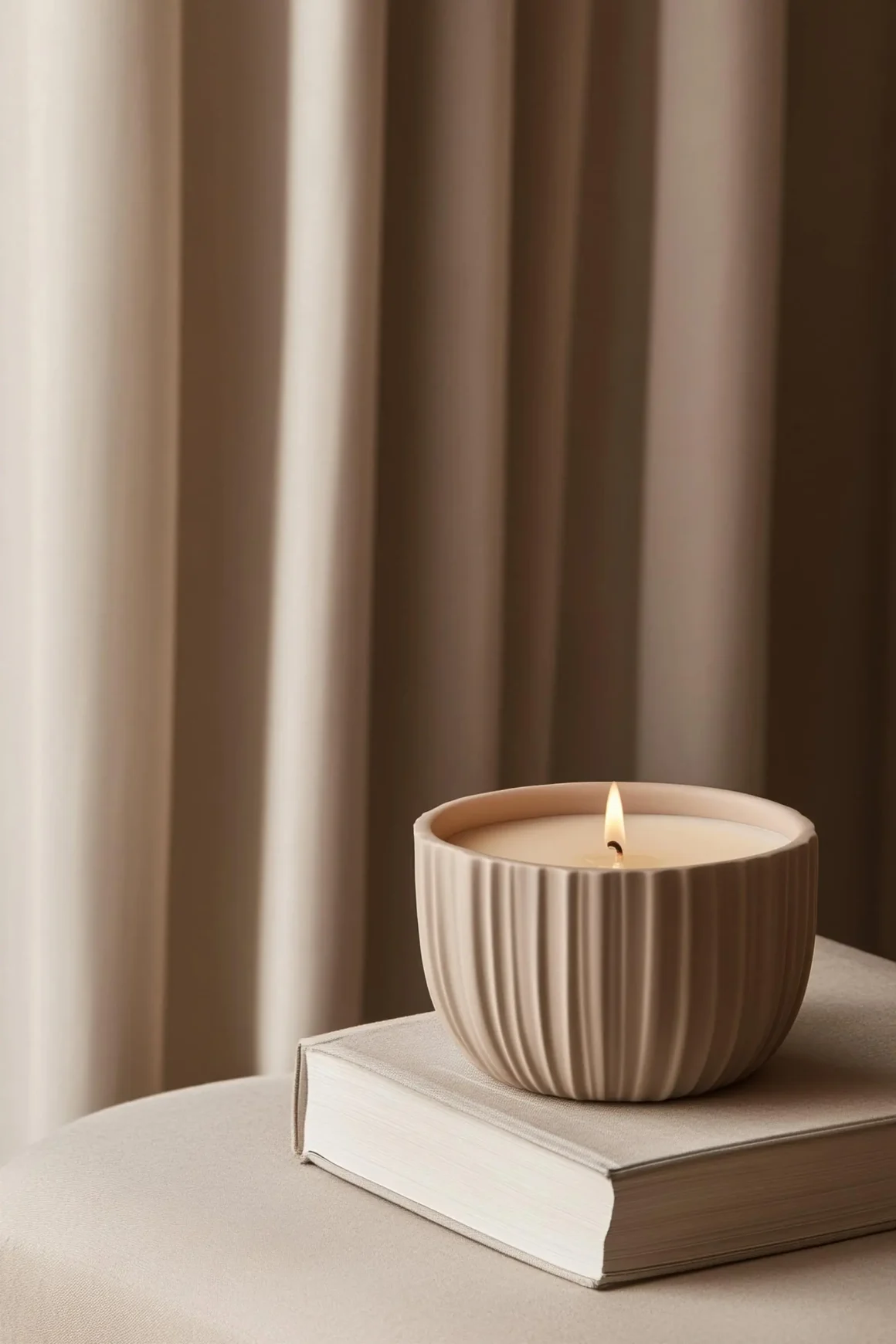
What electric light does well (and where it overwhelms)
Electric light excels at clarity. It’s precise, dependable, and efficient. We need it for cooking, reading, working, cleaning — all the moments that require focus and safety.
The issue isn’t brightness itself. It’s unchanged brightness.
When the same overhead light illuminates every hour, every task, every mood, the home loses rhythm. There’s no visual signal that says: you can stop now.
What candlelight changes (beyond mood)
Candlelight doesn’t brighten a room — it softens it. Edges blur slightly. Contrast lowers. Movement replaces glare. The eye stops scanning for information and begins to rest.
What candlelight offers isn’t coziness — it’s relief. It doesn’t ask you to relax. It simply removes what keeps you alert.
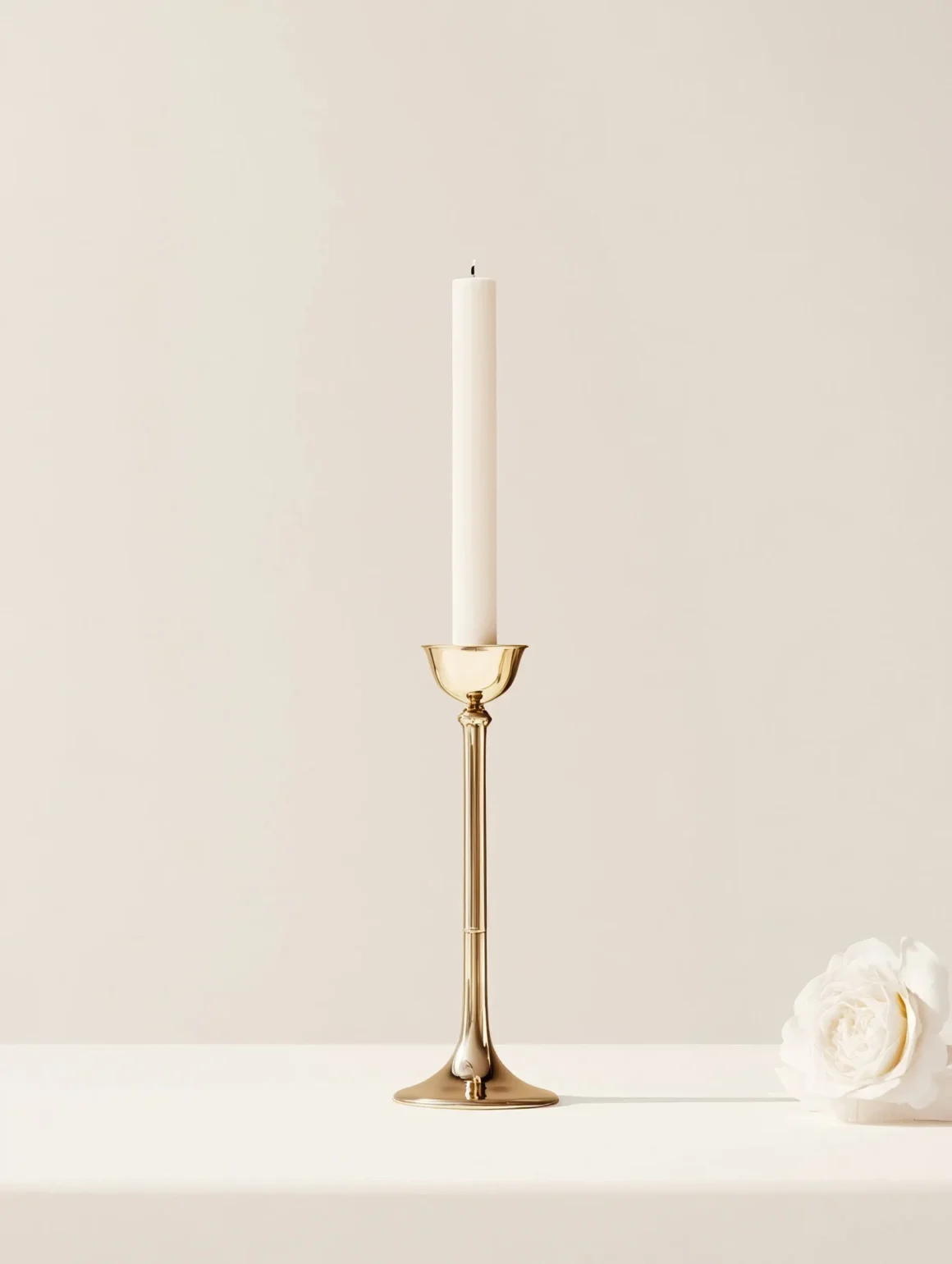
Candles as a boundary, not a décor choice
In quiet luxury, candles aren’t styled. They’re used.
Lighting a candle is less about atmosphere and more about intention. It says: this part of the day is complete. The room is no longer performing a function — it’s holding space.
One flame is enough to change how a room behaves. It draws attention inward. It slows conversation. It allows stillness without instruction.
What candlelight is — and isn’t — for
Candles work best when the goal is presence, not productivity.
They belong:
- after dinner
- during conversation
- beside the bed
- in entryways at night
- in rooms meant for lingering
They are not replacements for:
- task lighting
- reading lamps
- kitchens in use
- safety or navigation
Quiet luxury doesn’t reject function. It assigns it a time. With respect to candlelight vs electrical lighting, each has its function in signaling the time of day.
Candles vs Electric Light FAQs
A few quiet clarifications on atmosphere versus function—so your lighting feels supportive, not harsh.
Are candles better than electric light?
Candles and electric light serve different purposes. Candles offer softness and ritual, while electric light supports function. Quiet luxury often combines both—using each where it feels most natural.
Why does candlelight feel calmer than electric lighting?
Candlelight flickers and casts uneven light, which relaxes the eye. Unlike uniform overhead lighting, it allows shadows and movement that make a space feel more human.
Can electric lights feel like candlelight?
Yes—when they’re warm, dim, and indirect. Lamps with low color temperature bulbs placed below eye level can approximate the softness of candlelight.
How does quiet luxury use both candles and lamps?
Quiet luxury treats candles as atmosphere and lamps as support. The goal is not replacement, but balance—light that enhances a moment rather than dominating it.
Using candlelight quietly (no styling required)
There’s no need to cluster, layer, or arrange. One candle, lit consistently, in the same place each evening, is more effective than many used occasionally.
Repetition builds association. Over time, the body learns what that light means.
**Quiet rule of thumb: If you wouldn’t notice its absence, you’ve lit too many.
Extinguish deliberately. Don’t let it burn itself out. Ending the light is part of the ritual.

A note on hosting
Candlelight subtly changes how people stay. Guests sit longer. Voices lower. Movement slows. There’s less pressure to entertain, more room to simply be together.
One candle per table is often enough. More doesn’t mean warmer — just brighter.
Where this leads
Quiet luxury isn’t about choosing candles over electricity. It’s about knowing when brightness has done its job.
When the lights change, the room changes. And when the room changes, the evening can finally begin.
Night light is less about brightness—and more about permission.
If this resonates, the next step is designing your default evening atmosphere: layered lamps, warmer bulbs, and small choices that make home feel like an exhale.
Quiet luxury isn’t something you arrive at. It’s what remains once the noise is gone.

