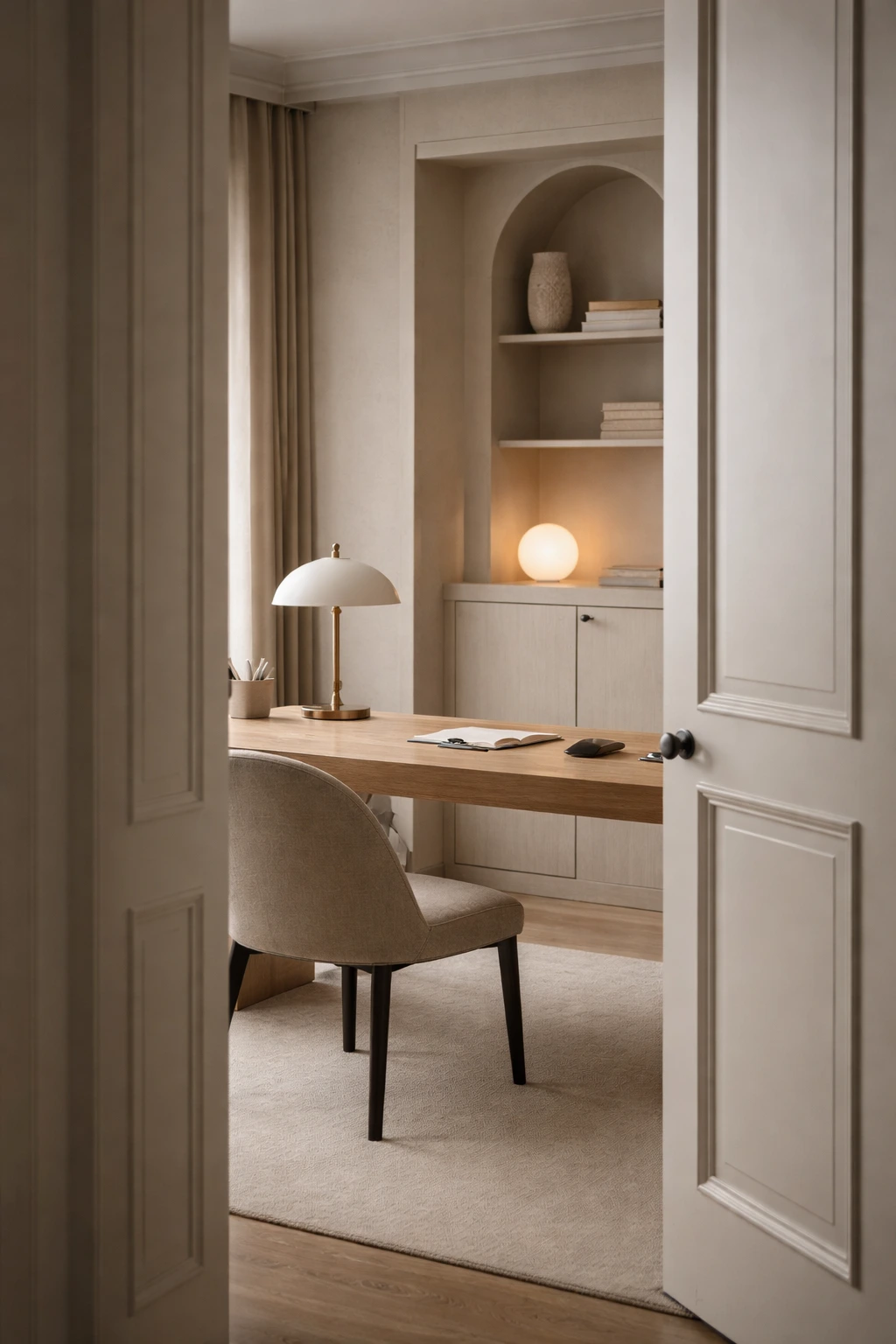
There is a particular kind of dressing that has nothing to do with trends or aspiration. It emerges when your role carries weight—when you are expected to be steady, credible, and clear before you ever speak.
In those moments, clothing stops being expressive and starts being deliberate. Not because it needs to impress, but because it needs to support. Authority does not ask to be noticed; it asks not to remove attention from the work itself.
I used to think dressing well for work meant looking capable—put-together, appropriate, correct. Over time, I’ve learned that authority requires something quieter. In environments where decisions matter and expectations are implicit, clothing either holds its place or competes for it.
The most effective choices are rarely the most interesting ones. They are the ones that disappear just enough.
For a quieter, more repeatable wardrobe foundation, The Quiet Authority Capsule is the companion to this essay.
Authority isn’t announced
Think of this less as guidance and more as orientation —
a way of noticing how authority already dresses itself.
Authority rarely announces itself through clothing. It doesn’t need to.
In environments where responsibility is real — clinics, boardrooms, courtrooms, classrooms — credibility is assumed before anyone looks closely.
What clothing does in these spaces is quieter. It removes friction. It stays out of the way of decision-making. It supports presence rather than competing with it.
This is why the most authoritative dress often feels unremarkable at first glance. There is no obvious trend to decode, no visual shorthand asking for recognition. Instead, there is coherence: between posture and fabric, between pace and silhouette, between what’s worn and what’s required of the wearer.
Clothing for authority is not about being seen as powerful.
It’s about not needing to prove it.
What authority actually asks of clothing at work
Authority places specific, practical demands on dress — whether or not we name them as such.
Clothing must:
- hold its shape through long hours
- remain comfortable under pressure
- look appropriate without drawing attention
- feel settled rather than styled
These requirements explain why certain pieces recur in high-responsibility environments, regardless of industry or trend cycle. They aren’t chosen for novelty. They’re chosen because they behave well when the wearer’s attention is elsewhere.
Quiet luxury doesn’t invent this logic. It observes it.
Why “impressive” often undermines authority
When clothing asks to be noticed first, it subtly shifts the balance of a room. Attention moves toward appearance rather than judgment. Toward performance rather than substance.
This doesn’t mean authoritative dress must be severe or joyless. It means that its interest tends to live in construction, proportion, and material — details that reward proximity rather than broadcast.
Authority reads best when nothing interrupts it.
What high-responsibility clothing optimizes for
Clothing worn in roles of sustained responsibility is rarely optimized for novelty. It’s optimized for endurance.
Not just physical endurance — long days, variable temperatures, repeated wear — but cognitive endurance. The ability to make decisions without distraction. The ability to move through complexity without adding visual noise.
High-responsibility clothing quietly optimizes for four things.
1. Predictability
When a role requires judgment, people around you benefit from visual consistency.
This doesn’t mean uniformity. It means recognizability. The ability for others to read you quickly and then move on to what actually matters.
Predictable clothing reduces interpretive labor. It lets colleagues, patients, clients, and teams focus on your words rather than your presentation.
This is why repetition is common among people with authority. Not because they lack imagination, but because they understand that stability communicates reliability.
2. Ease under pressure
High-responsibility clothing must behave well when the wearer is under strain.
It must:
- remain comfortable when seated for long stretches
- hold its line when standing suddenly
- move without requiring adjustment
- feel physically settled, not precarious
Discomfort is distracting. Clothing that needs frequent correction — pulling, smoothing, adjusting — quietly erodes presence.
Quiet luxury prioritizes ease not as indulgence, but as infrastructure.
3. Proportion over decoration
In authoritative dress, interest tends to live in line rather than embellishment.
Proportion does more communicative work than adornment ever could. A sleeve that falls correctly. A trouser that meets the shoe without hesitation. A jacket that aligns with the body rather than hovering around it.
These details are not dramatic. They are precise.
They signal care without spectacle — a quality that aligns naturally with authority.
4. Visual calm
Authority benefits from visual quiet.
When clothing is visually calm, it creates space for the wearer’s voice, decisions, and presence to lead. Patterns soften. Colors repeat. Textures harmonize rather than compete.
Nothing asks for attention. Nothing interrupts.
This calm is not accidental. It’s the result of editing — of choosing fewer elements and allowing them to work harder.
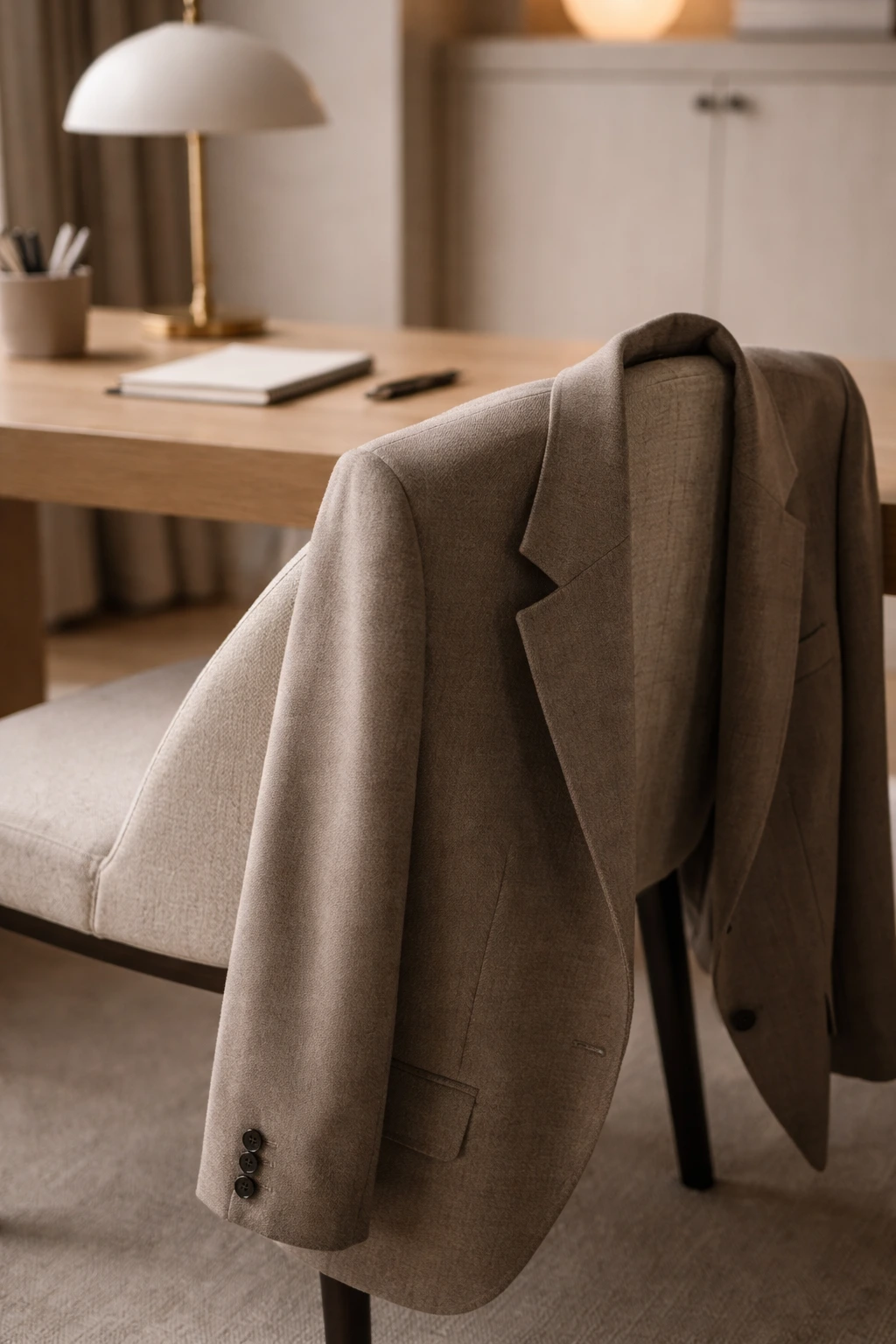
When clothing stops distracting and starts supporting
High-responsibility clothing doesn’t try to elevate the wearer. It stabilizes them.
It supports the role rather than styling the individual. And in doing so, it allows the person inside the clothes to show up more fully — focused, credible, and at ease.
Quiet luxury doesn’t impose this system.
It recognizes it — and gives it language.
When people first step into roles with real responsibility, they often assume clothing should signal authority before it supports it. Early on, that can look like garments that are technically “right” — structured, polished, professional — but physically distracting: fabrics that don’t breathe, tailoring that pulls or collapses, silhouettes that require constant adjustment.
Sometimes this is about cost. Sometimes it’s about not yet knowing what to look for. More often, it’s simply that no one tells you clothing can work with you rather than against you.
Over time, authority teaches a different lesson: the less you notice your clothes, the more effectively you inhabit your role.
How authority reads without signaling
Authority rarely announces itself through novelty.
More often, it appears through repetition.
The same silhouettes, returned to.
The same proportions, trusted.
The same few garments worn until they no longer feel like choices at all.
This is why truly authoritative dress can look deceptively simple.
It isn’t minimal because it lacks interest — it’s minimal because the decisions have already been made.
What reads as confidence is often familiarity.
A jacket that no longer needs adjustment.
Shoes that don’t require thought.
Fabric that holds its shape across long days and varied contexts.
There is a particular calm that comes from knowing exactly how something will behave — on your body, in motion, under pressure. That calm registers outwardly.
Not as style.
As steadiness.
Where trend-driven dressing asks to be noticed, authority dressing asks to be trusted. It removes friction rather than adding emphasis. The goal isn’t to impress a room, but to remain fully present inside it.
Over time, this produces a recognizable effect:
people stop looking at what you’re wearing — and start listening to what you’re saying.
Authority without performance
There is often a moment — subtle, easy to miss — when clothing stops feeling aspirational and starts feeling infrastructural.
When pieces are chosen not because they project authority, but because they allow you to exercise it without interruption.
That shift doesn’t announce itself.
It simply stays.
This is why authority doesn’t need variety to feel complete — it needs reliability.
When clothing stops asking for attention.
At a certain point, clothing stops introducing itself.
You’re no longer aware of seams, waistbands, sleeves, or shoes. Nothing needs adjusting. Nothing pulls focus away from the conversation, the decision, the work in front of you. The outfit doesn’t perform — it holds.
This is often mistaken for “playing it safe.” In reality, it’s the opposite. When clothing recedes, presence advances. Authority doesn’t need to be announced because it’s already being exercised elsewhere.
The quietest wardrobes tend to be repetitive, not because their owners lack imagination, but because they’ve already answered the important questions. They know how they move. They know what distracts them. They know what supports them on long days with real consequences.
What remains is consistency — in silhouette, in fabric, in proportion. Not as a uniform, but as infrastructure.
And once clothing becomes infrastructure, it stops signaling altogether. It simply does its job.
Quiet luxury doesn’t ask to be noticed.
It’s what remains when the noise is gone.

