Quiet luxury at home is an atmosphere long before it’s a shopping list. A quiet luxury home doesn’t depend on new furniture or a bigger space; it starts with how your rooms feel when you move through them — what’s on your surfaces, how the light falls, and which objects are allowed to stay out because you actually use them.
It’s the feeling when you walk into a room and nothing shouts, but everything feels considered: the weight of the glass in your hand, the way the light sits on a linen cloth, the fact that there’s space to exhale because every surface isn’t performing.
You don’t need a new house—or even a new sofa—to move toward that feeling. Quiet luxury at home is less about buying a whole new interior and more about refining three things you already live with every day: your surfaces, your materials, and your rituals. If you have a small space, like an apartment or rental, explore decorating options at Quiet Luxury in a Small Space.
If Quiet Luxury, Defined is the philosophy, this is what is looks like when it lands in your rooms — how to make any room feel more expensive without making it feel overdone.
1. Start with the Surfaces You Actually Touch
In a quiet luxury home, the surfaces you actually touch shape your experience more than any statement piece. Before you think about paint colors or furniture layouts, look at the surfaces you live with at eye level and hand level:
- The kitchen counter you set keys and mail on
- The nightstand you stack books on
- The small table by the sofa where a glass always seems to land
- The bathroom sink, where a quiet luxury skincare regimen can turn five quiet minutes into part of your atmosphere
These planes shape your daily experience more than any gallery wall.
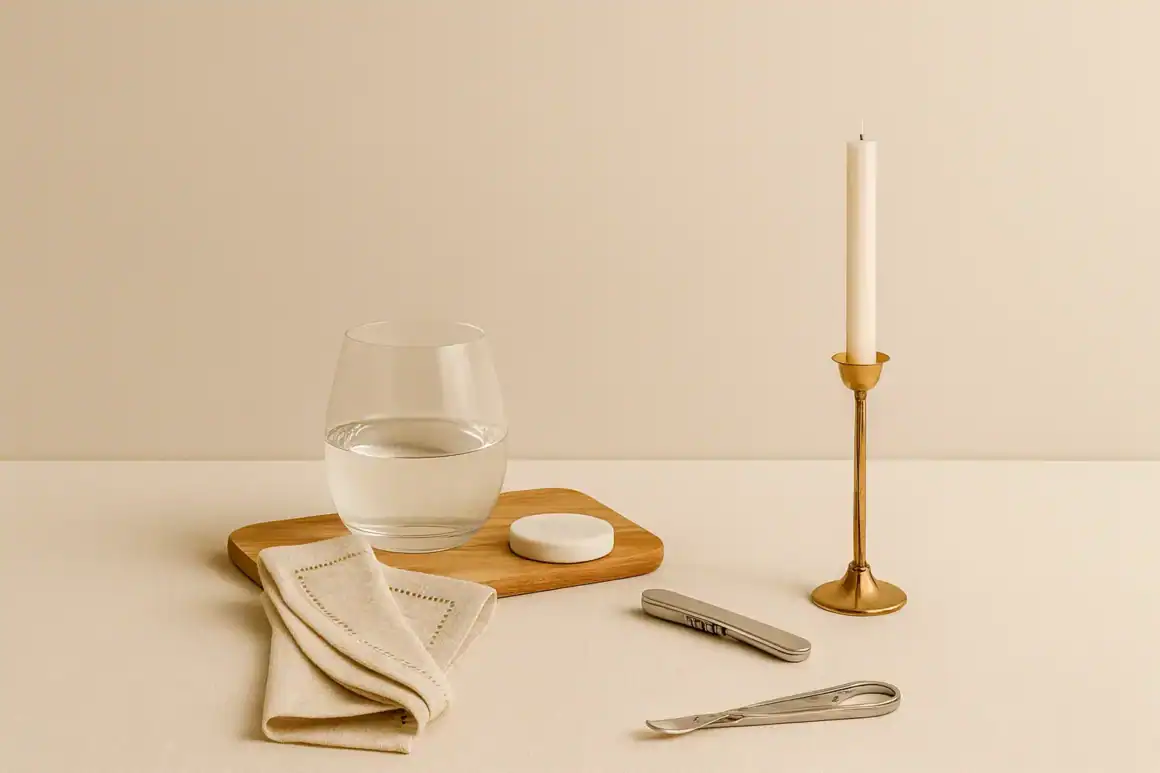
Quiet luxury at home begins by asking a simple question of each: What truly needs to live here—and what’s just noise?
A quietly luxurious surface usually has:
- One anchoring object (a lamp, a carafe, a single candle)
- One supporting object (a dish, a small bowl, a cloth)
- Empty space around them
On a nightstand, that might look like:
- A small carafe and glass
- One book—the one you’re really reading, not the aspirational stack
- A single candle instead of a scatter of trinkets
On the kitchen counter:
- A board that works for both prep and serving
- A small pinch bowl for salt
- A linen cloth or towel that dresses the space without fuss
The goal isn’t to strip everything away; it’s to let each object earn its position by what it does, not just how it looks. When surfaces breathe, the room starts to breathe with them.
If you’d like to see these ideas in motion for hosting, Hosting with Intention shows how edited surfaces make guests feel cared for without the house feeling staged.
2. Choose a Palette That Calms the Room, Not Competes with It
Quiet luxury doesn’t mean all-white. It means a palette that feels coherent enough that your eyes aren’t working overtime every time you walk through a room.
Instead of chasing a specific “trend color,” think in terms of three tiers:
- Base tones – the quiet backdrop
- Warm whites, soft stone, oat, greige, soft charcoal
- These show up in walls, larger furniture, rugs, major textiles
- Support tones – the lived-in neutrals
- Deeper taupe, milk chocolate, warm black, muted olive, clay
- These appear in wood, leather, linen, wool, and accent pieces
- Small emphasis tones – barely-there contrast
- A more saturated version of your support colors: deeper green, inky navy, rich espresso
When your home starts to feel busy, it’s usually because too many unrelated colors are competing at equal volume. Quiet luxury at home turns the volume down by repeating tones and materials instead of introducing new ones on every surface.
You don’t have to repaint anything to move toward this. You can:
- Group like-colored objects together
- Swap one loud piece (a bright dish towel, a bold catchall) for something that echoes your base tones
- Let one or two rooms lead the palette, and pull those colors into the rest of the home slowly
The point is not to erase personality—it’s to give it a calmer stage.
3. Build a Material Story: Linen, Stone, Wood, Glass, Metal
If color is the mood, materials are the vocabulary. Quiet luxury is deeply material-driven: it relies on textures that feel good in the hand and age gracefully.
Think of your home’s materials as a small cast of characters you return to:
- Linen – relaxed, breathable, a little rumpled in the best way
- Wool & Alpaca – warmth with structure; throws, rugs, cushions
- Stone – marble, travertine, soapstone; cool to the touch, subtle veining
- Wood – oak, walnut, ash; quieter stains over high-gloss finishes
- Glass – clear, softly weighted; carafes, tumblers, candle vessels
- Metal – brass, bronze, blackened steel; small hardware and tools, not dominant features
- Beeswax – candles as architecture, not just scent
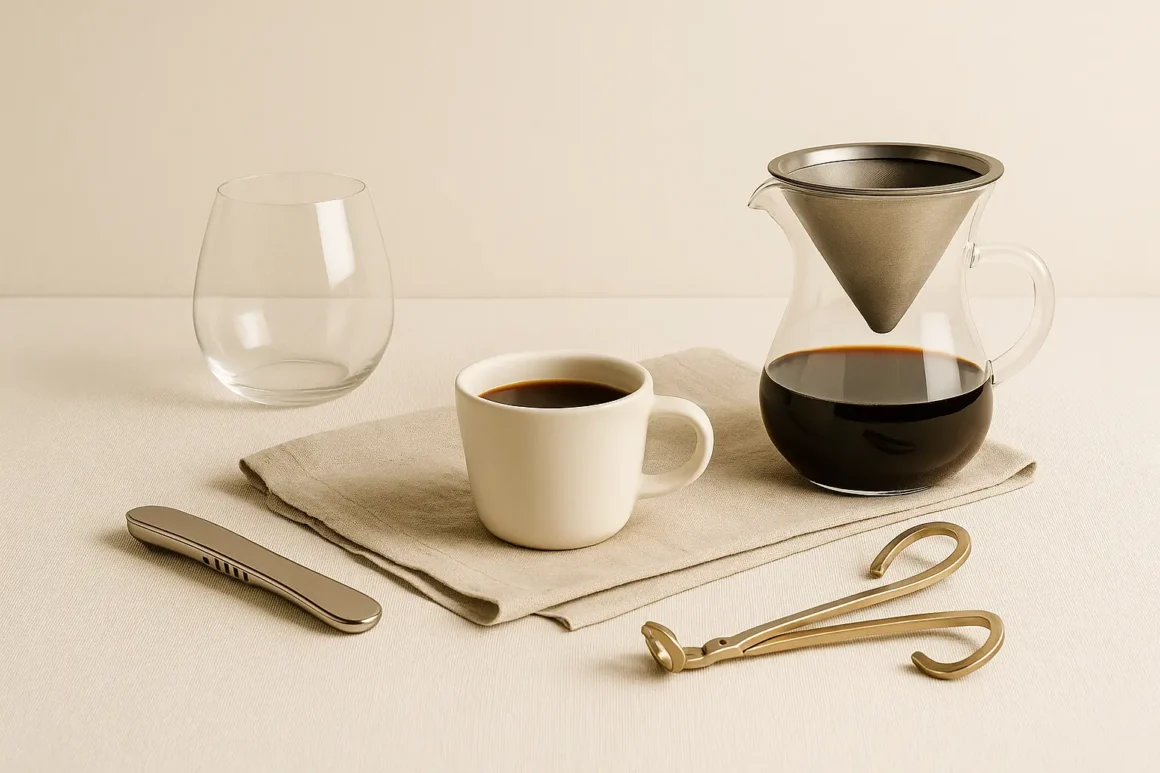
A room feels expensive when these materials are limited and repeated, not endlessly varied.
For example:
- A living room with a linen slipcovered sofa, wool throw, oak coffee table, glass carafe, and brass tray shares a consistent material language.
- A dining area with linen napkins, a stone or wood centerpiece, and glass stemware will quietly echo that story.
You don’t need every material in every room. Pick three or four to lean on and let them appear in different ways:
- Linen as napkins in the kitchen and as a throw pillow in the living room
- Marble as a wine coaster in the dining room and as a small tray on the nightstand
- Glass as a water carafe, a candle vessel, and a bud vase
When materials repeat, the home feels tied together—even if individual pieces are simple or budget-conscious. If you would like to explore some beautifully crafted items to either add to your home or to gift a loved one, see Refined Gifting for well-crafted, useful objects you can reach for again and again.
4. Light and Scent: How a Room Actually Feels
Quiet luxury at home is never just about what you see; it’s also about the temperature of the light and the softness of the air.
Layer the Light
Overhead lighting is rarely flattering. It flattens everything, including your mood. To make a room feel more expensive without changing a single piece of furniture:
- Add lamps at different heights: a floor lamp, a table lamp, a small lamp on a shelf
- Introduce candlelight where you linger: the table, the coffee table, the nightstand
- Use warmer bulbs (around 2700–3000K) rather than cold, blue-toned ones
You don’t have to fill every corner. Just make sure there’s more than one source of light so the room has depth. A single plain lamp with a linen shade and a beeswax candle nearby will do more for the atmosphere than any overhead chandelier.
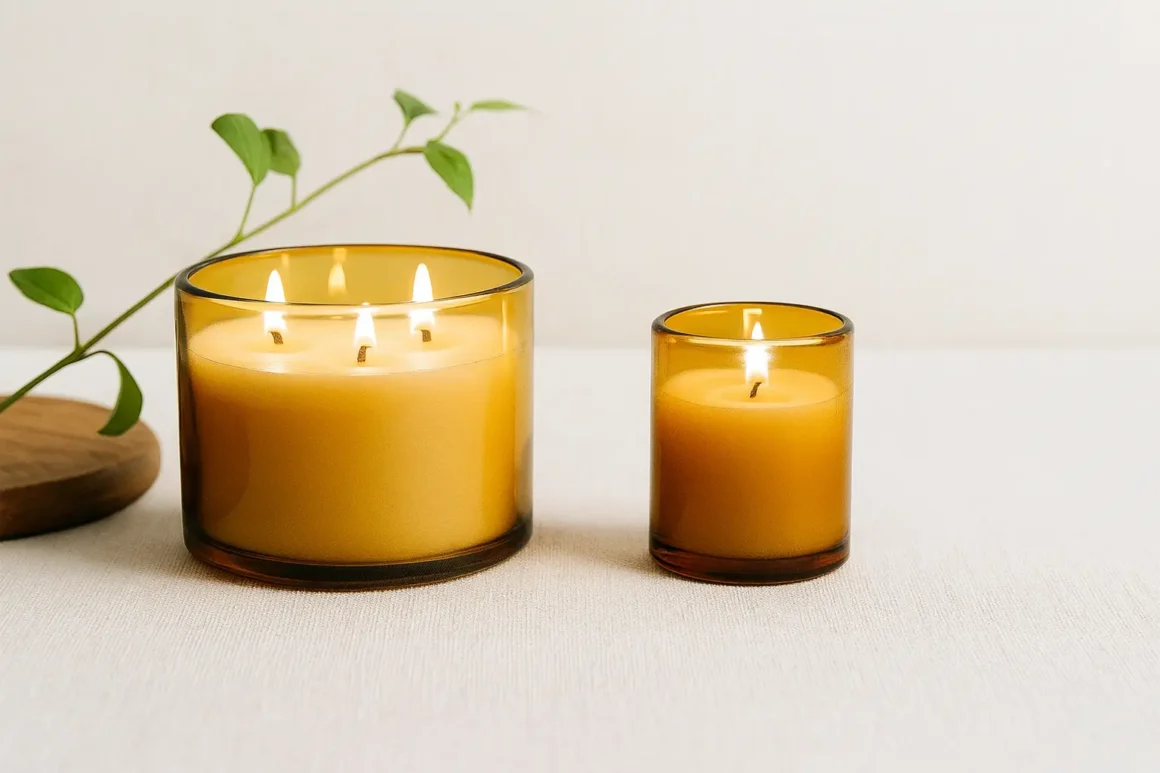
Curate Scent, Don’t Blast It
Scent is powerful, and in quiet spaces, a little goes a long way. The goal isn’t that someone walks in and thinks, “What is that candle?” It’s that the room feels calm and lived-in.
You can build a scent wardrobe the way you build a fabric one:
- One wood-toned candle (like charcoal, hinoki, or sandalwood) for evenings
- One beeswax candle for pure light and a faint honey warmth
- One diffuser or smokeless incense for grounding moments when you don’t want an open flame
Use scent selectively:
- Light the wood candle only when you’re actually in the room
- Burn beeswax at the table or during nighttime wind-down
- Use incense for brief, defined sessions, not all-day background
Quiet luxury at home doesn’t smell like a department store. It smells like clean air, rubbed briefly with wood, resin, or beeswax.
If you want a small, shoppable starting point, the Scent & Light section of the Minimalist Host Gifts Under $100 edit gathers a few calm options that already fit this mood.
5. Let Useful Objects Stay Out
One of the easiest ways to make a room feel quietly expensive is to let certain beautiful, functional objects stay visibleinstead of hiding everything away.
Not everything—just the pieces that:
- You reach for regularly
- Are visually calm
- Improve the room simply by existing in it
For example:
- A glass water carafe on a bedside table
- A well-made cutting board that doubles as a small aperitif board
- A linen apron hanging on a hook in the kitchen
- A stack of wool or alpaca throws folded in a basket by the sofa
- A match cloche and candle snuffer next to your evening candle
These small tools act like visual cues: this is a space where things are done with care.
The key is to let them stay out only if they’re truly used. A board that never moves becomes clutter. A board you reach for every day becomes part of the architecture of the room.
6. Edit with Seasons, Not with Guilt
Finally, quiet luxury at home is not about perfection. It’s about rhythm.
Instead of a single, exhausting “declutter weekend,” think in terms of seasonal edits:
- At the start of a new season, choose one room and one category: textiles, surfaces, or lighting.
- Remove what clearly doesn’t serve you: pillows that always feel wrong, duplicates you never reach for, decorative objects that never quite earned their place.
- Rearrange what you already own before buying anything new.
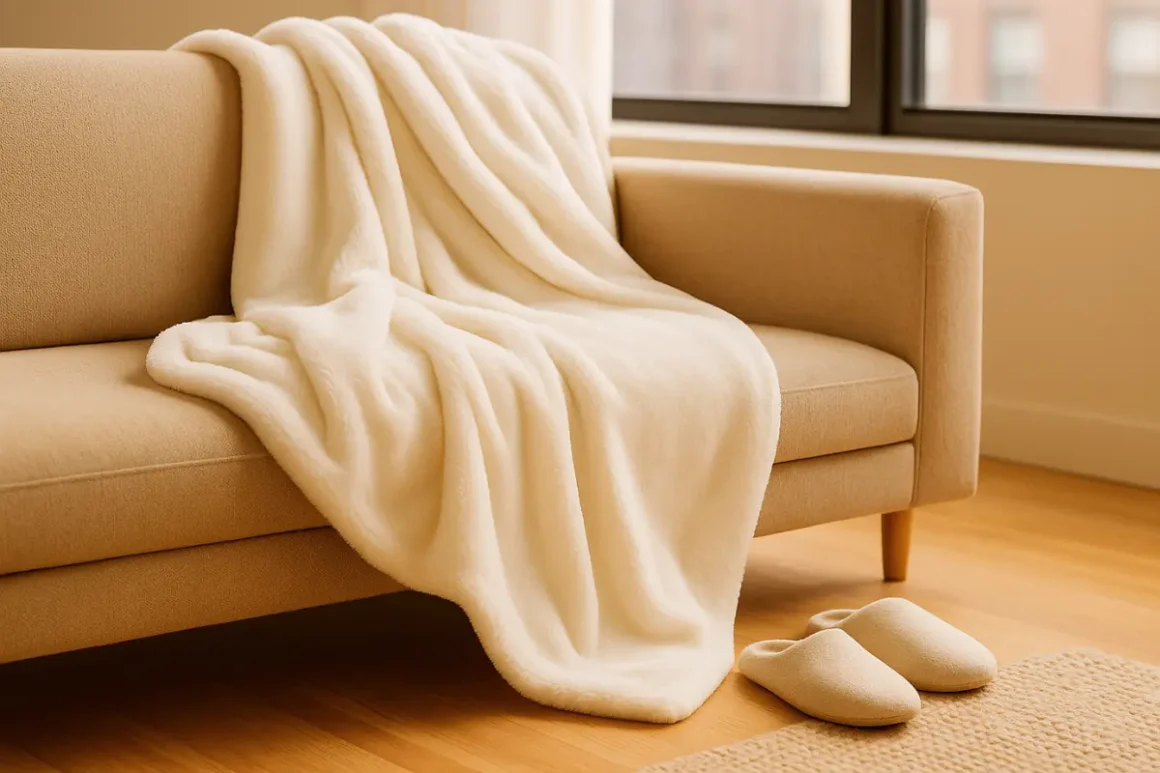
Ask yourself:
- Would I buy this again today if I saw it in a shop?
- Does this object support how I actually live, or who I thought I might be?
You don’t have to be ruthless. Just honest.
When you do bring something new in—a throw, a board, a carafe, a candle—welcome it like a guest. Decide where it will live, how often you’ll use it, and what it’s quietly replacing. That’s how a home becomes refined over time, not just filled.
If you’re drawn to a quiet reset that includes your days as well as your rooms, Refined Renewal explores the same idea through rituals and small, supportive objects.
If you’d like a small, tangible place to begin, the pieces below are a quiet way to let your nightstand, surfaces, and evenings reflect the ideas in this guide.
Objects for a Quiet Home Reset
A small edit of objects that quietly support the surfaces, materials, and rituals in this essay—pieces that earn their place by being used every day.

LSA International — Borough Bedside Carafe & Tumbler
Keeps water within reach and makes the nightstand feel quietly composed.
Shop
Bluecorn — Beeswax Tumbler Candle
Soft golden light and a faint honey warmth, without heavy fragrance.
Shop
French Kitchen Marble Tray — Crate & Barrel
Gives keys, a carafe, or a candle a defined home so surfaces feel edited, not bare.
Shop
Jenni Kayne — Alpaca Basketweave Throw
Anchors a room with texture and warmth, whether it lives on the sofa, a reading chair, or the end of the bed.
ShopFor you: a robe you’ll actually wear
Not every reset lives on a surface. If you like a wearable layer as part of your evening ritual, this robe adds that same quiet softness to you—lightweight, textured, and easy to live in long after January.

Parachute — Cloud Cotton Robe
A year-round robe with real presence—soft, absorbent, and structured enough to feel like getting dressed, not just covered up.
Shop the robe
Where to Begin
If this all feels like a lot, start small:
- Clear and reset one surface—a nightstand, coffee table, or kitchen corner.
- Choose one material to repeat more intentionally this month—linen, glass, or wood.
- Make one evening or morning ritual more considered with light, scent, and a single object you already own.
Quiet luxury at home isn’t about creating a showroom. It’s about creating rooms that support how you move through your days: a carafe that keeps you hydrated, a candle that marks the end of work, a robe and room shoes that tell your body it’s time to exhale.
Over time, those small choices are what make a home feel expensive—not because of the price tags on each piece, but because of the care behind them.
Quiet luxury at home is built in layers.
If this way of thinking resonates, these pieces show how it carries through the rest of the home—light, texture, and small rituals that make a space feel settled.
If you’d like more calm, practical ideas to layer in over time, you can keep exploring the Minimalist Host Gifts Under $100 edit for objects that work quietly in the background.
With quiet confidence, in your inbox.
Monthly notes on quiet luxury in your wardrobe, home, and daily rituals—plus the latest mini edits, before they hit the site.

