Discomfort rarely announces itself as pain. More often, it shows up as small interruptions: a sleeve that twists, a hem you keep tugging, a waistband you feel every time you sit back down.
Over time, those moments add up. Not dramatically—but enough to pull you out of your work, your thinking, your presence.
The Comfort Audit is a way to make those patterns visible. In a few minutes, it helps you identify which pieces support your day—and which quietly ask for too much attention.
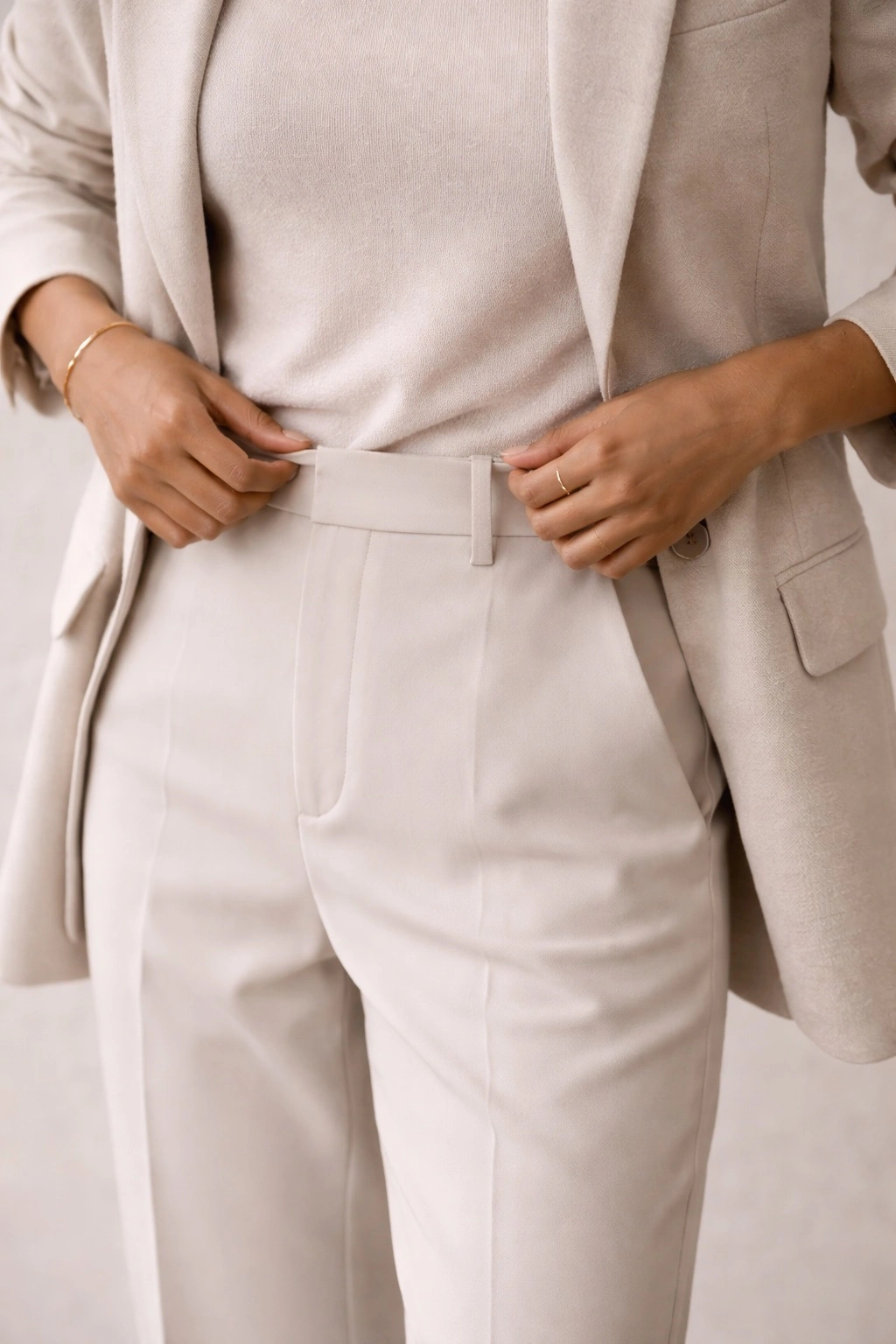
What the Comfort Audit Is (and Isn’t)
The Comfort Audit is not about softness, loungewear, or lowering standards.
It isn’t a permission slip to dress down, and it isn’t a checklist for buying new things.
Instead, it’s a way to observe how your clothes behave once the day is in motion.
What the Comfort Audit is
- A noticing tool. It helps you identify where your attention drifts because your clothing asks for adjustment, awareness, or correction.
- A fit-and-function check.The audit looks at how garments sit when you walk, sit, reach, stand, and stay still—especially over several hours.
- A decision filter. Over time, it clarifies which pieces earn repeat wear and which ones quietly cost more energy than they’re worth.
- A support for authority. When clothing recedes, presence sharpens. The audit makes space for that shift.
What the Comfort Audit isn’t
- Not a comfort-vs.-polish tradeoff. A piece can feel easeful and read composed. Discomfort is often a fit or proportion issue—not a formality issue.
- Not about perfection. Every garment moves. The question is whether movement feels neutral—or interruptive.
- Not a one-time exercise. The audit works best when repeated lightly, over time, as seasons and roles shift.
Think of it less as a verdict, and more as a quiet diagnostic—one that lets you build ease without losing intention.
How to Use the Comfort Audit
This isn’t something you do standing in front of a mirror.
The Comfort Audit works best midday, once you’ve been moving, sitting, thinking, and interacting for a while. That’s when friction shows up—quietly.
Use it like this:
- Choose one outfit you’re already wearing.
- Set aside five uninterrupted minutes.
- Answer the questions quickly, without fixing anything yet.
You’re not looking for perfection. You’re looking for patterns.
If something pulls your attention—even briefly—note it.
If a piece disappears on your body and stays that way, note that too.
At the end, don’t overhaul the outfit. Adjust one variable:
- a different shoe,
- a different base layer,
- a small tailoring tweak,
- or a swap you already own.
Then move on with your day.
Over time, the audit reveals which pieces support you consistently—and which ones ask you to manage them. That’s where comfort stops being casual and starts being functional.
With that in mind, here are the questions that tend to surface friction fastest.
A quick tool
The 5-Minute Comfort Audit
Answer quickly. No perfection—just signal. If anything pulls your attention away from the day, it counts.
1) Physical friction
- Do I feel any pinching at the waist, hips, underarms, or toes?
- Do I feel heat, itch, static, or cling by midday?
- Do I avoid lifting my arms, bending, or sitting because of this outfit?
- Does anything ride up, gap, or twist as I move?
2) Psychological friction
- Do I keep checking or adjusting (hem, waistband, straps, neckline)?
- Do I feel “a little exposed” or “a little sloppy” in this?
- Would I feel fine running into a colleague unexpectedly?
- Do I feel like myself—or like I’m managing the outfit?
3) Visual friction
- Does it crease, shine, or show outlines in a way that distracts me?
- Is the silhouette intentional (even if relaxed)?
- Does the fabric hold its shape, or does it collapse by noon?
- Do the proportions look deliberate from the side and back?
Rule: If you answered “yes” to more than two questions, the outfit isn’t “casual”—it’s friction-heavy. Adjust one variable and retest.
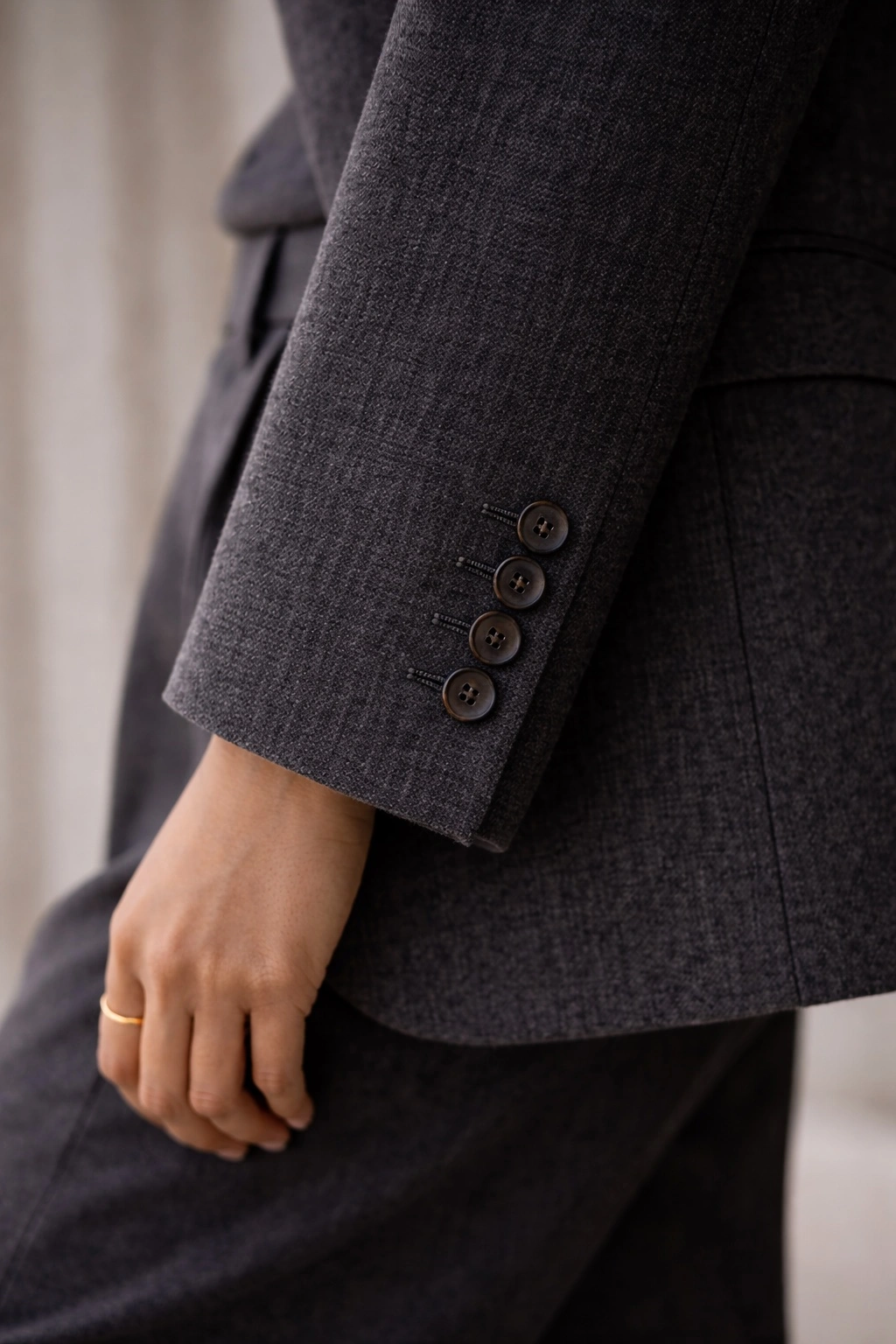
If You Answered “Yes,” Here’s the Fix
The goal of a comfort audit isn’t to eliminate discomfort entirely — it’s to remove the avoidable friction that drains attention.
For each “yes,” the fix is rarely dramatic. It’s usually structural.
If you’re constantly adjusting…
The fix:
Replace softness with support.
Look for waistbands that hold their shape, knits with recovery, and layers that anchor the outfit (a structured cardigan, blazer, or overshirt).
Adjustment is often a sign that a garment lacks internal structure — not that it’s “too dressy.”
If something feels fine standing, but not sitting…
The fix:
Prioritize seated comfort over mirror comfort.
Choose mid-rise trousers with stretch woven in (not added elastane that bags), longer tops that don’t pull, and shoes that remain comfortable after an hour at a desk.
Authority is sustained posture — not how you look for thirty seconds.
If the outfit feels mentally noisy…
The fix:
Reduce competing signals.
Limit contrast, narrow your color story, and remove one styling element (extra layer, accessory, or sharp silhouette clash).
Ease often comes from less information, not better pieces.
If you feel “presentable” but not settled…
The fix:
Build repetition.
Choose one outfit formula that works and wear it again — with small variations only.
Comfort deepens when your body knows what to expect.
If the outfit reads casual when you need authority…
The fix:
Upgrade the edges, not the center.
Swap in a better shoe, a sharper outer layer, or a more intentional fabric. Keep the base simple.
Authority is usually decided at the perimeter.
FAQ
A few quiet clarifications—so “comfortable” becomes supportive, not sloppy.
Is comfort the same as casual dressing?
No. Comfort is about how clothing supports your body and attention. Casual is a style category. They can overlap, but they’re not interchangeable—comfortable clothing can still read polished and capable.
Why do “easy” outfits still feel off?
Because ease without structure often creates friction: pulling, sagging, readjusting, or visual noise you manage all day. If you’re constantly thinking about the outfit, it isn’t actually easy.
Can comfortable outfits still look polished for work?
Yes. Polished comfort usually comes from proportion, fabric-hand, and one anchoring element (a structured layer, a sharper trouser, a grounded shoe). You’re not “dressing up”—you’re removing friction.
Do I need new clothes to fix this?
Usually, no. Start by editing what you already own: keep what fits well, tailor what’s close, and replace only the pieces that create the most friction. One upgrade in the right place often does more than five new items.
What’s the fastest “instant upgrade” if an outfit feels too casual?
Upgrade the edges, not the center: swap the shoe (loafer/boot over soft sneaker), add a structured layer, or choose a fabric with more weight and recovery. Authority is often decided at the perimeter.
If you only change one thing, change what touches the ground or what frames the shoulders.
How do I know when an outfit is working?
You stop adjusting it—and you stop thinking about it. The best “easy” outfits feel settled in motion, seated, and under real life (commute, desk, errands), not just in the mirror.
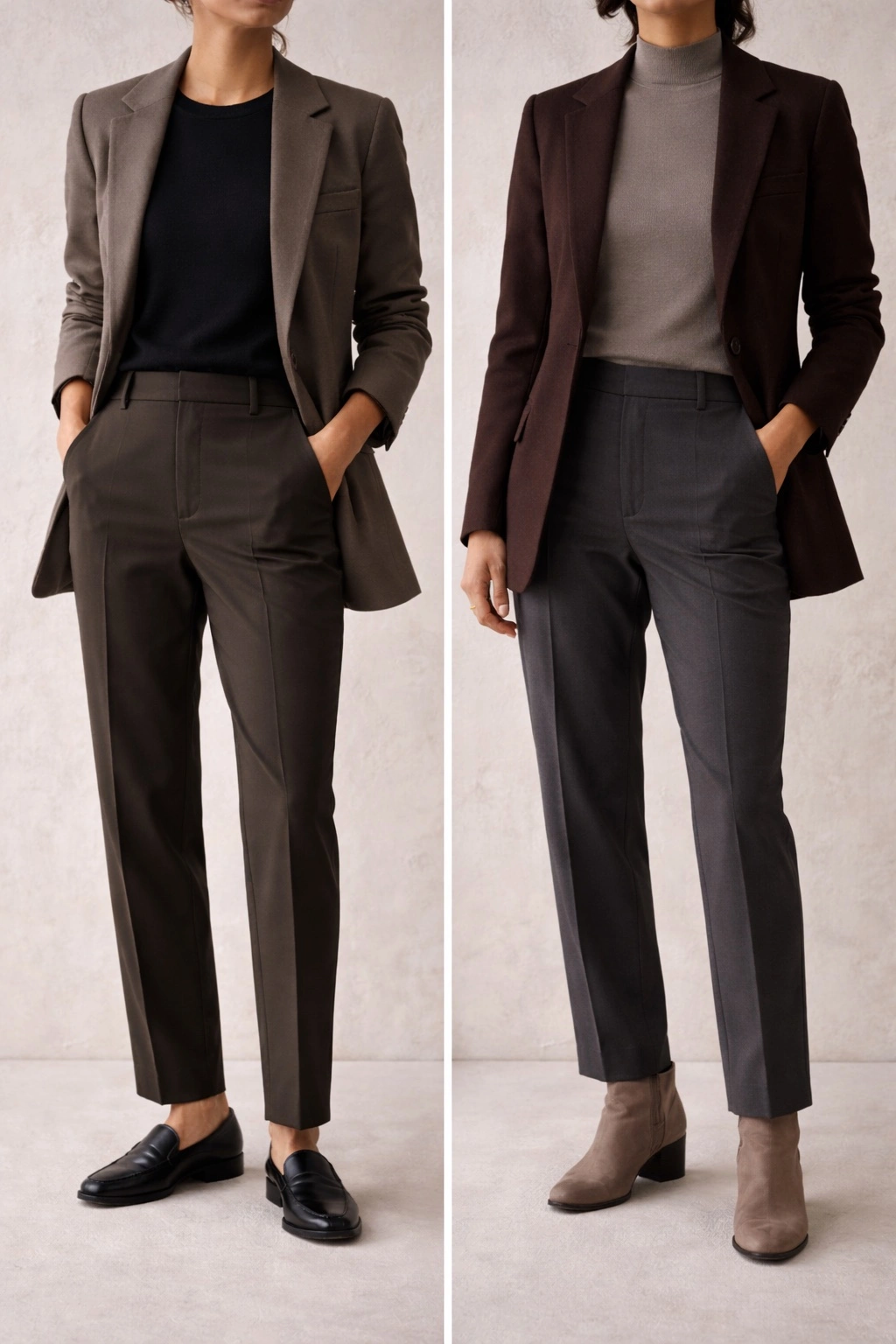
Three Outfit Formulas That Feel Comfortable and Polished
These are not trends — they’re templates you can return to.
1. Soft Base + Structured Layer + Grounded Shoe
- Fine-gauge knit or tee
- Blazer, coat, or chore jacket with shape
- Loafer, boot, or sleek flat
Why it works: softness against the body, structure for presence.
2. Matching Neutrals + One Texture Shift
- Knit + trouser in the same tone
- Add contrast through fabric (wool + silk, knit + leather)
Why it works: visual calm reduces mental load.
3. Easy Dress + Anchoring Layer
- Knit or woven dress
- Coat, cardigan, or tailored layer worn open
Why it works: one-piece ease with authority at the frame.
Instant Upgrades That Change the Feeling Immediately
If you don’t want to rethink your whole closet, start here:
- Shoes: swap soft sneakers for a loafer or low boot
- Outer layer: add one piece with weight and shape
- Fabric: replace one flimsy knit with something that holds form
- Fit: tailor one “almost right” piece — especially trousers
One upgrade at the right point of contact often does more than five new items.
A Quiet Close
If your clothes are meant to support a full day — thinking, deciding, leading — they should ask very little of you once they’re on.
Comfort isn’t casual when it’s intentional.
It’s infrastructure.

