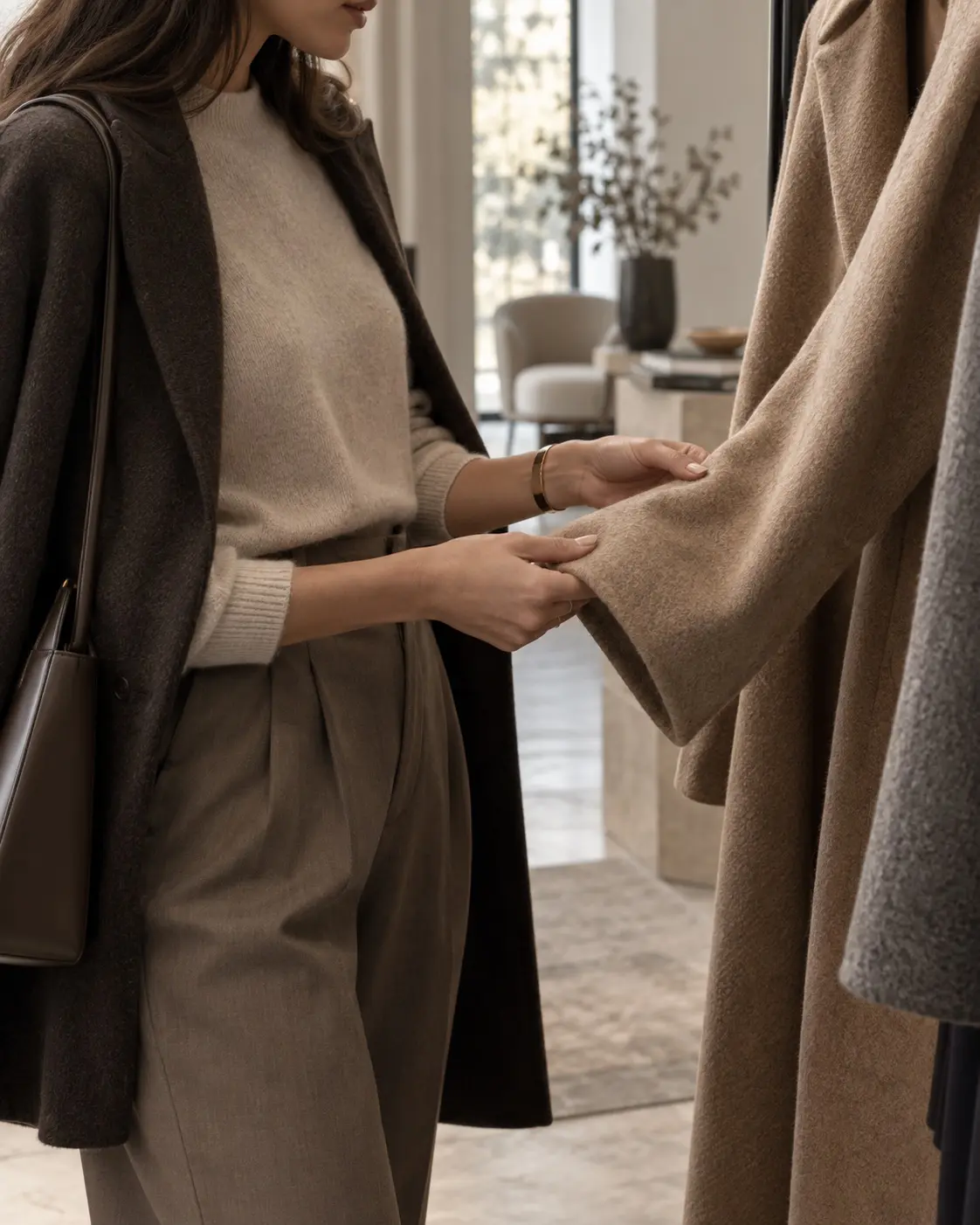
A clothing label can tell you that a sweater is cashmere, a shirt is cotton, or a blouse is silk. What it cannot tell you is whether the fabric is particularly good.
That distinction matters because fiber names have become shorthand for quality. We learn to look for wool instead of acrylic, linen instead of polyester, silk instead of satin. Those instincts can be useful, but they are only a starting point.
Learning how to judge fabric quality means looking beyond the fiber name to how the cloth is made, how it behaves, and whether it is suited to the garment.
Two garments can both be labeled 100% cotton and differ dramatically in how they feel, drape, wear, and age. The same is true of wool, linen, silk, and even cashmere. Fiber quality varies. So does the way a fiber is spun, woven or knitted, finished, and ultimately turned into cloth.
In other words, the label tells you what the fabric is made from. It does not tell you how well that fabric was made.
Learning to recognize the difference is one of the more useful skills you can develop as a shopper. It makes it easier to look past a familiar fiber name, a high price, or an impressive brand and pay attention instead to the garment in front of you.
Because good fabric should do more than feel luxurious for thirty seconds in a fitting room.
It should behave well once you actually wear it.
Start With the Label—but Don’t Stop There
The care label is still worth reading.
Fiber content gives you clues about how a garment may feel, move, breathe, wrinkle, stretch, insulate, and require care. If you are comparing two sweaters, knowing that one is wool and the other is cashmere tells you something useful. If a shirt is linen rather than cotton, you can reasonably expect a different hand, drape, and relationship with wrinkles.
But fiber content is not the same thing as fabric quality.
It helps to separate three ideas that often get collapsed into one:
The fiber is the raw material—cotton, wool, silk, linen, cashmere.
The fabric is what happens after those fibers are processed, spun into yarn, and woven or knitted into cloth.
The garment is the finished piece, with its own construction, seams, lining, proportions, and finishing.
A good fiber can become mediocre fabric. Beautiful fabric can be undermined by poor construction. And a garment made from an unglamorous fiber blend can sometimes perform better than one made from a more prestigious material.
That is why “100% cashmere” should not end the evaluation any more than “100% cotton” should.
Instead, treat the label as the beginning of a conversation.
Once you know what the garment is made from, start looking at how the cloth behaves.
Does it have enough density for what it is meant to do?
Does the surface look even and healthy rather than excessively fuzzy, limp, or slick?
If you gently compress the fabric, does it recover?
When the garment hangs, does the cloth fall naturally or fight against itself?
Does it feel appropriate to its purpose—a fine shirt with enough substance to hold its shape, a sweater soft enough to wear but resilient enough not to collapse after a season?
These questions are more revealing than a fiber name alone.
And they are also what make fabric quality easier to learn than it initially sounds. You do not need to become a textile expert or memorize every grade of every fiber.
You need to learn what to notice.
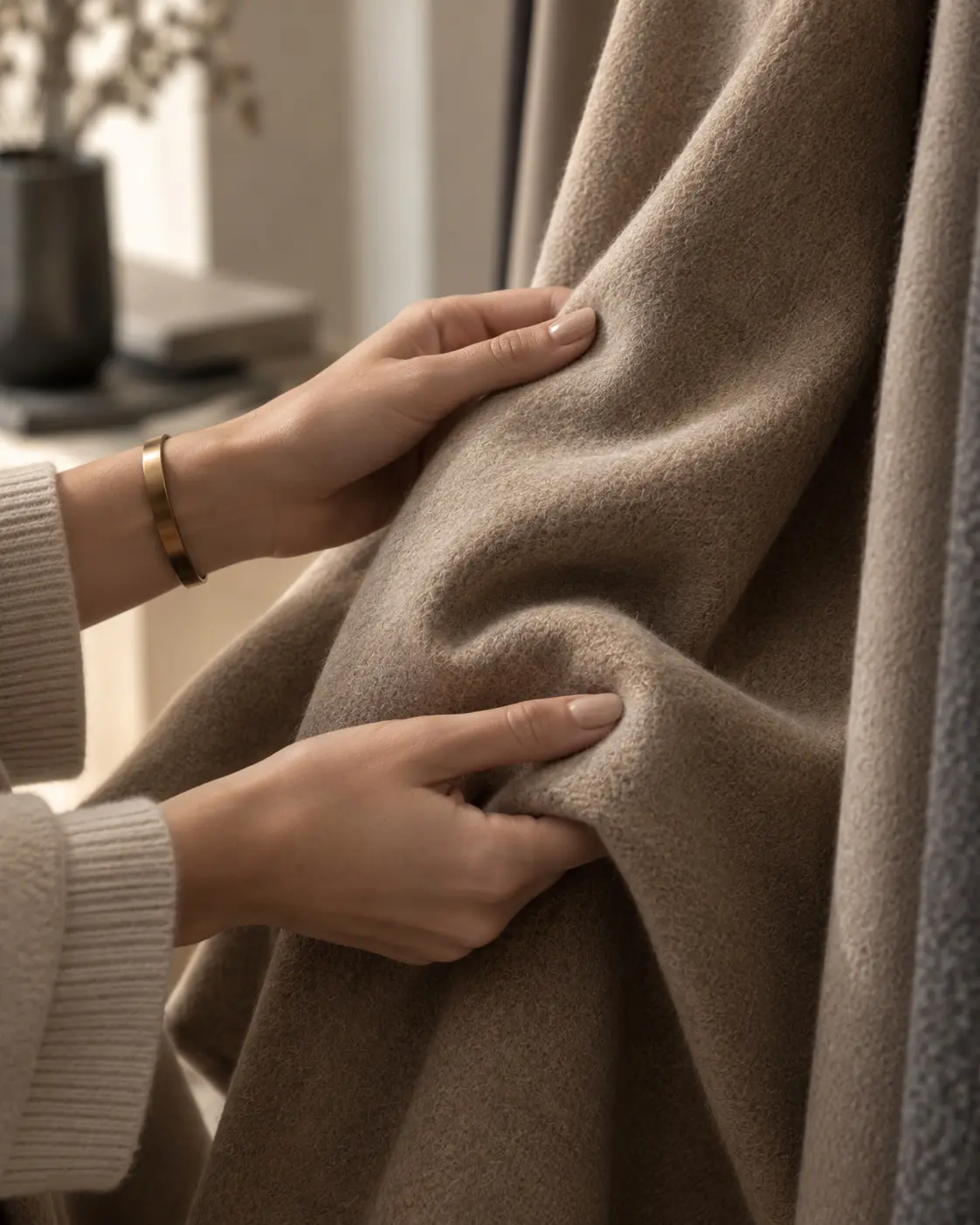
Learn to Read the Fabric with Your Hands
A clothing label can tell you that a sweater is cashmere, a shirt is cotton, or a blouse is silk. What it cannot tell you is whether the fabric is particularly good.
That distinction matters because fiber names have become shorthand for quality. We learn to look for wool instead of acrylic, linen instead of polyester, silk instead of satin. Those instincts can be useful, but they are only a starting point.
Two garments can both be labeled 100% cotton and differ dramatically in how they feel, drape, wear, and age. The same is true of wool, linen, silk, and even cashmere. Fiber quality varies. So does the way a fiber is spun, woven or knitted, finished, and ultimately turned into cloth.
In other words, the label tells you what the fabric is made from. It does not tell you how well that fabric was made.
Learning to recognize the difference is one of the more useful skills you can develop as a shopper. It makes it easier to look past a familiar fiber name, a high price, or an impressive brand and pay attention instead to the garment in front of you.
Because good fabric should do more than feel luxurious for thirty seconds in a fitting room.
It should behave well once you actually wear it.
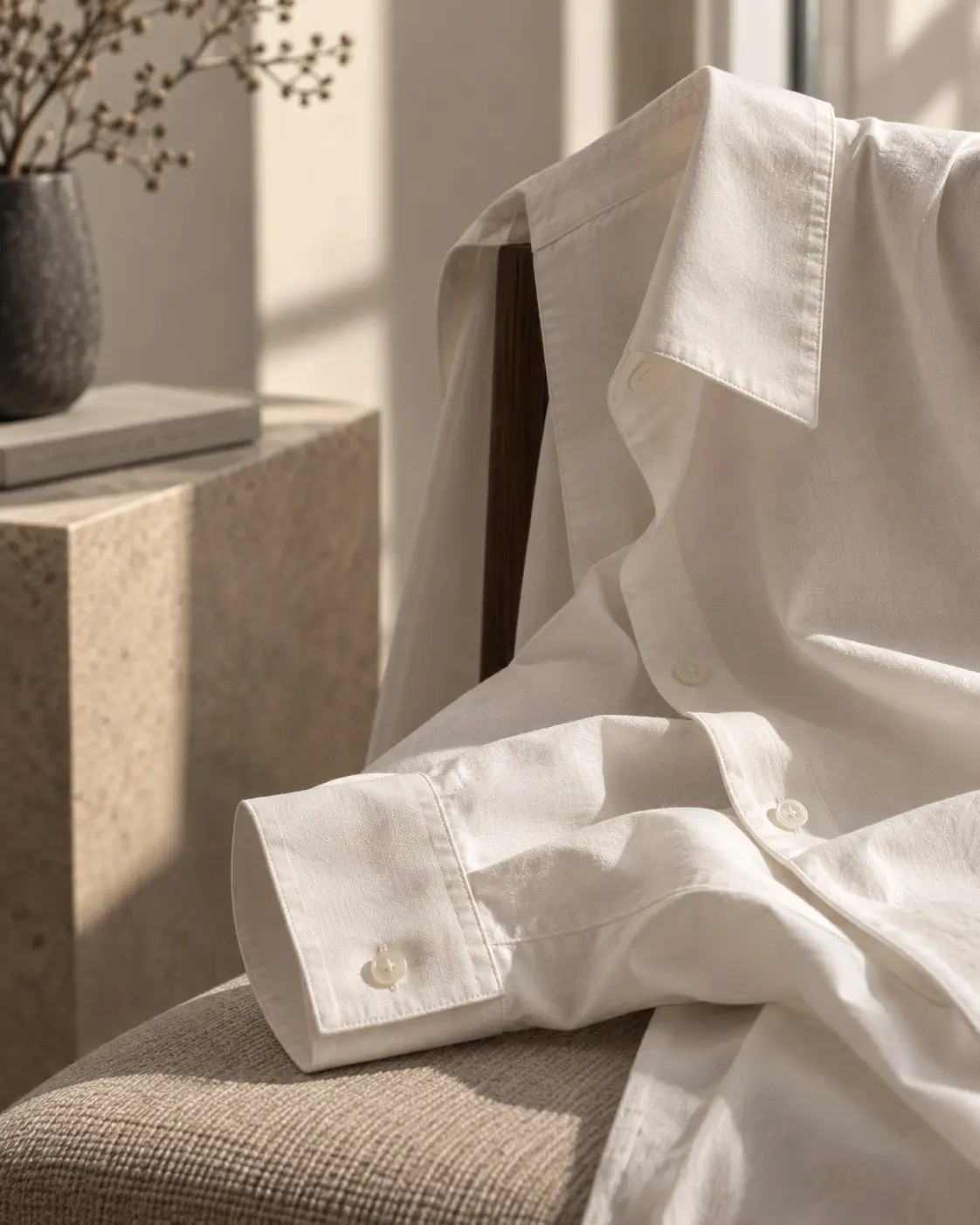
Cotton: Look Beyond “100% Cotton”
Cotton is familiar enough that it is easy to stop evaluating it.
A label that reads 100% cotton can feel reassuring, particularly when it is sitting beside garments made from more complicated fiber blends. But cotton comes in an enormous range of qualities. A crisp poplin shirt, a soft T-shirt, a dense chino, and a fine cotton knit may all contain the same fiber while behaving very differently.
The first distinction begins with the cotton fiber itself.
Cotton fibers vary in length and fineness. Longer fibers can generally be spun into smoother, stronger yarns with fewer fiber ends protruding from the surface. That can contribute to fabric that feels smoother, wears well, and is less prone to developing the rough or fuzzy surface associated with lower-quality cloth.
You may see terms associated with longer-staple cotton on labels and product descriptions. They can be useful clues, but they should not end your assessment either. The quality of the yarn, the density and structure of the weave or knit, and the finishing of the fabric still matter.
So instead of looking only for a particular cotton name, look at the cloth itself.
Run your hand over the surface. A good cotton fabric often feels clean and consistent, even when it is intentionally textured. You should not see an excessive amount of fuzz or loose fiber on a new garment. In a shirt or finely knitted piece, the surface may feel remarkably smooth without feeling slick or coated.
Then consider density.
Hold the fabric toward the light. A lightweight cotton does not have to be opaque, but the weave or knit should generally look even. If an everyday shirt fabric appears unexpectedly sparse or irregular, or you can easily see areas where the structure looks weaker than others, the garment may not tolerate repeated wear particularly well.
Give the fabric a gentle rub between your fingers as well.
Does it feel like cloth with some integrity, or does it feel unusually thin and papery? A beautifully fine cotton can be very lightweight, so thinness alone is not the problem. The question is whether the fabric feels fine or merely flimsy.
That difference becomes easier to recognize with practice.
Fine cotton tends to retain a sense of structure despite its lightness. Flimsy cotton often seems to collapse as soon as you handle it.
For shirts and trousers, notice how the fabric responds when you bend or compress it. Some cottons are intended to be crisp, while others are washed for softness. Neither treatment is inherently better. But crispness should not feel brittle, and softness should not come at the expense of all body and resilience.
This is also where extreme softness deserves a little skepticism.
A cotton T-shirt that feels extraordinarily soft on the rack may indeed be beautifully made. But softness can also come from finishing processes that create an appealing first impression without necessarily telling you how the fabric will behave after repeated washing.
Ask the more useful question:
Does the fabric feel good because it is well made, or simply because it has been made to feel good today?
When you are shopping online, of course, you lose most of these tactile clues. In that case, the product description becomes more important. Look beyond “100% cotton” for information about the type of fabric—poplin, twill, jersey, oxford, voile, sateen—and, when available, its weight, weave, yarn, or construction.
Those details tell you much more about what the garment may actually feel like and how it is likely to perform.
Ultimately, good cotton does not have one particular texture or weight.
A summer voile and a substantial twill should not feel alike.
What they should share is integrity: an even structure, a surface appropriate to the fabric, enough strength for their intended use, and a hand that feels deliberate rather than depleted.
“100% cotton” tells you where to begin.
The fabric tells you whether to keep going.
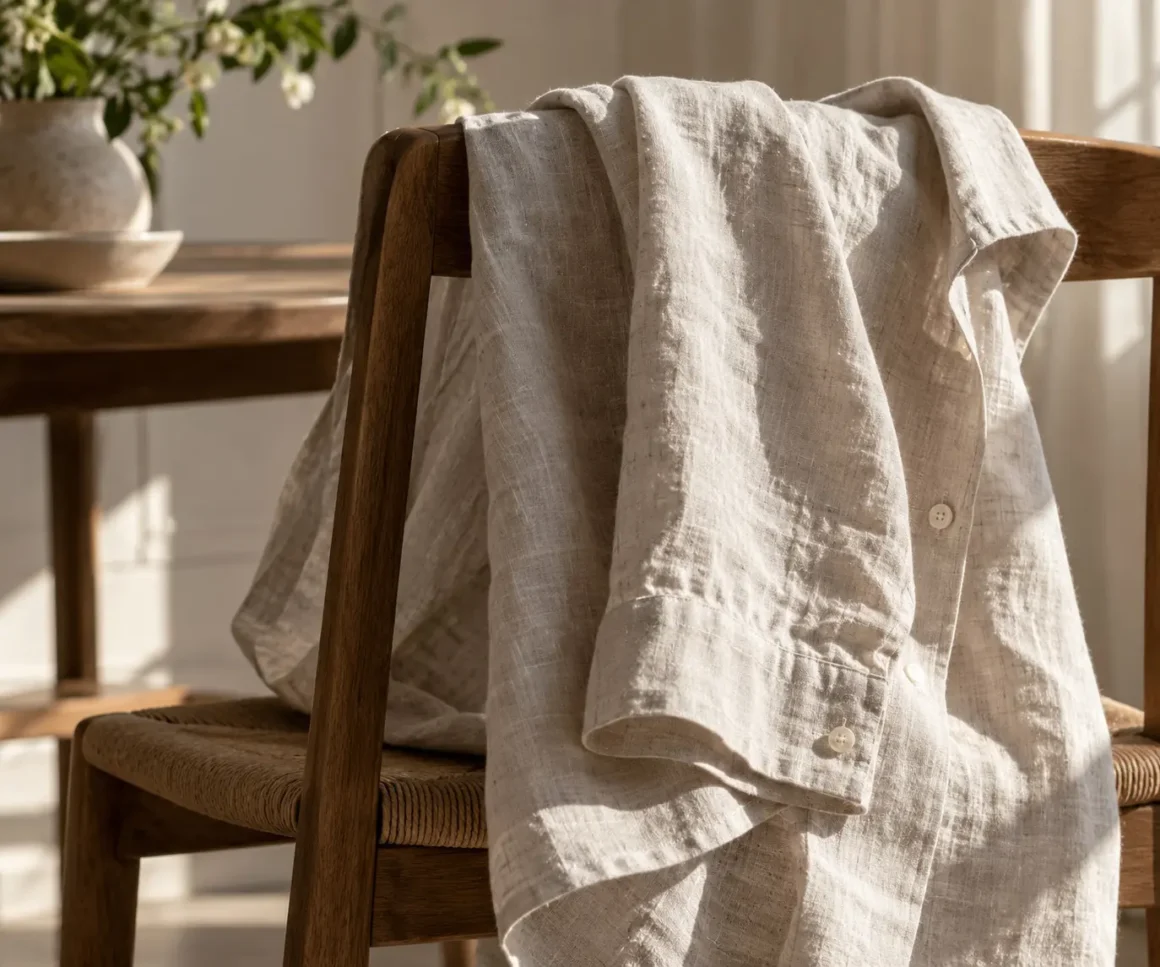
Linen: Imperfection Is Not Poor Quality
Linen can look a little unruly even when it is excellent.
The fiber comes from flax, and good linen often has visible texture, small irregularities, and the occasional slub running through the cloth. Those variations are part of its character. They should not automatically be mistaken for flaws.
What matters is whether the fabric still feels sound, balanced, and well constructed.
Start by looking at the weave.
A lightweight linen may be open and airy, while a heavier linen can feel dense and substantial. Neither is inherently better. But the structure should look reasonably even for the style of fabric. Large accidental gaps, weak-looking areas, or sections that seem markedly thinner than the rest can be signs that the cloth may not wear particularly well.
Then feel it.
New linen can range from crisp to surprisingly soft. It does not need to feel silky to be good, and an initially firm hand is not necessarily a problem. One of linen’s pleasures is that it tends to soften with washing and wear while retaining its distinctive texture.
What you want to avoid is confusing softness with weakness.
A soft linen should still feel like it has some substance. If the fabric seems limp, overly loose, or fragile before it has been worn, softness is not doing much for you.
Give the fabric a gentle pull across the grain and then release it.
Linen does not have the springy recovery of wool, so do not expect it to bounce immediately back into place. Instead, notice whether the cloth feels stable and whether the weave remains orderly rather than shifting dramatically under very little pressure.
Wrinkles require a similar change in perspective.
Linen wrinkles. That is not evidence of poor quality; it is part of the fiber’s behavior.
The more useful question is how the fabric wrinkles.
A good linen often develops broad, relaxed creases that become part of the garment’s appearance. Very thin or weak linen may collapse into a mass of sharp crumpling and lose much of its shape. The difference is difficult to judge from one wrinkle alone, but weight, density, and construction usually tell the larger story.
Look at the surface as well.
Slubs and slightly uneven yarns can be completely normal. What deserves more scrutiny is excessive loose fiber, snagging, pulled threads, or areas that already look abraded. Natural irregularity should make the cloth interesting, not unstable.
And as with cotton, consider what the linen is being asked to do.
A loose summer shirt can be light and relaxed. A pair of trousers needs enough weight and structure to withstand sitting, movement, and friction. A linen blazer needs considerably more body than a beach cover-up.
The same fiber can be beautiful in all three garments, but the fabric should be built for the job.
When shopping online, look for more than simply 100% linen. Fabric weight, whether the linen is garment-washed, the type of weave, and descriptions such as lightweight or midweight can help you anticipate how the piece will behave.
Linen is a particularly good reminder that quality does not always look perfect.
Sometimes the better question is not whether the fabric is flawless, but whether its imperfections are inherent to the material or evidence that the cloth itself is weak.
Good linen should look lived-in eventually.
It should not look worn out before you buy it.
Wool: Look for Resilience
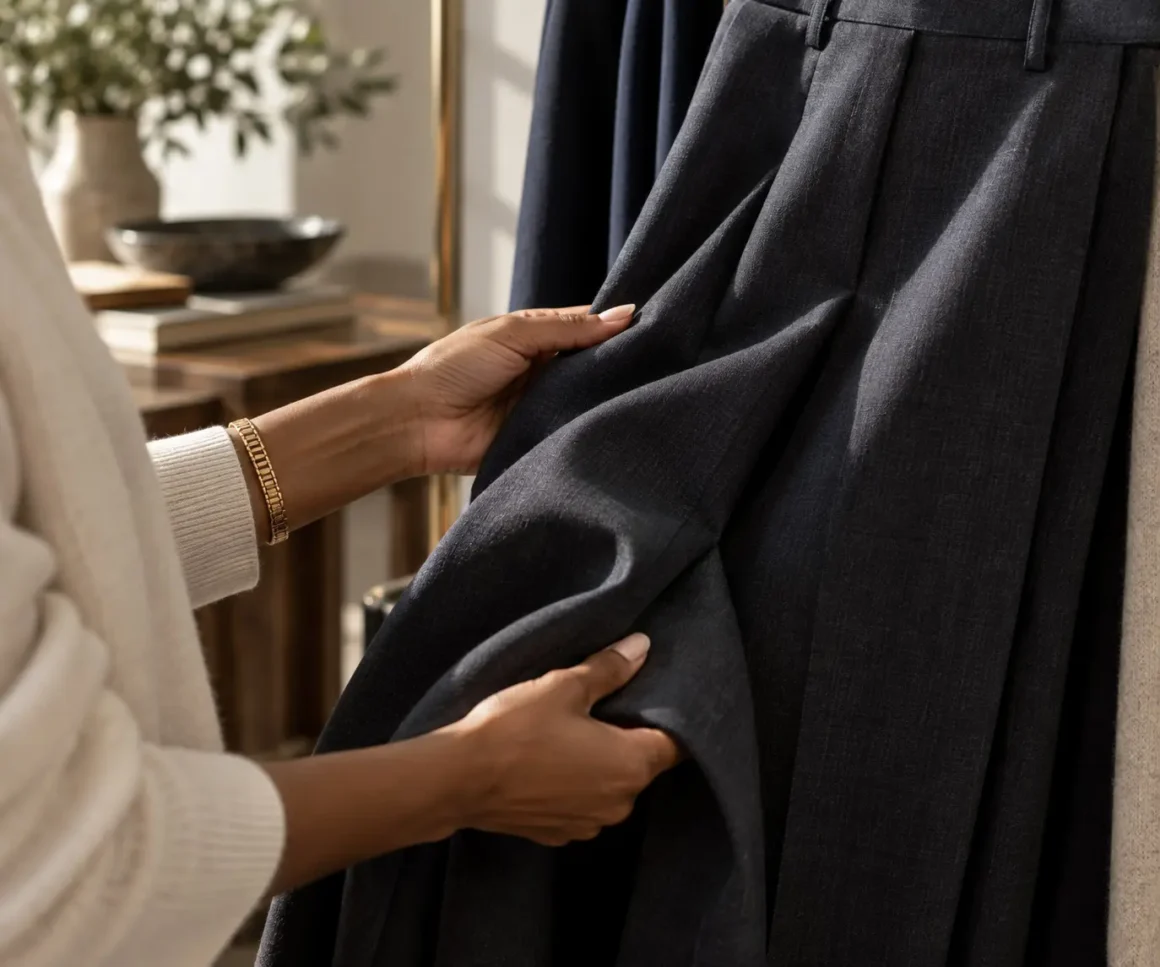
Wool should not be judged by softness alone.
That can be counterintuitive, especially because so much marketing treats softness as the defining sign of quality. But wool is a broad category, and different types are meant to feel different. A fine merino knit may feel smooth and soft against the skin. A sturdy wool coat may have a firmer, drier hand and still be excellent.
The more useful quality to notice is resilience.
Wool fibers naturally have a degree of crimp and spring, which helps wool fabrics recover from compression and hold their shape. You can often feel this simply by handling the garment.
Take a small section of the fabric in your hand, compress it gently, and release it.
A good wool fabric often seems to have some memory. It may wrinkle temporarily, but it should not immediately look exhausted. In a knit, the fabric should feel responsive rather than limp. In a woven wool trouser or coat, the cloth should generally retain enough body to support the garment.
This does not mean every wool fabric should feel thick or stiff.
Fine wool suiting can be remarkably light and fluid. A merino sweater can be soft and flexible. The question is whether that softness or lightness comes with structure appropriate to the piece.
Look closely at the surface, too.
A little texture or halo can be completely normal depending on the wool and the finish. What deserves more scrutiny is excessive fuzziness, loose fibers, or a surface that already looks heavily abraded. If a new sweater appears as though it has been worn for months, that is worth noticing.
You can also gently rub a small area of the fabric between your fingers.
Some movement of fibers is normal, especially with softer knits, but excessive shedding or immediate fuzzing may suggest that the surface will change quickly with wear.
Pay attention to the knit or weave itself.
In sweaters, look for an even knit with consistent tension and no obvious weak or unusually open areas. Stretch the fabric very gently and see whether it returns toward its original shape. A knit that stays distorted after minimal handling may not hold up particularly well at elbows, cuffs, or other areas that experience repeated movement.
For woven wool, notice how cleanly the cloth hangs.
Good wool often drapes beautifully because it combines structure with movement. A trouser should fall rather than cling awkwardly. A coat should have enough substance to hold its line without feeling board-like. A blazer should move with the body while still recovering its shape.
And then there is softness.
Soft wool is lovely when softness makes sense. A sweater worn directly against the skin should feel comfortable. But a fabric does not become better simply because it feels softer.
Very soft wool can sometimes be more delicate. A more robust wool may feel slightly firmer but prove better suited to trousers, outerwear, or a garment expected to tolerate frequent wear.
The useful question is not:
Is this wool soft?
It is:
Is this wool well suited to what this garment is asking it to do?
When shopping online, look for information about the type of wool and the construction rather than stopping at the word wool. Terms such as merino, lambswool, worsted, or boiled wool can offer clues about how the fabric may feel and behave, although they are still not guarantees of quality.
As always, context matters.
A fine merino knit, a tailored wool trouser, and a winter coat should not feel alike. But all three should have a sense of integrity and recovery.
Good wool should feel as though it can be worn, compressed, moved in, and allowed to rest—and still remember what it is supposed to be.
Cashmere: Softness Alone Can Mislead You
Cashmere may be the fiber most likely to persuade us with a single touch.
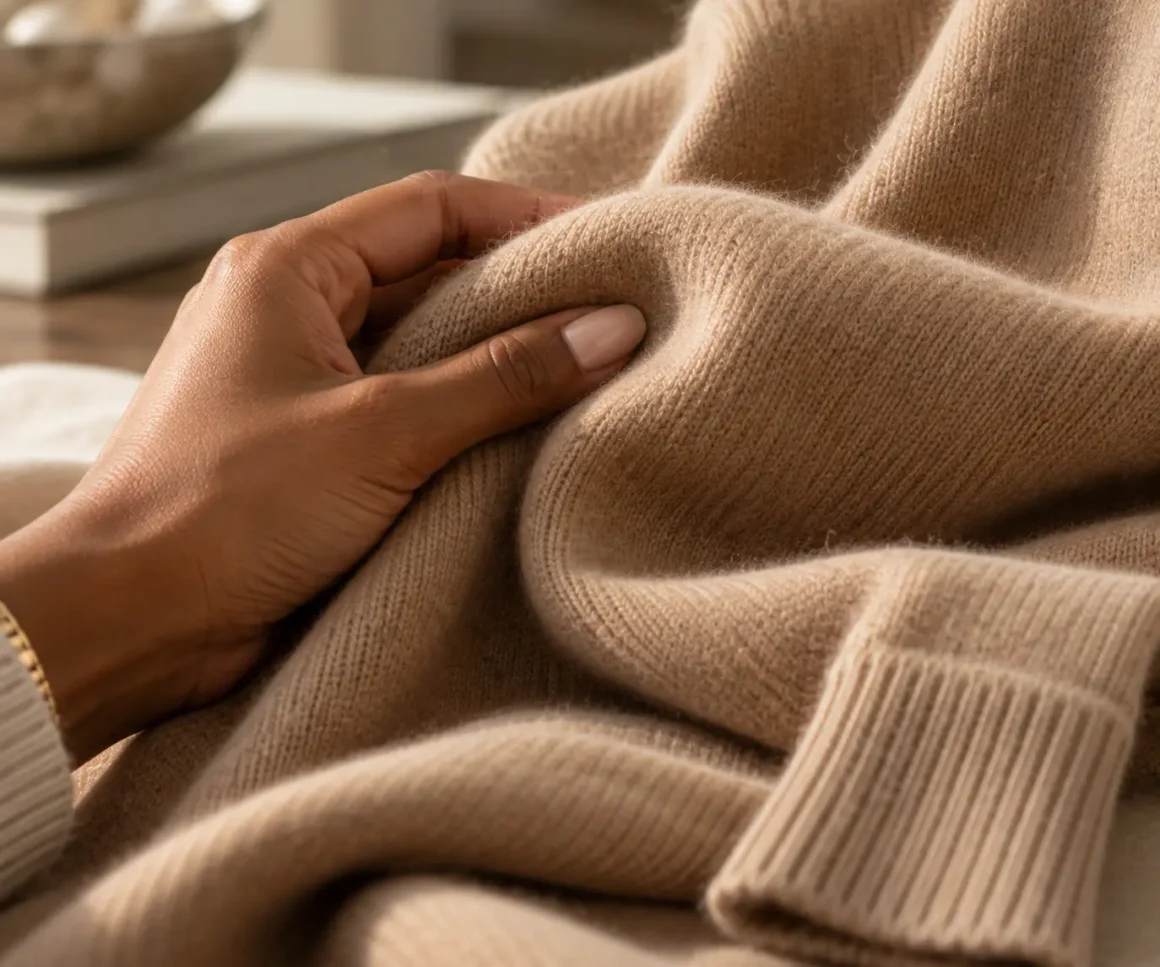
A very soft sweater feels luxurious immediately, which makes softness easy to mistake for proof of quality. But cashmere can be exceptionally soft and still pill quickly, lose its shape, shed fibers, or look tired after surprisingly little wear.
So with cashmere, softness is worth noticing—but it should not be the only thing you notice.
Start with the knit itself.
Take a section of the sweater gently between your fingers. Good cashmere should usually feel soft but substantial enough to have some body. A fine-gauge sweater may be lightweight, but it should not feel strangely empty, loose, or fragile.
Hold it toward the light and look at the knit. You are looking for consistency rather than thickness: an even structure without obvious weak areas, unusually loose sections, or places where the knit seems more open than the rest.
Then gently stretch a small portion of the sweater and release it.
Cashmere is not elastic in the way a performance fabric is, but a well-made knit should have enough resilience to move back toward its original shape. If the fabric remains noticeably distorted after very gentle handling, that may be a clue that it will struggle with elbows, cuffs, and other areas that experience repeated movement.
Now look at the surface.
A slight halo is normal. Cashmere is made from very fine fibers, and some softness at the surface is part of what gives the material its characteristic feel.
But more fuzz is not necessarily more luxury.
Some cashmere is heavily brushed or finished to create an exceptionally soft first impression. That can make a sweater feel wonderful in the store while bringing more loose fiber to the surface—fiber that may later shed or pill.
This is one reason extremely fluffy cashmere deserves a second look rather than automatic admiration.
Fiber length matters here as well. All else being equal, longer cashmere fibers can be spun into stronger, more stable yarns with fewer loose ends working their way to the surface. Shorter fibers may contribute to faster fuzzing and pilling.
That does not mean a good cashmere sweater will never pill.
Pilling is not, by itself, proof of poor quality. Even excellent cashmere can pill where friction occurs—under the arms, along the sides of the body, beneath a handbag strap. The more useful distinction is between some manageable pilling with wear and a new sweater that begins shedding or developing a heavily fuzzy surface almost immediately.
Gently rub a small area of the fabric with your fingers. You are not trying to manufacture a pill in the store. 😂 You are simply noticing whether the surface seems stable or whether fibers immediately begin lifting away from the knit.
Density matters too.
A cashmere sweater does not need to be thick to be good, but there should be a relationship between its weight and its construction. A lightweight knit can be beautifully made. What you are looking for is lightness without fragility.
This is also why terms such as two-ply can be useful but should not be treated as automatic quality grades. Ply describes how yarns are constructed; it can affect strength, weight, and feel, but it does not tell you the quality of the underlying fibers or how well the sweater has been knitted.
The same caution applies to price.
Expensive cashmere is not necessarily exceptional cashmere, just as affordable cashmere is not automatically poor. Price can reflect fiber quality and craftsmanship, but it can also reflect branding, distribution, design, or simply positioning.
The sweater itself still has to make its case.
When shopping online, that evaluation becomes harder. Look for useful information about the knit, weight, ply, gauge, or fiber sourcing when a brand provides it—but be wary of vague language that relies almost entirely on words such as luxurious, premium, or buttery soft.
Those words tell you how the sweater is being sold.
They do not tell you how it will wear.
Perhaps the best question to ask of cashmere is not “How soft is this?”
It is:
“Does this softness seem supported by a fabric that also has density, resilience, and integrity?”
Because the best cashmere should still feel beautiful after you have stopped being impressed by the first touch.
Silk: Weight and Drape Matter
Silk has its own version of the “100% cashmere” problem.
The word itself carries so much prestige that it can make us assume the fabric must be good. But silk can be dense or flimsy, fluid or stiff, beautifully woven or frustratingly delicate. The fiber name alone tells you almost nothing about how the finished cloth will behave.
Start with weight.
A good silk does not have to be heavy, but it should feel appropriate to the garment. A blouse can be light and fluid. A dress may need more substance so it hangs cleanly. A silk scarf can be fine and airy without feeling weak.
What you are looking for is not heaviness. It is enough body for the job.
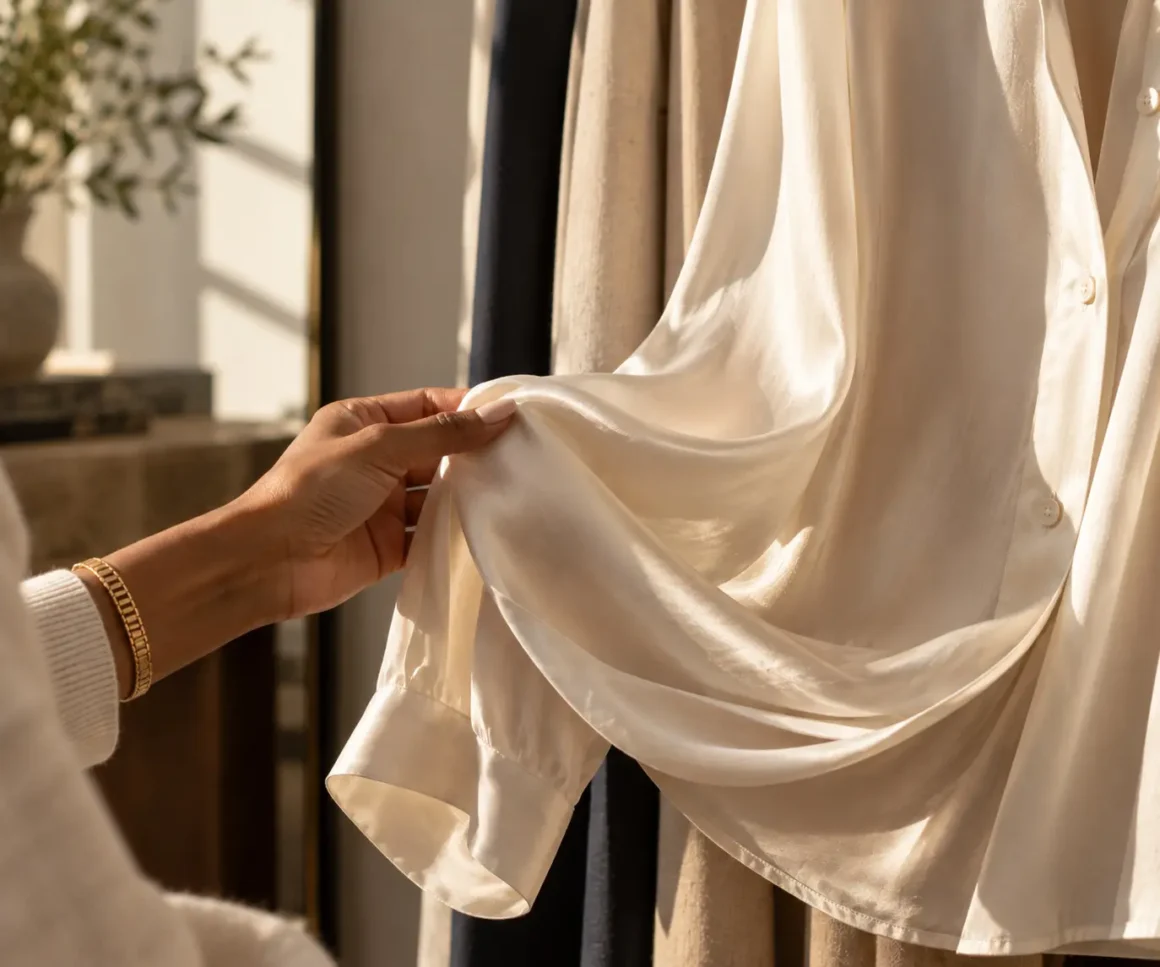
Take the fabric in your hand and let it fall.
Silk is especially revealing when you watch it move. A good silk often has a graceful, fluid drape rather than collapsing lifelessly or standing away from the body in a way that feels wrong for the design.
That movement matters because silk can look beautiful on a hanger and completely different once gravity and the body are involved.
Look at the surface closely too.
Silk can have a soft sheen, a matte finish, or something in between depending on the weave and finish. Shine alone does not indicate quality.
What matters more is whether the surface looks even and intentional.
If the fabric is supposed to be smooth, look for obvious snags, pulled threads, uneven areas, or sections that appear unusually thin. Fine silk is naturally delicate, but it should not already look compromised before it has been worn.
Then hold it toward the light.
Some silk fabrics are intentionally sheer. Chiffon and georgette, for example, are meant to be light and translucent. Others—such as many silk crepes, twills, or charmeuses—should usually offer more coverage.
Again, the question is not:
Can I see through this?
It is:
Is this level of transparency appropriate to the fabric and the garment?
Unexpected thinness is more useful information than sheerness itself.
Feel the cloth between your fingers as well.
Silk often feels smooth, but good silk should not necessarily feel unnaturally slick or plastic-like. Depending on the weave, it may feel soft, dry, pebbled, crisp, or almost suede-like.
That is why knowing the type of silk fabric can be so useful.
A silk charmeuse should not feel like a silk crepe. A silk twill should not behave like chiffon. A structured silk faille is doing something completely different from a fluid satin.
“Silk” is the fiber.
The weave is what helps tell you how the fabric is meant to behave.
Durability deserves attention too.
Silk has a reputation for being fragile, but not all silk fabrics are particularly delicate. A dense silk twill can be remarkably sturdy. A fine chiffon, by contrast, requires a very different kind of care.
Gently move the fabric and inspect areas that will experience stress—seams, armholes, button plackets, side seams. If the cloth already appears strained or puckered around stitching, the problem may not be the silk itself but the relationship between the fabric and the garment construction.
This is particularly useful when shopping for silk clothing online.
Look beyond 100% silk and search the product description for the weave or fabric type: crepe de Chine, charmeuse, twill, chiffon, organza, georgette, satin.
If the brand lists fabric weight or momme, that can provide another clue about substance—but, as with ply in cashmere, a number is only one piece of the assessment.
A heavier silk is not automatically better than a lighter one.
It is simply suited to a different purpose.
The best silk should feel as though its weight, drape, surface, and intended use agree with one another.
That harmony is much more useful than the prestige of the fiber name.
What About Blends?
A blend is not automatically a compromise.
It is tempting to treat fiber labels as a hierarchy: 100% natural fiber at the top, anything mixed with a synthetic fiber somewhere below it. But that can be too simplistic.
Fibers are blended for many reasons.
Sometimes the goal is to improve strength, stretch, recovery, wrinkle resistance, softness, or durability. A small amount of elastane can help cotton trousers hold their shape. Nylon can add resilience to wool. Viscose or lyocell can change the drape and feel of linen. In some garments, another fiber is not there to cheapen the fabric—it is there to help the fabric perform better.
The more useful question is not:
Is this a blend?
It is:
What is the second fiber doing here?
That requires looking at both the fibers and their proportions.
A small percentage of another fiber may simply fine-tune how the garment behaves. A much larger percentage can change the character of the fabric entirely. Neither is automatically good or bad, but it is useful to understand what you are actually buying.
The intended use matters here too.
A wool coat may benefit from added durability. A fitted trouser may need a little stretch. A lightweight summer fabric may be blended to improve drape or reduce wrinkling. In each case, the blend can be functional rather than inferior.
Where I become more cautious is when the fiber mix seems to exist without an obvious benefit—or when a garment is being marketed primarily around a prestigious natural fiber even though that fiber makes up only a small portion of the cloth.
A sweater described prominently as “cashmere blend,” for example, may contain far less cashmere than the language initially suggests.
That does not automatically make it a bad sweater.
It simply means the label deserves to be read carefully rather than emotionally. 😂
And just as with a 100% natural fabric, the final judgment still comes back to the cloth itself.
Does it feel stable?
Does it drape well?
Does it recover?
Does the surface look healthy?
Does the blend seem suited to what the garment is supposed to do?
Those questions matter more than whether the fiber list contains one ingredient or three.
Blends deserve a fuller discussion of their own—particularly when synthetic fibers improve performance and when they are simply being used as inexpensive filler.
For now, the important thing to remember is simple:
Purity is not the same thing as quality.
A well-designed blend can be better suited to a garment than a poorly made fabric that happens to be 100% natural.
The Five-Minute Fabric Test
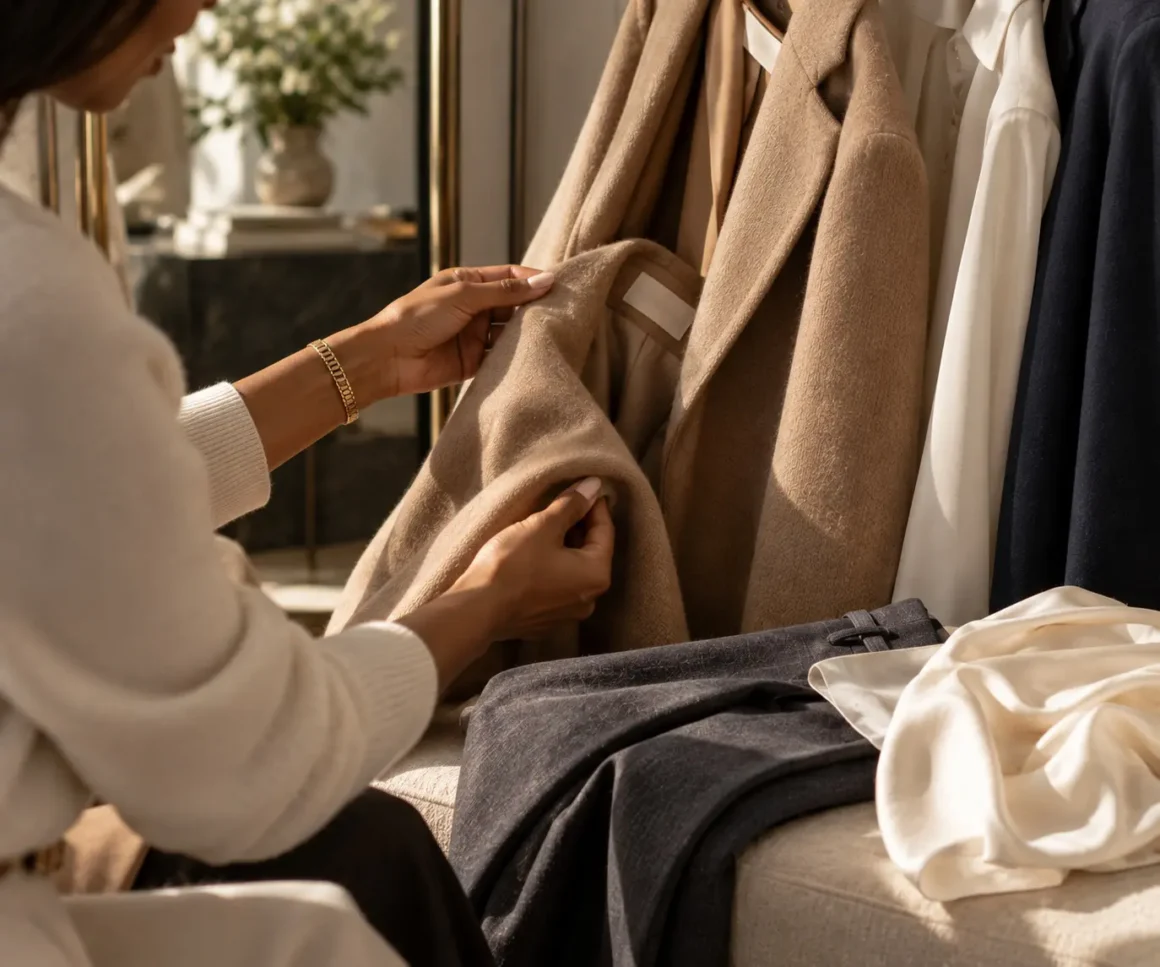
You do not need to know the technical history of a textile to make a better decision in a fitting room.
A few minutes of attention can tell you quite a lot.
Start with the label.
Note the fiber content, but also look for more specific information when it is available: the type of cotton, the kind of wool, the weave, the knit, or any indication of fabric weight. These details give you context for what you are about to feel.
Then use your hands.
Take a small section of the fabric between your fingers. Notice its weight, density, and surface. Does it feel substantial enough for the garment? Does it feel smooth because the cloth is well made, or merely unusually soft or slick? Does the surface already look fuzzy, weak, or worn?
Next, compress the fabric gently and release it.
You are not looking for every material to behave the same way. Linen will wrinkle. Wool should recover more readily. A silk blouse may fall back into place rather than spring.
What you are looking for is life.
Does the fabric still seem intact and responsive after being handled, or does it immediately look depleted?
Then hold it toward the light.
Look at the consistency of the weave or knit. Is the fabric intentionally sheer, or simply thinner than you expected? Are there weak-looking areas, uneven density, or gaps that seem out of character for the material?
After that, let the garment hang.
This may be one of the simplest and most revealing tests.
Watch how the cloth falls from your hand or on the hanger. Does it drape cleanly? Does it pull against itself? Does it have enough structure for the design? A fabric that feels lovely when folded can behave very differently once gravity gets involved.
Finally, look at the areas that will experience the most wear.
Cuffs. Underarms. Elbows. Side seams. Seat. Inner thighs. Button plackets. Bag-contact areas.
If the fabric already looks strained, fuzzy, puckered, or unstable in those places, it is worth asking what repeated wear will do.
And then ask yourself one final question:
Does this fabric make sense for the life I expect this garment to have?
A delicate silk blouse may be perfectly good fabric and still be a poor choice for something you want to throw into a suitcase every week.
A sturdy wool trouser may feel less immediately luxurious than a softer alternative but prove far better for frequent wear.
Quality is not only about how beautiful a fabric is.
It is also about whether that fabric is suited to the job you are asking it to do.
If you remember nothing else, remember these five things:
Read it. Feel it. Compress it. Hold it to the light. Watch it move.
That will not tell you everything.
But it will usually tell you much more than the fiber label alone.
Buy the Cloth, Not the Fiber Name
The easiest way to shop for fabric is to reduce quality to a label.
Cashmere sounds luxurious. Linen sounds natural. Silk sounds refined. Polyester sounds suspect. But those shortcuts can only take you so far.
A fiber name is useful information.
It is not a verdict.
The better habit is to look at the cloth in front of you and ask whether its weight, density, surface, drape, resilience, and construction make sense for the garment you are considering.
That may lead you to choose a crisp cotton shirt over a softer one, a resilient wool trouser over a more delicate alternative, or a thoughtfully made blend over a mediocre fabric with a more prestigious fiber name.
It may also help you walk away from something expensive without feeling as though you are missing out.
Because price and terminology can create a powerful first impression. Learning to evaluate fabric gives you another source of information—one that belongs to you.
Over time, that judgment becomes easier.
You begin to recognize the cotton that feels fine rather than flimsy. The linen whose irregularities look natural rather than weak. The wool that springs back. The cashmere that feels soft without seeming fragile. The silk whose drape and weight suit the garment.
You stop asking only:
What is this made from?
And start asking:
Is this fabric good at being what it is?
That is ultimately the more useful question.
A thoughtful wardrobe is not built by memorizing a list of “good” fibers and avoiding everything else.
It is built by learning to notice quality when you encounter it—and by choosing fabrics that are likely to keep doing their job long after the label has stopped impressing you.
That is the cloth worth buying.
Learn to read clothes more closely.
Fabric quality is easier to judge once you know what to notice: how cloth drapes, how it is finished, and whether the garment makes sense for the life you expect it to have.

