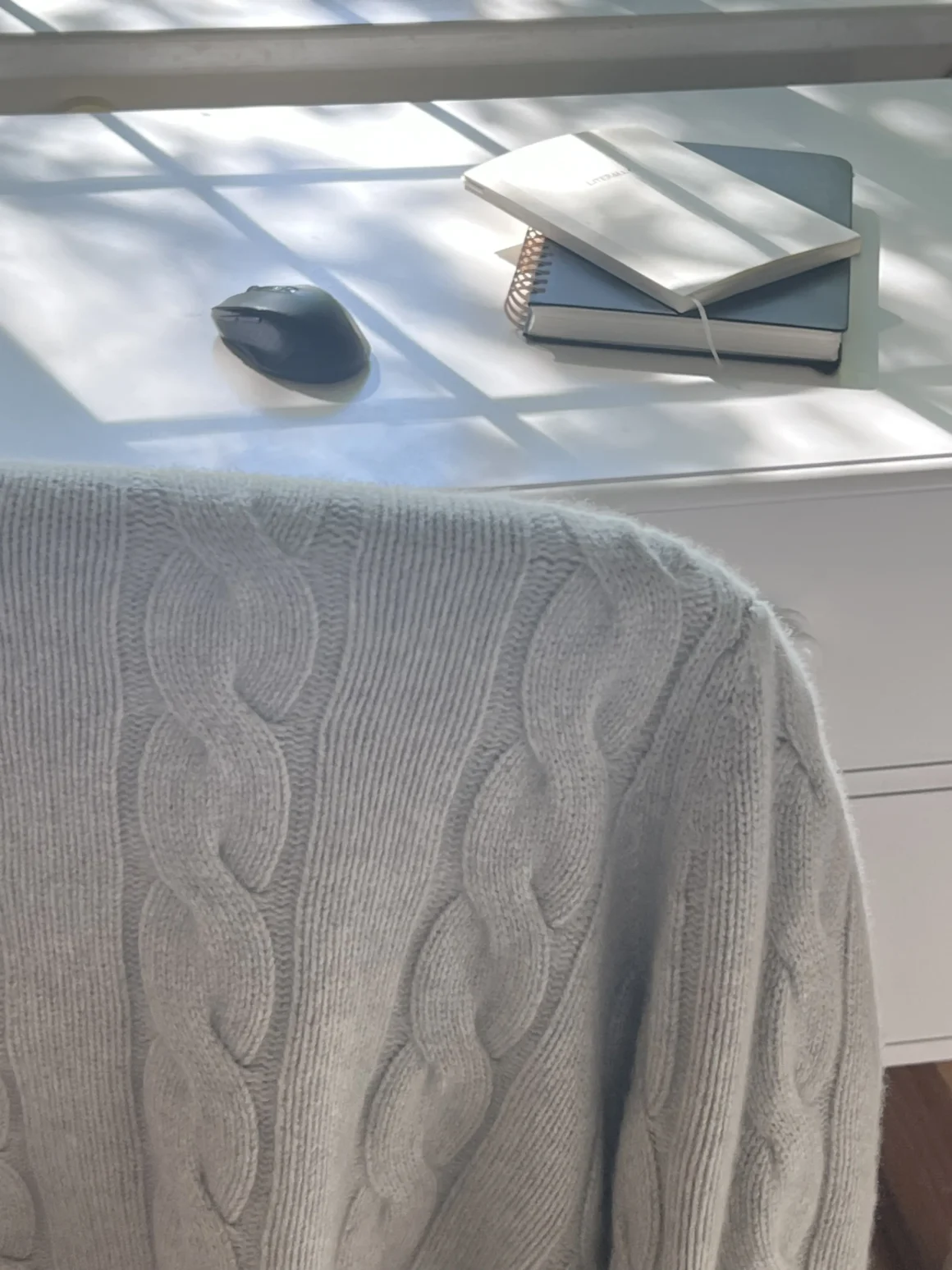
The clothes we love most are rarely the ones that surprise us. A familiar sweater settles exactly as you would expect; a pair of trousers falls the way you like; an outfit requires almost no negotiation before you leave the house. Nothing about it is new, yet it can feel more satisfying exactly because it isn’t. We are often taught to think of style as a form of invention—new combinations, new purchases, new ways to make familiar clothes feel different. But some of the strongest wardrobes are built through return: wearing the same things often enough that preference becomes instinct.
We Often Mistake Novelty for Style
Style is often presented as a form of constant reinvention. A new season arrives and suddenly there is pressure to refresh the wardrobe, update the silhouette, introduce a new color, or find some better version of what we already own.
Novelty can be enjoyable. There is nothing wrong with wanting something new simply because it delights you. But novelty and style are not the same thing.
Something unfamiliar naturally catches our attention. A new jacket feels more interesting than the one we have worn twenty times; a different pair of shoes can make an outfit feel transformed. That little jolt of newness is real—but it is temporary. Eventually, the new piece becomes familiar too.
What lasts longer is the assurance of knowing what works: knowing which proportions suit you, which fabrics you enjoy wearing, which shoes make an outfit feel finished, and which combinations require almost no thought.
Novelty catches our attention. Familiarity gives us a kind of assurance.
This clarity is often what makes personal style look effortless from the outside. The outfit may not be new at all. The wearer simply knows it well enough to stop negotiating with it.
There is a subtle freedom in that. Getting dressed no longer has to prove that you are imaginative, current, or capable of producing something different every time. Sometimes style is simply knowing what works—and being comfortable enough to wear it again.
Repetition Teaches You What You Actually Like
We don’t always know what we really think of a piece when it first enters the wardrobe. At first, we are often responding to possibility: how the piece looked in the fitting room, how we imagined wearing it, what it seemed to promise about the rest of the wardrobe.
Repeated wear is much less romantic—and much more revealing.
Over time, we learn which fabrics we enjoy having against the skin, which proportions feel most natural, which necklines we keep reaching for, and which details begin to annoy us after several hours. We discover whether we really like a structured shoulder or just liked the idea of one; whether a certain trouser rise works for our actual day; whether the color we admired online is one we genuinely want to wear again and again.
These preferences are often quieter than the ones we form while shopping. They emerge through use rather than aspiration.
A wardrobe becomes personal partly because use edits it for you. I’ve written before that repetition is the point: wearing the same clothes again is not a failure of imagination, but part of how a wardrobe begins to work. The pieces that continue to feel right rise naturally to the surface. Others remain technically beautiful, flattering, or well made, yet somehow never become part of the rhythm of getting dressed.
That is useful information. The clothes we repeat begin to show us not only what we own, but what we prefer. And over time, those patterns can become a more reliable guide to personal style than almost anything we could have planned in advance.
Familiar Clothes Become Easier to Wear Well
The more often we wear something, the less attention it seems to require. We know which coat works over it, which shoes give the right proportion, whether the sleeves look better pushed back, or whether the trousers need a little more length with one pair of shoes than another.
None of this knowledge is especially dramatic. Much of it is acquired almost accidentally, through getting dressed on ordinary mornings and noticing what works.
A blouse that once required thought eventually has a familiar place in the wardrobe. We know which bra disappears beneath it, whether it needs to be tucked or left loose, which jacket sits comfortably over the shoulder. The same is true of a skirt whose movement we understand, a sweater whose neckline determines the jewelry, or a pair of trousers we have learned to balance with the right shoe.
Over time, these small decisions become less like decisions at all. What can look like instinct from the outside is often simply familiarity: we have worn the clothes enough to understand them.
That familiarity is part of what can make a wardrobe feel calmer, too. When fewer choices require active negotiation, getting dressed can take up less mental space and allow the day to begin with a little less friction.
And perhaps that is part of why familiar outfits can look so convincing. We are no longer experimenting with the clothes or wondering whether they work. We know how they behave, and we know how we like to wear them. There is a quiet assurance in that knowledge—one that is difficult to reproduce with something we have only just brought home.
The Same Outfit Is Never Quite the Same
Even when the clothes are identical, the outfit rarely is.
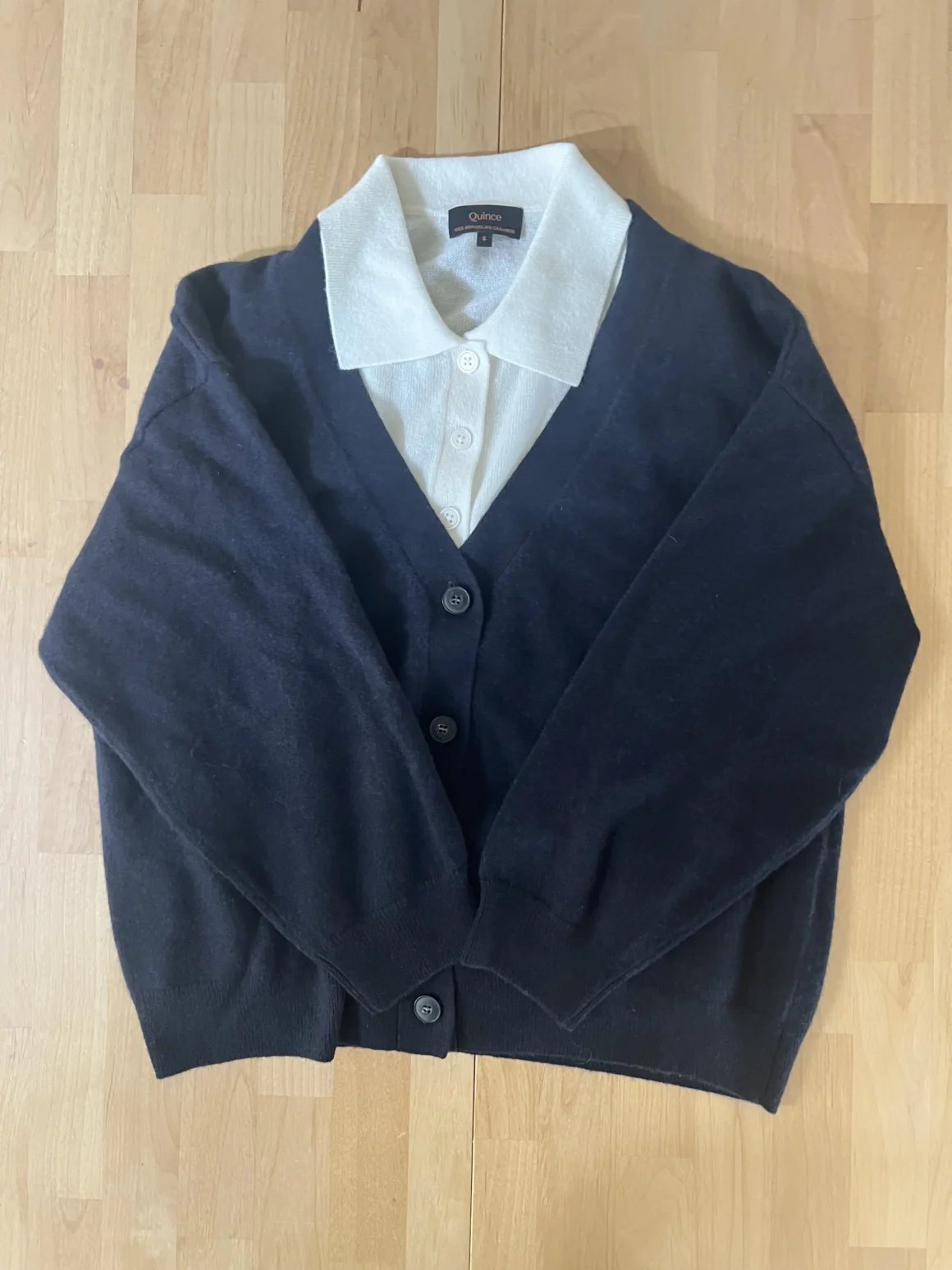
A familiar combination changes with the shoes, the coat, the jewelry, the bag, the weather, the way the sleeves are pushed back, or simply the mood in which we wear it. A navy sweater and trousers can feel practical one day, polished the next, and almost formal with a different shoe and a sharper coat.
Sometimes the variation is even smaller than that. The same dress worn in September feels different from the same dress in November. A jacket that once belonged to work may later become the thing we throw over a knit on the weekend. Context changes the clothes, even when the clothes themselves have not changed at all.
That is part of what makes repetition more interesting than it first appears. We tend to imagine that wearing the same outfit means reproducing the same experience, when in reality the surrounding details are always shifting.
And sometimes nothing changes—and that is fine too.
Not every repeated outfit needs to be refreshed, restyled, or made newly interesting in order to justify wearing it again. There is something satisfying about putting on a combination exactly as before simply because it worked the first time.
Maybe that is one of the quiet pleasures of repetition: the clothes can remain familiar without ever feeling entirely fixed.
Some Clothes Get Better Because They Carry a History
Not every well-loved piece improves because the fabric softens or the leather develops a patina. Sometimes what changes is our relationship to it.
A coat becomes the one we wore through several winters. A cardigan reminds us of a trip, a move, or a season of life we can still picture clearly. A bag may carry the faint marks of ordinary use—corners softened, handles darkened slightly, the shape no longer quite as crisp as the day it came home.
None of that necessarily makes the object less beautiful. In some cases, it makes it more so.
There is a particular kind of satisfaction in wearing something that has already accompanied us somewhere. The piece no longer represents possibility in the abstract; it has become part of an actual life.
This is especially true of clothes and accessories that age well. Wool settles. Leather softens. A favorite shirt becomes more comfortable after dozens of washes. A sweater may eventually need mending, or new buttons, or a little care to keep it going—and that maintenance can become part of the story too.
We often associate luxury with pristine condition, but continuity has its own richness. A garment does not have to remain untouched to retain its value. Sometimes the signs of use are evidence that it has been worth using.
That is one reason certain pieces become harder to replace over time. We are no longer comparing one coat to another coat, or one bag to another bag. We are comparing a new object to something that already carries years of familiarity, memory, and use.
And that is not an easy advantage to manufacture.
Repetition Is Also a Kind of Wardrobe Discipline
Wearing the same things regularly does more than reveal what we like. It also makes the wardrobe harder to romanticize.
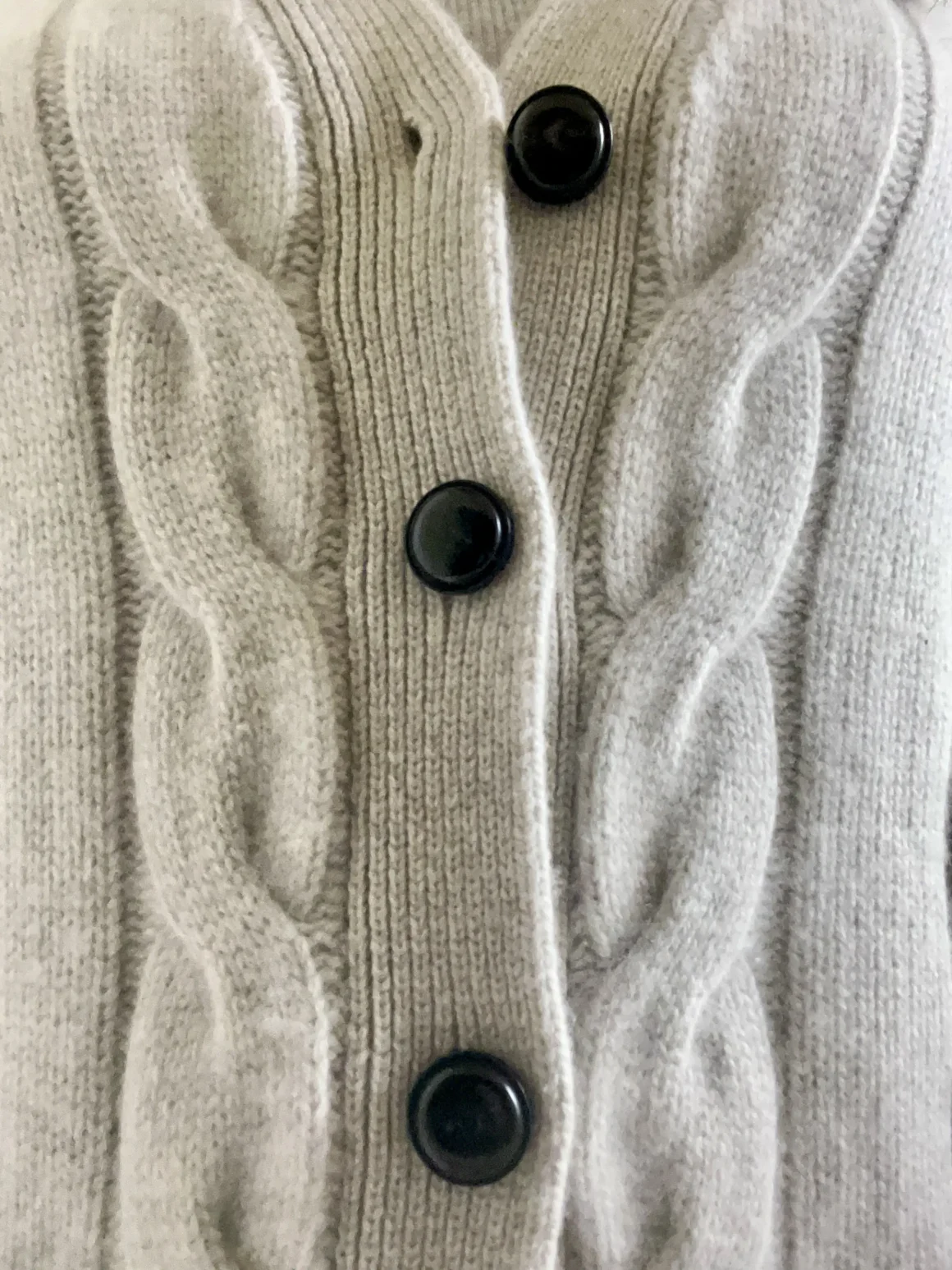
Repeated wear shows us which pieces deserve maintenance, which ones may need replacing, and which purchases never quite became part of our lives in the first place. A favorite sweater develops pilling and gets combed. A coat loses a button and is repaired. A pair of trousers begins to wear at the hem because it has actually been worn often enough to earn the damage.
That kind of attention is different from constantly looking for what comes next. It asks us to stay with what we already own long enough to notice its condition, its usefulness, and whether it still deserves a place.
It can also expose the quieter mistakes. The dress that seemed perfect but has been worn once. The shoes that work beautifully in theory and nowhere in practice. The blouse that keeps surviving every closet edit despite never being chosen. Repetition makes those gaps between aspiration and reality more difficult to ignore.
That is not necessarily a reason for regret. It is information.
The more clearly we can see what we genuinely use, the easier it becomes to make better decisions about what to repair, what to replace, what to release, and what not to buy again. In that sense, repetition becomes a kind of discipline—not restrictive, but clarifying.
It is also one of the ideas behind the Purchase Pause: creating enough distance between wanting something and buying it to ask whether the new piece has a real role to play, or whether we are simply responding to the pleasure of novelty.
A wardrobe built this way may change more slowly. But the changes that do happen are more likely to be useful ones.
When Repetition Becomes a Uniform—and When That’s Useful
There is a point at which repetition begins to look less like habit and more like a uniform.
That can sound limiting, but a personal uniform is not necessarily a sign that a wardrobe has become dull. Often it means we have identified a combination of proportions, colors, and pieces that reliably feels like us. A knit with tailored trousers. A crisp shirt under a cardigan. A simple dress with the same coat and shoes. The details may shift, but the underlying formula stays remarkably consistent.
That kind of repetition can be useful because it removes unnecessary decision-making. We are not starting from zero each morning. We are working within a structure we already understand, which leaves room for small changes without requiring constant reinvention.
The more interesting question is whether the uniform still feels chosen.
There is a difference between reaching for the same things because they continue to suit us and doing so because we have stopped paying attention altogether. One feels grounded; the other can begin to feel automatic in a way that no longer reflects who we are or how we live.
It can be useful, every so often, to notice the distinction. Are these the clothes I repeat because they make getting dressed simpler and more satisfying? Or are they simply the ones closest at hand? Does the formula still feel like mine, or has it become a default I no longer really see?
A good uniform does not need to be escaped. It only needs to remain intentional enough that, when we put it on again, it still feels like a choice.
Personal Style May Be More Repetitive Than We Think
When we think about personal style, we often imagine variety: a distinctive wardrobe, an interesting mix of pieces, an ability to put things together in ways that feel original.
But recognizable style is often built through repetition.
The people whose style feels most consistent usually return to the same kinds of silhouettes, proportions, colors, fabrics, and combinations. The details change, but the vocabulary remains familiar. A certain trouser shape. A preference for long coats. The same kind of shoe. A narrow range of colors worn in slightly different ways.
That repetition is not a lack of imagination. It is often the evidence of preference becoming visible.
Over time, the things we repeat begin to form a pattern. We may not even notice it at first, but others often do: the jackets we favor, the way we balance volume, the colors that appear again and again, the pieces we seem most at home in. Those patterns can also become the foundation of a capsule wardrobe that actually works, because the strongest capsules tend to be built around what we already know we like to wear.
In that sense, personal style may be less about continually creating something new and more about recognizing what keeps returning.
Repetition is not the opposite of personal style. It is one of the ways personal style becomes visible.
And perhaps that is why the wardrobes that feel most convincing are not necessarily the most varied. They are the ones with a point of view clear enough to repeat itself.
A quieter wardrobe starts with what works
Build around the pieces you’ll actually wear again.
The Quiet Luxury Capsule is a simple 10-piece starting point for creating a polished, versatile wardrobe around clothes that earn their place through repeated wear.
The Pleasure of Knowing What Works
One of the quieter pleasures of a good wardrobe is that, eventually, getting dressed stops feeling like an exercise in invention.
There is comfort in reaching for something familiar and knowing what will happen next: the sweater will sit the way you like, the trousers will fall properly, the coat will work over both. The outfit may have been worn many times before, but that does not make it less satisfying. If anything, the familiarity can make it feel more distinctly yours.
This is not the same as giving up on curiosity or never wanting anything new. A wardrobe can still evolve. Tastes change, lives change, bodies change, and sometimes a new piece genuinely adds something that was missing.
But there is a different kind of pleasure in realizing that not everything needs to change at once.
Some clothes have already answered the question. They fit. They feel right. They suit the life you actually live. You know how to wear them, and you are happy to wear them again.
A wardrobe begins to feel truly personal when repetition no longer feels like a compromise.
It feels like recognition.
Where This Leads
Knowing what works can change what you bring in next.
Repeating the clothes you love does more than make getting dressed simpler. It gives you a clearer sense of what belongs in your wardrobe—and what may not need to be added at all.
If you want to carry that idea a little further, The Confidence of Enough explores the quieter satisfaction of recognizing when what you already have is sufficient. And the Purchase Pause Journal offers a practical way to slow down new purchases long enough to decide whether they truly deserve a place.

