Quiet luxury isn’t something you put on. It’s something you return to.
It doesn’t begin with a purchase, a palette, or a silhouette. It begins with repetition—with the calm confidence of knowing what works and choosing it again. Not because it’s new, but because it’s right.
This is the foundation of quiet luxury as a practice — not a look, trend, or uniform.
This is where quiet luxury often gets misunderstood. When it’s reduced to a look, it becomes copyable. When it’s understood as a practice, it becomes personal.
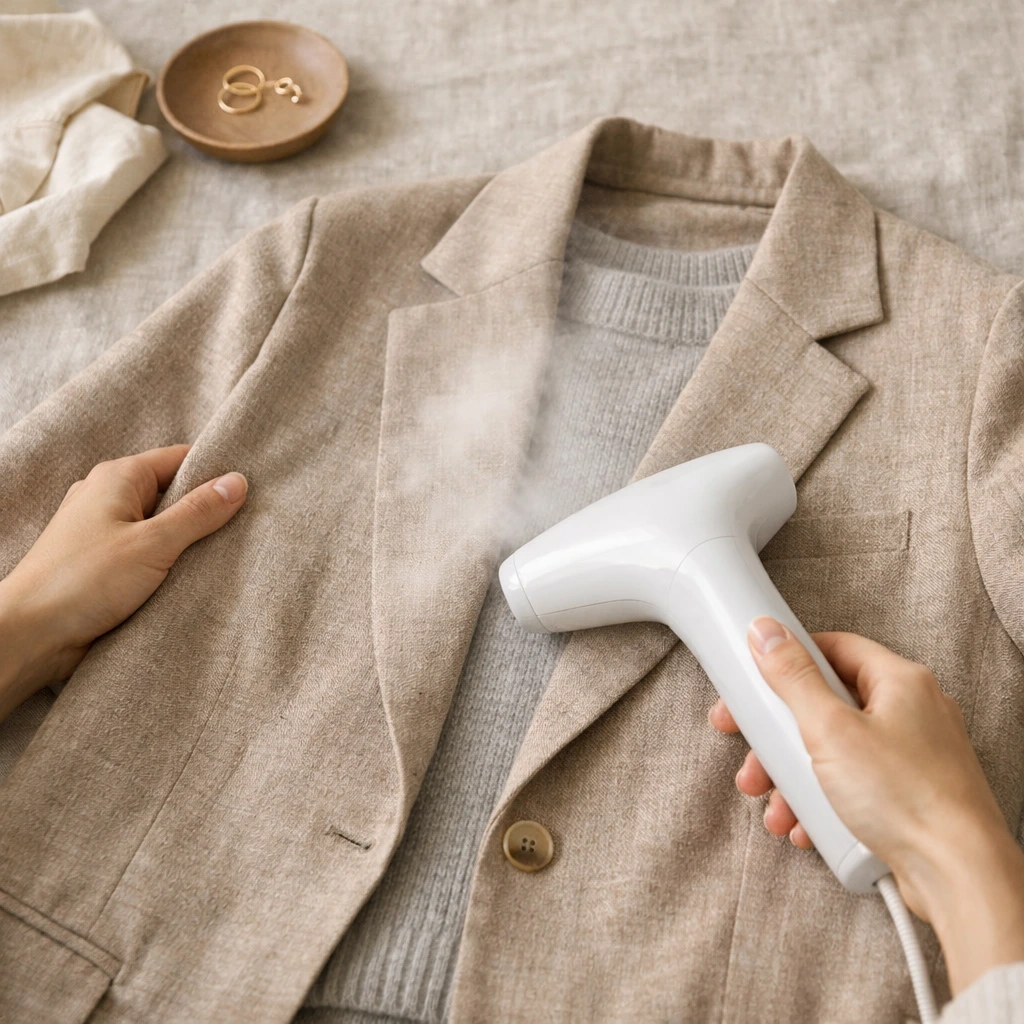
Practice over presentation (why quiet luxury isn’t a look)
A look asks to be seen.
A practice asks to be lived with.
Quiet luxury shows up less in what you wear or own and more in how you decide. It’s the pause before buying. The willingness to repair instead of replace. The comfort with wearing the same pieces often—letting them soften, shape, and settle into your life.
This is why quiet luxury resists uniformity. Two people can share similar wardrobes or homes and still practice it very differently. What matters isn’t the overlap—it’s the intention.
If something feels considered rather than performative, it’s usually on the right track.
The daily signals that define a quiet luxury practice
The clearest expressions of quiet luxury are small and repeatable:
- Wearing what fits your body now, not what you’re hoping to become
- Caring for clothes and objects so they age well instead of loudly
- Choosing comfort without apology
- Letting one element lead—tailoring, texture, or proportion—rather than stacking signals
These aren’t dramatic gestures. They don’t photograph loudly. But they compound. Over time, they create an ease that reads as refinement without effort.
This is why quiet luxury is often felt before it’s noticed.
Why quiet luxury style changes—But the practice doesn’t
Trends move quickly because they’re visual. Practices move slowly because they’re embodied.
The shapes, colors, and references associated with quiet luxury will continue to shift. What felt modern five years ago may feel dated now. But the underlying behaviors—the restraint, the discernment, the repetition—remain stable.
This is what makes quiet luxury durable. It adapts without chasing. It evolves without erasing what came before.
When your choices are guided by practice rather than novelty, change feels additive instead of destabilizing.
How practice shapes wardrobe, home, and rhythm
Once you see quiet luxury as a practice, it stops living in a single category.
It shows up in a wardrobe built around anchors rather than outfits—pieces chosen to work across real days, not imagined ones.
It shows up in homes designed for use first, atmosphere second—spaces that feel calm because they’re lived in, not staged.
It shows up in daily rhythms that prioritize clarity over optimization—small resets, familiar rituals, and room to breathe.
This is why the quiet luxury philosophy translates so naturally across what you wear, how you live, and how your days unfold. It isn’t aesthetic consistency—it’s behavioral consistency.
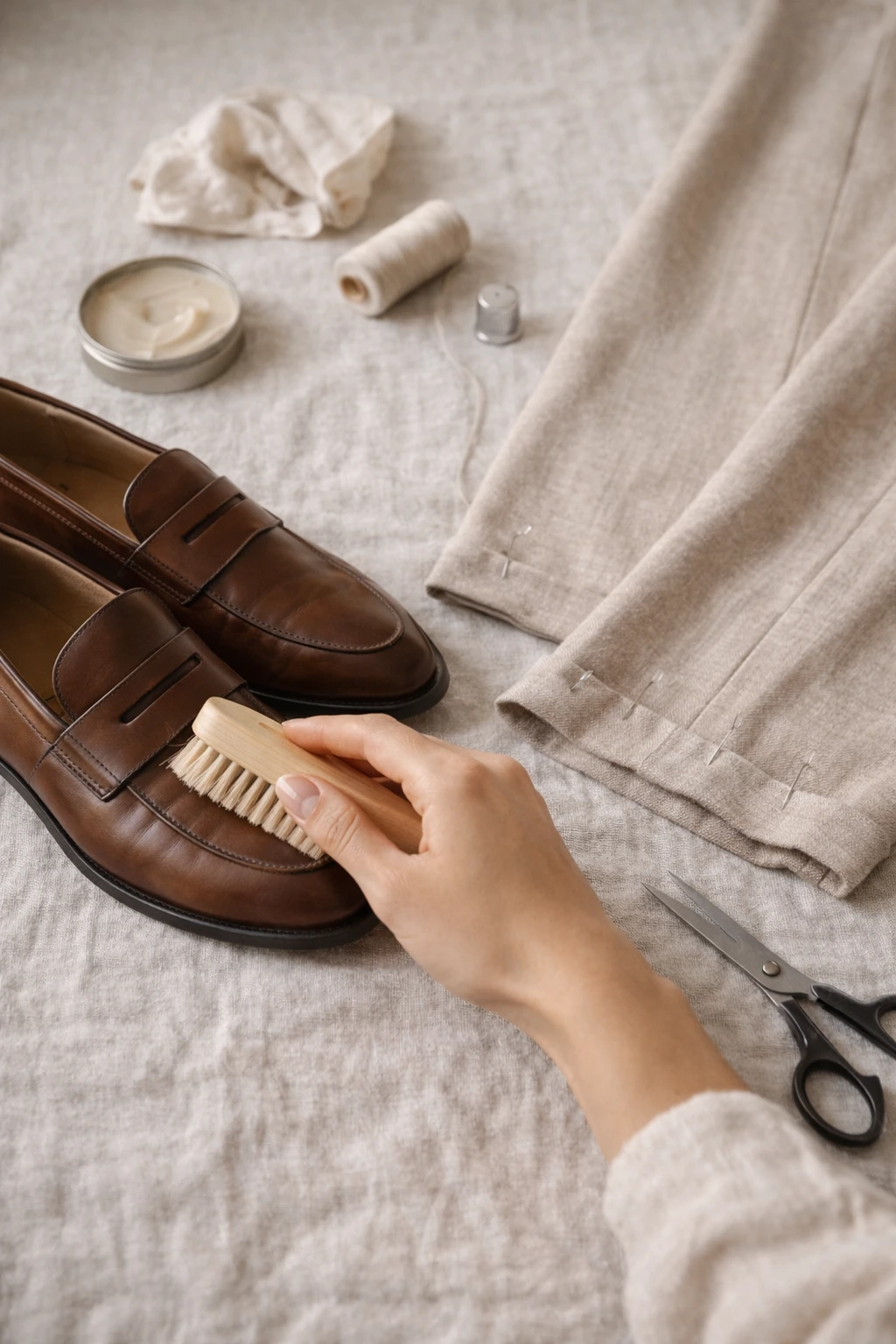
When it finally feels quiet
There’s usually a moment when quiet luxury clicks. Not because everything looks perfect, but because nothing is asking for attention.
You stop adjusting.
You stop second-guessing.
You move through your day without thinking about how things read.
That’s the signal.
Quiet luxury isn’t something you arrive at.
It’s what remains once the noise is gone.
If you’d like to see how this philosophy translates into real life, start with the Quiet Luxury Wardrobe, explore Quiet Luxury at Home, or return to Refined Renewal for the rhythm behind it all.
You don’t need to adopt everything—just follow what resonates.
Practice eventually becomes the atmosphere of a life.
Quiet luxury is sustained through repetition rather than performance. The choices you make every day gradually shape the way you dress, the way you live, and the rhythms you return to.
These pieces explore how that practice takes form — through wardrobes designed for ease, homes that support presence, and the habits that allow both to feel natural over time.

