Many people search for how to look expensive without logos. But what they’re often asking is simpler: what makes an outfit feel refined without trying too hard?
Quiet luxury rarely announces itself. It registers — through fit, fabric, finish, and care. These are the subtle signals that make a wardrobe (or a home) feel settled, not staged.
Quiet luxury is easiest to misunderstand when it’s reduced to a palette or a price point. In practice, it’s almost always the small, repeatable details — the things that look calm up close and even calmer over time.
This is also why quiet luxury is less about appearing expensive and more about creating coherence through fit, texture, proportion, and restraint—something explored more fully in What Quiet Luxury Actually Means.
Quick premise: Quiet luxury reads most convincingly when nothing is trying too hard — and everything is quietly maintained.
1) Fit Is the First Tell
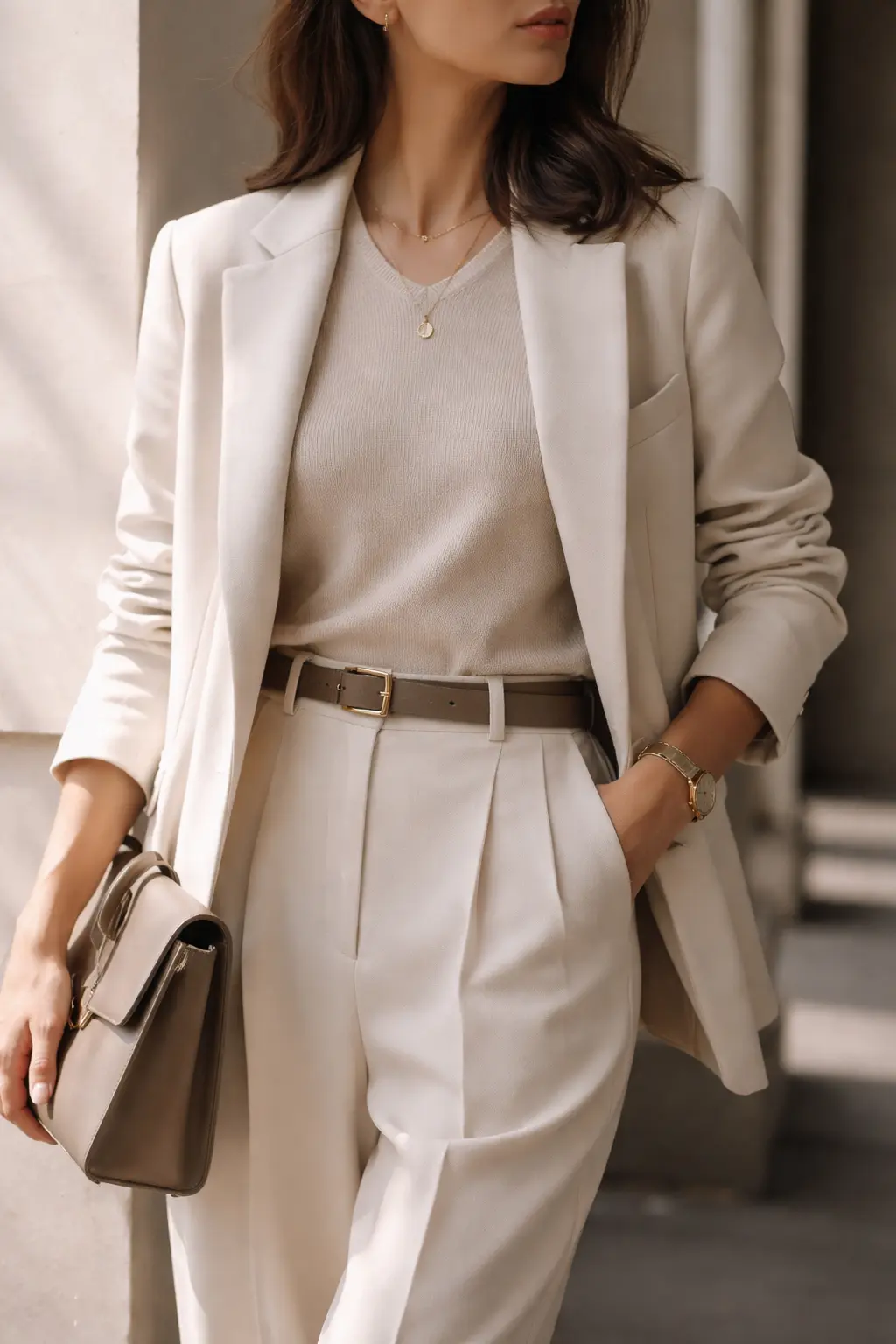
Before fabric, before brand, before color — fit speaks first. Quiet luxury avoids anything fighting the body: sleeves too tight, trousers collapsing at the hem, waistlines that need constant adjustment.
The signal is ease: a blazer that closes cleanly without pulling; trousers that skim rather than cling; a dress that holds its shape as you move.
The way fabric moves around the body often determines whether an outfit feels relaxed and refined or slightly rigid–which is why fabric drape changes the entire read of a garment.
Quiet rule of thumb: if you’re constantly tugging or adjusting, the piece isn’t quiet — it’s asking for attention.
2) Fabric Matters More Than Brand
Fabric is the detail people feel, even if they can’t name it. Quiet luxury tends to favor materials that age well: wool with structure, cotton with density, knits that recover their shape, leather that softens rather than cracks.
A well-chosen fabric lets a simple silhouette carry more weight — visually and literally.
This is often why quiet luxury wardrobes rely so heavily on natural fibers, restrained palettes, and versatile layers that continue to feel refined across seasons—principles that shape a strong set of quiet luxury wardrobe essentials.
3) Finish is Where Restraint Shows
Finish is the difference between something that looks good on a hanger and something that holds up in real life: lined where it matters, seams that sit flat, buttons that feel deliberate, zippers that move smoothly.
Quiet luxury avoids decorative excess. Hardware is minimal — but intentional. When hardware appears, it feels integrated rather than attention-seeking.
A ten-minute upgrade
No shopping required
If everything above feels abstract, here’s the practical translation — one small reset that changes the entire read:
- Steam or press one outfit.
- Polish one pair of shoes.
- Remove one unnecessary accessory.
- Check hems and sleeves for proportion.
- Let one texture lead — wool, silk, suede, leather.
Quiet luxury often emerges not from addition, but from subtraction and care.
4) Care Is the Quiet Multiplier
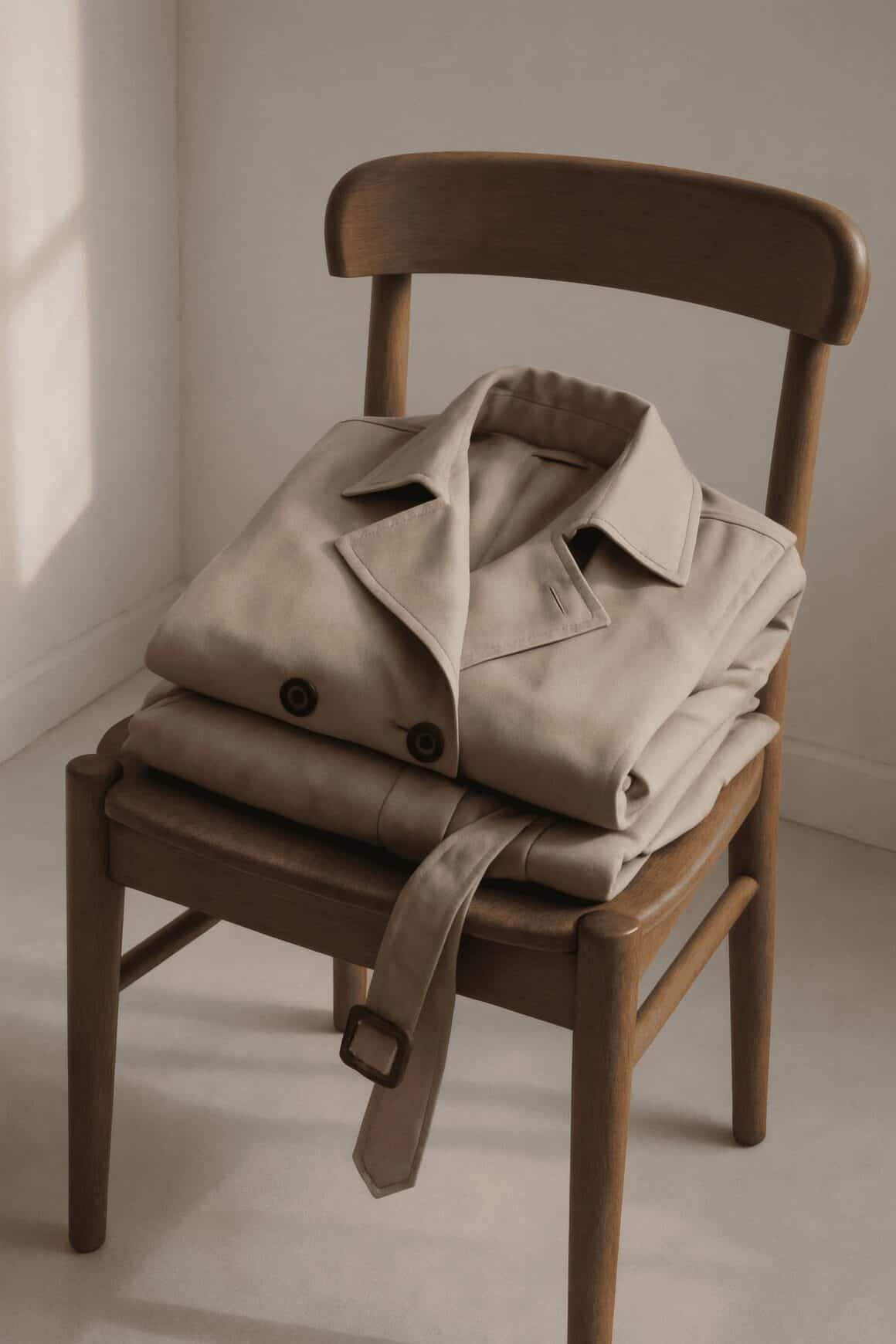
This is the least glamorous signal — and one of the most powerful: pressed garments, clean shoes, knits rested between wears, fabrics stored with care.
Quiet luxury often looks expensive because it looks maintained. Care communicates ownership — not just possession, but familiarity.
The same principle applies to a capsule wardrobe: fewer pieces tend to feel more elevated when they are worn often, cared for properly, and chosen for compatibility rather than excess—the foundation of a well-built capsule wardrobe.
5) Personal Tells Matter More Than Trends
Quiet luxury is not a uniform. It’s a language. Most people who dress quietly well have one or two consistent “tells” — a neckline they favor, a sleeve shape they return to, a shoe profile that anchors their look.
Over time, these repeated details become part of what makes a wardrobe feel recognizable rather than repetitive—the same idea explored in Why Repeating Outfits Is the Point (Not the Problem).
The goal isn’t to copy a look, but to refine your own.
The most polished wardrobes rarely feel overly formal. Instead, they balance structure with ease— the same tension is explored in Why Professional Style Doesn’t Have to Be Stiff.
When to stop editing
Quiet luxury isn’t perfected — it’s settled. If you keep adjusting, you usually drift away from ease. Here’s a simple stopping rule:
- If it feels comfortable when you sit, stand, and walk — keep it.
- If one element is leading (tailoring, texture, or line) — don’t compete with it.
- If you’ve reached “three notes” — base + layer + shoe — pause.
- If you’re only changing for photos — stop. Your life is the point.
- If you’re removing something and the outfit gets better — you’re done.
The best signal is quiet: you forget about the outfit and return to your day.
Where this leads
Once you start noticing quiet signals, shopping becomes slower — and more selective. You stop chasing novelty and start building coherence. The philosophy becomes practical: fewer pieces, worn more often, maintained with intention.
Over time, this changes how you buy — and how you feel in what you own. For many professionals, this shift eventually leads toward a wardrobe built less around constant novelty and more around reliable structure, repetition, and ease—the foundation of The Modern Professional’s Capsule Wardrobe.
You begin to recognize when something is already enough. The wardrobe stops performing and starts supporting.
Quiet luxury isn’t something you arrive at. It’s what remains once the noise is gone.
Quiet luxury is often found in the details.
Fit, fabric, and finish are the subtle signals that make clothing feel refined before a label or logo ever matters.
These guides continue the idea through wardrobe essentials, fabric quality, and the pieces that create a quieter, more cohesive closet.

