Comfortable work outfits often fail for one simple reason: everything in them is soft.
The problem isn’t comfort. It’s the absence of structure.
In professional settings, authority is read through line, proportion, and fabric weight. When a knit collapses at the shoulder, when trousers are too light to hold a crease, when shoes disappear into the outfit, the result isn’t ease — it’s visual fatigue. The clothes feel fine. They just don’t hold you.
Looking polished at work doesn’t require stiffness or formality. It requires balance.
The goal isn’t to dress up your comfort. It’s to support it — with pieces that introduce steadiness, vertical line, and quiet structure. When even one element carries weight, the entire outfit reads as intentional.
Below are three structural pieces that consistently make comfortable work outfits look polished. Not trends. Not formulas. Just dependable anchors that allow softness to exist without sacrificing authority.
If you’d prefer complete outfit templates rather than individual upgrades, start with these comfortable work outfit formulas.
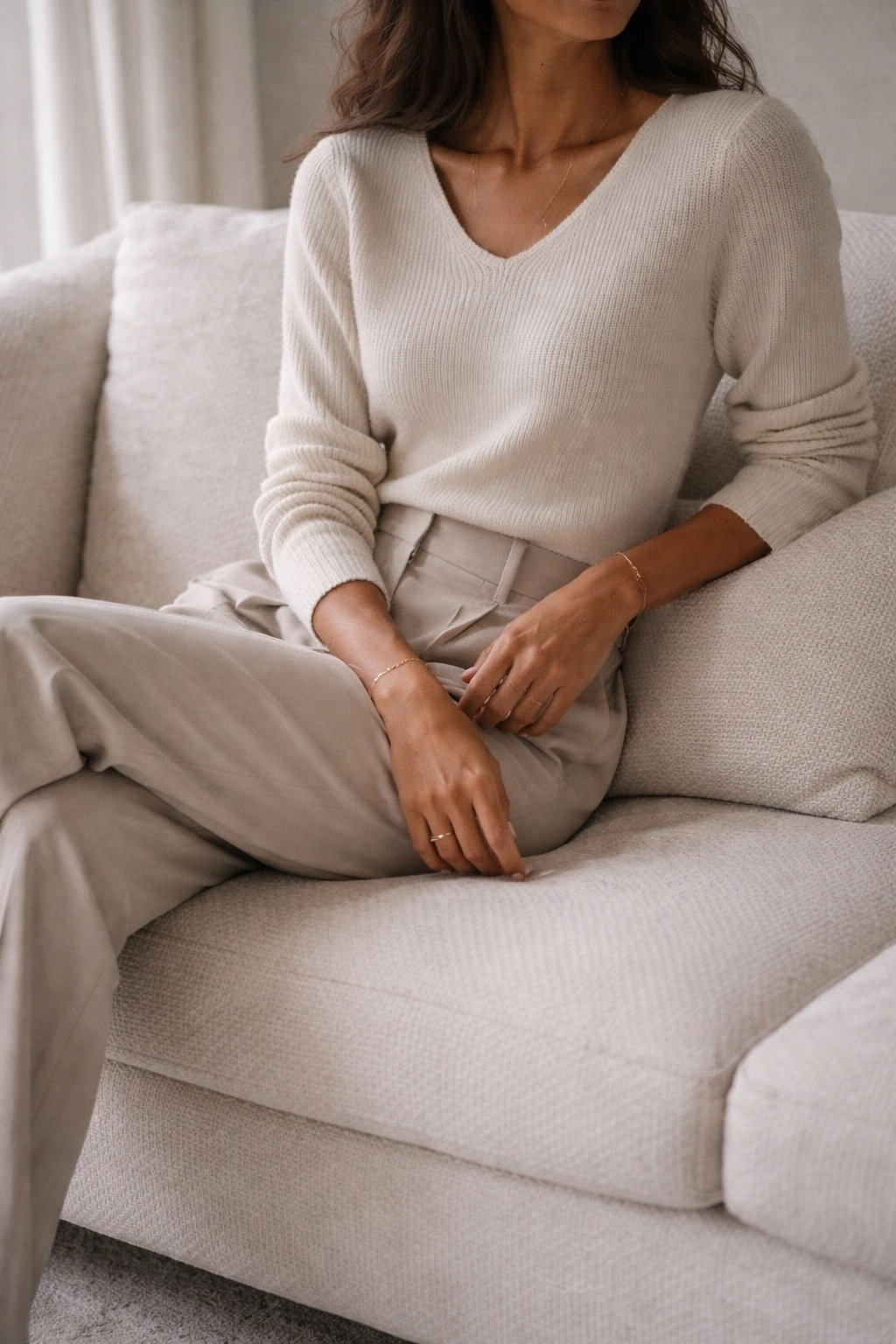
Why comfortable work outfits often look too casual
Comfortable work outfits don’t look casual because they’re soft.
They look casual when nothing in the outfit holds a line.
When every piece is elastic, slouchy, unlined, or overly forgiving, the eye reads ease — but not intention. Structure doesn’t have to mean stiffness. It means visual steadiness. Without it, even expensive clothing can look undefined.
Here’s where comfortable but professional outfits quietly unravel:
When every piece is elastic or unstructured
Elastic waistbands, drop shoulders, oversized cuts, stretch-heavy fabrics — each of these can work on their own. But when every piece in the outfit relies on stretch instead of shape, proportion collapses.
The body disappears inside softness. Authority disappears with it.
Comfortable workwear needs at least one element that introduces containment — a shoulder seam that sits correctly, a waistband that anchors, a knit that recovers after movement. Without that counterweight, the entire look reads off-duty.
When fabric weight is too light
Fabric weight is one of the most overlooked signals of polish.
Lightweight knits, thin crepe, soft jersey, or fluid trousers can feel wonderful — but if the fabric lacks density, it won’t hold a vertical line. It clings. It folds inward. It shifts with every step.
Polished but comfortable work outfits rely on fabric that creates quiet structure: compact knits, substantial twill, ponte, wool blends with body. Weight doesn’t mean heaviness. It means stability.
Stability reads as composure.
When shoes remove structure
Many comfortable work outfits fall apart at the ground.
Soft knits and relaxed trousers need a stabilizing element at the hem. When paired with ultra-thin flats, overly flexible soles, or sneakers without visual weight, the entire silhouette drifts downward.
Shoes are not about height. They’re about finish.
A firm sole, defined shape, or subtle leather structure gives the outfit closure. Without that anchor, even strong pieces above can look incomplete.
When proportion collapses
Proportion is what makes an outfit look deliberate.
If the top is oversized, the trousers are wide, the sleeve is long, and the shoe is minimal, nothing defines the frame. Everything floats. Nothing holds.
Comfortable but professional dressing depends on contrast — softness balanced with line, drape balanced with structure, ease balanced with containment.
When proportion is intentional, comfort reads as control.
When proportion collapses, comfort reads as casual.
The solution isn’t more effort. It’s strategic structure.
The 3 structural pieces that make comfort look professional
These are not statement pieces.
They are stabilizing ones.
Each introduces structure without stiffness and improves proportion instantly. They allow comfort to exist — without letting the outfit collapse.
Think of them as quiet load-bearers.
1. A structured knit that holds its shape
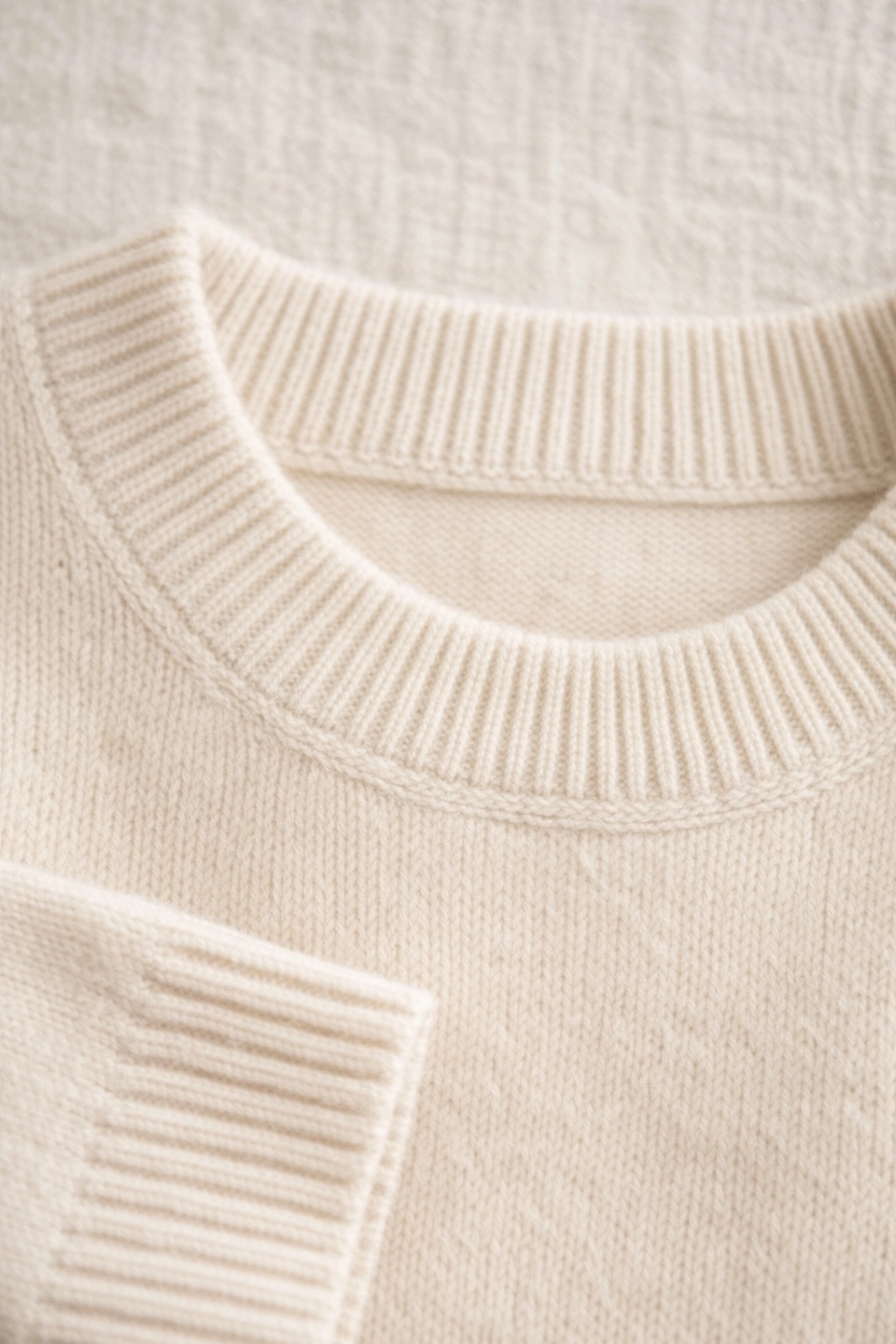
A good knit can be comfortable without reading casual—but only if it holds its shape. It creates visual steadiness at the shoulder — and steadiness reads as control.
It’s about density, drape, and edge. A fine-gauge wool, cashmere, or cotton knit with a clean neckline and intentional hem creates a stable upper frame. It gives the body something to organize around. This is what makes a comfortable work outfit look intentional rather than transitional.
Compared to a sweatshirt or slouchy pullover, a structured knit:
- keeps the shoulder line intact
- resists collapse at the waist
- reads finished even without layering
It allows you to stay warm, soft, and at ease—without looking like you stopped mid-transition.
A knit with weight and recovery—compact merino, ponte, or rib that holds its line. This is what replaces the sweatshirt without adding stiffness.
Why it works: warmth + stretch, with enough structure to read intentional.
Once the upper half feels composed, attention naturally drops downward. This is where many “easy” outfits quietly unravel — where comfort turns soft, and softness turns vague.
The difference is rarely the cut. It’s the weight.
2. Trousers with fabric weight and vertical line
Fabric weight is often the missing element in comfortable professional clothes.
Comfortable pants fail when they’re too light to hold a line. Stability reads as composure.
A trouser with substance—wool twill, ponte, structured crepe—doesn’t cling or fold inward. It creates vertical clarity, even when the rest of the outfit is relaxed.
This is why elastic-waist trousers can work beautifully when the fabric has enough body. The comfort comes from ease, not flimsiness.
A weighted trouser:
- sharpens proportion immediately
- balances soft tops and knits
- allows flats and low shoes to feel intentional
When the bottom half is grounded, the outfit doesn’t need explaining.
At this point, the outfit may already feel comfortable and complete at home. But the final test comes when you step outside — when the clothes have to meet the world, not just your mirror.
That’s where the third piece matters most.
3. Shoes with presence (not just comfort)
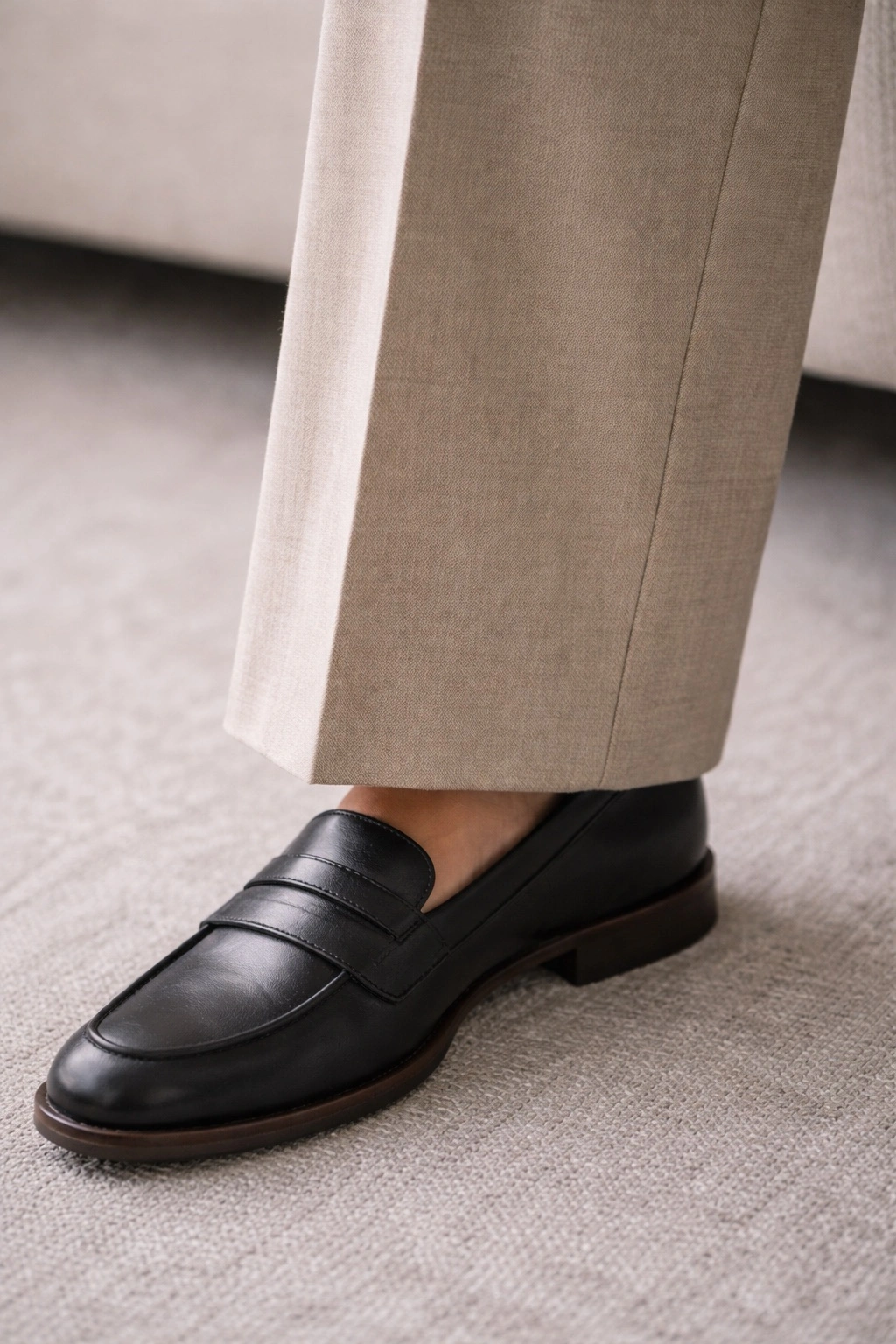
Most “easy” outfits unravel at the shoe. Anchoring footwear is what keeps comfortalbe outfits from reading casual in a work setting.
Lightweight knits and relaxed trousers need contrast at the ground—something with structure, finish, and visual weight. This isn’t about height. It’s about presence.
Loafers, leather flats with a firm sole, or low-profile boots quietly signal that the outfit was chosen, not defaulted.
An anchoring shoe:
- prevents the look from drifting into loungewear
- adds polish without formality
- makes repetition feel intentional
It’s often the difference between feeling underdressed and feeling simply at ease.
Together, these pieces create a kind of visual ballast. They let the body relax without the outfit collapsing. Nothing is trying to impress — but nothing is asking for permission either.
This is how comfort becomes credible.
How these 3 pieces change the entire outfit
Polished but comfortable work outfits aren’t built through effort.
They’re built through stability.
When a knit holds its line, fabric carries weight, and shoes anchor the silhouette, comfort stops reading casual. It reads deliberate.
You’re not dressing up.
You’re removing visual drift.
And in professional environments, steadiness reads as authority.
How to build polished but comfortable work outfits around these pieces
Polished but comfortable work outfits aren’t built from trends.
They’re built from anchors.
Once you understand which pieces carry structure, you stop asking, “Is this too casual?” and start asking, “What is holding the line?”
Here’s how to assemble comfortable work outfits that still read capable and intentional.
Start with containment at the shoulder
The upper frame sets authority.
Begin with a knit that holds shape — compact merino, structured rib, or fine-gauge wool with recovery. The shoulder seam should sit where it belongs. The neckline should stay clean throughout the day.
This becomes the stabilizing base layer.
From there, layering is optional — not corrective.
If the knit already holds, you don’t need a blazer to “fix” the outfit. You can add one for hierarchy, not rescue.
Ground the lower half with fabric weight
The second decision is the trouser.
Choose fabric with body — wool twill, ponte, structured crepe, or substantial cotton blends. Even elastic-waist trousers can read professional when the fabric carries weight.
What you’re looking for:
• Vertical clarity
• Minimal collapse at the knee
• A waistband that anchors rather than negotiates
Comfortable but professional outfits rely on lower-half stability. When the base is grounded, everything above looks intentional.
Close the look at the hem
The final move is structural closure.
Shoes don’t need height — they need finish. A leather loafer, a structured flat, a low-profile boot with presence.
The sole should feel firm. The shape should be defined. The material should have visual weight.
This is where many comfortable work outfits tip into casual. When the shoe carries structure, the entire silhouette resolves.
Use contrast, not correction
You don’t need to harden every piece.
A soft knit works because the trousers hold weight.
Elastic works because the fabric carries density.
Relaxed tailoring works because the shoulder stays clean.
Polish doesn’t come from eliminating comfort.
It comes from balancing it.
That balance is what makes an outfit repeatable — and repeatability is the real measure of comfort in professional settings.
If you’ve ever felt that comfortable work outfits look right at home but slightly undefined in a meeting, the issue is rarely comfort itself. It’s the absence of structural anchors.
Three pieces — one at the shoulder, one at the waist, one at the ground — are often enough to change the entire read.
Three Polished but Comfortable Work Outfit Formulas
These aren’t “looks.”
They’re repeatable frameworks — the kind you can wear weekly without explanation.
1. Structured Knit + Weighted Trouser + Anchored Flat
Why it works:
Softness at the body, structure at the shoulder and hem.
- Compact knit (merino, rib, fine-gauge wool)
- Wool twill or ponte trouser
- Leather loafer or structured flat
This is the most reliable polished but comfortable work outfit for meetings, leadership settings, and long days at a desk.
It reads composed without trying.
2. Fine Knit + Pull-On Trouser (Done Right) + Low Boot
Why it works:
Ease in construction, weight in fabric.
- Clean neckline knit with recovery
- Elastic-waist trouser in structured crepe or ponte
- Low-profile leather boot with firm sole
This formula proves that comfortable but professional doesn’t require tailoring. It requires density.
Nothing clings. Nothing collapses. Everything holds.
3. Structured Knit + Straight Trouser + Minimal Layer
Why it works:
Clarity in proportion.
- Knit that defines the shoulder
- Straight or gently tailored trouser with drape
- Optional blazer or sharp coat
- Anchored leather shoe
This is the version that travels well — long days, client visits, transitional weather.
The structure is built in. The layer simply reinforces it.
If a comfortable work outfit feels “almost right,” adjust one anchor — shoulder, waist, or hem.
You rarely need more than that.
What to look for when shopping for comfortable workwear
Comfortable workwear fails when it prioritizes softness over structure.
When you’re shopping for polished but comfortable work outfits, look for weight, recovery, and proportion — not stretch alone.
1. Fabric Weight (Not Just Stretch)
Lightweight fabric reads casual, even when cut well.
Look for:
- Ponte with density
- Wool twill with drape
- Rib knits that spring back when pressed
If the fabric folds inward easily, it will read relaxed — not professional.
2. Recovery at the Shoulder and Waist
Stretch is fine.
Sag is not.
A knit should return to shape after you tug it slightly.
A waistband should sit flat without collapsing.
This is what keeps comfortable work outfits looking intentional after a full day.
3. Matte Finish Over Shine
Subtle texture reads expensive.
Shine reads synthetic.
Choose:
- Matte leather
- Compact wool
- Cotton with body
Even small surface details change how “professional” an outfit reads.
4. Clean Edges
Look at:
- Necklines
- Hems
- Seams
- Pleats
Sharp pleats and stable hems elevate comfortable pieces instantly.
Comfort isn’t the problem. Fabric choice and proportion are.
When those are right, comfortable work outfits read polished without extra styling.
When comfort becomes polished
Comfortable work outfits don’t fail because they’re soft.
They fail because nothing in them holds.
When one piece introduces structure — a knit with recovery, a trouser with weight, a shoe with presence — the entire look stabilizes. You don’t need more layers. You need better anchors.
This is how ease becomes credible.
If you want the deeper framework behind why softness alone undermines polish, read Why Comfort Isn’t Casual. The thinking there explains why structure, not effort, is what makes professional dressing sustainable.